


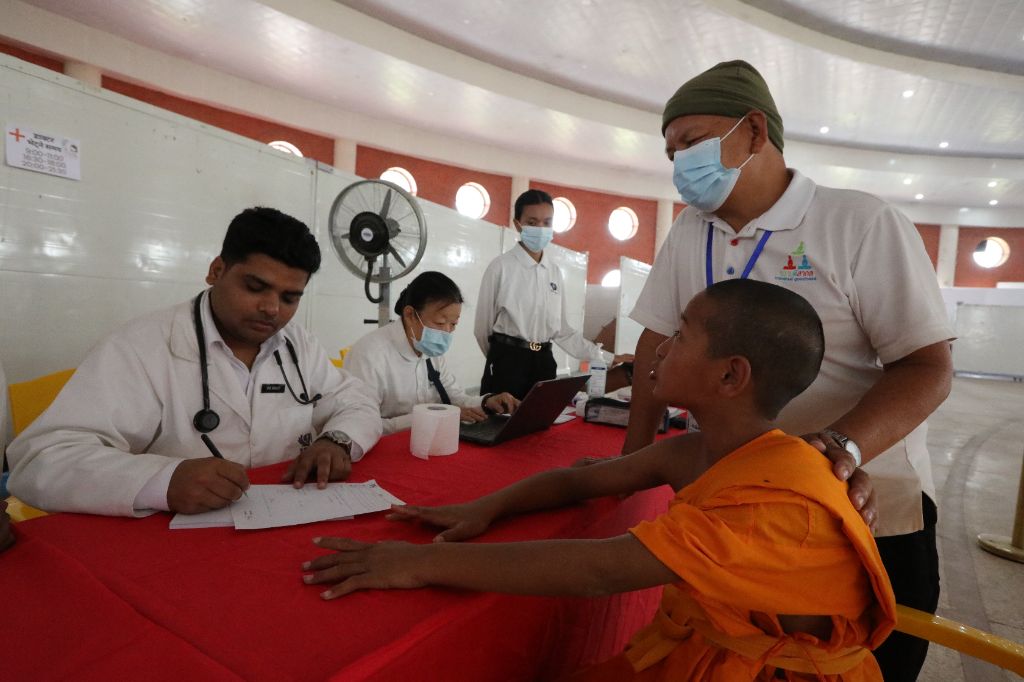
Two and a half millennia ago, the Buddha was born under a Sal tree in Lumbini, Nepal. Today, this sacred land remains a place where stories of compassion continue to unfold. In the spring of 2026, the Lumbini International Conference Hall became a sanctuary for hundreds of individuals arriving from various regions to participate in a short-term monastic program. Within the hall, the steady rhythm of chanting creates an atmosphere of peace, allowing practitioners to settle their minds through meditation.
Silent protectors of the Dharma
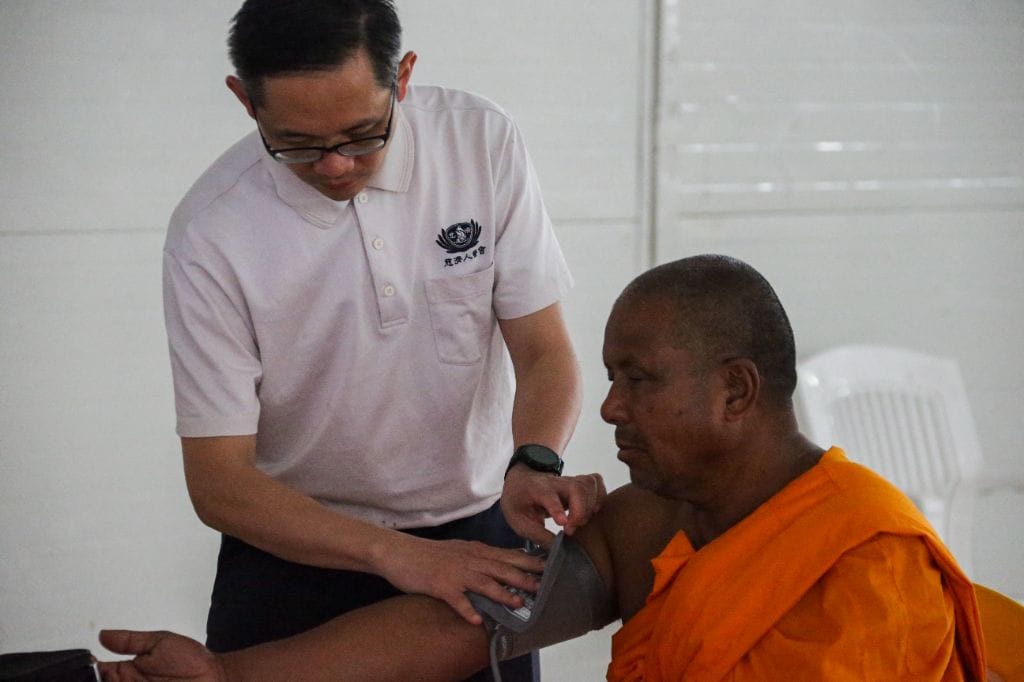
In a quiet corner of this solemn venue, a group of people serves in a different capacity. They are the doctors, nurses, and volunteers of the Tzu Chi International Medical Association (TIMA). On March 23, five medical professionals in white uniforms and three Tzu Chi volunteers from Taiwan arrived at the conference hall. Acting as "invisible guardians," they provide professional medical care and humanistic support, ensuring that the practitioners' spiritual journey is not hindered by physical illness.
The program was initiated by the Royal Thai Monastery in the Lumbini Garden and managed by the local organization Prabhajaya Samajik Nepal (PSN). While the two organizations have collaborated for over a decade, this marks the third year that Tzu Chi has been invited to provide medical support. Previously, medical services were primarily managed by teams from Thailand.

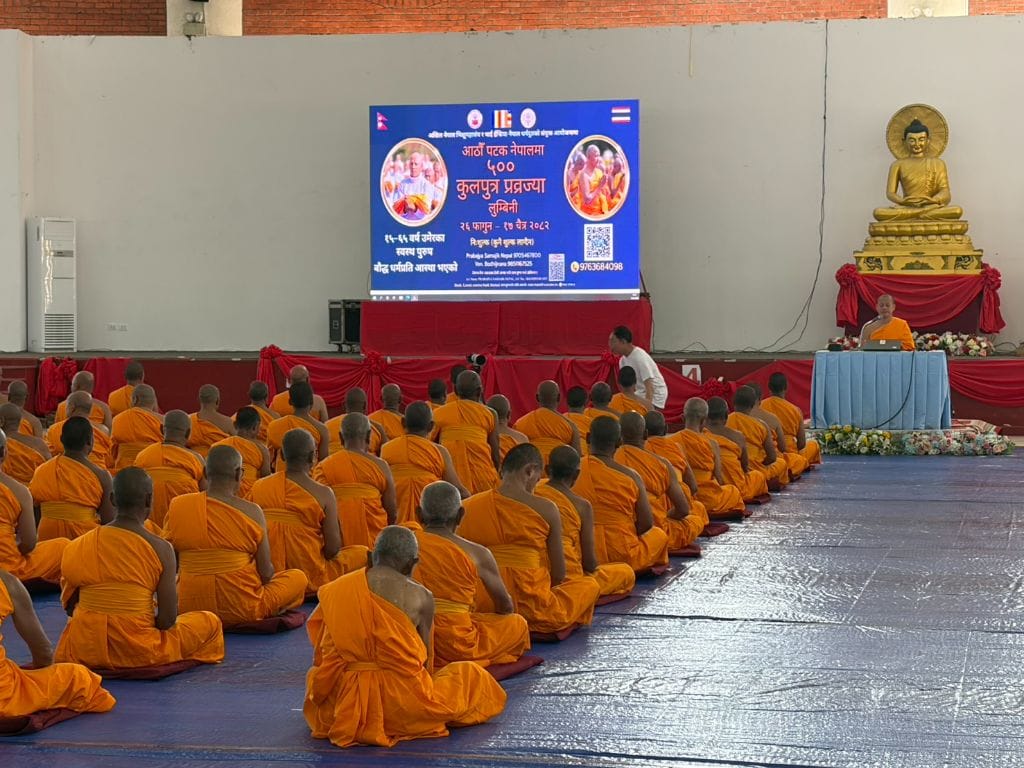
LEFT: Sunita Tuladhar (second right) was the first patient to seek help, reporting dizziness and leg pain. After her blood pressure was checked, she was provided with analgesic ointment. | Photo: Hsin-Yi Cheng RIGHT: Inside the main hall of the Lumbini International Conference Hall, the low, continuous chanting creates a sense of peace for the short-term monastics. | Photo: Shu-Chen Yuan (袁淑珍)
Medical care for the practitioners
The medical team consists of local Nepalese professionals and international volunteers working in harmony. Pharmacist Binod Kirmel, Ankit Srivastav, and nurse Barsha Basel work on the front lines, conducting consultations and dispensing medication. They are supported by seasoned volunteers like nurse Kim Yan Lim (林金燕) from Singapore, who provides gentle companionship, and Dr. Chun Sen Lim (林俊生) from Malaysia, who assists with coordination and patient guidance.
Sunita Tuladhar, the media partnership coordinator for the event, was the first patient of the day. After being treated for dizziness and leg pain, she shared her connection with the foundation.
I first learned about Tzu Chi through Buddhist literature, and later saw their actual work in Lumbini—distributing food and school supplies to those in need. I even had the chance to participate in some distributions in remote areas. I am very grateful and hope to continue serving in the future.— Sunita Tuladhar, Media Coordinator
A dialogue between robes and lab coats
As the morning progressed, Siddharth Gautam sought help for gastrointestinal discomfort. After receiving his medication, he paused to express his respect for the busy team.
Tzu Chi’s contributions are respected not just in Nepal, but worldwide. I am so grateful to the medical team for being here. Lumbini still has many people who truly need help, especially the original residents of the area. I believe Tzu Chi is a sincere organization that truly serves humanity. I hope they continue to work for the happiness of all beings and the welfare of the world.— Siddharth Gautam, Practitioner
For many practitioners, the transition to monastic life and long hours of seated meditation can cause physical strain, leading to fluctuating blood pressure and dizziness. Despite limited pharmacy stock on the first day, the team organized their supplies meticulously to provide the best possible care.

LEFT: Dr. Chun Sen Lim (left) from TIMA Malaysia expresses gratitude for the opportunity to support the monastic community in Lumbini. RIGHT: Nurse Barsha Basel (center) observes that most health issues treated are pre-existing conditions rather than a result of the monastic environment. | Photos: Hsin-Yi Cheng
"Since it is the first day, we are using the medications provided on-site," Ankit Srivastav explained. While he noted that the variety of medicine was not yet comprehensive, he found the experience rewarding. "Being able to treat patients here while learning and gaining experience with the team is a wonderful opportunity."
Improving the patient experience
Kim Yan Lim, who arrived from Singapore to assist, noted that the team treated sixteen patients in two hours. "Most issues involve pain, such as in the legs or back, and a few cases of fever," she said. "It is a privilege to serve here because, for many of them, accessing medical care is not easy."
Local nurse Barsha Basel provided professional insights into the clinic's operations. She observed that most ailments were pre-existing chronic conditions rather than issues caused by the retreat environment itself. She also suggested implementing a simple numbering or queuing system to streamline the flow of patients for future sessions.


LEFT: Priben Shakya (center), a local coordinator, notes that Tzu Chi has been invited to provide medical support for the past three years. RIGHT: "It is an honor to serve here; for many, seeing a doctor is quite difficult," says Singaporean nurse Kim Yan Lim (left). | Photos: Hsin-Yi Cheng
Planting seeds of hope
Dr. Chun Sen Lim emphasized the importance of this "back-end" support. Because the practitioners are focused on intensive training, minor illnesses can become significant distractions.
I feel very joyful and grateful to be part of this. While we sometimes face language barriers and rely on local volunteers for translation, the greatest meaning of our presence is allowing the practitioners to focus on their cultivation with peace of mind.— Chun Sen Lim, Physician
In the birthplace of the Buddha, these medical volunteers are demonstrating that a cultivation ground is not confined to the meditation hall. It exists wherever there is a compassionate heart ready to serve. As the short-term monastics eventually return to their secular lives, they will carry with them not only the teachings they learned but also the memory of the "blue and white" figures who guarded their health with silent, steadfast love.


LEFT: On the first day of service, the team worked with available medications while identifying the need for a wider variety of supplies for specific symptoms. RIGHT: Nepalese pharmacist Binod Kirmel carefully inspects each prescription to ensure the safety of the monastic practitioners. | Photos: Hsin-Yi Cheng
Written by Shu-Chen Yuan (袁淑珍)
