


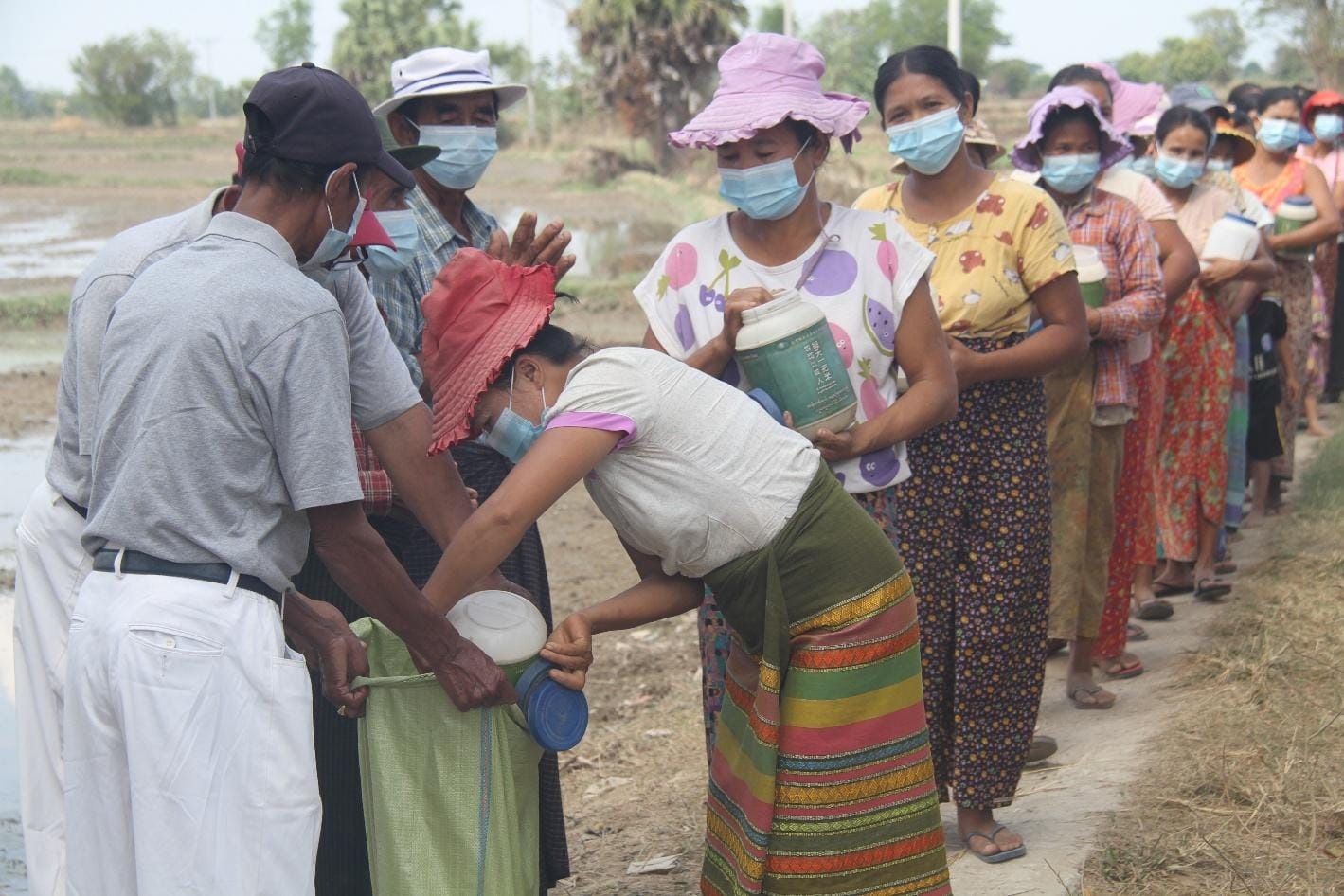
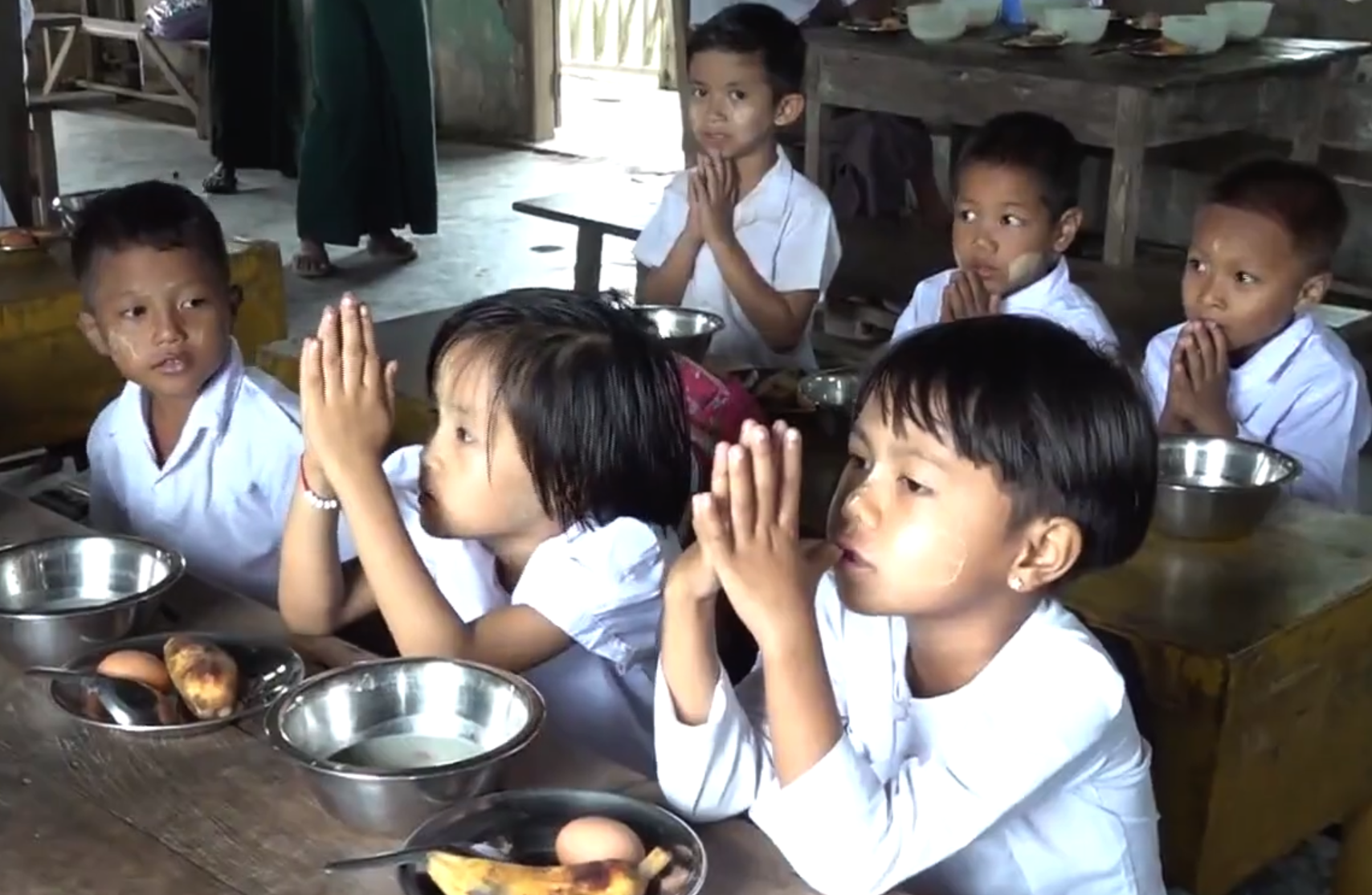
Once a month, villagers of all ages in Shwe Na Gwin, Taikkyi Township, Yangon Region, Myanmar, gather at the local school with a shared purpose. They bring along small portions of white rice, carefully saved from their daily meals before cooking. This rice is poured into a communal pool, which the villagers then take turns preparing. Through this collective effort, students receive hot meals five days a week, supplemented with eggs and bananas for extra nutrition. Beyond the meals, local women use sewing machines to craft school uniforms, ensuring that every child has properly fitting clothes for their education.
Nurturing a community
The origins of this initiative trace back to 2008, in the aftermath of Cyclone Nargis. After receiving rice seeds to help resume farming, local agricultural workers U San Thein and U Thein Tun were inspired to give back. They encouraged their neighbors to save just a handful of rice each day to support those who were struggling in their community. Over the years, the number of people participating has steadily grown, turning this simple act into a cornerstone of local charity.
Eighteen years later, this movement has fostered a deep sense of self-reliance among the residents. The desire to improve their circumstances has even reached unemployed women in the area. They have learned to extract fibers from discarded banana tree stems, which are then dried and woven into everyday household items. This new skill has provided an additional source of income for their families and motivated more people to contribute to the betterment of their hometown.
Our Shwe Na Gwin village used to be muddy everywhere during the rainy season, lacking water, electricity, and medical stations. Although the village is still not wealthy today, everyone has shown their compassion, and we have become happy. — U San Thein, Farmer and Volunteer
Spreading positive change
The tangible improvements in Shwe Na Gwin have not gone unnoticed, and the momentum has begun to ripple outward to neighboring areas. In Yao Thoe village, residents faced significant challenges during the rainy season when local roads turned into thick mud. The conditions were so severe that students had to take the dangerous route of walking on railway tracks to get to school, and anyone needing urgent medical care had to be carried out of the village.
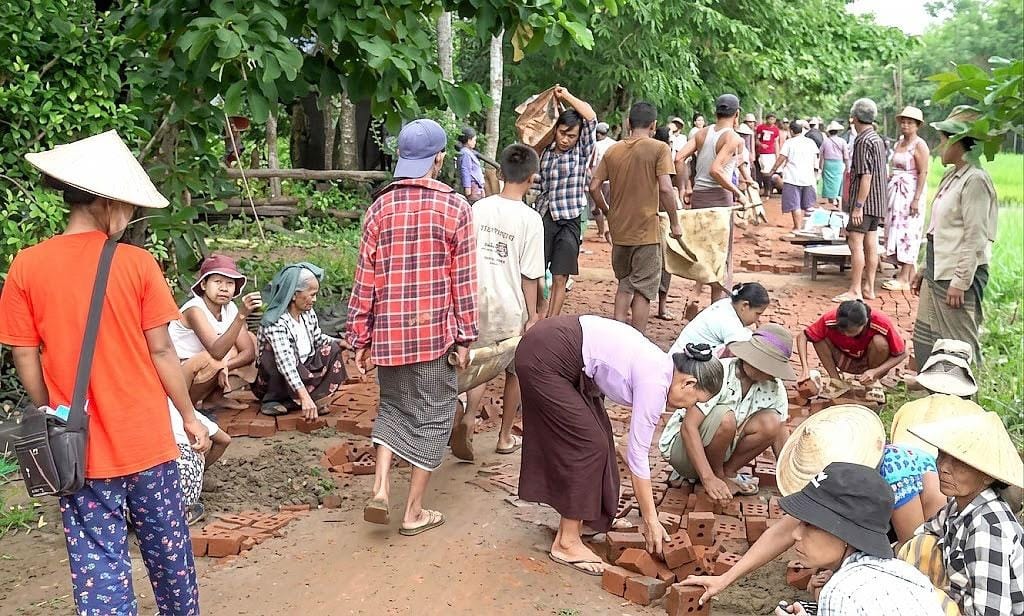
Determined to change their environment, more than 200 residents in Yao Thoe village organized a community project. Using ox carts to transport heavy loads of bricks and cement, they worked side by side to pave a new path, creating what is now recognized as the fifth Tzu Chi road in Myanmar.
From the simple daily habit of saving rice to the heavy labor of paving community roads, these villagers are actively shaping their own futures. The transformation of one rural town has become the spark for action in another, proving that small, consistent efforts can pave the way for lasting change.
Written by Chi-Chuan Hsieh (謝啟泉), Kuo-Wei Yu (余國維)
Edited by Yu-Chen Pan (潘俞臻)
