


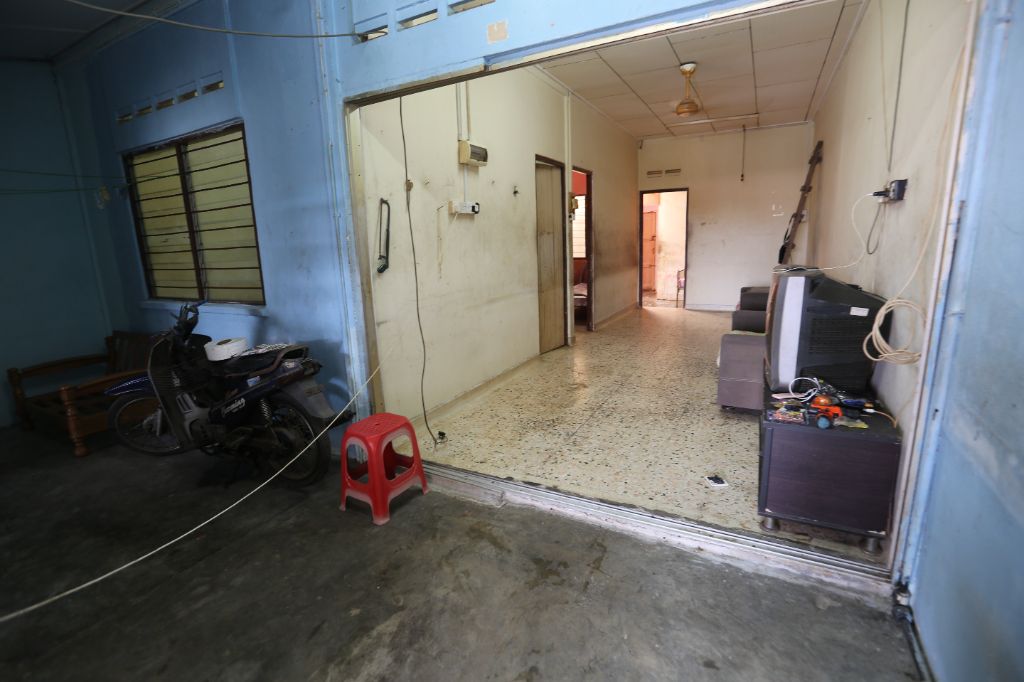
From the outside, the low-cost terraced house in Melaka, Malaysia, looked perfectly ordinary. However, stepping closer to the front door revealed a different reality. A thick odor of urine mixed with the stale scent of hoarded fabrics served as a stark warning, forcing visitors to pause before entering.
For 71-year-old Cao Jin (曹金), this chaotic space was more than a house; it was a fortress built from scavenged goods to protect his fragile world.
A fortress of survival
Cao spent his days resting on a blackened, heavily worn mattress tucked into a small space near the front door. The iron bed was surrounded by hanging old clothes, discarded electric fans, and sofa cushions. He viewed every scavenged item as a treasure—a tangible guard against the uncertainties of poverty.
When thirteen community volunteers arrived on March 8, 2026, to conduct a major cleanup, Cao was immediately defensive. Wearing sunglasses to protect his eyes after a recent cataract surgery, he closely monitored their every move.
These are my clothes, you can't touch them! — Cao Jin, Resident
For young volunteers like Jianrong Lin (林見榮) and Junyang Ye (葉俊揚), the environment was shocking. Lin admitted he had to steel himself to enter such a cluttered space in an urban area, while Ye noted that the overwhelming smell made him anxious until he put on gloves and a mask.
Beneath Cao’s fierce protectiveness was a lonely father carrying a heavy burden. His household included two sons requiring constant care. His youngest son, Cao Qingfu (曹清福), nicknamed Ah-Fu, struggled with bipolar disorder. His older brother, Cao Qingwang (曹清旺), known as Ah-Wang, had an intellectual disability and often wandered off, forcing Cao to sometimes chain his leg to the bed for safety when left unsupervised.
Reconnecting fractured ties
The journey to clear Cao's home began long before the brooms were brought out. In 2017, a plea from behind bars initiated the first outside contact. Cao's eldest son, Ah-Gui (alias), who was serving a life sentence, worried about his aging father and his two half-brothers. He asked a Buddhist friend to reach out for help.
Initially, Cao was terrified of strangers, even threatening the first visitors with a container of urine. Over time, volunteer Kok Eng Goh (吳儀榮) slowly built trust with the family.
Wu helped them apply for welfare benefits, arranged medical checkups, and encouraged Cao to quit drinking and smoking. Gradually, Wu guided the elderly father to relax his tight control over his sons and encouraged him to save spare change in a donation box, shifting his mindset from survival to creating a positive impact.


LEFT: Volunteer Kok Eng Goh (left) consistently seeks ways to help the family overcome their hardships. RIGHT: Volunteers wash the accumulated dishes outdoors. | Photos: Siew Lian Low
A significant turning point emerged when Malaysia abolished the mandatory death penalty in 2023. This judicial reform meant Ah-Gui's case could be reviewed, giving him a chance to be released in eight years. Furthermore, Wu successfully tracked down a long-lost daughter from Cao's first marriage, encouraging her to visit her father annually from Johor Bahru.
Cao Jin has a house, but it lacks the feeling of a home. He looks forward to his children returning, but feels too guilty about abandoning his family in his early years to speak up. We hope to serve as a bridge to bring his children back, create a sense of home, and give him the confidence and motivation to live on. — Yirong Wu, Volunteer
Clearing space for a new chapter
As Cao's health declined with age, he lost strength in his legs, leaving Ah-Fu to handle the cooking. The persistent habit of hoarding, combined with poor ventilation, had created a toxic environment.


LEFT: Volunteers guide Cao's sons in cleaning the bathroom with a high-pressure water gun. RIGHT: Youth volunteer Junyang Ye participates in his first cleanup. | Photos: Siew Lian Low
During the cleanup, the physical clearing of the house mirrored the unburdening of Cao's life. The team divided tasks: scrubbing the blackened bathroom, organizing the kitchen, and removing expired food donated long ago by well-meaning individuals. Wu used a high-pressure water gun to blast away years of grime.
In the bedrooms, volunteers discovered that termites had completely destroyed piles of old clothes stored in basins.
Hey! You cannot take this away! What will we do if you throw everything away?— Cao Jin, Resident
Volunteers patiently reassured him, explaining that they were simply removing the ruined items to replace them with clean clothing and a brand-new mattress waiting outside.


LEFT: Termites had destroyed the old clothes stored in basins. RIGHT: A trailer filled with trash from the half-day cleanup. | Photos: Siew Lian Low
By the afternoon, the suffocating environment was transformed. Cao immediately took a seat on his new mattress, his actions speaking louder than words. Embracing a fresh start, he even requested to have his head shaved during a grooming session provided by the team. His sons absorbed the lighter atmosphere; Ah-Wang happily served snacks to the volunteers, and Ah-Fu politely expressed his gratitude for the clean home.
The freshly scrubbed house is no longer just a shelter for a scavenger and his scraps. For Cao, the overwhelming clutter of the past has finally made way for a dignified present, giving him the environment and the hope he needs as he waits for his family to reunite.
Written by Siew Lian Low (羅秀蓮)
