


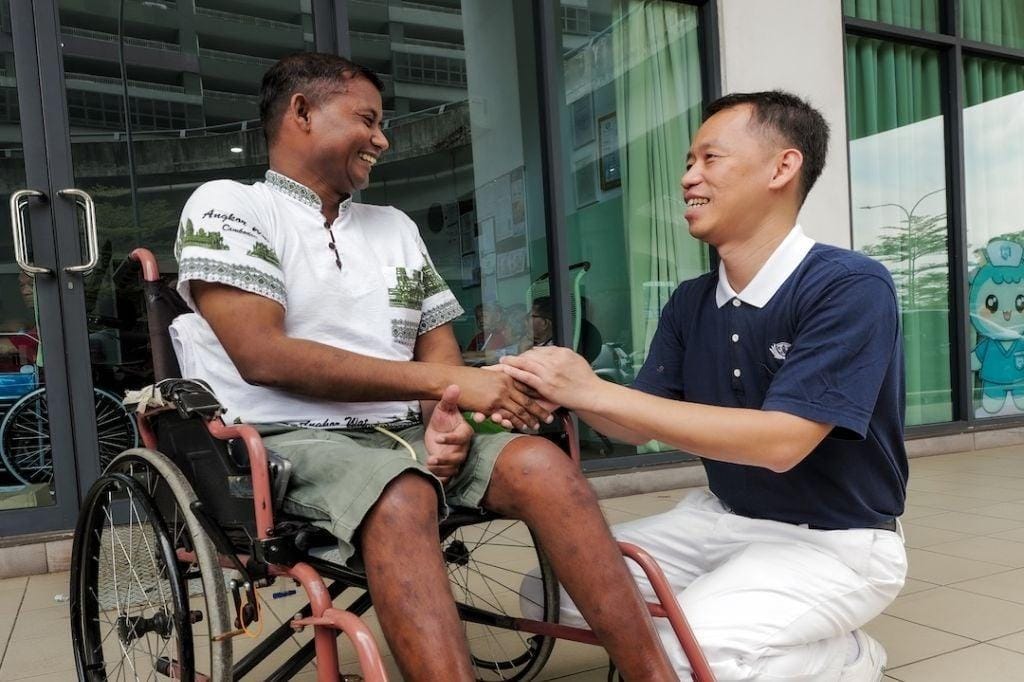
On the morning of April 12, 2026, bright sunlight poured through the floor-to-ceiling windows of the Minty Green Nursing Home in Kajang, Malaysia. The light landed gently on a wheelchair where Aman Shah Bin Abdul Malik sat waiting. Though the space was small, it held six years of his life’s memories. As soon as volunteers walked through the door, a long-absent smile lit up his face, radiating both anticipation and pure joy.
In just two days, Aman Shah would leave the nursing home. This time, it was not for a hospital transfer or a medical follow-up. He was moving to Canada to reunite with his family, whom he had not seen in fourteen years. Before embarking on this life-changing journey, he had only one simple wish: to say goodbye to the people who had stood by his side during his darkest days.
Fleeing conflict for survival
Originally from Myanmar, Aman Shah is a Rohingya refugee. In 2014, at just eighteen years old, he was forced to flee his homeland. It was not a choice but a necessity for survival as conflict spread, villages were destroyed, and his own home was reduced to ashes. Seeking safety, he spent eighteen perilous days drifting at sea, traveling from Myanmar through Thailand before finally reaching Malaysia.
He was young and driven by a singular goal: to survive and support his family, who were living in a refugee camp in Bangladesh. With no concrete plans for the future, he took on heavy manual labor, moving mineral water and carrying heavy loads for six years. It was grueling work, but it allowed him to keep moving forward.
However, a tragic motorcycle accident in 2019 brought his life to a devastating halt. Falling from the back of the motorcycle, he sustained a severe T12 spinal cord injury. Doctors delivered the harsh reality that the nerve damage was permanent. He would never walk again. Confined to a bed and lacking proper medical knowledge or resources, he developed massive, infected bedsores.
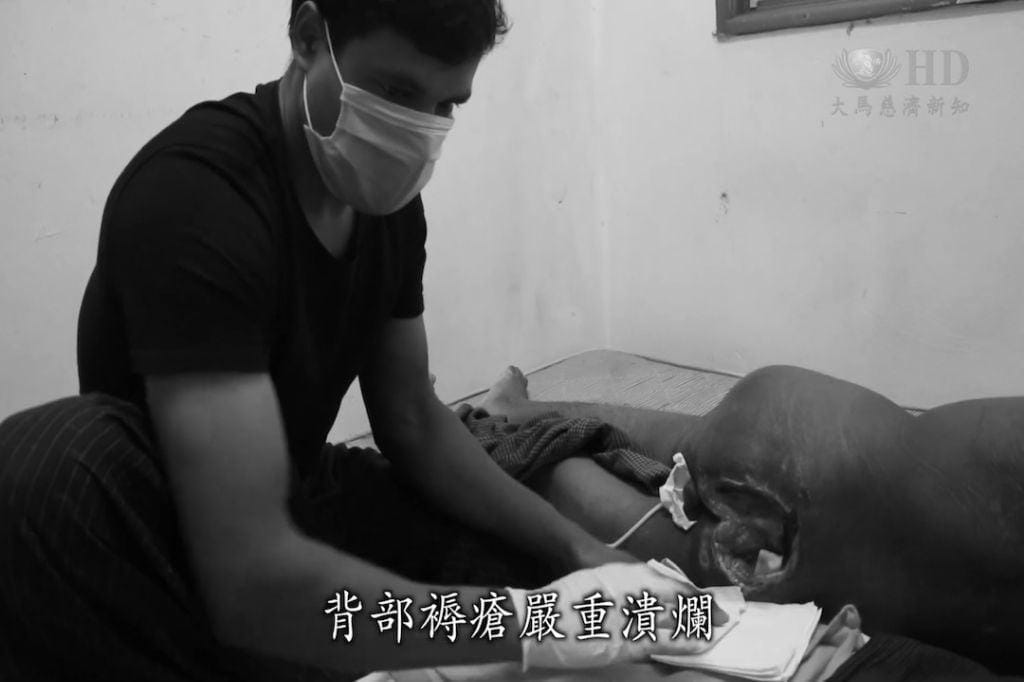
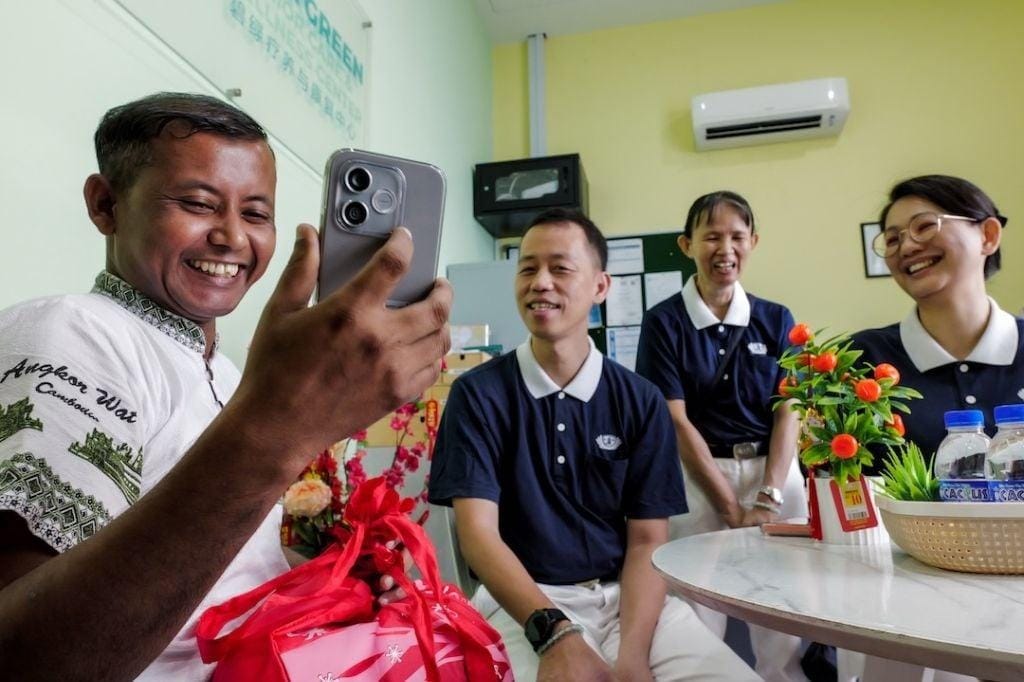
LEFT: A 2019 accident left Aman Shah completely paralyzed and battling severe wounds. | Photo: Da Ai TV RIGHT: He shares a bright smile during a video call with his family in Canada. | Photo: Joo Leang Lim
My house was completely burned down. The hardest part was not being able to walk and being unable to manage my bodily functions. I cried every day, and my family cried every day too.— Aman Shah Bin Abdul Malik, Care recipient
Healing visible and invisible wounds
During the early stages of his injury, Aman Shah stayed with a friend. His cousin tried to clean his wounds, but without proper gauze or medical training, the infections worsened. The pain and helplessness were overwhelming. Because of his severe immobility, he went seven months without a proper shower.
When Tzu Chi volunteers first met him, they immediately stepped in to help. They gently bathed him, helping to restore a sense of basic human dignity that had been stripped away by his circumstances. Volunteer Tit-Siang Tio (張得祥) recalled that their immediate priority was simply keeping him alive and comfortable.
Our initial focus was on healing his wounds and stabilizing his basic living conditions. We were stuck at one point, not knowing how to help him. It wasn't me helping him, but him teaching me how to help others.—Tit-Siang Tio, Tzu Chi volunteer
Once his wounds began to heal and his condition stabilized enough for him to sit in a wheelchair, Tio started looking into long-term solutions. While Aman Shah deeply wished to return to his family in Bangladesh, his severe physical limitations made the journey nearly impossible. Instead, Tio collaborated with the United Nations High Commissioner for Refugees (UNHCR) to pursue an alternative: third-country resettlement for the entire family. After compiling extensive documentation and persistently tracking the application, they received life-changing news in 2023. The entire family had been approved for resettlement in Canada.
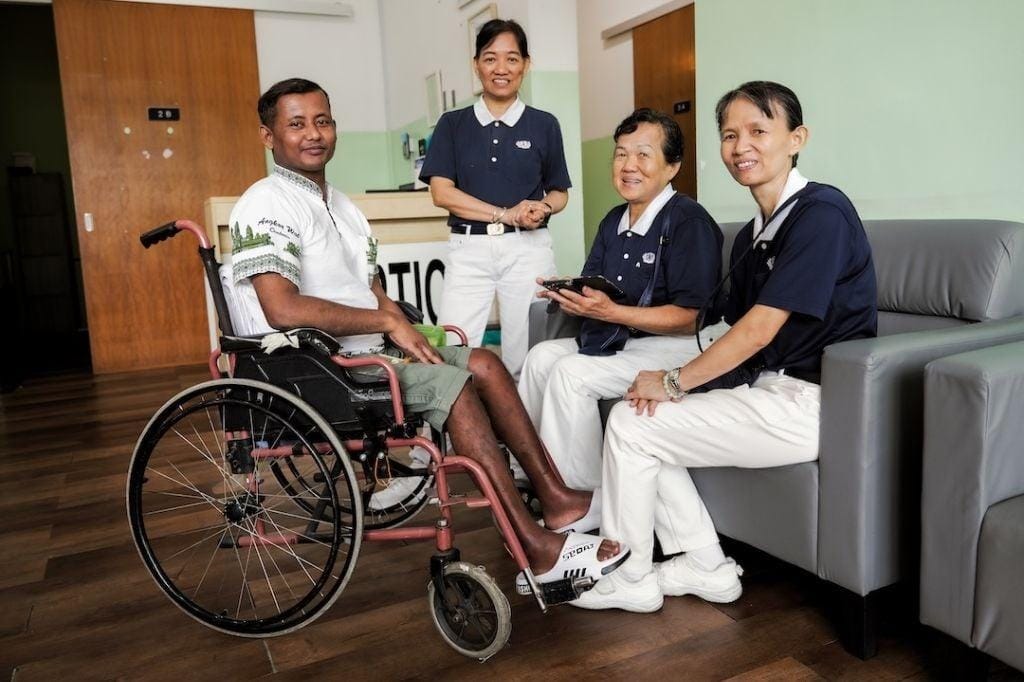
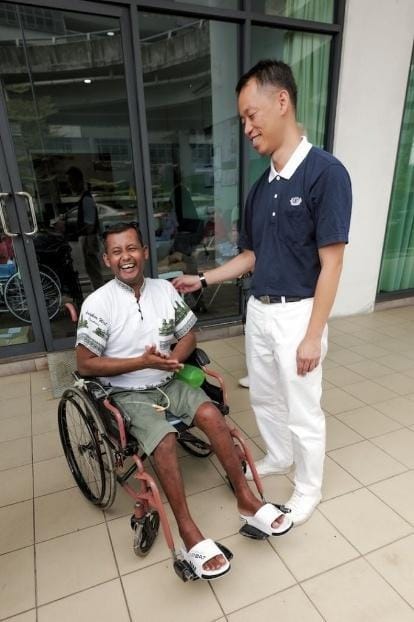
LEFT: Aman Shah eagerly waits in his wheelchair as volunteers arrive at the nursing home. RIGHT: Tio (right) reflects on their meaningful journey together. | Photos: Joo Leang Lim
A bittersweet farewell
Aman Shah’s family traveled to Canada in 2025, and his own departure was scheduled for April 14, 2026. Two days before his flight, he made sure to express his gratitude. Dressed neatly and sitting tall in his wheelchair, he held Tio's hands tightly. Through a video call, volunteers were introduced to his family across the globe.
Another volunteer, Sai Yeng Yong (楊世英), was also a central figure in his recovery. Over their six years together, she consistently brought him daily necessities and medication. Their bond grew so deep that he began calling her "Mom." Hearing this affectionate title, Yong’s eyes welled with tears, and Aman Shah covered his face as he wept.
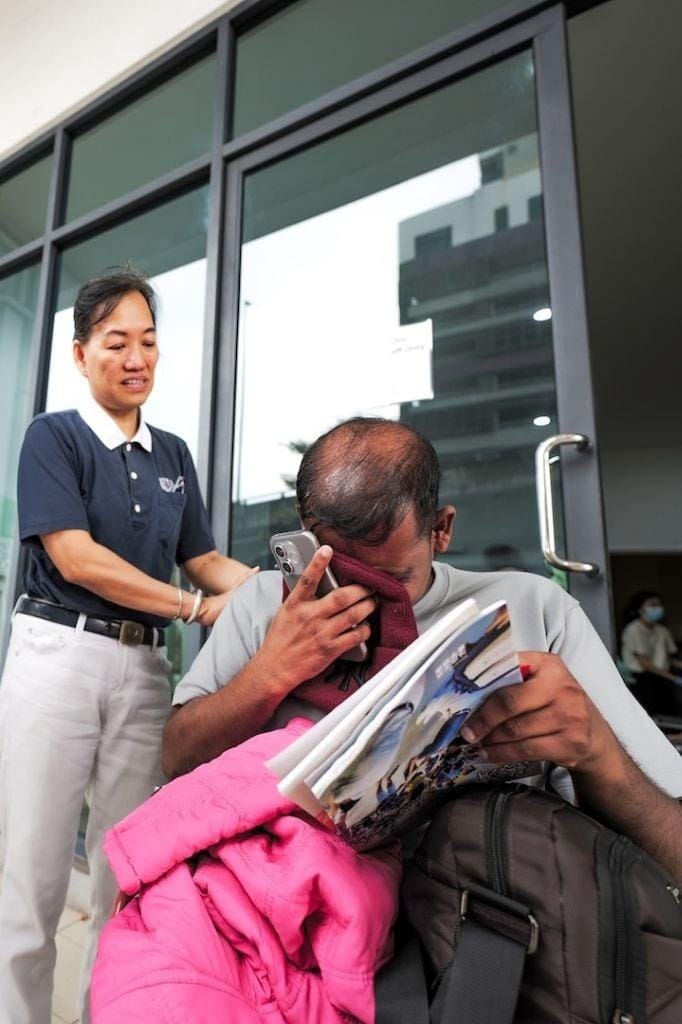
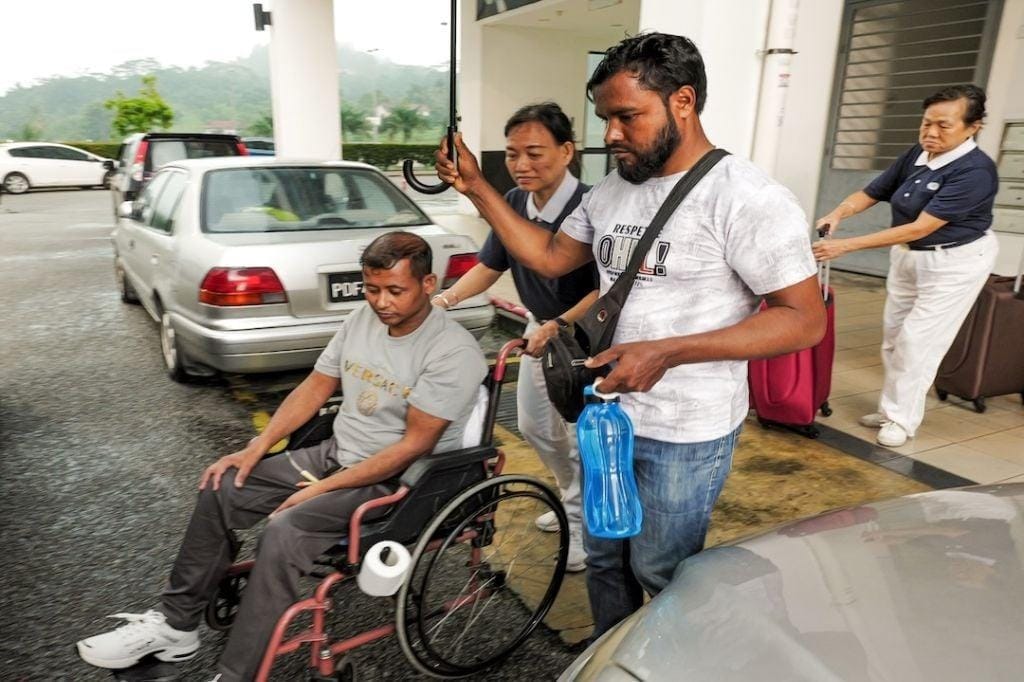
LEFT: Aman Shah gets emotional thanking Yong (right), whom he affectionately calls Mom. RIGHT: A quiet farewell as Aman Shah prepares to leave for Canada. | Photos: Joo Leang Lim
Seeing him finally able to meet his family makes me very happy. When those who suffer cannot come to us, those who are blessed must go to them. If it's the right thing to do, just do it. —Sai Yeng Yong, Tzu Chi volunteer
Outside the nursing home, a sudden heavy rain began to fall. As volunteers wheeled Aman Shah toward the transport vehicle, the downpour softened into a gentle drizzle, as if pausing to honor the emotional farewell. He was traveling far away, but he carried with him the memories of those who helped him when he could not walk on his own. As the doors of the nursing home closed behind him, a new door to his life finally opened.
Written by Siew Yen Kong (江欣燕)
