


In the gentle morning sunlight of early May, the Student Organization Center at Hilles at Harvard University welcomed over 50 scholars and practitioners from seven countries. They gathered in Cambridge, Massachusetts, to explore how historical wisdom can translate into practical, compassionate action for those facing illness, disaster, and displacement in the modern world.
The forum, titled "Applied Buddhism and the Contemporary Bodhisattva Path: Exploring the Future of Buddhism," moved beyond theoretical discourse. It centered on how philosophy can directly address the urgent needs of individuals across the globe.
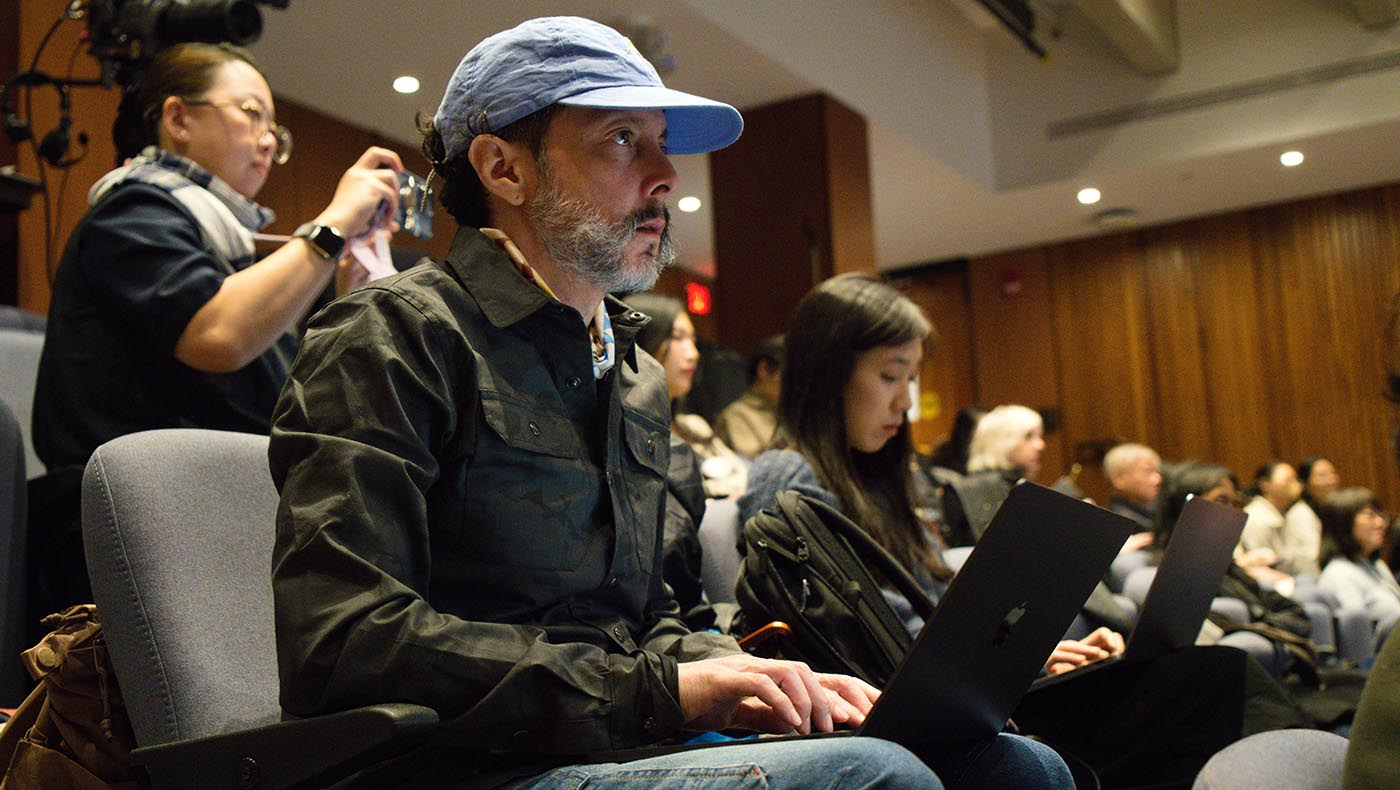

Attendees from multiple countries listen attentively to research presented across various fields at the forum. | Photo: Héctor Muniente
Echoes of healing from the past
The world in 2026 continues to face complex challenges—from families displaced by conflicts in the Gaza Strip and Sudan to communities devastated by extreme weather events. While ancient texts may not seem like an immediate solution, historians at the forum revealed how communities centuries ago developed profound systems of care for the vulnerable.
During his presentation, Professor Stephen F. Teiser from Princeton University shared insights from liturgical handbooks discovered in the Dunhuang caves. These ancient texts guided local practitioners in comforting people suffering from epidemics, providing a spiritual anchor when medical resources were scarce.
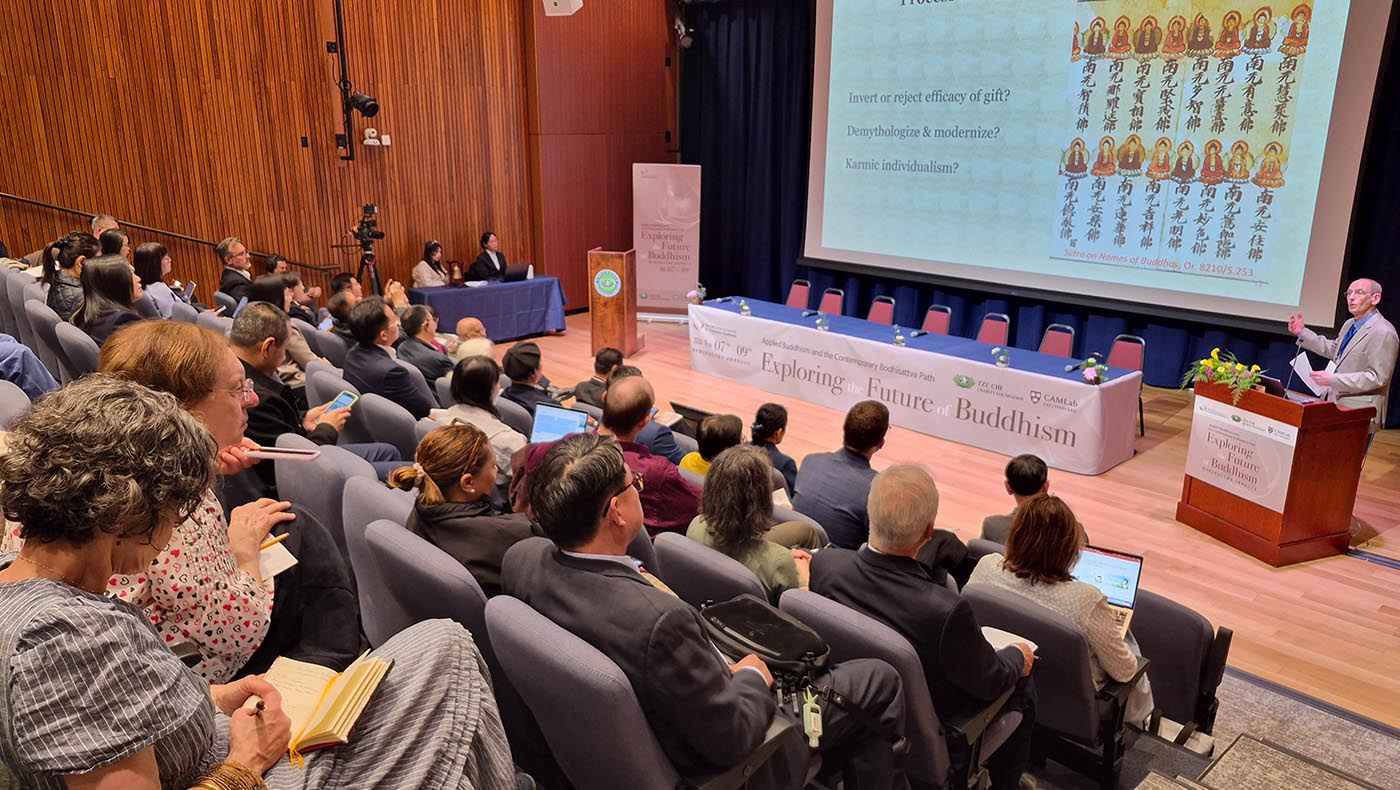

LEFT: Professor Stephen F. Teiser from Princeton University delivers a keynote speech on the first day of the conference. | Photo: Wendy Tsai (蔡蕙菁) RIGHT: A presentation slide by Professor Teiser discusses the Medicine Buddha and ancient medical practices. | Photo: Stephen F. Teiser
Professor James Robson, Director of the Harvard-Yenching Institute, discussed Iwakura, an isolated village in northern Kyoto, Japan. Since the ninth century, the community surrounding the local temple has been known for its holistic care for individuals with mental illness. Patients were not locked away; instead, they were welcomed into local homes, treated without physical punishment, and allowed to move freely and participate in simple community tasks. This compassionate, human-centered approach lasted for centuries until modern practices took over.
In the 19th and 20th centuries, with changes in medical and political policies, psychiatric hospitals were established near the temples that originally housed mental health patients. The patients were subsequently forcibly confined in the new, modern hospitals — James Robson, Director of the Harvard-Yenching Institute
Compassion in action
While historical structures of care have evolved, the responsibility to alleviate suffering remains. Wei-Shan Huang (黃維珊), a scholar presenting at the forum, highlighted how empathy continues to drive tangible innovation today. She recounted a moment following a severe flood, where a blind mother was found sitting on the damp ground, unable to locate her child. This single, heartbreaking image of a mother in distress became the catalyst for action, prompting the creation of the Jing Si Multi-Purpose Foldable Bed—a design ensuring that disaster survivors would no longer have to sleep on cold, wet earth.
Similarly, Professor Julia Huang (黃芊妤) presented research on the families of body donors. For those who donate their bodies to medical science, the process is often surrounded by deep grief. Her research noted that the structured, respectful ceremonies surrounding these donations provide families with a vital space to express their sorrow and find solace, transforming a painful loss into a deeply meaningful contribution to society.

This practical application of compassion was further summarized by Dr. Rey-Sheng Her (何日生), Deputy CEO of the Tzu Chi Charity Foundation.
We do not return to the secular world to save sentient beings only after attaining Buddhahood; rather, it is in the process of saving sentient beings that we ultimately attain Buddhahood. — Rey-Sheng Her, Deputy CEO of Tzu Chi Charity Foundation
Reaching the hardest-hit communities
When theory steps out of the classroom, it must meet people where they are hurting the most. Debbie Lee (李瓊薰), CEO of Tzu Chi USA, shared her firsthand experience responding to the January 2025 Southern California wildfires. Her account brought the focus back to the families who watched their neighborhoods burn.
Our team entered the disaster area to conduct on-site assessments, standing on scorched earth where everything around us was black, and entire communities had vanished. At that moment, I recalled Master Cheng Yen's words: 'Step lightly, lest the earth feels pain.' These words felt exceptionally heavy and real at that moment. Many families lost everything: their homes, possessions, and most importantly, their sense of security. Sometimes compassion arrives faster than any administrative system.— Debbie Lee, CEO of Tzu Chi USA
The approach described by Lee ensures that families receive immediate emergency funds to buy necessities, followed by long-term emotional and rebuilding support.
Beyond immediate disaster relief, the forum also addressed the slow-moving crisis of climate change. Yining Liu (劉怡寧) from the Dharma Drum Institute of Liberal Arts detailed how grassroots recycling efforts have expanded to the United Nations, elevating the voices of local environmental defenders to advocate for policies that protect vulnerable communities globally.
Designing a harmonious future
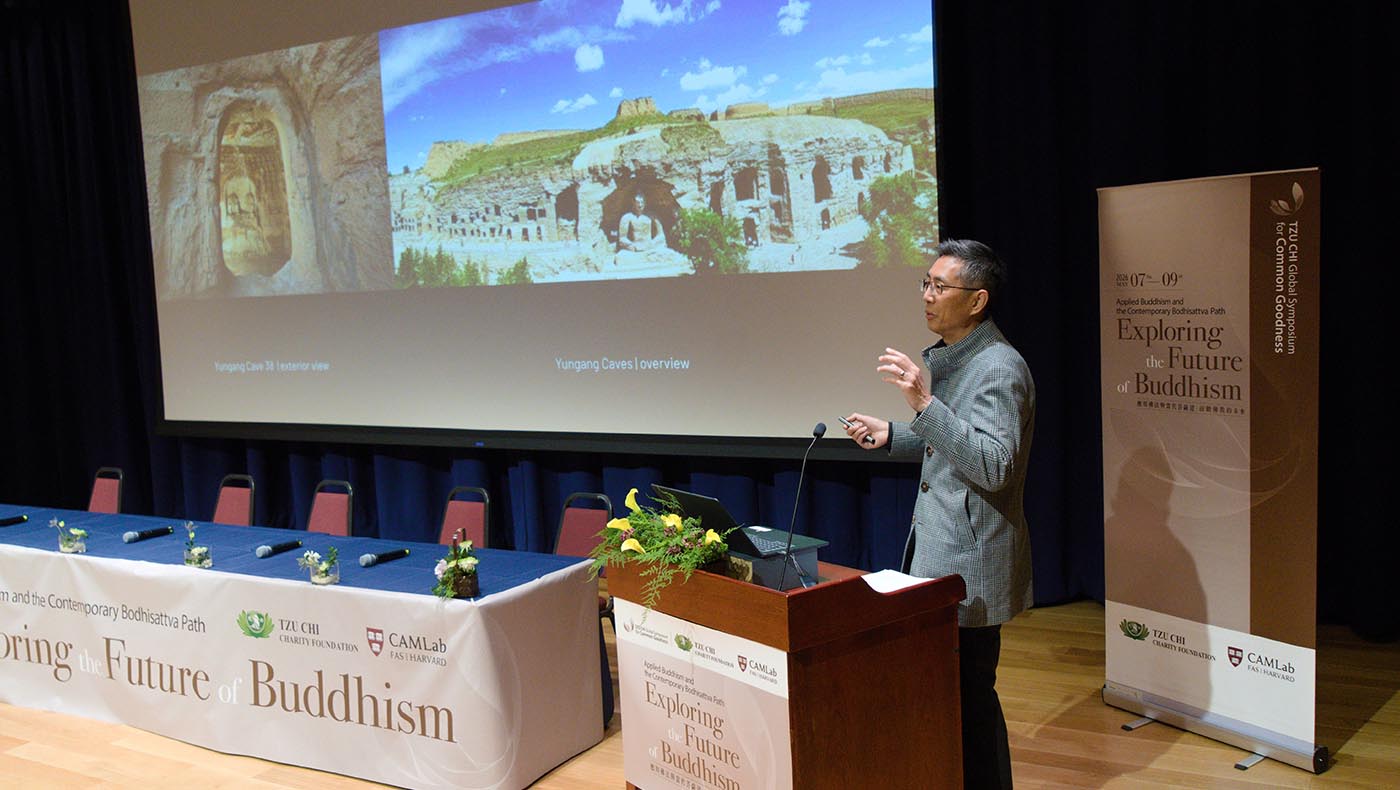
Looking forward, Professor Eugene Y. Wang (汪悅進), the founding director of Harvard FAS CAMLab, discussed the winning architectural design for the Shenzhen Natural History Museum. The design, titled "The Big Wave," did not attempt to dominate the landscape. Instead, it mimicked the natural erosion and deposition of the nearby river.
They abandoned the idea of replicating a natural object, choosing instead to replicate the process of nature. The entire building... is like a massive, meandering wave, undulating with the terrain. What the Shenzhen Natural History Museum demonstrates is another path, a profound humility—acknowledging that four billion years of natural evolution hold more elegant structural solutions than our inventions starting from scratch. — Eugene Y. Wang, Director of Harvard FAS CAMLab


LEFT: Professor James Auger discusses architecture that coexists with nature, shifting away from resource exploitation. | Photo: Chien-Chih Lin RIGHT: Professor Monique Mead shares musical pathways to a meditative state and enlightenment during the May 9 session. | Photos: Chin-Chih Lin (林建志)
As the three-day forum concluded, the shared sentiment was clear: whether through ancient healing prayers, compassionate community care for mental health, or rapid response to modern wildfires, the core focus remains on uplifting the human spirit. Lina Verchery from the Victoria University of Wellington reflected that understanding the empathy of the past is essential for building a more meaningful future for everyone.
The forum underscored that true wisdom is measured by its capacity to heal and support those in need.
There are many people in suffering, and many who want to help, but do not know how. By becoming Tzu Chi volunteers, we will have the strength to lend a helping hand. This is how we can bring together kind-hearted people and help more people in need. This is the strength we can build. — Master Cheng Yen, Founder of Tzu Chi
Written by Xiaoke Song (宋小可)
