


From February 24 to 27, 2026, representatives from the Tzu Chi Foundation participated in the Asia-Pacific Forum on Sustainable Development (APFSD) at the United Nations Conference Centre in Bangkok. This marks the sixth consecutive year of participation for the organization. Nineteen representatives from Taiwan, Malaysia, Singapore, the Philippines, and Thailand gathered to exchange practical experiences and strengthen sustainable actions on an international stage. The delegation showcased how civil society can drive sustainability through compassion and practical innovation.
Designing for human dignity
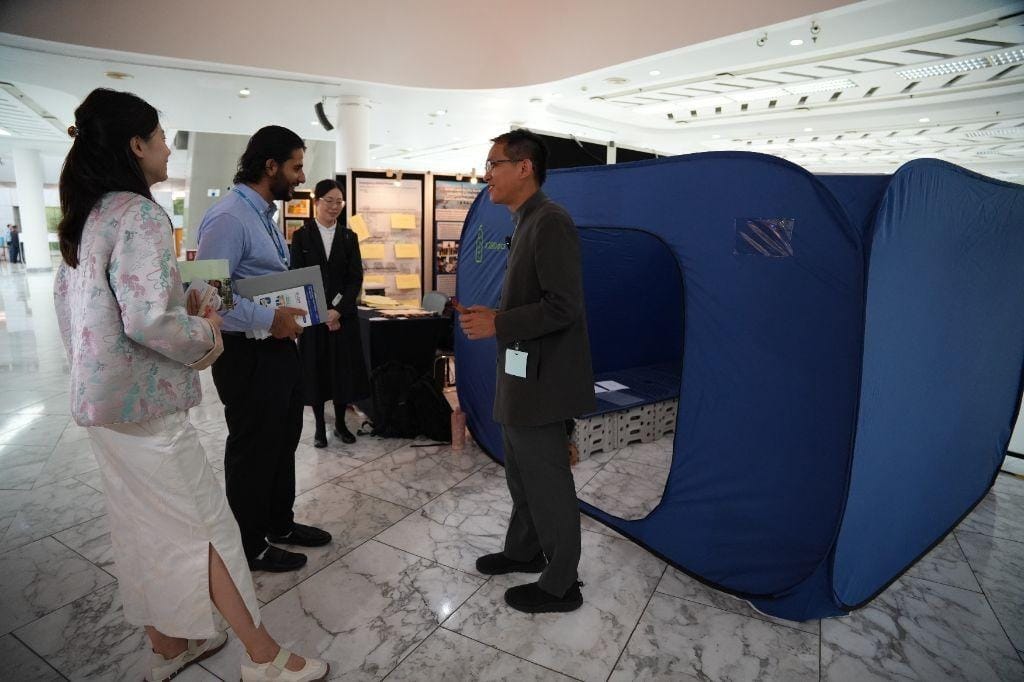
The forum focused on several United Nations Sustainable Development Goals (SDGs), including clean water and sanitation, affordable energy, industry innovation, sustainable cities, and partnerships. In the exhibition area, a foldable partition tent caught the attention of many attendees. Made from 280 recycled plastic bottles, the partition tent—along with eco-friendly tables, chairs, and beds—demonstrated a commitment to circular economy principles. These items are fire-resistant and designed specifically for disaster relief.
Sean Tan shared the philosophy behind these innovations with forum participants. He noted that in the past, disaster shelters often lacked basic privacy. Hundreds of survivors would be crowded into a single space, making it difficult for women to change clothes or breastfeed.
"We realized that beyond saving lives, we must also protect human dignity," Sean explained. Tzu Chi’s model extends from immediate emergency aid to long-term relocation and vocational training, emphasizing the importance of personal reconstruction and self-reliance.
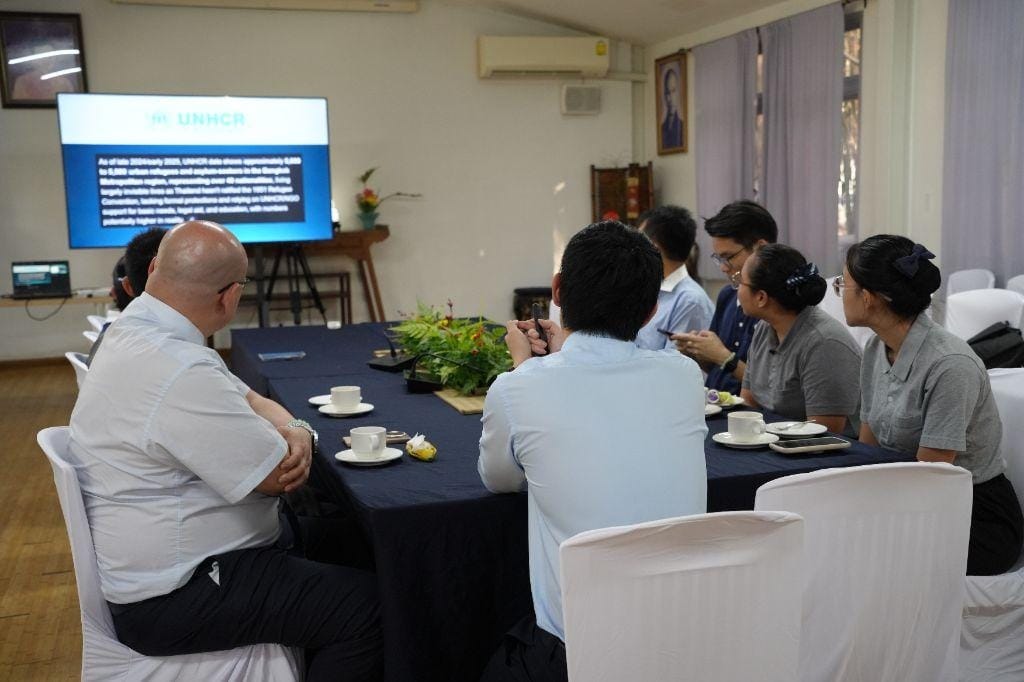
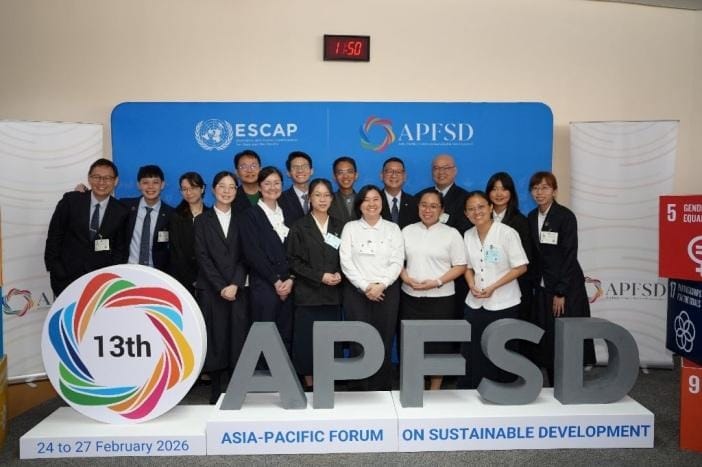
LEFT: Volunteers from four countries gather at the Tzu Chi Thailand office before the forum. RIGHT: Nineteen representatives attended the UN forum in Bangkok. | Photos: Pinticha Jansuksri
The power of storytelling
A significant highlight of the forum was the "SDG Story Exchange," co-hosted with the Global Shapers Community. The event utilized a "Living Books" format, where six adults and five youth representatives served as "books" to share their experiences related to different SDGs.
Huey-Yi Lee (李威儀), a youth representative from the CEO's office, explained that many international meetings are often one-way presentations. This activity was designed to be highly interactive, allowing for deep dialogue at thematic roundtables.


LEFT: Huey-Yi Lee, a youth representative, delivers a welcome speech. RIGHT: Choon-Choon Lin (林杏純) shares her insights during the fireside chat. | Photos: Pinticha Jansuksri
Amornthep Sachamuneewongse, a representative from a Thai technology social enterprise, found the format valuable. He observed that in an age where attention is currency, people often feel pressured to pitch themselves quickly.
I think that if we can create more spaces for exchange, it will attract more people who are interested in creating change to participate. Here, each speaker has twenty minutes to be heard—to explain their challenges, their products, and their proposed solutions.
—Amornthep Sachamuneewongse, Tech Social Enterprise Representative
Empowering communities for the future
During the exchange, Anton Mari Lim (楊偉順), Deputy CEO of Tzu Chi Philippines, shared the journey of community recovery following Super Typhoon Haiyan (Yolanda) in 2013. He emphasized that while emergency relief is vital, the ultimate goal should be strengthening the community's own capacity to handle future challenges.
Relief is about saving lives, but we should also promote disaster prevention and reduction to strengthen community resilience. By bringing grassroots voices into policy and establishing international partnerships, we can protect more lives and build a more stable future.
— Anton Mari Lim, Deputy CEO of Tzu Chi Philippines
The forum also highlighted the impact of education. Cherrie Ang (洪茜莉), once a scholarship recipient in the Philippines, shared her story of moving from a recipient to a contributor. Having completed her education with Tzu Chi's support, she now serves as a staff member in the Philippine branch. Her journey from a life of uncertainty to one of service served as a testament to how education can transform a life.


LEFT: Cherrie Ang shares how educational support helped transform her life. | Photo: Budsara Sombut. RIGHT: Ruoxi Yu discusses how she engaged her community in recycling. | Photo: Pinticha Jansuksri
Youth volunteer Ruoxi Yu (余若晞) from Singapore also participated in the dialogue. She shared her experience of organizing an event that attracted 700 people in a single day, successfully preventing seven kilograms of textiles from entering landfills. For Ruoxi, the most moving part was not the numbers, but seeing young people realize that "sustainability can be cool."
As a young person, it’s not easy to walk into high-level meetings and understand the discussions. In a space like this, we can put aside technical jargon and ask from our hearts: Who are we? What do we care about? What can we do? And how can we shape the future together?
— Ruoxi Yu, Youth Volunteer
Through compassionate technology and sincere dialogue, the representatives at the forum demonstrated that sustainability is not just a slogan. It is found in the footprints of those who serve others and in the shared commitment to building a more resilient world.

Written by Budsara Sombut (桑瑞蓮)
