


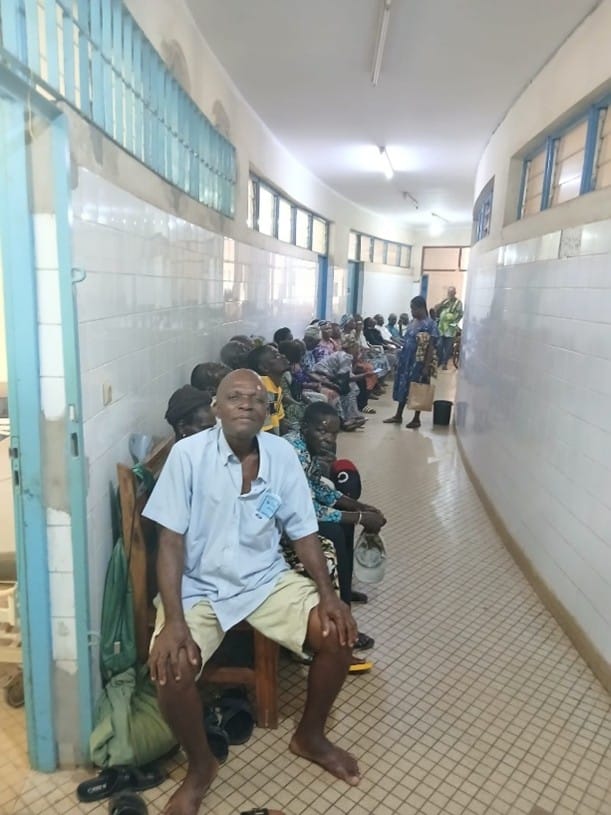
The Alliance to Fight Avoidable Blindness, a project funded by Tzu Chi, has expanded its reach to the Republic of Chad and the Togolese Republic, bringing critical eye care services to communities in need. With this expansion, the two African nations become the 138th and 139th countries to receive assistance through Tzu Chi’s global humanitarian efforts.
A collaborative vision for Africa
The Alliance to Fight Avoidable Blindness is a two-year charitable initiative funded by the Tzu Chi Foundation and implemented by Tzu Chi USA in partnership with the Islamic Development Bank (IsDB). Formalized on April 11, 2023, the collaboration aims to donate cataract surgery equipment and mobile clinics to several African countries. Through preventive services and treatment for eye diseases, the project seeks to reduce avoidable blindness among underserved populations and improve quality of life.
The first phase of the project, carried out between July and December 2023, provided nineteen sets of cataract surgery equipment to six countries: Burkina Faso, the Republic of Guinea, the Republic of Djibouti, Mozambique, the Republic of Mali, and the Federal Republic of Somalia. During implementation, unforeseen circumstances arose. A political coup in the Republic of Niger—one of the originally planned recipient countries—required adjustments, and Togo’s Ministry of Health indicated it had sufficient resources from other charitable organizations at that time. These developments led to a reassessment of the project scope and subsequent contractual revisions.
Expanding the reach of care
Following the successful completion of the first phase, Tzu Chi and IsDB began preparing for the second phase, which included plans to donate mobile vision screening clinics to Burkina Faso, the Republic of Guinea, and the Federal Republic of Somalia.
On July 25, 2024, Tzu Chi received a proposal from IsDB to use the remaining first-phase funds to provide three additional sets of cataract surgery equipment to the Republic of Chad and the Togolese Republic. Further coordination and confirmation were completed through correspondence on August 5, finalizing the additional assistance. With this expansion, the first phase ultimately supported eight African countries, delivering a total of twenty-two sets of cataract surgery equipment.
The impact of the additional aid was swift. On September 3, 2024, Chad’s Ministry of Public Health and Prevention sent a letter of appreciation to IsDB, confirming receipt of two sets each of ophthalmic stainless steel operating tables and ophthalmic microscopes. On October 29, the Coordinator of Togo’s National Eye Health Program (PNSO) likewise expressed gratitude, acknowledging receipt of one set of ophthalmic operating tables and microscopes, and noting their immediate benefit for cataract patients.
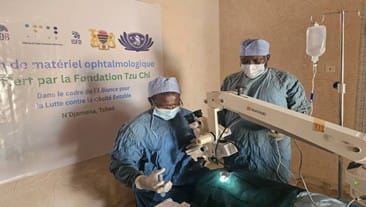
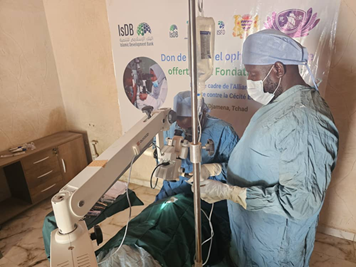
Photos: Tzu Chi Foundation
Restoring sight, renewing lives
Following the arrival of the equipment, both Chad and Togo promptly launched cataract surgery services. By November 2025, a total of 2,027 surgeries had been completed in Chad, while 750 had been performed in Togo. Each procedure represents a person whose sight was restored, enabling greater independence and a renewed quality of life.
Global compassion, collective impact
Since its establishment in 1966, Tzu Chi has extended charitable and humanitarian care from Taiwan to communities around the world. By the end of 2025, its humanitarian footprint will have reached 139 countries and regions. Whether through long-term local service, international disaster relief, or partnerships in areas without a direct volunteer presence, Tzu Chi remains committed to providing aid where it is most needed.
As Master Cheng Yen has often said, “Taiwan is just a tiny dot on the world map, inconspicuous, like a small firefly emitting a faint light. If there is only one firefly, it is not easily noticed; but when many gather together, their light can be seen.” Guided by this spirit, Tzu Chi volunteers around the world continue to gather collective goodwill to relieve suffering and bring hope to more communities.
Written by Wan-Ting Yen (顏婉婷)
