


Severe flash floods and landslides struck northern Nepal along the Nepal–Tibet border on August 26, damaging homes, roads, public facilities, and essential services. In Galchhi Rural Municipality in Dhading District, floodwaters and mud left the only public hospital in the area unable to operate while also affecting nearby schools and homes.
As emergency response efforts continue, Tzu Chi volunteers are working with residents, hospital staff, police, military personnel, and government representatives to address urgent needs. Tzu Chi has also joined a rapid response initiative coordinated by Nepal’s Social Welfare Council (SWC), together with other non-governmental organizations. Alongside medical care and the distribution of essential supplies, volunteers join local efforts to clear damaged facilities and help communities begin returning to daily life.
Restoring essential healthcare at Baireni Hospital
Baireni Hospital is the only public hospital in Galchhi Rural Municipality. The 15-bed facility normally serves around 200 patients a day. When floodwaters approached, hospital staff quickly evacuated the facility. At the time, about 15 patients were staying in the hospital. Two patients were transferred to Kathmandu, while the others returned home safely.
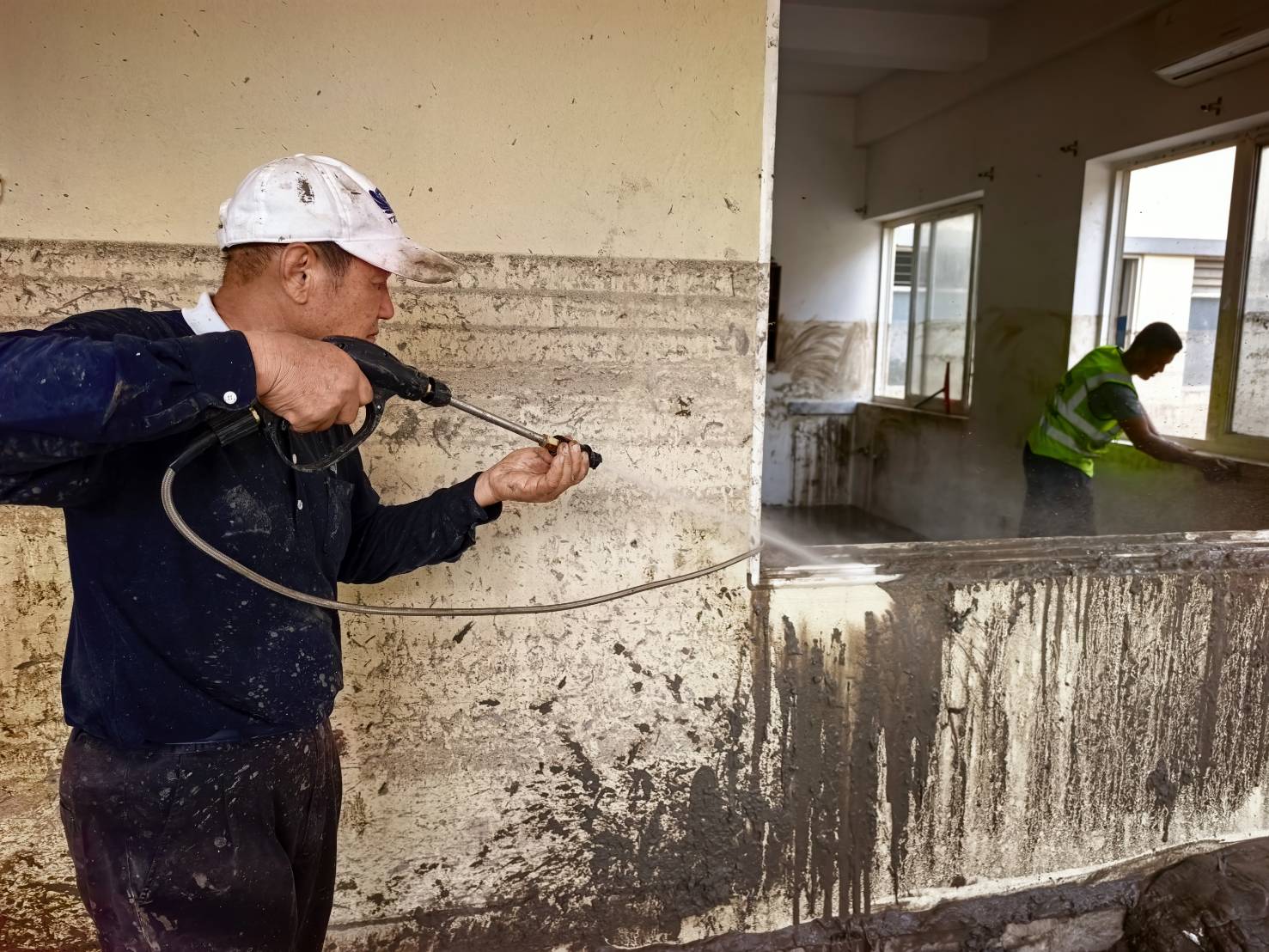
The hospital itself was left covered in thick, heavy mud. Mud filled treatment rooms and corridors, while medical equipment, medicines, and other facilities were damaged, leaving the hospital unable to provide its usual services.
Tzu Chi volunteers joined a cleanup effort coordinated with local authorities. At first, only a small group worked with shovels and sacks to remove the mud. Because the wet mud is very heavy and difficult to move, volunteers have bought additional shovels and wheelbarrows so that people can divide the work of digging, loading, and transporting the debris.


LEFT: Baireni Hospital staff (wearing Tzu Chi volunteer vests) work alongside volunteers to clean the hospital. CENTER: The relief team joins the hospital cleanup effort. RIGHT: The municipal mayor joins hospital staff and volunteers in clearing mud from the damaged facility. | Photos: Ramesh
With the hospital no longer operating, the need for medical care remains urgent. Police officer Rohit, who joined the cleanup, said:
Many people have been injured. The primary need for the public is medical facilities. — Rohit, Police Officer
The cleanup effort has quickly grown. Rohit is among the first to join the cleanup, bringing 10 officers on the first day and returning with 18 more colleagues the next day. Asked why he came, he said simply, “When the country is in need, it is the responsibility of the police.” He was also moved to see how Tzu Chi has quickly brought people together to help clear the hospital and support its recovery.
Hospital staff, local volunteers, the municipal mayor, police officers, and military personnel joined, bringing the number of people involved to more than 100. Volunteers are also helping to engage the locals in environmental practices as they work together to clean the affected areas. Working through the day, volunteers and local responders have cleared mud from the hospital and opened pathways through the facility, taking an important step toward restoring medical services.
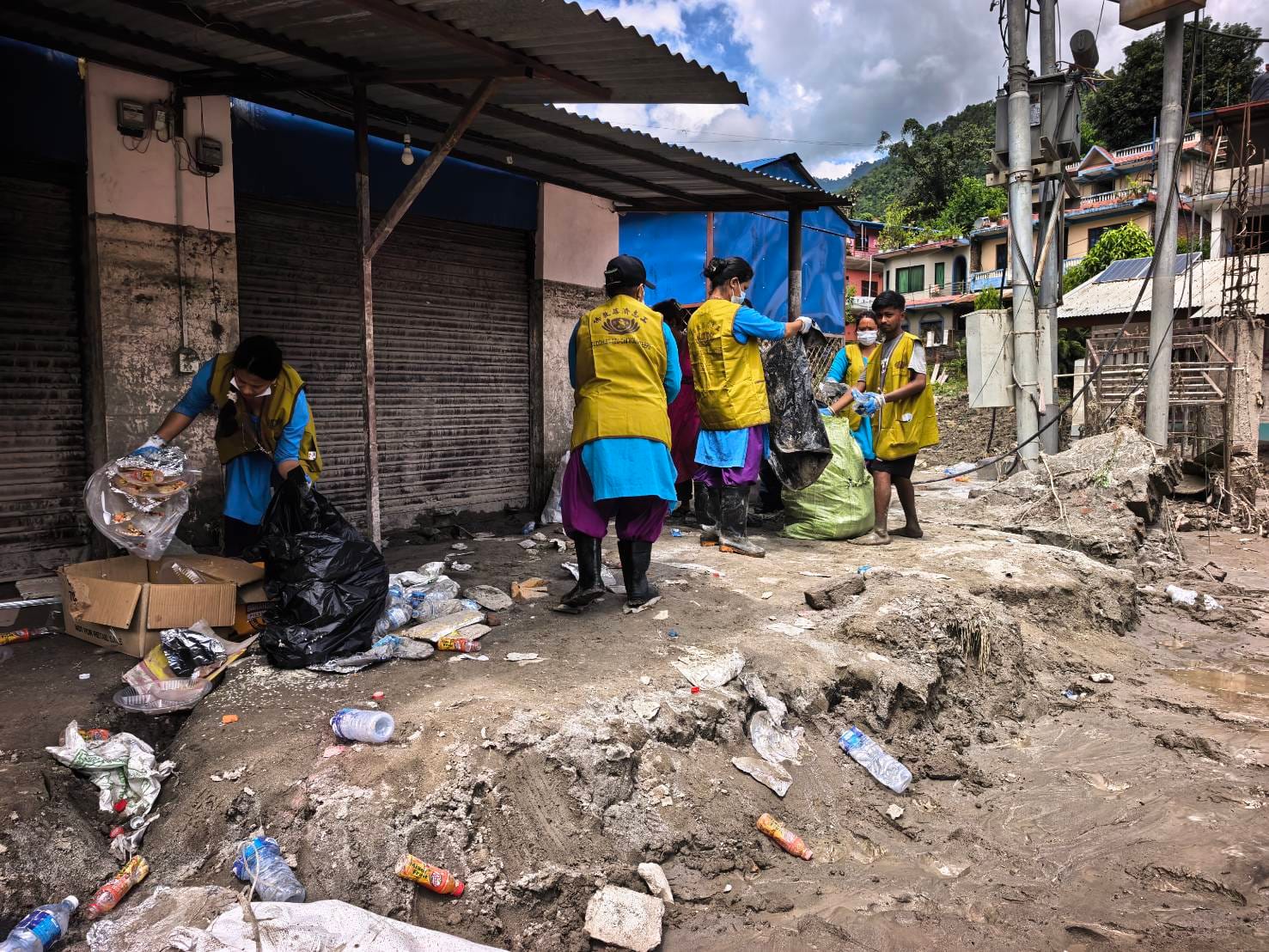
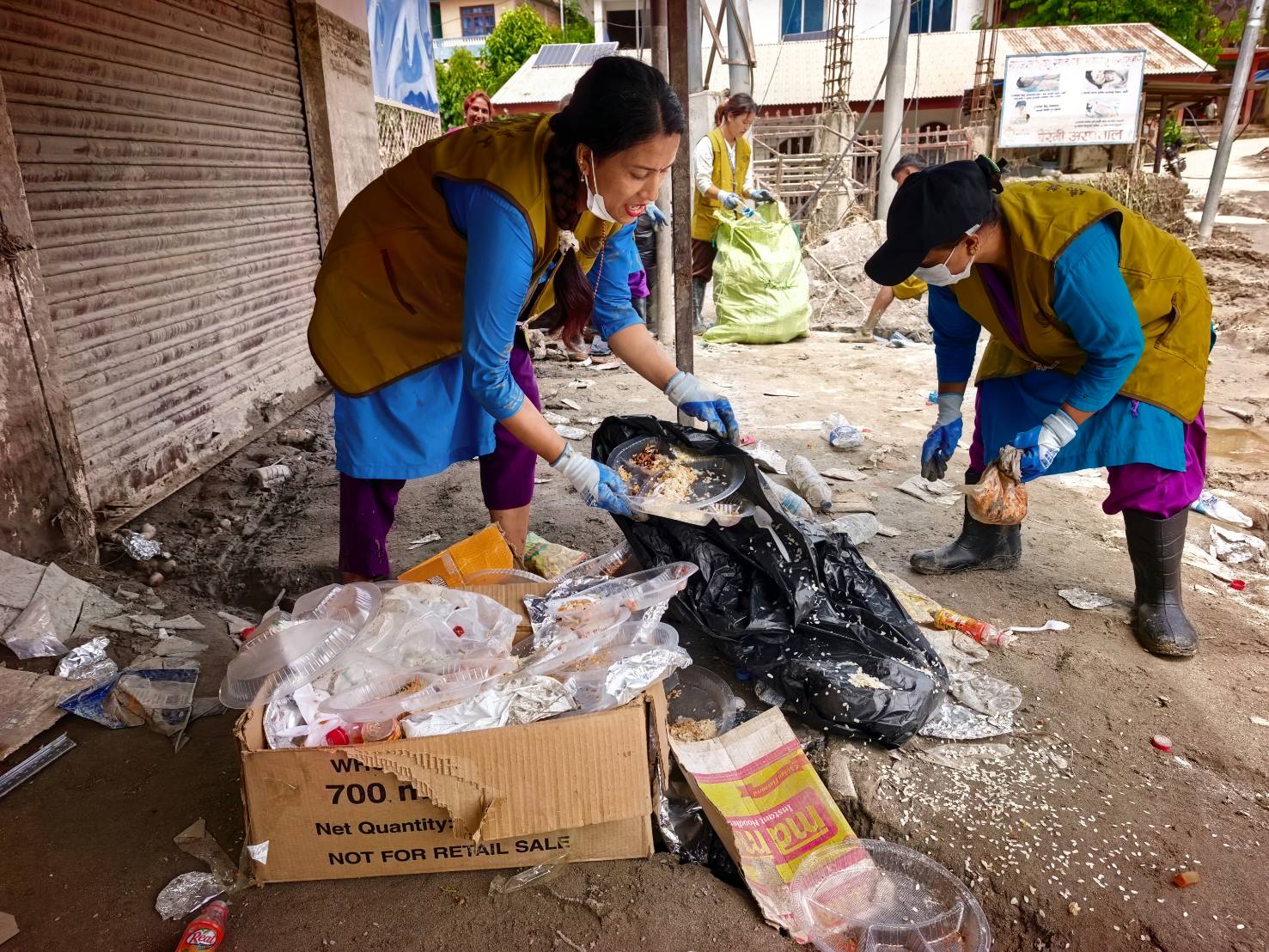
Tzu Chi volunteers from Kathmandu guide local volunteers in sorting recyclable materials during the cleanup. | Photos: Tzu Chi Nepal
Bringing essential supplies to affected families
While volunteers work to restore the hospital, Tzu Chi is also responding to the basic needs of families affected by the floods.
Following the disaster assessment, relief supplies have been distributed to 169 households in Galchhi. Each family has received 25 kilograms of rice, 4 kilograms of soybeans, 1 liter of cooking oil, 1 kilogram of salt, and bottled drinking water. The assistance also includes basic cooking equipment: a pressure cooker, cooking pot, single-burner gas stove, ladle, plastic bucket, water jug, plates, spoons, and cups.
For families whose daily routines have been disrupted by the disaster, these supplies provide more than food for the immediate days ahead. They have given households the basic tools needed to prepare meals and gradually resume everyday life.

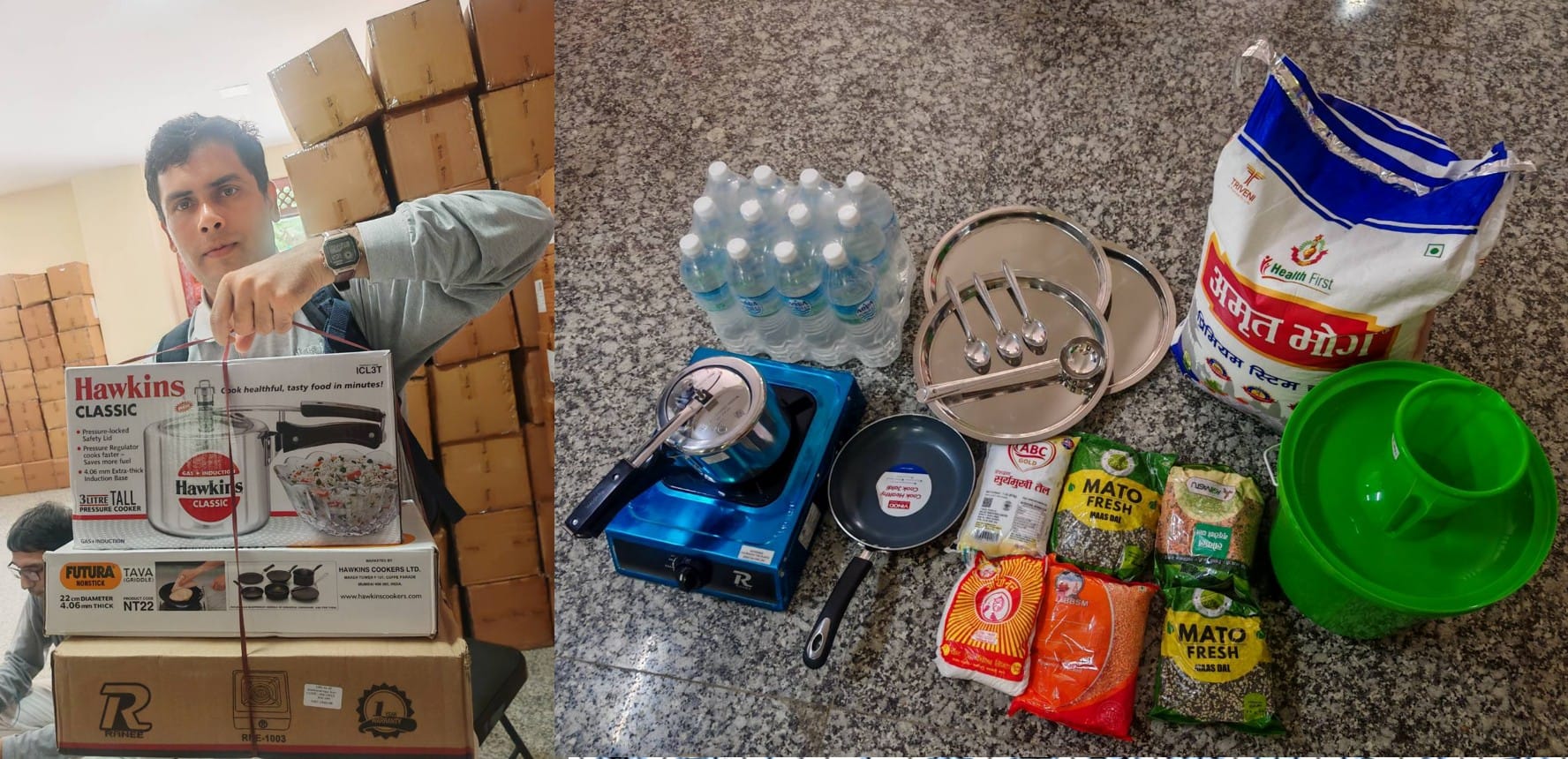
LEFT: The relief team distributes essential supplies to affected families. RIGHT: Each family receives rice, soybeans, cooking oil, salt, bottled drinking water, and basic cooking utensils. | Photos: Tzu Chi Nepal
Protecting those working on the front lines
Tzu Chi has also responded to requests for protective equipment from police and military units in Chitwan and from Madhyabindu Provincial Hospital in Nawalpur.
From Kathmandu, volunteers have arranged for 200 protective suits to be transported to Chitwan. Local businesses also contributed 30 boxes of disposable medical gloves, 48 boxes of medical masks, 20 pairs of plastic gloves, and 20 bottles of 500 ml Phenyl disinfectant.
The supplies have been distributed to Chitwan police and army units and Madhyabindu Provincial Hospital for personnel involved in responding to the disaster and handling the deceased.

Assessing the impact on schools
Educational facilities were also affected by the floods. At Shree Bageshwori Secondary School, students were attending classes when flood warnings were issued. Teachers quickly evacuated the children, leaving their schoolbags and other belongings behind as they fled to safety.
Six days later, students returned to the school to retrieve their mud-covered backpacks and textbooks. Tzu Chi volunteers have visited the school to assess the damage and understand the needs of the students and the school as they evaluate follow-up support.
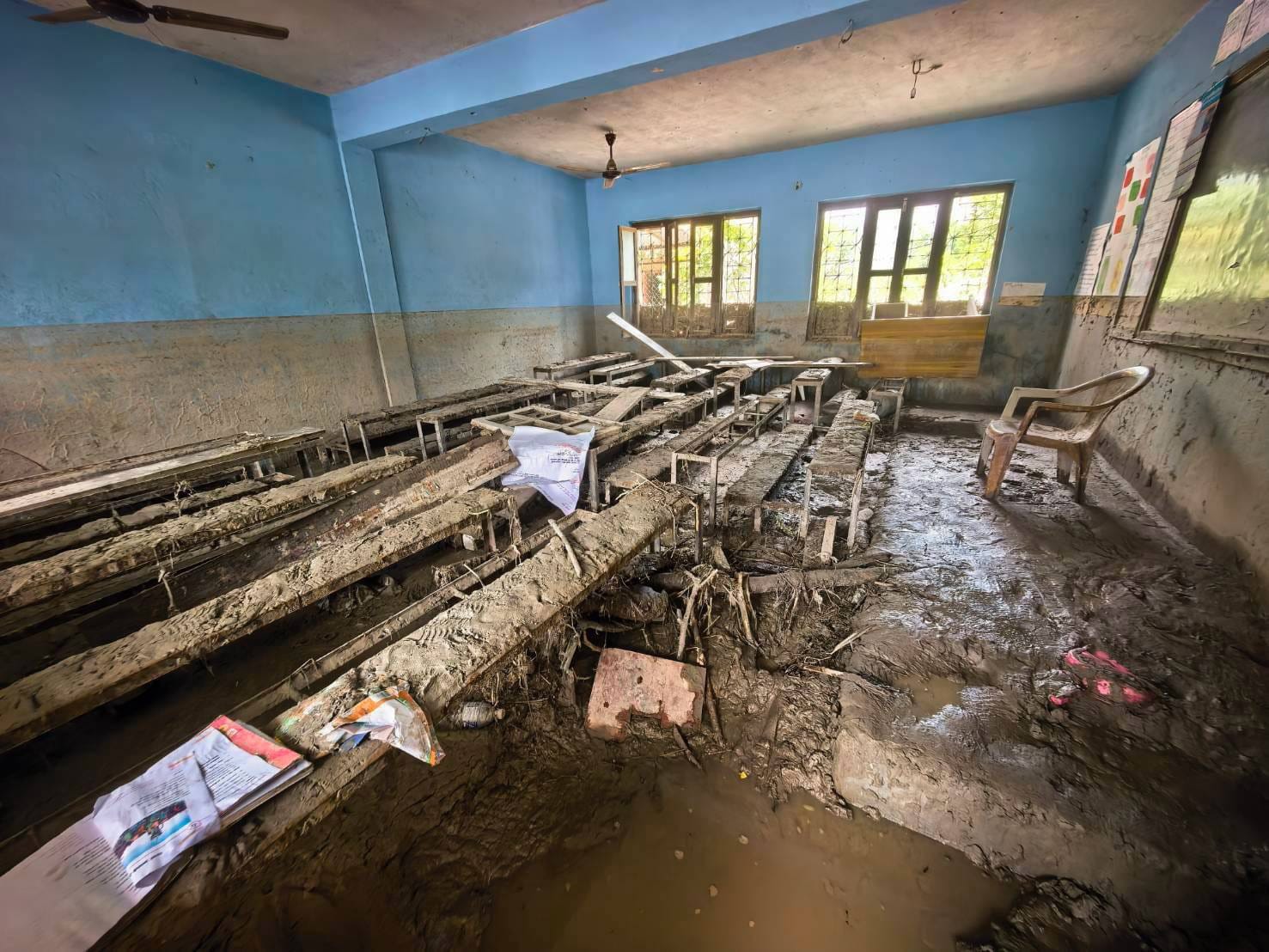
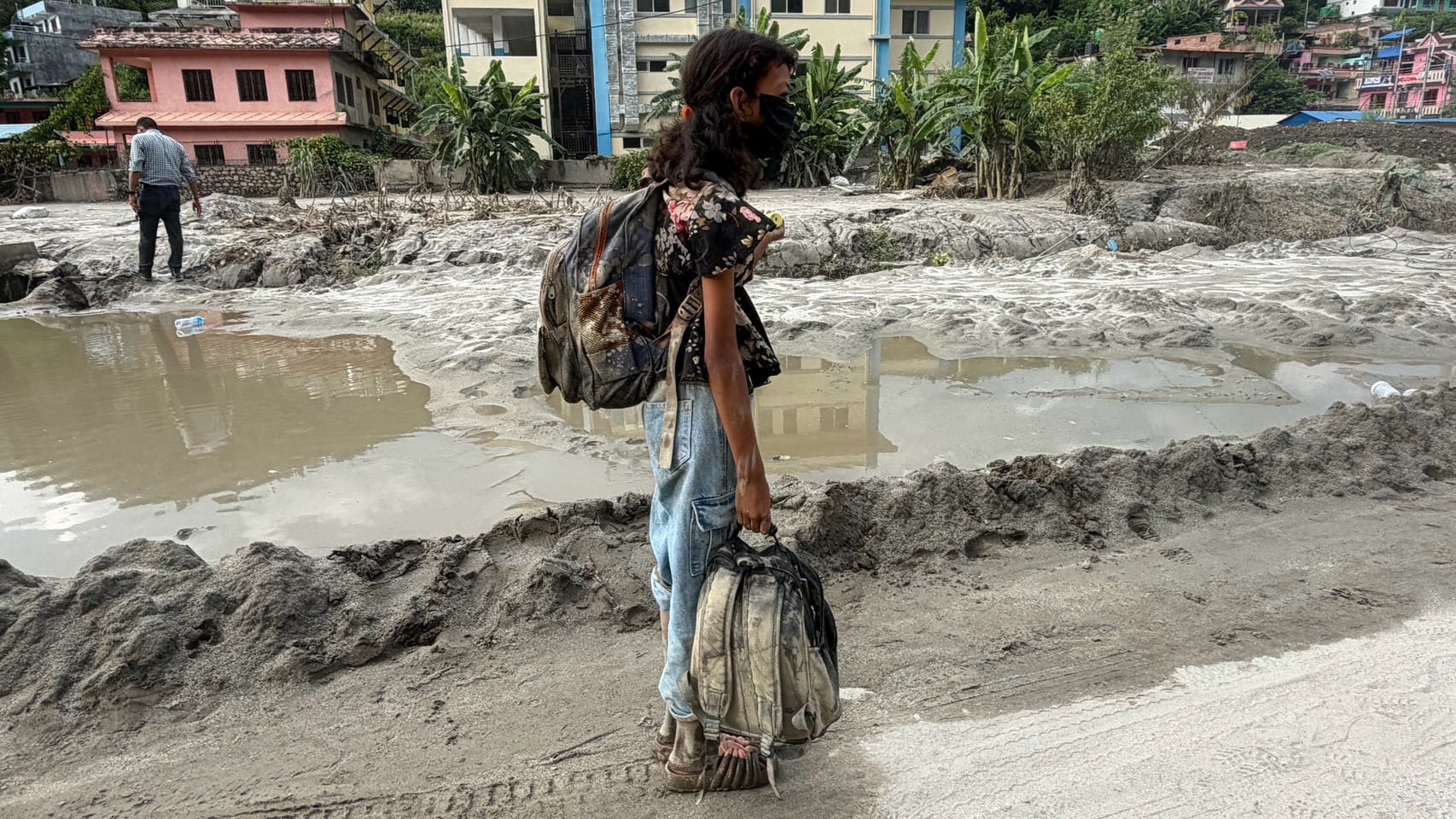
LEFT: Nearly two feet of mud covered the classrooms. Desks and benches have been buried and severely damaged. RIGHT: Students at Shree Baneshwor Secondary School retrieve their school bags and books buried by the flood and take them home. | Photos: Tzu Chi Nepal
Relief teams continue to work alongside local municipal authorities and community leaders to assess recovery needs, clean damaged school grounds, and support local families as they rebuild their lives.
Written by Yu-Chen Pan (潘俞臻), TC News and Tzu Chi Nepal
