


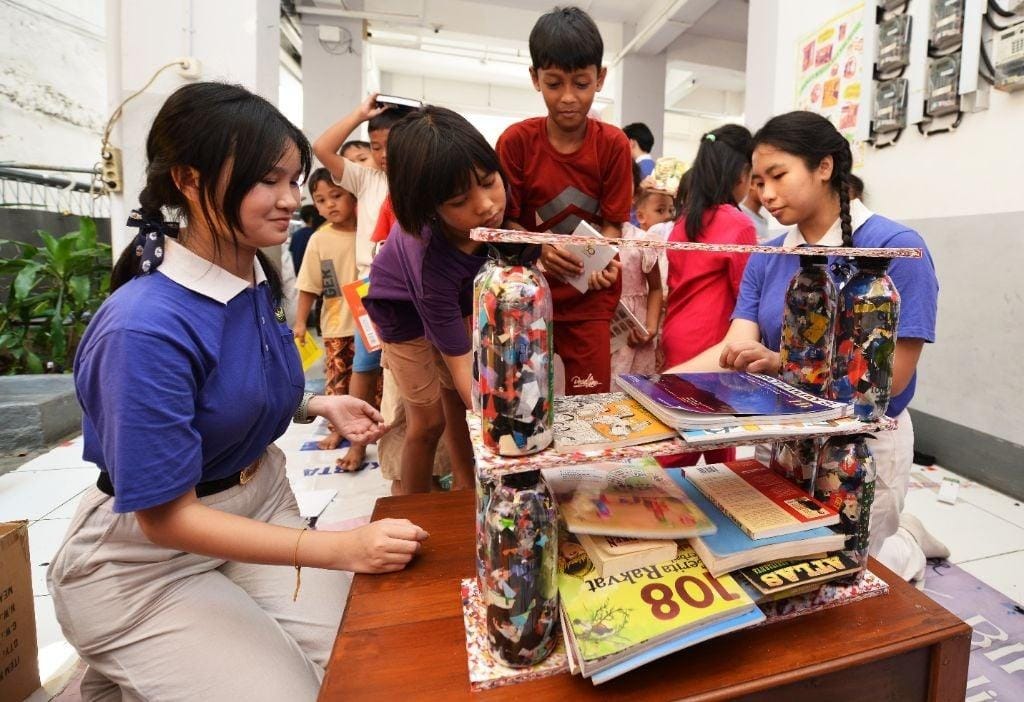
In Jakarta, Indonesia, a collaborative effort is transforming discarded plastic into educational resources for local children. On June 30, 2026, three volunteers from the Tzu Chi International Youth Association (TIYA) and 70 students from Bina Nusantara University (BINUS) gathered at the Pantai Indah Kapuk (PIK) Environmental Education Station. Together, they embarked on a project to convert plastic waste into "eco-bricks," laying the foundation for a new reading corner at Rusun Barokah, an apartment complex built by Tzu Chi.
The initiative aims to engage the younger generation in environmental protection by demonstrating how discarded materials can be repurposed into valuable community assets.
Shaping waste into resources
The process of creating eco-bricks requires patience and teamwork. Participants sorted plastic waste, cut it into small pieces, and packed it tightly into washed bottles. Each one-liter bottle was filled with 350 grams of compressed plastic. These bottles were then combined with recycled plastic boards—made by melting plastic and pressing it through molds and hydraulic presses—to construct sturdy bookshelves.
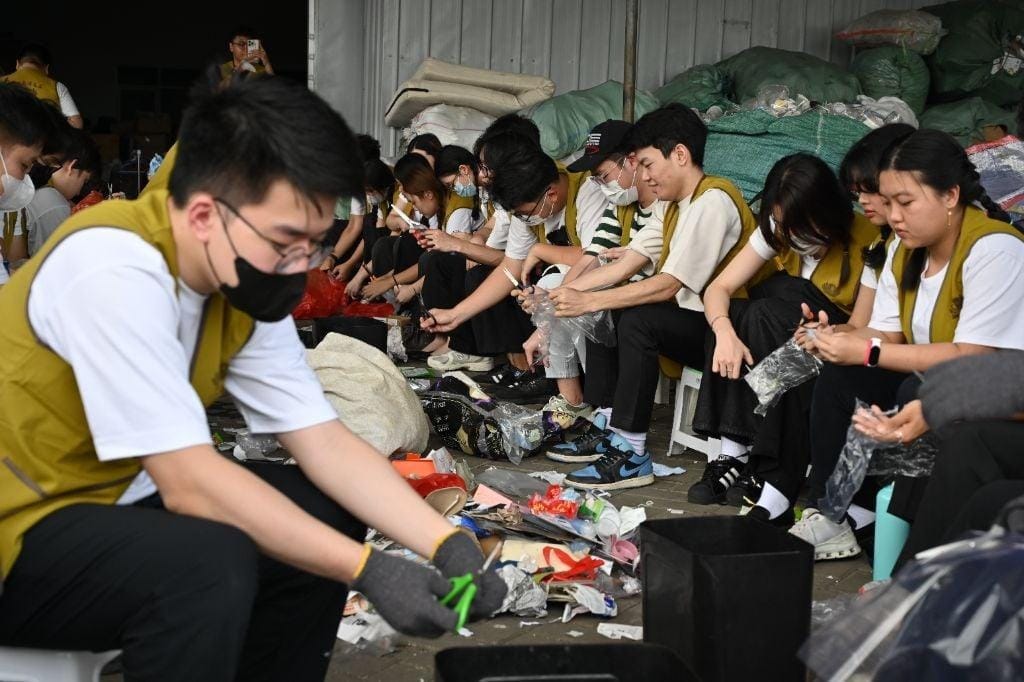
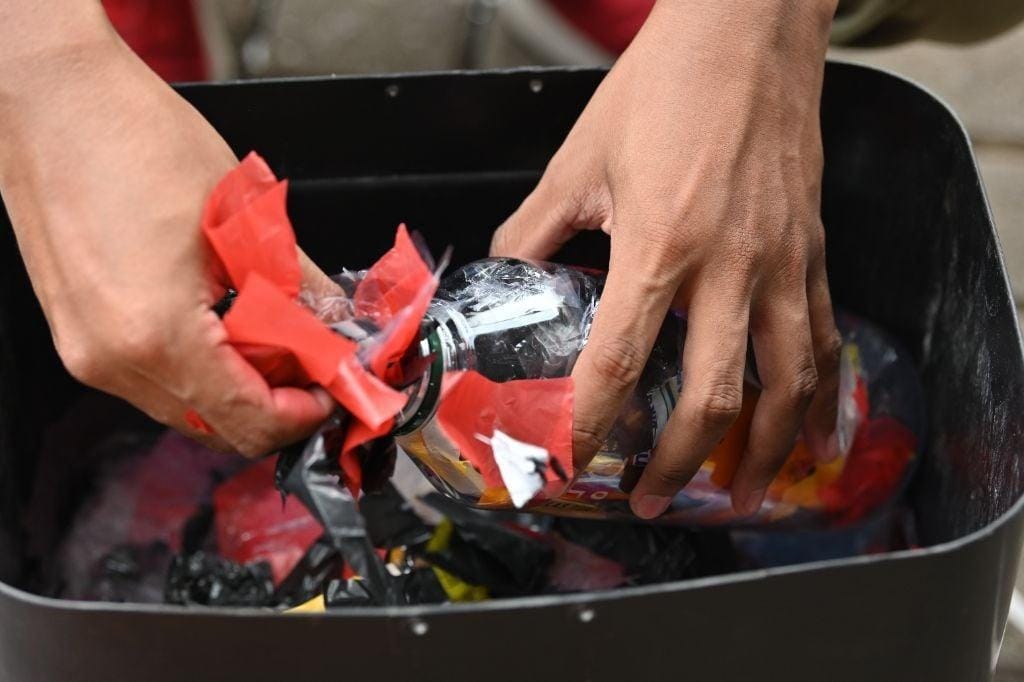
LEFT: On June 30, 2026, volunteers and students make eco-bricks to build a reading corner for Rusun Barokah. RIGHT: A one-liter plastic bottle is packed with 350 grams of compressed plastic waste. | Photos: Anand Yahya
Aiting Huang (黃愛婷), a TIYA senior and Indonesian representative for the International Youth Leadership Program (IYLP), led the initiative.
At first, many people asked, 'What is this? What is the use? Why are we just cutting plastic?' But when we demonstrated how it eventually becomes a bookshelf, everyone's eyes lit up. They started discussing it with interest and gradually understood the value and meaning of this activity. — Aiting Huang, Volunteer
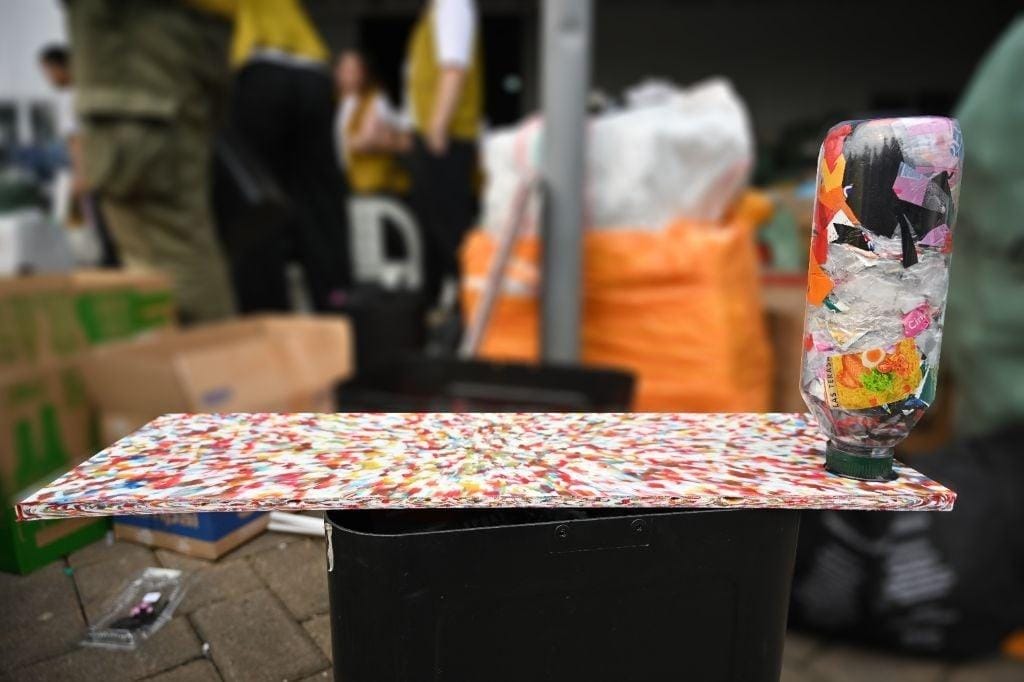
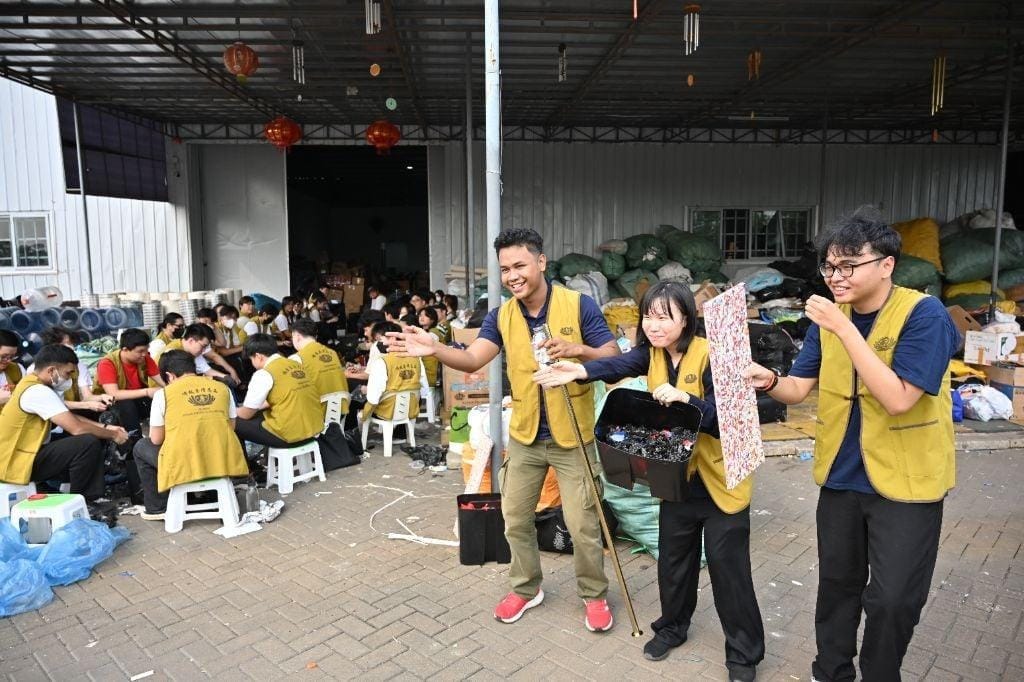
LEFT: The eco-bricks and recycled plastic boards are transformed into materials for the new bookshelves. RIGHT: Muhammad Ahmad Rukmana (right) and Rijal (third right) participate with Aiting (second right). | Photos: Anand Yahya
By engaging students in the hands-on process of sorting and creating eco-bricks, Aiting hopes to cultivate a stronger environmental consciousness among youth.
Our project focuses on the UN Sustainable Development Goals, specifically in the areas of quality education and sustainable cities and communities. We hope this activity will continue, not just stop here, but be implemented in everyone's daily life. At the same time, this activity also trains us to be more disciplined and know how to handle waste better. — Aiting Huang, Volunteer
Engaging the next generation
On July 1, 2026, the volunteers brought their efforts directly to the community. They visited Rusun Barokah, organizing games and teaching the resident children how to make eco-bricks. The location was chosen specifically to reach the large number of children living in the area, encouraging them to develop reading habits while becoming more mindful of local waste issues.
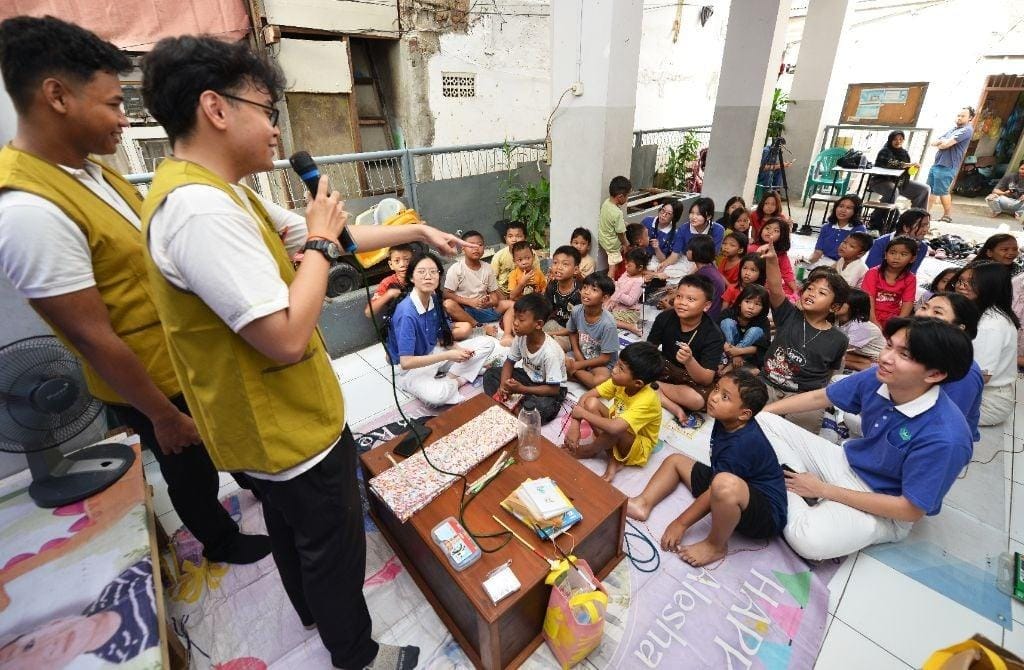
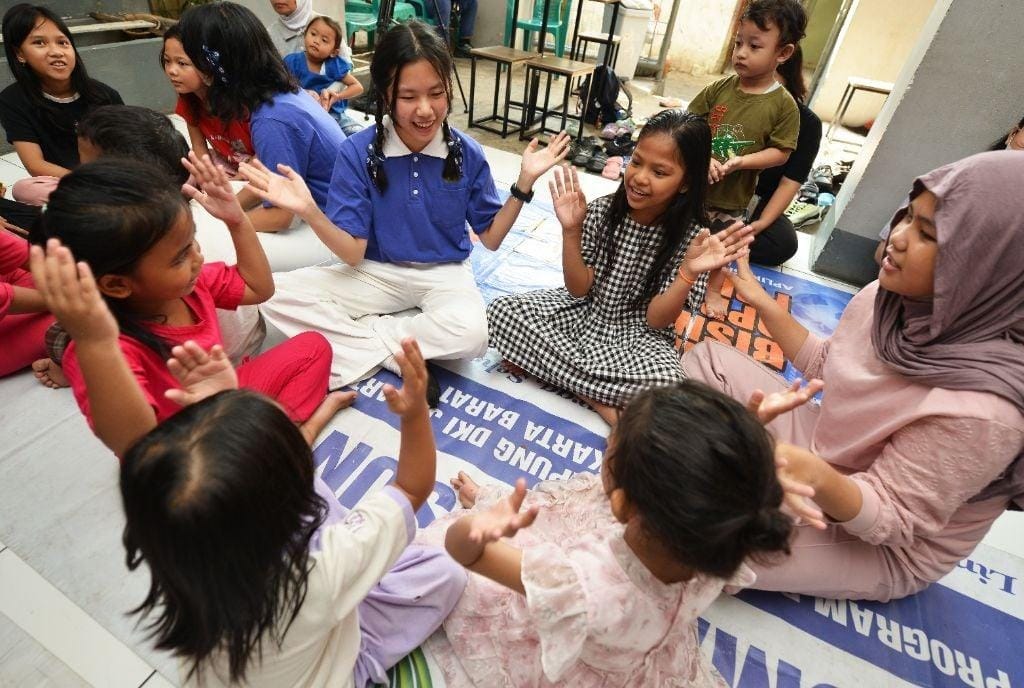
LEFT: On July 1, 2026, volunteers accompany children at Rusun Barokah to learn recycling by making eco-bricks and completing the reading corner. RIGHT: Volunteers enthusiastically play games with children from the surrounding neighborhood. | Photos: Arimami Suryo Asmoro
Muhammad Ahmad Rukmana, an IYLP participant, noted that the program taught him how to create positive social impacts through education, healthcare, and environmental action.
I hope the children in the apartments can learn and improve their reading skills here. Also, because this project is related to environmental protection, we hope this reading corner will also have a positive impact on the planet. — Muhammad Ahmad Rukmana, Volunteer
The children eagerly participated, taking turns weighing the bottles filled with shredded plastic to ensure they met the 350-gram standard required for a sturdy eco-brick.
Xiangqi Huang (黃香琪), a TIYA volunteer, guided the children in using chopsticks to push the plastic fragments into the bottles.
I hope the children can understand recycling better, stop littering, and care more about their surrounding environment. Besides spending less time on their phones, I also hope they can engage in more meaningful activities. In addition, by making bookshelves, donating books, and promoting reading this time, we are not only bringing environmental protection into the community but also bringing the habit of reading along with it. — Xiangqi Huang, Volunteer
A sustainable future
I am very happy today. The older brothers and sisters accompanied us to learn and play together—recycling, drawing, reading, and playing games. — Raisa, Resident
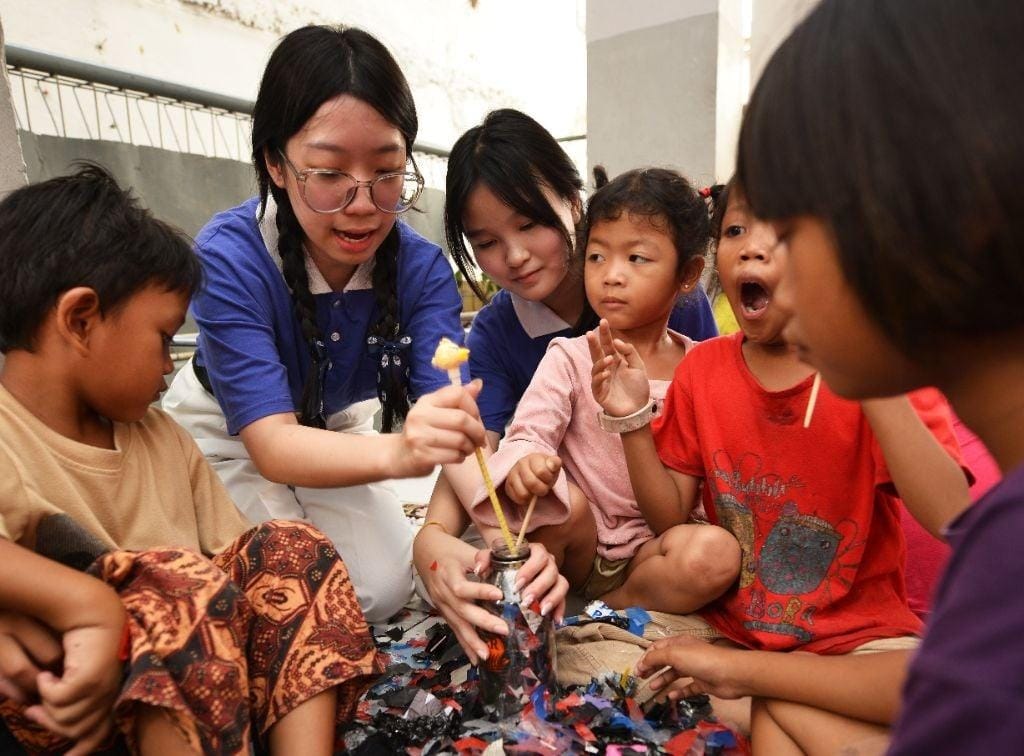
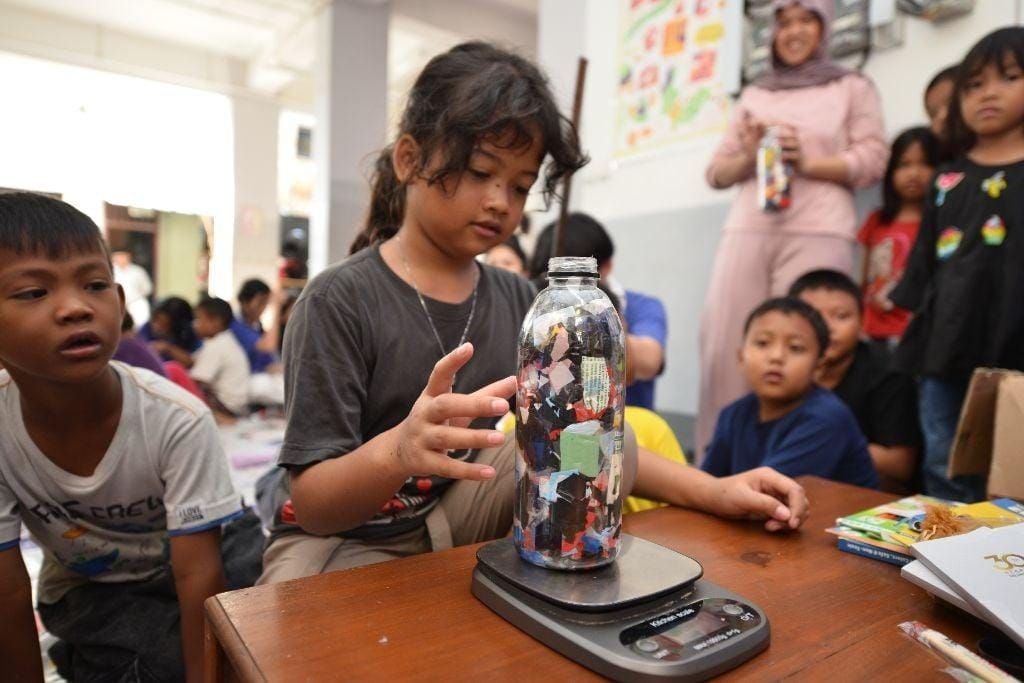
LEFT: Xiangqi (second left) demonstrates how to push shredded plastic into a bottle using chopsticks. RIGHT: Nine-year-old Raisa (center) Nine-year-old Raisa actively weighed the bottles, ensuring each one met the requirements. | Photos: Arimami Suryo Asmoro
With the eco-bricks and recycled boards assembled, the volunteers completed the bookshelves. The new reading corner was set up on the ground floor of the apartment complex, and the shelves and books were formally handed over to Kartiwo, a counselor at Rusun Barokah.
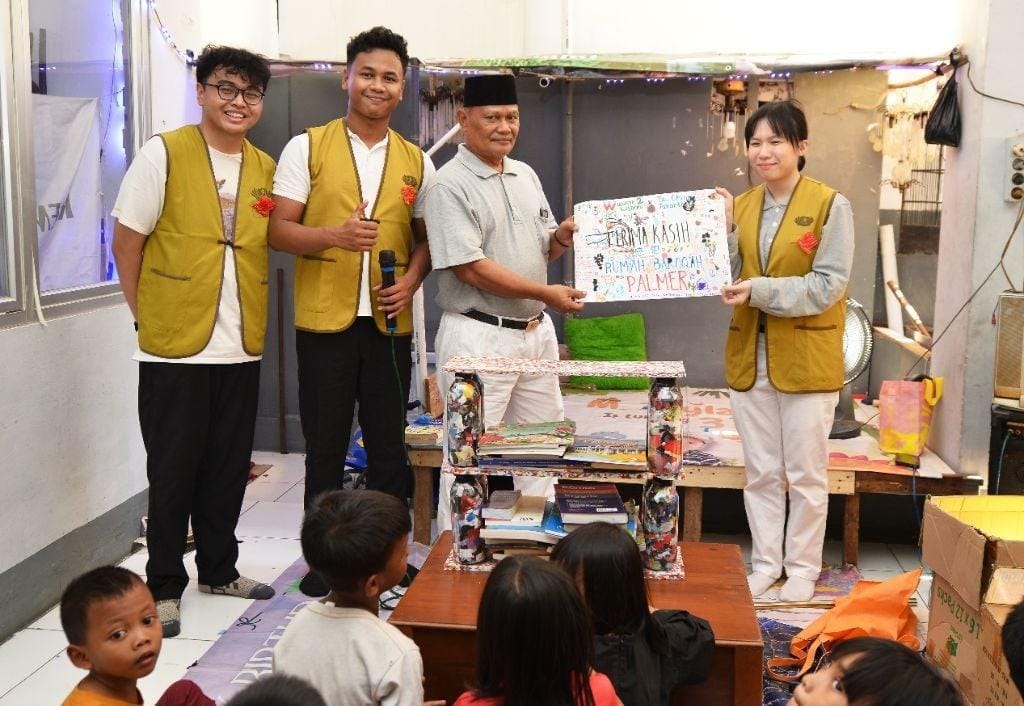
Looking ahead, Aiting envisions the project expanding further into Jakarta.
I hope this kind of activity continues to be promoted among the surrounding residents and is passed on by TIYA. Because we are also learning how to face Jakarta's waste problem together. At the same time, I look forward to promoting this activity to more communities in the future, and that this bookshelf, completed with the children's help, can be used well. — Aiting Huang, Volunteer
As communities worldwide grapple with climate change, habitat destruction, and plastic pollution, these youth-led efforts demonstrate that consistent, everyday actions can foster a healthier environment and a brighter future for the next generation.
Written by Arimami Suryo Asmoro and Anand Yahya
