


When the familiar melody of the Tzu Chi song "One Family" resonates through learning centers in Kuala Lumpur and Kota Kinabalu, the voices are young, but the impact is profound. Children sing and perform sign language with clear, focused eyes. In classrooms with simple furniture and weathered walls, their sincere voices create an atmosphere of warmth and belonging. For these students, the lyrics aren't just words to a song—it is a reflection of their reality.
Bridging the gap for the stateless
The children attending these centers face immense life challenges. In West Malaysia, the Tzu Chi Unity Learning Center in Kuala Lumpur serves refugees from Afghanistan, Pakistan, and the Myanmar Rohingya community. Meanwhile, in East Malaysia, the Kota Kinabalu Tzu Chi Learning Center supports students of Filipino and Indonesian descent.
These children are stateless. Without passports, identification documents, or legal status, they live in a state of constant uncertainty. Their families often lack stable housing and access to basic utilities like water and electricity. Crucially, they are excluded from the national education system, leaving them with few opportunities to improve their circumstances.
A sanctuary for learning
Despite these obstacles, Tzu Chi has established a network of learning centers to provide a bridge to a better future. The Kuala Lumpur center currently manages ten classes with 11 teachers, serving 238 students. In Kota Kinabalu, nine teachers support 196 children across eight classes.
The educators come from diverse backgrounds, including Malay, Indian, and Chinese heritages. While the centers in Kuala Lumpur follow the Cambridge curriculum and the Kota Kinabalu center offers subjects such as English, Mathematics, and Computer Science, "Humanistic Culture" remains a core requirement at all locations.


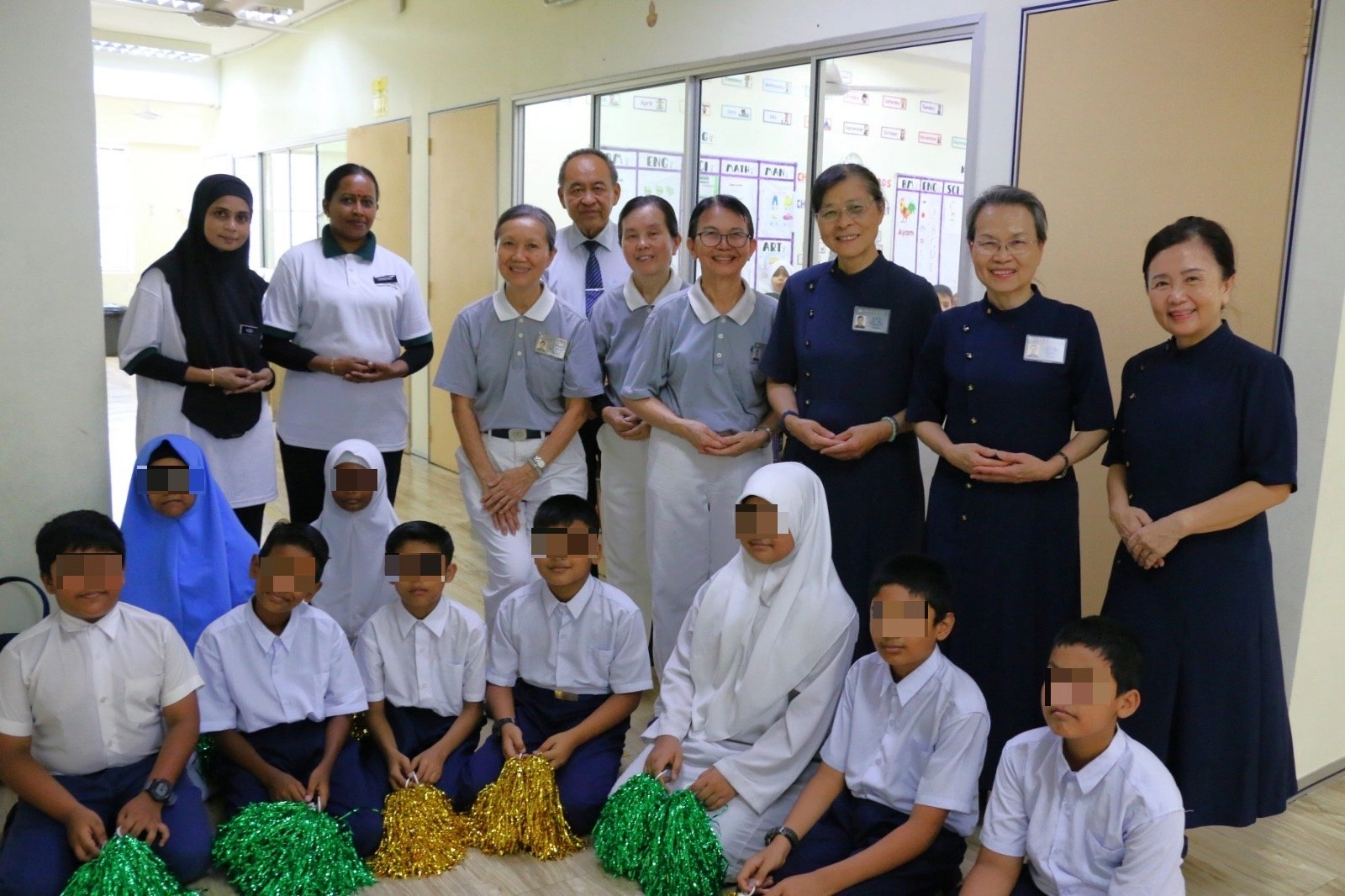
LEFT: Currently, learning centers in East and West Malaysia only offer primary education for refugee and stateless students. | Photo: Pei-Kee Tan (陳佩琪) RIGHT: These children share similar stories, yet Tzu Chi volunteers have built a bridge for their education. | Photo: Jing-Qi
Finding purpose through education
For a child without a country, the future can seem like a void. One teacher recalled a student asking, "Teacher, if I study hard now, will it really be useful later? Where can I use it?"
While education may not immediately grant them legal status, it provides a vital light in their lives. The students arrive punctually each day, focusing intently on their lessons. Their presence demonstrates a profound appreciation for the opportunity to learn—a right often taken for granted elsewhere but cherished here as a pathway to dignity.
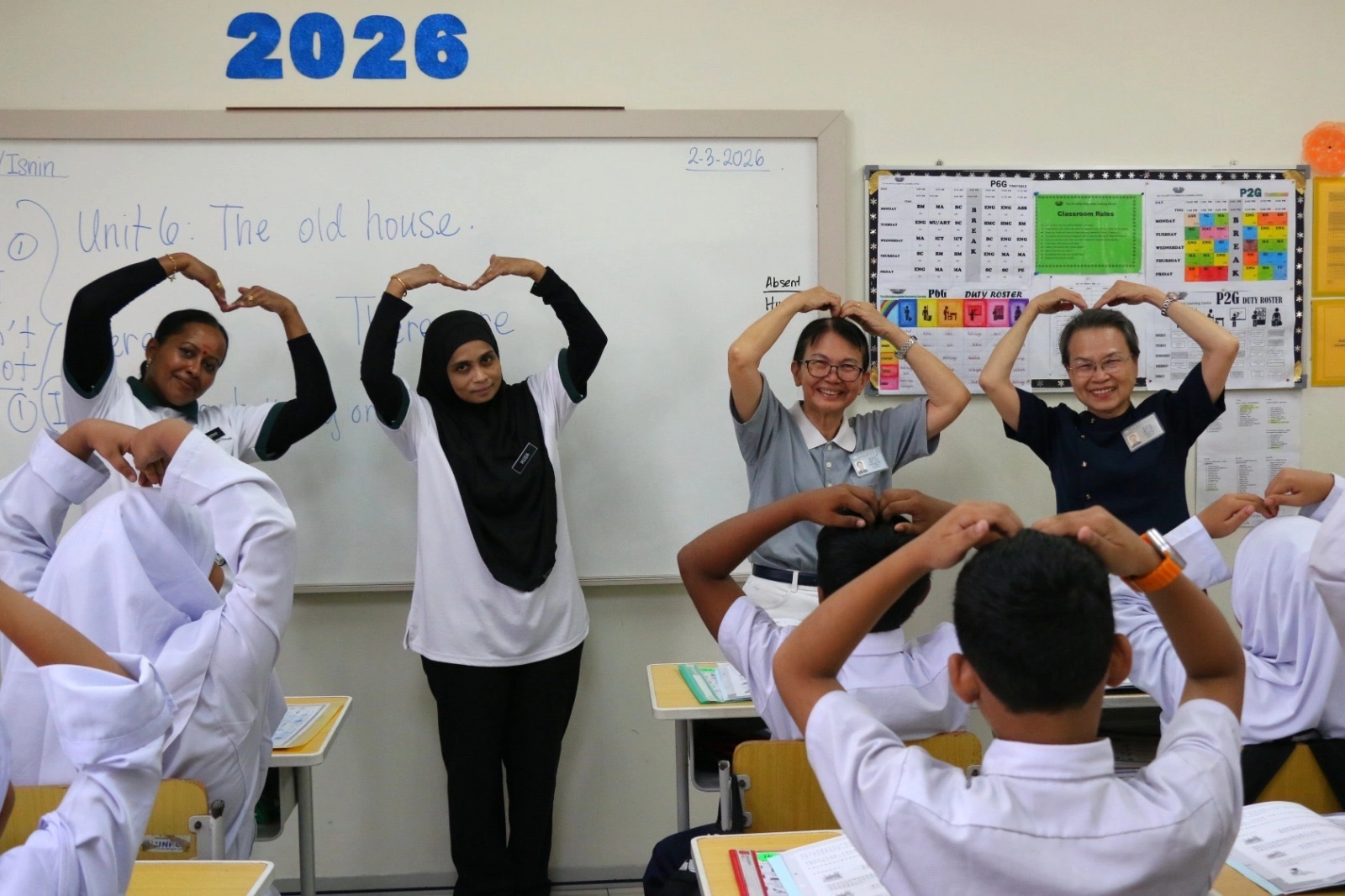
A shared humanity
The sight of these children—their bright eyes filled with gratitude rather than despair—serves as a reminder of the inherent dignity of every human being. The centers bring together people of different nationalities, languages, and religions, all united under a common goal of mutual support.
The centers in Malaysia continue to grow and adapt to meet the needs of these communities. In West Malaysia, additional facilities include the Tzu Chi Harmony Learning Center. In East Malaysia’s Sabah State, where stateless populations are concentrated, centers also operate in Tawau and Sandakan.
Through these efforts, the children are no longer defined solely by their lack of status, but by their potential and the community that stands beside them.
Written by Jing Qi (靜淇)
