


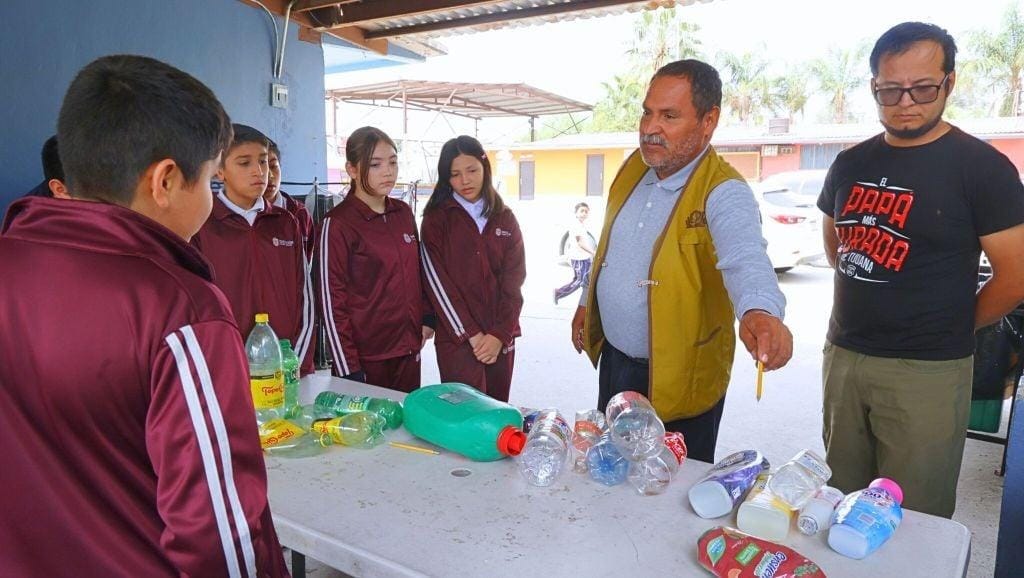
In Tijuana, Mexico, managing household waste can be a heavy burden for residents. To avoid disposal fees, many families resort to burning their trash, a practice that contributes to severe air pollution and increases the risk of local fires. To address this environmental and public health challenge, a recycling initiative has taken root across several local schools. By teaching students to collect and sort discarded materials, the program aims to shift community habits, showing how items once considered garbage can be transformed into valuable resources.
Fostering environmental habits
At the Tijuana Tzu Chi Elementary School, recycling has become an integral part of the daily routine. Every morning, students arrive with plastic bottles they have collected at home, placing them neatly in designated areas outside their classrooms.
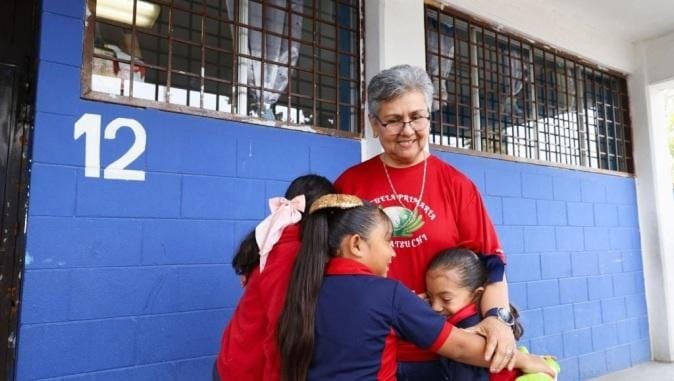
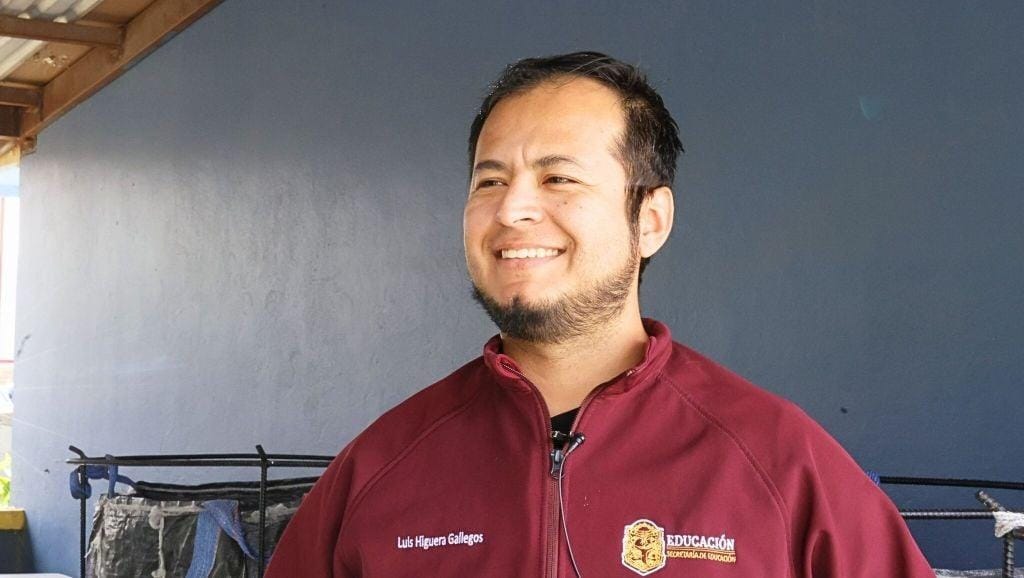
LEFT: Students at Tzu Chi Elementary School interact warmly with Principal Graciela Sánchez. RIGHT: Luis Enrique, Vice Principal of Children's School of Baja California, expresses his delight at the students’ strong support. | Photos: Mandy Lo
Principal Graciela Sánchez has been a driving force behind this shift. She emphasized the value of turning perceived waste into something useful. The school holds dedicated recycling activities every Wednesday, encouraging active student participation through an organized recycling committee.
We are grateful to the Tzu Chi Foundation and the teachings of Dharma Master Cheng Yen, which have given us a profound understanding of the importance of protecting the Earth.— Graciela Sánchez, Principal of Tijuana Tzu Chi Elementary School
Parents are also actively participating. Norma, a mother of one of the students, joined the school's recycling team and rotates duties with two other parents. She shared that the school invites students to bring recyclables from Monday to Wednesday; a practice intended not only to teach environmental stewardship but also to preserve the Earth for future generations.
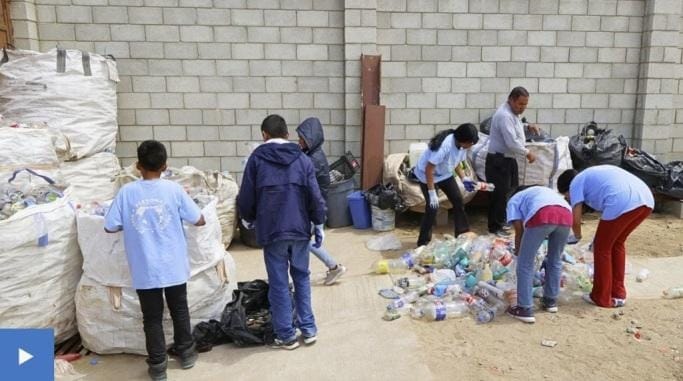
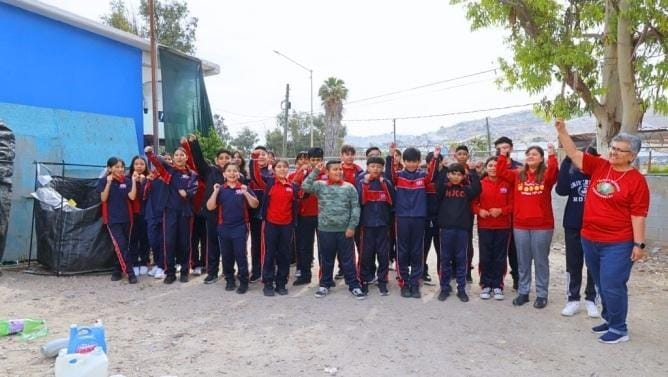
LEFT: Recycling has become a daily routine for teachers and students at the Hope Classroom. RIGHT: Graciela Sánchez (right), principal of Tijuana Tzu Chi Elementary School, leads students and teachers in recycling. | Photos: Mandy Lo
Students stepping up as leaders
The movement has gained significant traction at the Children's School of Baja California (Escuela Niños de Baja California). There, students bring plastic items to school four days a week, supported by a structured, student-led classification system.
This is a recycling project, and fortunately, we have received immense support from the students. We train our older students so they can help other children understand how to classify plastics.— Luis Enrique, Vice Principal of the Children's School of Baja California
Under this system, sixth-grade student supervisors guide their younger peers in separating plastics by color and material. Staff member Omar regularly visits the campus to clarify the sorting rules and transport the collected materials. Through these hands-on lessons, students gain practical skills and a deeper understanding of plastic pollution.
Luis Enrique noted the widespread impact of microplastics, which have infiltrated marine ecosystems, organisms, and human bodies.
Even if it is just a small effort, we hope to contribute to solving this problem.— Luis Enrique, Vice Principal of the Children's School of Baja California
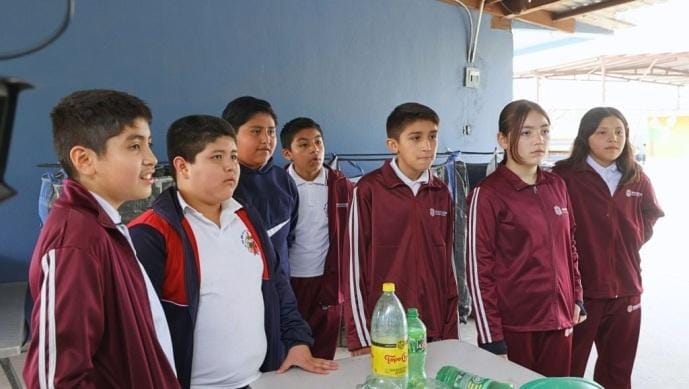

LEFT: Children listen attentively to Omar as he explains how to sort accurately. RIGHT: Teachers and students of the Children's School of Baja California pose with Omar after the class. | Photos: Mandy Lo
Funding community needs through recycling
The impact of this environmental education is multiplying through cross-school collaboration. Jesús Cataño, principal of both Moctezuma High School and Vergelmina Elementary School, introduced the program to his campuses. He recognized that changing mindsets within the school environment is the first step toward improving the broader community, especially by discouraging the harmful practice of burning waste.
Supported by staff member Cindy, multiple schools are now pooling their collected bottles. The materials are transported to local recycling centers, and the generated funds are returned directly to the schools. Administrators can then allocate the money based on their specific needs, whether purchasing new educational equipment or funding charitable projects.

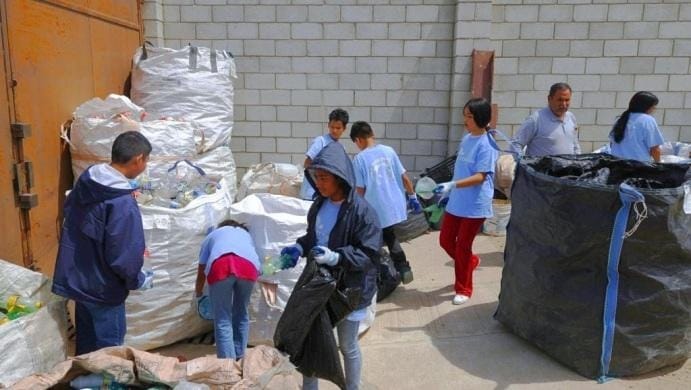
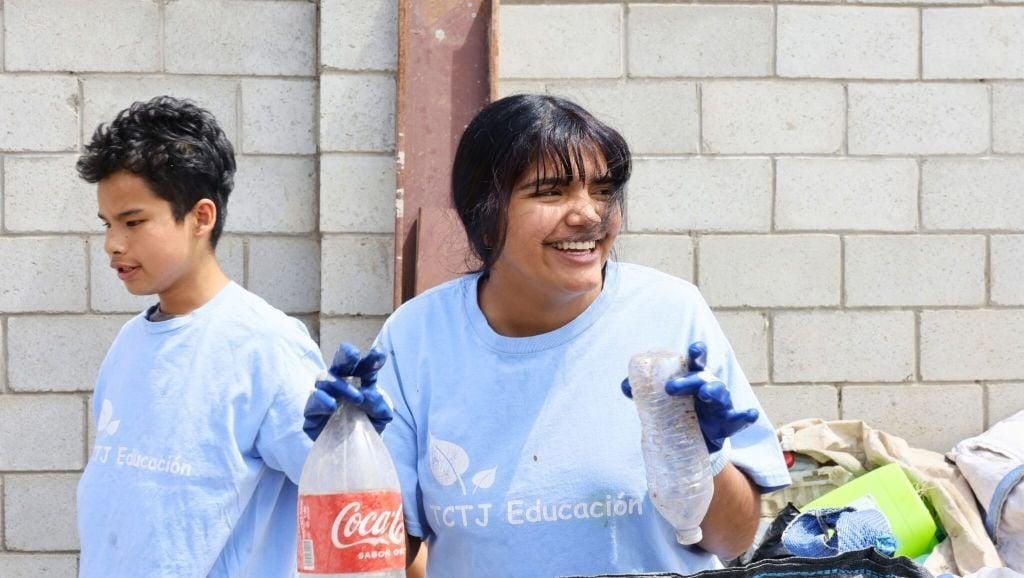
LEFT: Students from the Hope Classroom diligently collect plastic bottles every week. | Photo: Jessica Su (蘇美娟) RIGHT: The recycling efforts of Hope Classroom students yield impressive results. | Photo: Mandy Lo
The tangible benefits of this system are deeply felt at the Hope Classroom, where students recently used their recycling proceeds to purchase necessities for disadvantaged groups during the Christmas season. Experiencing the joy of giving has only fueled their passion for environmental protection. From young children learning to sort colors to older students organizing community cleanups, the culture in Tijuana is slowly transforming. By integrating sustainability into daily education, these schools are proving that consistent actions can clear the air, empower the vulnerable, and build a more resilient community.
Written by Mandy Lo (駱淑麗)
