


When severe flooding struck Nepal on August 26, 2026, rivers swollen by mountain rainfall inundated communities across the region. Among the damaged facilities was Bailey Hospital, a newly constructed 25-bed medical center in Dhading District that had been scheduled to open its doors on August 31. Torrential floodwaters and thick mud swept through the ground floor, submerging examination rooms, the pharmacy, and storage areas under heavy silt. For residents in this rural area, the loss of the facility meant losing immediate access to vital emergency and maternal healthcare.
Clearing mud with determination
Faced with the destruction of the newly constructed facility, the hospital director—an obstetrician-gynecologist—was initially overwhelmed by grief before gathering the resolve to rebuild. Relief teams quickly rallied to support the local medical staff and community members. Master Cheng Yen contacted the local team with a clear message:
A hospital building may suffer damage, but our mission to save lives cannot wait. — Master Cheng Yen
Cleanup efforts began on September 1, just three days after the disaster. Because standard shovels were in short supply across the region, volunteers, hospital workers, and local residents adapted by using large wooden boards as makeshift scoops to clear the thick silt. Starting at 5:00 a.m. each day, the director led volunteers, local women, and villagers in continuous cleaning work until dusk.
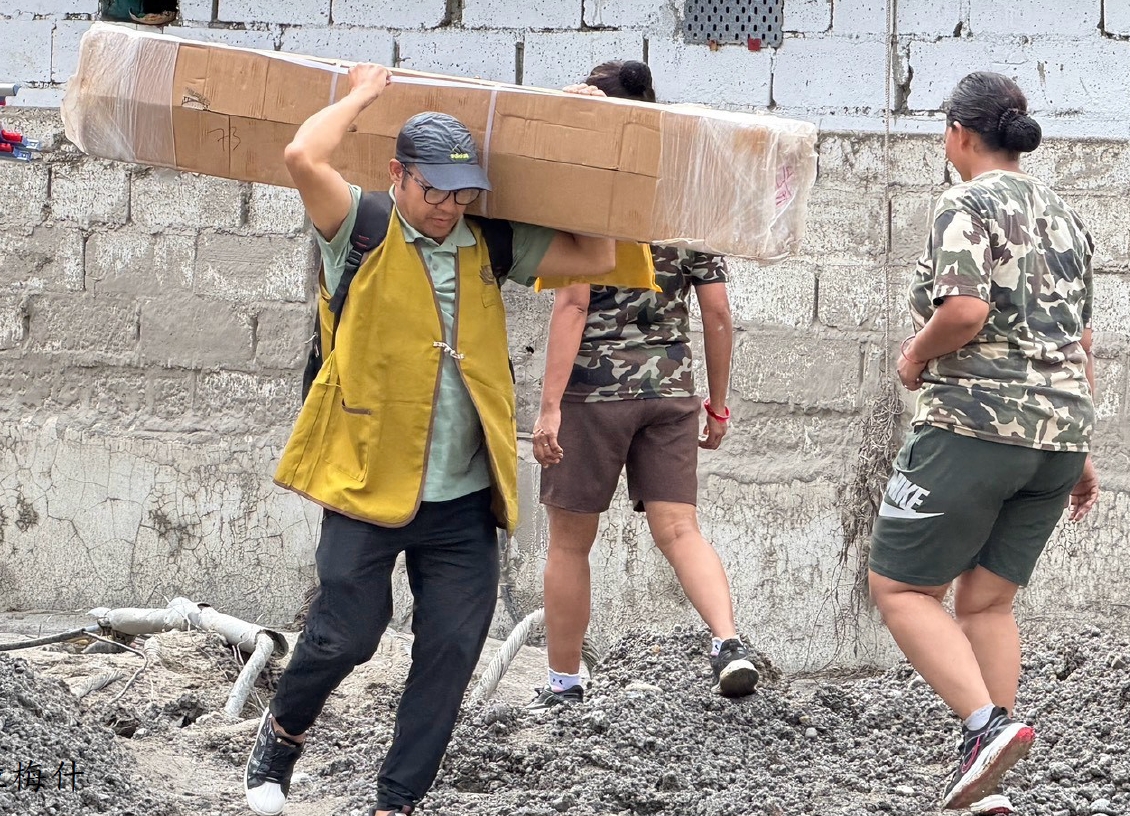
By September 6, an excavator was brought in to clear mud from the access roads, significantly improving conditions at the front entrance. Through collective effort, approximately 70 percent of the hospital’s interior spaces were cleared within days.
Rapid procurement and facility setup
To ensure local residents would not remain without medical care, a goal was established to reopen outpatient and emergency services within ten days, setting September 7 as the target date. While teams on the ground cleared mud and washed flood-soaked operating room equipment, Dr. Ching Chen Hua (莊宛佳) and volunteer Lee Meow Hong (李妙紅) traveled to Bangkok to coordinate with medical equipment suppliers. Several vendors provided equipment at discounts of up to 80 percent to assist the recovery.
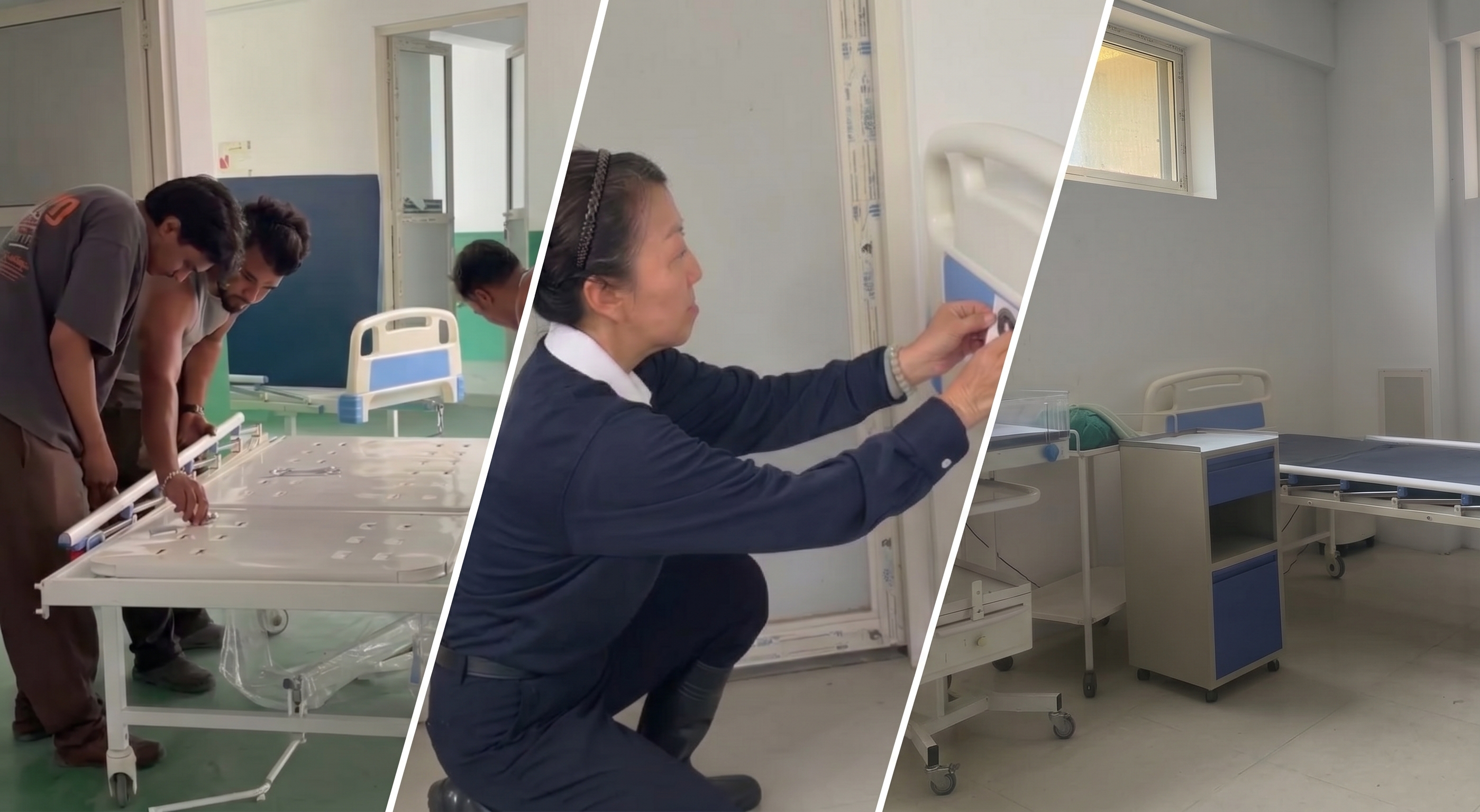
More than 350 types of medical equipment totaling nearly 5,000 items were procured and delivered, including laboratory instruments, X-ray units, ultrasound diagnostic systems, emergency room beds, wheelchairs, and clinical consumables. On the afternoon of September 6, as shipments arrived, volunteers and contractors worked together to arrange beds and cabinets across three temporary wards, establishing clear spatial workflows. Three new iron gates were also installed to secure the damaged main entrance.
Reopening emergency care for the community
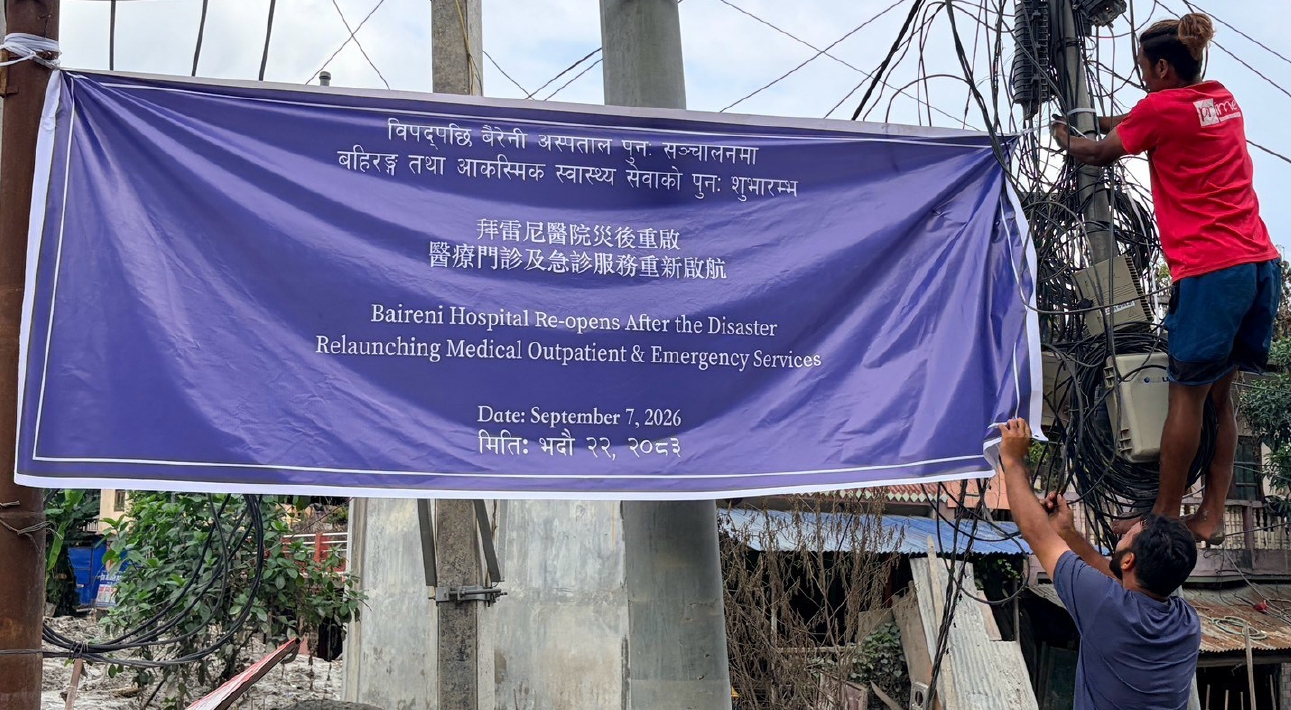
On September 7, Baireni Hospital officially resumed outpatient and emergency services amid morning prayers. A banner was raised along the main road to notify nearby villagers that medical care was once again available. Word spread quickly through local taxi drivers, and on the first day, all four emergency beds were occupied by arriving patients.
Kedarnath Khatiwada, Chairman of Gajuri Rural Municipality, sent a letter to the Social Welfare Council expressing gratitude to the volunteer teams for their rapid response in cleaning the facility, providing medical support, and distributing emergency supplies. Deeply moved by the joint recovery effort, the hospital director reflected on the facility's restored mission:
The hospital is my child, and the patients are my family. — Hospital Director, Baireni Hospital
On September 13, an official reopening ceremony was held, attended by 350 local leaders, government officials, and police representatives.
Protecting lives and welcoming new beginnings
The rapid restoration of services immediately impacted local healthcare. Shortly after emergency care resumed, medical staff treated a three-year-old child who had fallen from a three-story height, stabilizing the young patient before arranging transfer to a specialized teaching hospital in Kathmandu.
The addition of new diagnostic ultrasound equipment provided essential support for maternal care in Dhading District, where prenatal screening resources are scarce and maternal mortality rates remain high. Within days of reopening, three healthy infants were successfully delivered at the facility.
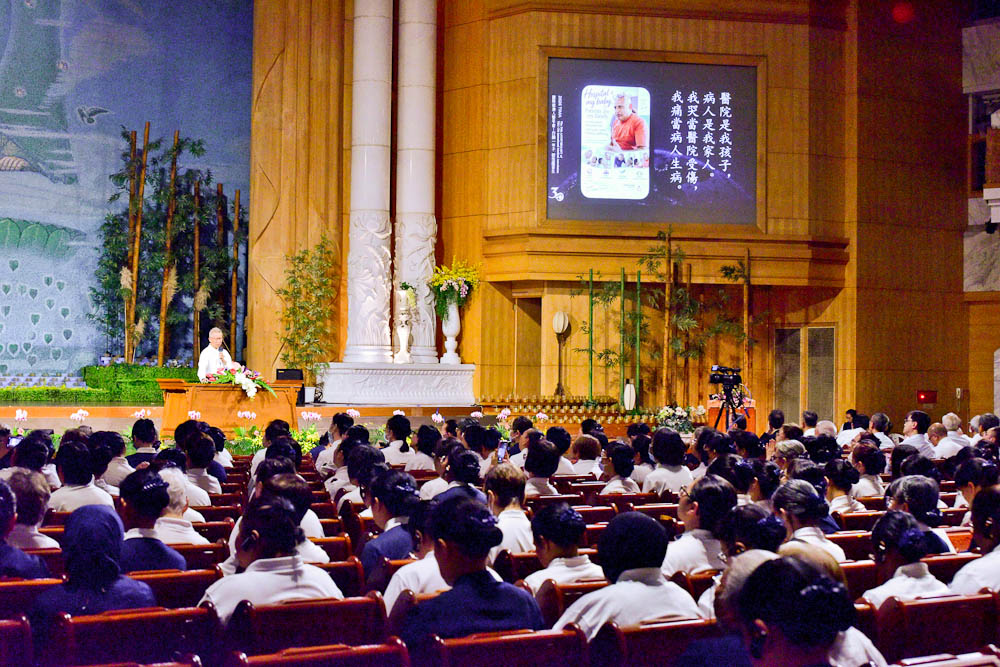
Reflecting on the recovery effort during a presentation at the 2026 Tzu Chi International Medical Association (TIMA) convention in Taiwan, Dr. Tang Kiat Beng (陳吉民) shared photos and videos of the mothers holding their newborns:
Tzu Chi fulfilled its promise to help reopen this flood-affected hospital within ten days, restoring medical care to protect local lives. — Dr. Tang Kiat Beng
Through coordinated cleaning, rapid equipment procurement, and local partnership, Baireni Hospital was transformed from a mud-covered structure back into a functioning center of healing for the people of Dhading District.
Written by Jessica Huang (黃秋惠)
