


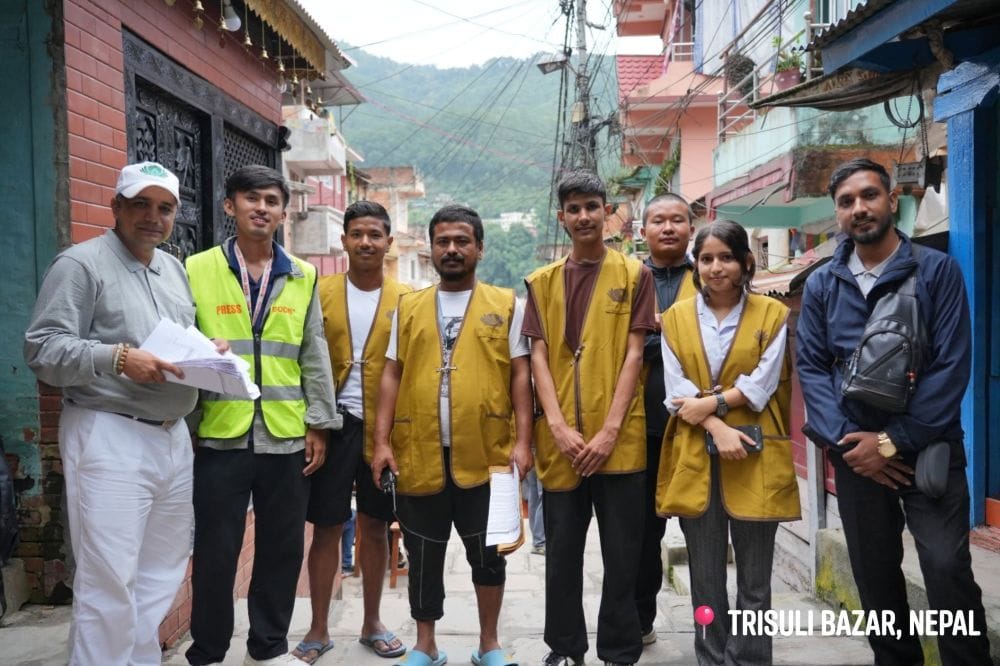
In flood-hit communities across Nuwakot District, Nepal, the immediate emergency response has shifted to preparations for Tzu Chi's upcoming relief distributions. In Bidur, Trisuli Bazar, Gerkhutar, and remote communities along the Trishuli River, local volunteers have been going door to door to register families in need and help ensure that relief supplies reach those who need them most.
Local volunteer Sujita Thapa continued helping others despite losing her own home in the floods. "What has happened has already happened," she said quietly. "During such a difficult time, I thought I should help others."
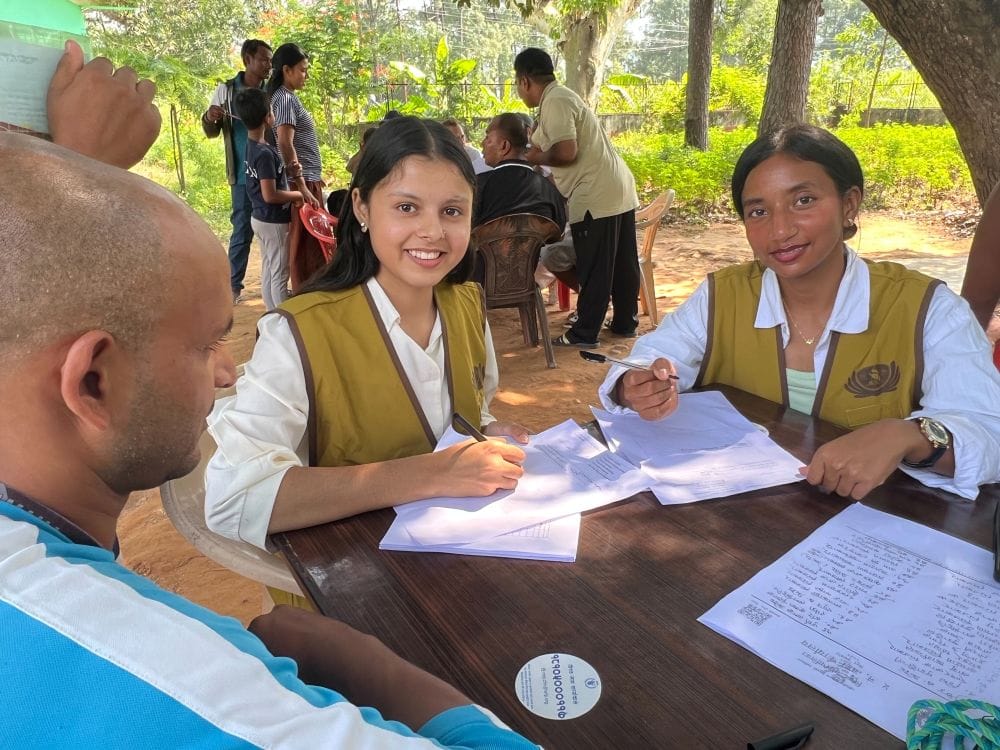
Seventeen-year-old Pratiba Rimal, a Grade 11 computer science student at Tribhuvan Trishuli Secondary School, also joined the team carrying out household registrations.
The 1,577-household census
In Trisuli Bazar, floodwaters swept away the main bridge, severing road access and leaving residents stranded without reliable access to food and emergency aid. To reach these isolated families, Tzu Chi volunteers crossed the river via a ropeway. With the crossing limiting the number of volunteers who could reach the area, residents on the opposite bank stepped in to guide them along footpaths strewn with debris and point out the families in greatest need.
In Bidur and surrounding villages, local volunteers are working with municipal ward offices to register affected households. Sitting with families to understand their circumstances, they document household members and other key details, verify identity cards, map family relationships, and enter the information into an emergency database to support relief planning and distribution.
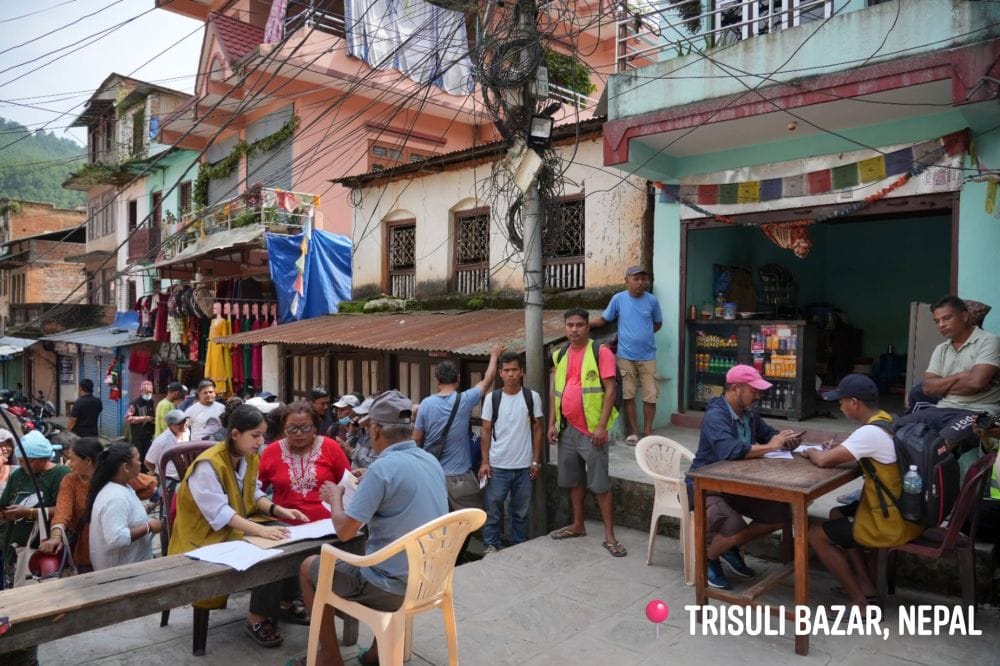
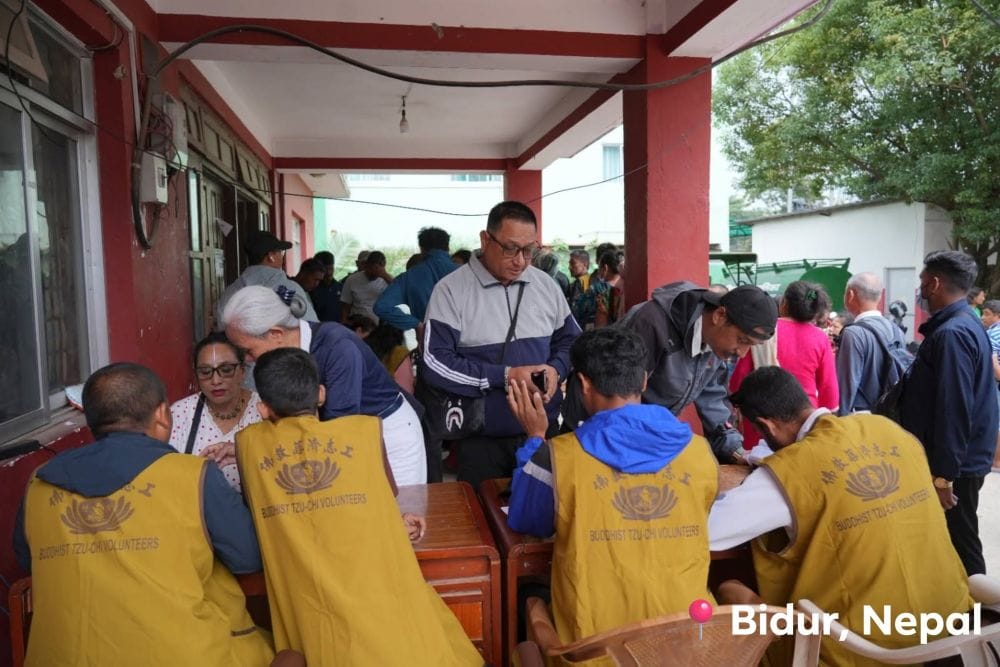
LEFT: In Trisuli Bazar-03, Nuwakot, Tzu Chi volunteers begin registering flood-affected families to assess their needs and prepare for relief distribution. RIGHT: Local volunteers register families from Dhunge village, Bidur Municipality-02, for flood relief. | Photos: Tzu Chi Nepal
Families are also struggling emotionally. After losing their homes, they are anxious about where they will live and how they will manage after losing what they spent years building.
We want to help as much as we can, which is why we are taking part in the household surveys. I also want to invite my friends to join us. At first, I wasn't sure how I would feel about doing this work, so I didn't ask them to come. But today, after seeing how meaningful it feels to help others, I'm happy I took part. Starting tomorrow, I plan to invite my friends to come along. If we help one another, we can get back on our feet together. I want to encourage everyone to join us in rebuilding our community. — Pratiba Rimal, student at Tribhuvan Trishuli Secondary School
Nani's new pushcart
For small street vendors, losing a home can also mean losing their livelihood. In Bidur, Nani Pariyar had supported herself by running a small tea and snack stall. The floods destroyed her home and swept away her cooking equipment, forcing her to seek shelter in a temporary relief center while coping with a chronic illness.
Recognizing that recovery also means helping people regain their independence, Tzu Chi provided Nani with a new, heavy-duty commercial pushcart equipped with a gas cylinder, stove, cooking utensils, and a grinding machine.
Tzu Chi Foundation vice president Pi-yu Lin (林靜憪) traveled to Bidur to join the inauguration of Nani's cart. Walking alongside Nani as they pushed the fully equipped cart through the streets, Lin then stood by the hot stove to help prepare the first batch of chow mein. Neighbors gathered to cheer them on, bringing a moment of joy to a community still recovering from the disaster.
For Nani, the cart was more than a set of cooking equipment. It offered a way to rebuild her livelihood, regain her independence, and move forward with dignity.
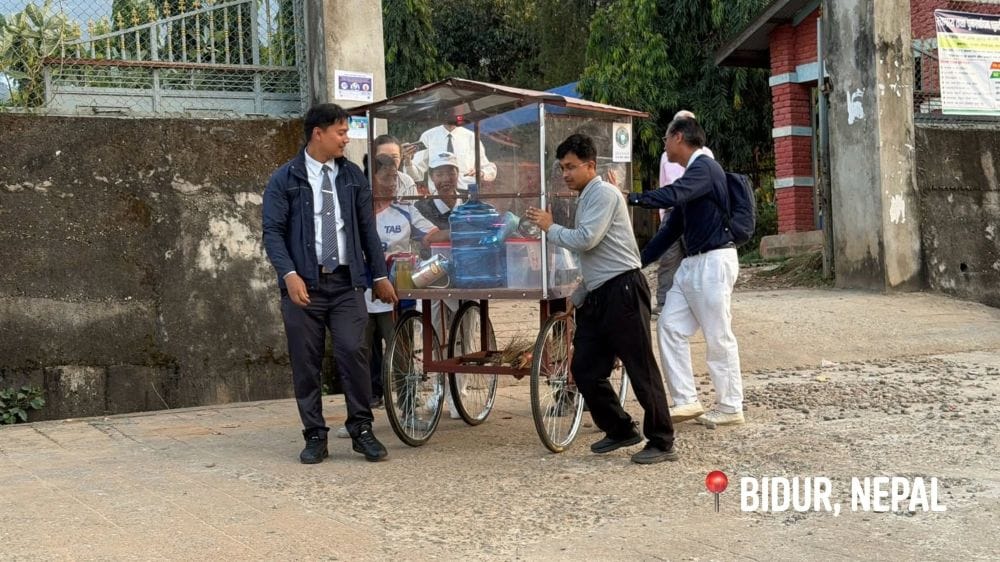
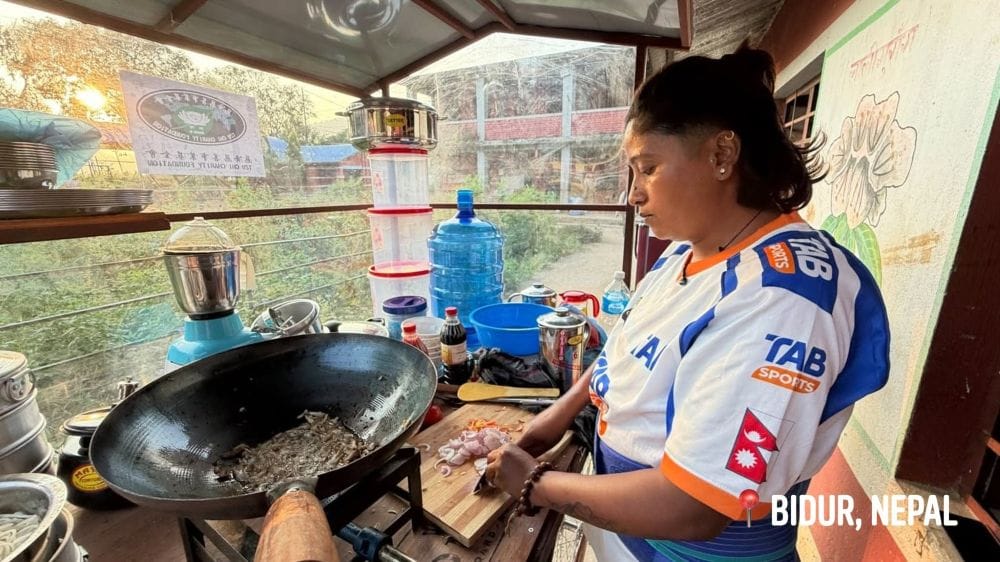
LEFT: Tzu Chi provides Bidur resident Nani Pariyar with a new pushcart and essential equipment to help her rebuild her livelihood. RIGHT: Nani Pariyar fries her first batch of chow mein using the new pushcart provided by Tzu Chi. | Photos: Tzu Chi Nepal
Walking together toward tomorrow
From study benches that help displaced students return to class to long-term reconstruction plans drawn up with local authorities, the work in Nuwakot now reaches past emergency relief. Most of it is still carried out by people who lost their own homes, and who show up for their neighbors anyway.
Written by Tzu Chi Foundation
