


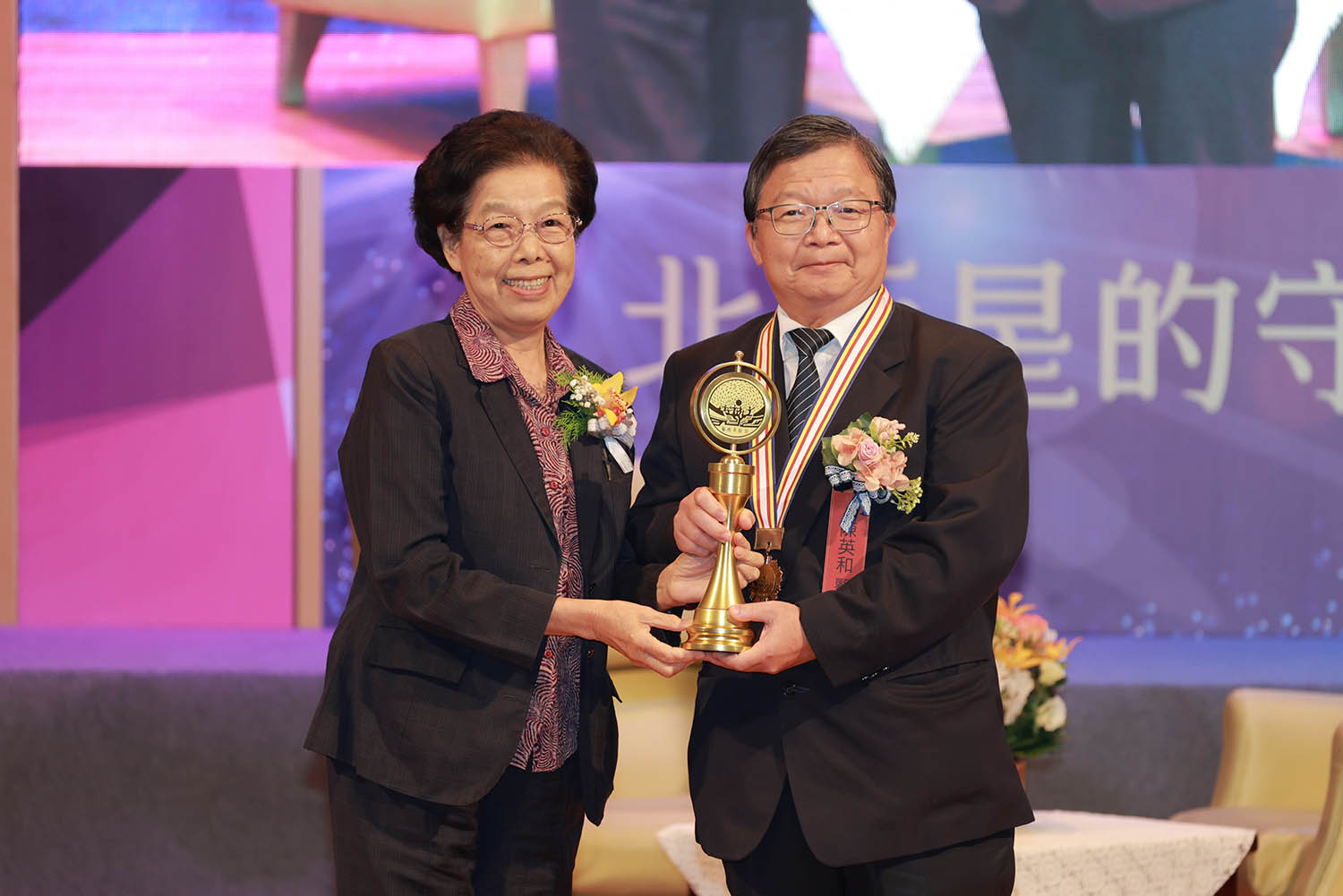
In eastern Taiwan, where mountains stretch long and communities are scattered, medical care once meant hours of travel for many families. For decades, people in Hualien and Taitung (in the remote east coast of Taiwan) made difficult journeys to reach treatment—often while in pain, often unsure whether they could obtain help in time. It was in this setting that Ing-Ho Chen (陳英和) chose to build his career, shaping not only a hospital department but the lives of countless patients.
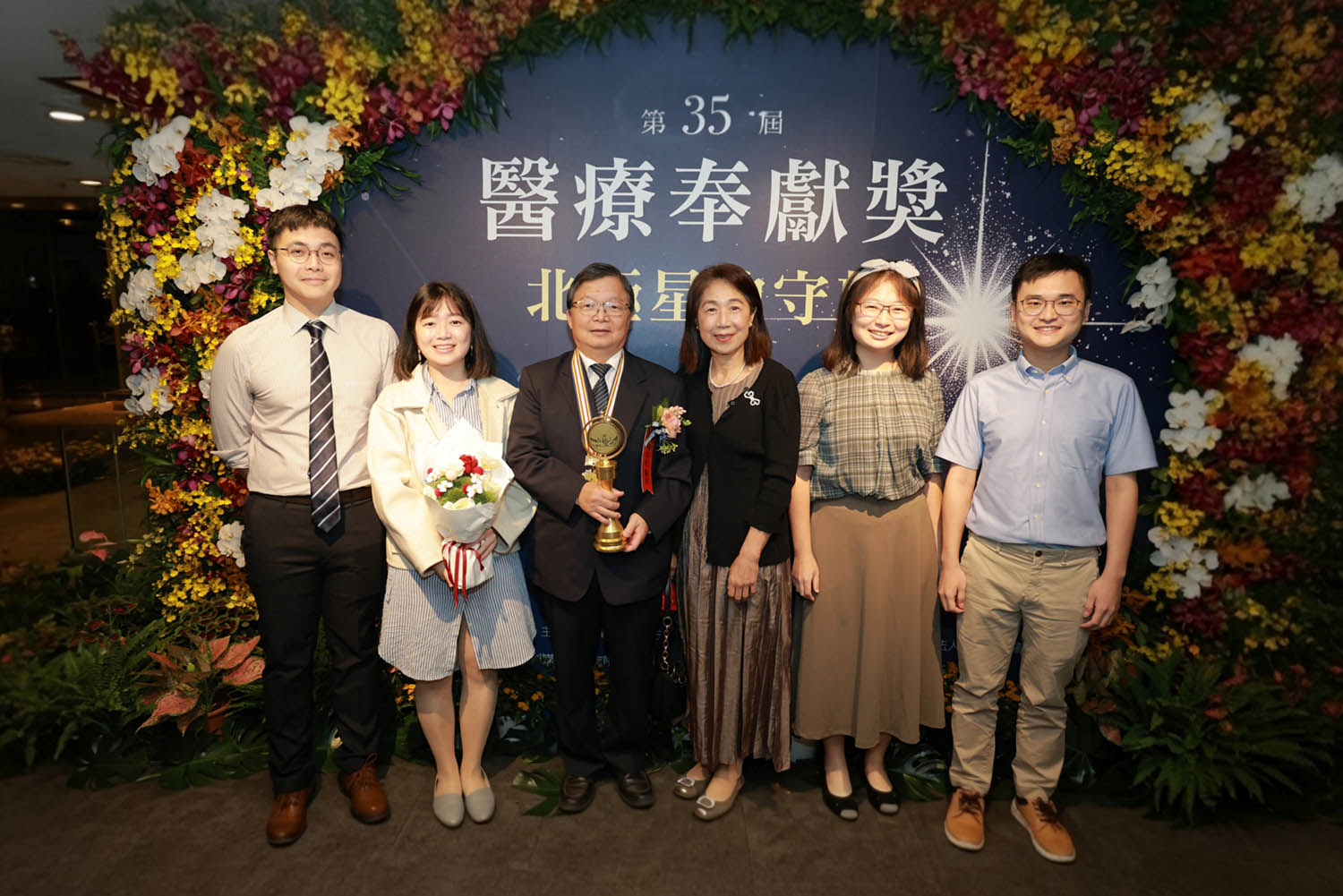
On November 1, Chen, honorary superintendent of Hualien Tzu Chi Hospital, received the Medical Dedication Award from the Kwoh-Ting Foundation at its 35th annual ceremony. The honor recognized more than four decades of clinical work, teaching, and patient care rooted in Taiwan’s east.

Choosing where he was needed most
More than 40 years ago, eastern Taiwan faced severe shortages of medical staff and resources. Although Hualien Tzu Chi Hospital officially opened in August 1986, recruiting physicians willing to relocate remained a challenge. After completing orthopedic specialty training at National Taiwan University Hospital, Chen became the first physician to report for duty in Hualien.
At the time, he weighed where his efforts could make the greatest difference. In Taipei, his work would have added to an already strong system. In the east, it could mean access to care where little existed. He took on outpatient services, surgery, teaching, and team-building—responsibilities that continued year after year.
Shortening long roads to treatment
Hualien and Taitung together account for more than one-fifth of Taiwan’s land area. Decades ago, roughly one-third of Hualien Tzu Chi Hospital’s patients came from Taitung, facing round trips of five to six hours. Chen joined outreach clinics in mountain villages and remote communities and worked to recruit younger orthopedic surgeons to form a stable team.
The goal was simple: ensure patients could receive quality care closer to home. Over time, the doctors he mentored went on to serve not only within the Tzu Chi system but also in hospitals across Taiwan, extending that impact beyond one region.
Helping patients stand again
Over 45 years of practice, Chen became known for steady surgical judgment and a willingness to tackle difficult cases. In 1991, he performed Taiwan’s first corrective surgery for severe kyphosis caused by ankylosing spondylitis, a condition that can bend the spine forward to the point where patients cannot look ahead. Since then, he has treated more than 200 people with the disease, restoring posture and mobility that many had thought impossible.
The technique later appeared in the eighth edition of Orthopaedic Knowledge Update, a U.S. medical textbook used by physicians worldwide.
His work also extended to minimally invasive knee replacement and joint reconstruction. When existing instruments failed to meet surgical needs, Chen designed a minimally invasive knee replacement tool set, eventually earning multiple domestic and international patents, along with national innovation awards. For patients, the results were less abstract: shorter recoveries, improved movement, and a return to daily life.
Care that begins with respect
Stories about Chen circulate quietly among patients and staff. In consultations, he was known to crouch down to examine wounds closely, even using smell to detect infection when necessary. After skin graft surgery, knowing how fragile the new tissue could be, he once inflated hundreds of balloons to create soft cushions for amputees to sit on.
Such details mattered to those receiving care, many of whom had traveled long distances and endured years of discomfort before finding help.
Lives reshaped by treatment
Among Chen’s most challenging cases was Xiaodong (曉東), who arrived from Xiamen in 2013 with spinal deformity exceeding 200 degrees. His body was bent so sharply that his nose touched his knees. After multiple surgeries in Hualien, his spine was corrected by 140 degrees, allowing him to stand upright when he returned home.
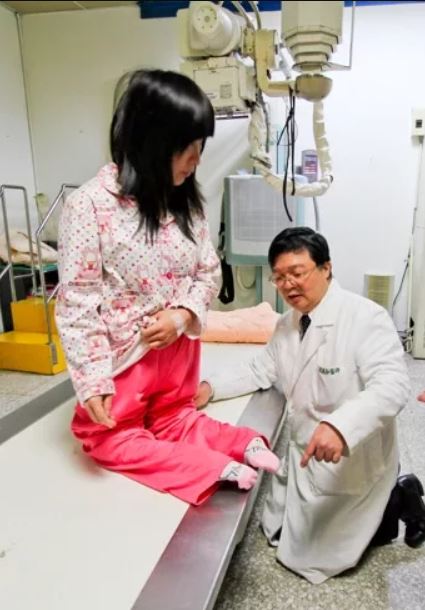
Another patient from Xiamen, Tuanzhi (團治), was born with an extremely severe congenital knee hyperextension combined with clubfoot deformity. Medical literature offered only two comparable cases worldwide. She came to Taiwan in 2014 and underwent innovative corrective surgeries that combined closed and open osteotomy techniques. Each knee was corrected by 160 degrees, and her height increased from 93 to 128 centimeters.
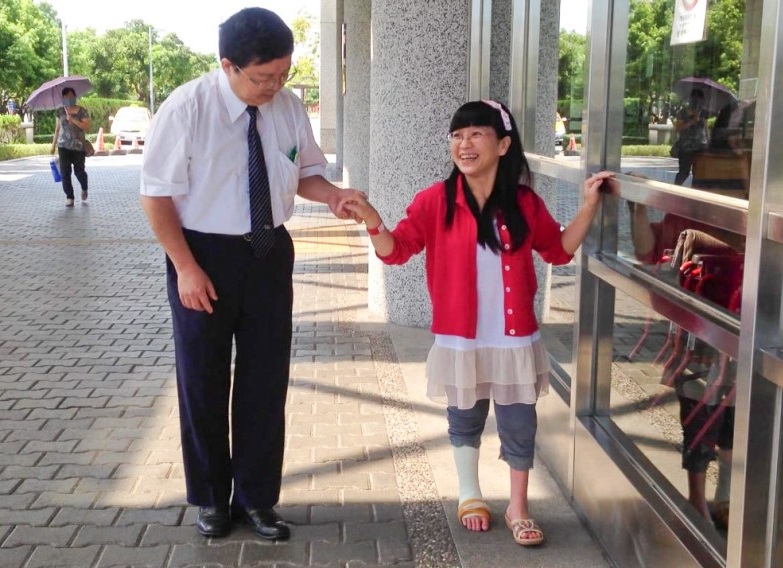
During rehabilitation, Chen personally demonstrated walking and stair climbing while wearing a pneumatic ankle brace, helping Tuanzhi and her family envision life after surgery. She later referred to him affectionately as “hospital dad” and invited him to her wedding. Today, she is a mother of two.
Learning from patients
At the award ceremony, Chen spoke on behalf of all recipients. He said he felt humbled receiving the honor, noting that many doctors were working in conditions far more remote than his own. He described the occasion as a learning journey and a reminder to keep striving.

Throughout his career, Chen often told students to “learn from the illness itself,” urging respect and gratitude toward patients. He encouraged young doctors not to avoid complex cases but to think carefully about what would serve patients best. Clinical experience, he believed, was a shared resource—knowledge gained from patients should be passed on so others could recover sooner.
Why rural medicine matters
Chen has often reflected that practicing in rural areas, while demanding, offers something rare in modern medicine: trust. In smaller communities, doctors and patients tend to see one another as family. With fewer pressures and incentives, he said physicians can follow medical principles more closely and use advanced technology judiciously.
For him, rural healthcare became an ongoing lesson in medical ethics and purpose. Joining the early days of Hualien Tzu Chi Hospital allowed him to build an orthopedic department alongside colleagues who shared the same commitment. Accepting the award, he emphasized that he stood on stage as a representative; the recognition belonged to the entire team.
After four decades, his work continues to echo in the lives of those who can now walk, stand upright, and return home with dignity—often without having to travel so far for care.
Source: Hualien Tzu Chi Hospital
