


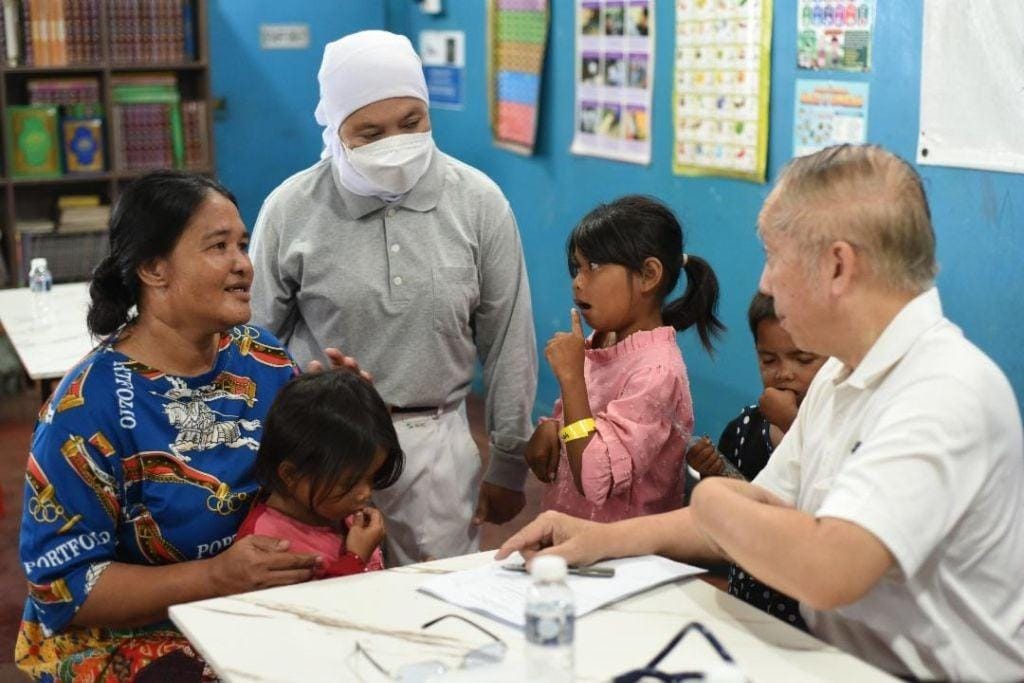
For many stateless residents living in the coastal villages of Lahad Datu, Sabah, accessing healthcare is a daunting challenge. Without legal identification, they are subjected to medical fees far higher than those of regular citizens. A single hospitalization or surgery often leads to crippling debt, forcing some families to borrow from high-interest lenders just to survive.
To address this critical need, the Tzu Chi International Medical Association (TIMA) from Kuala Lumpur and Selangor, alongside Tzu Chi volunteers from Lahad Datu, returned to Kampung Panji on June 14, 2026. Following a previous medical outreach in September 2025, the team arrived to provide free medical services to the community.
Setting up a temporary clinic
The medical team arrived at Kampung Panji early in the morning. Since vehicles could not enter the settlement, volunteers carried medical equipment, medications, tents, and tables on foot. The ten-minute walk required navigating grassy paths and makeshift walkways constructed from discarded tires. Houses in the village are built over a swamp littered with refuse, connected by narrow, winding wooden planks that require careful footing.
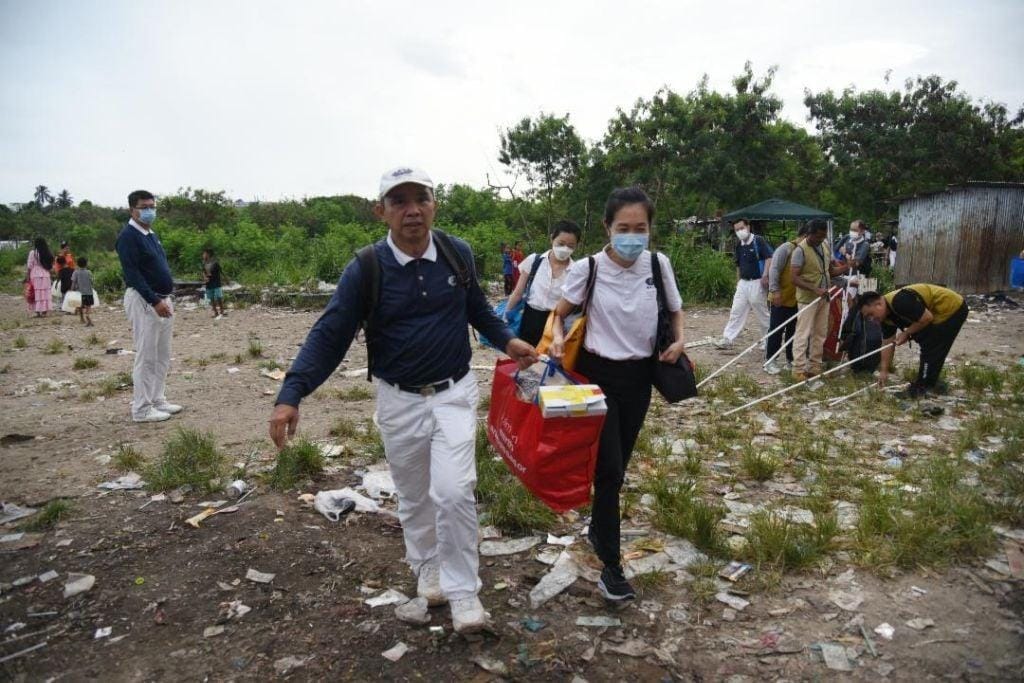
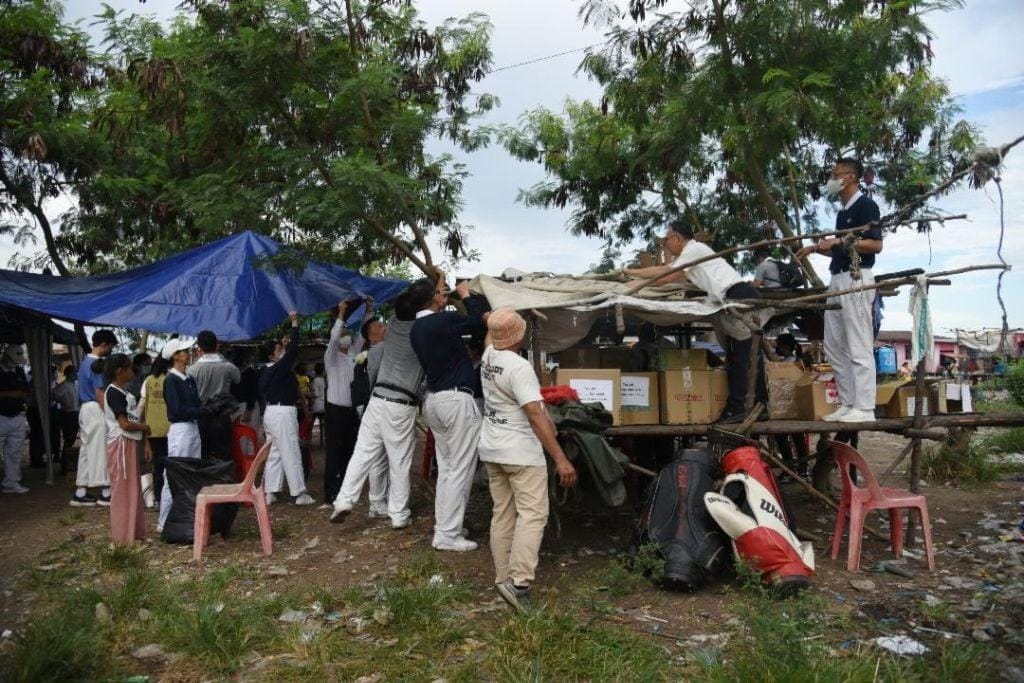
LEFT: Volunteers carry supplies into the village, a 10-minute walk from the main road. RIGHT: Volunteers quickly set up tents to create a basic medical outreach site. | Photos: Mong-Ping Chai
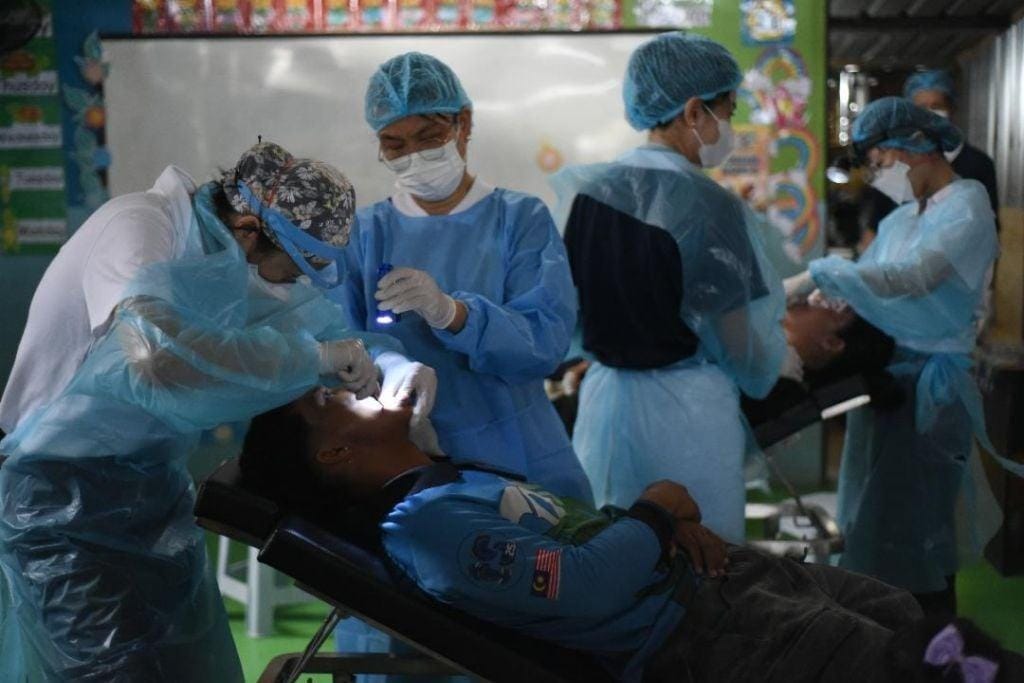
Upon arrival, volunteers transformed an open dirt field—typically used by residents for sports and recreation—into a functioning clinic. Within a short time, a waiting area, registration desk, and pharmacy were established. The general outpatient clinic was set up inside a local prayer room, while an adjacent small religious classroom served as the dental clinic.
Community support and education
Beyond medical scarcity, stateless children in the village also face significant educational barriers. Ibnu Suhud Bin Abd Razi, the head of the local reading and prayer class known as Rumah Kaji, has been promoting free education in the village since 2023. His goal is to provide stateless children with opportunities to learn and grow, regardless of their documentation status.
Through these classes, children who once begged on the streets have improved their language, math, and communication skills. Many have since found ways to earn a living, such as working in markets or taking on cleaning jobs, transitioning from dependency to self-reliance.
Familiar with Tzu Chi’s ongoing social initiatives in Kampung Panji, Ibnu offered the Rumah Kaji facilities for the medical outreach.
The villagers cannot afford expensive medical fees. Since Tzu Chi is providing free medical services, we are of course very happy to offer our space for use. Since last year's medical outreach, the villagers have been looking forward to Tzu Chi's return. Early this morning, residents began arriving, and even elderly people on crutches waited patiently for their consultations. — Ibnu Suhud Bin Abd Razi, Head of Rumah Kaji

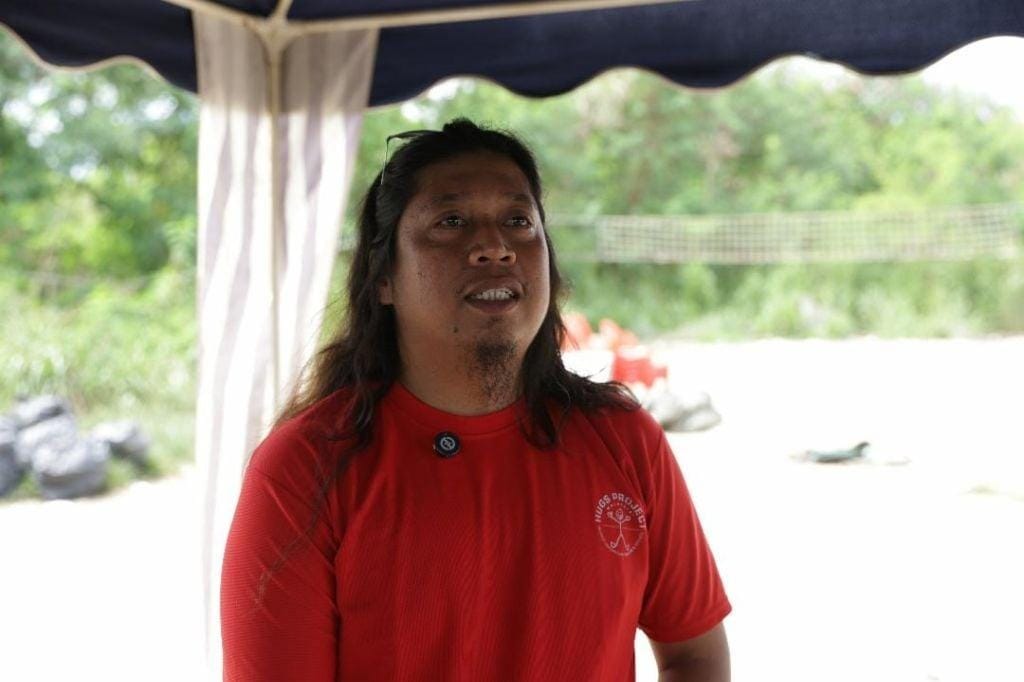
LEFT: Love knows no borders. Tzu Chi volunteers provided free medical care to the villages. | Photo: Mong-Ping Chai RIGHT: Upon learning that the members of free clinic had all paid for their own medical services and took time off work to travel from afar to provide assistance, Ibnu was deeply moved and expressed his gratitude to everyone. | Photo: Keat Yee Choong (鍾國義)
Ibnu observed that the outreach provides more than just medical treatment; it offers residents a sense of care. In the past, some villagers were fearful of injections and avoided interacting with outsiders. However, with patient explanations from the medical staff, their trust in the healthcare process is being built and they are learning the importance of managing their health.
From a humanitarian perspective, this service is very important to the residents. I hope the medical outreach can become an annual event to continuously track the residents' health, which would be even better. Thank you to all the doctors and volunteers who are willing to put aside their own work and dedicate their time and effort to help the residents here. — Ibnu Suhud Bin Abd Razi, Head of Rumah Kaji
Addressing family health concerns
For residents facing both financial and systemic restrictions, the medical outreach provides much-needed relief. Amina binti Victor, 25, is a single mother raising five children, two of whom a deceased relative entrusted to her. Without identification, she cannot secure stable employment and relies on begging to support her family.
Recently, one of her children injured their leg on a metal table, impairing their ability to walk. Unable to afford a hospital visit, Amina resorted to traditional massage therapies to ease the child's discomfort. When the free clinic opened, she brought her children in for a proper examination. The doctor assured her that the leg injury was not severe and would heal over time, providing a referral letter for an X-ray at the Lahad Datu Government Hospital just to ensure there were no fractures.
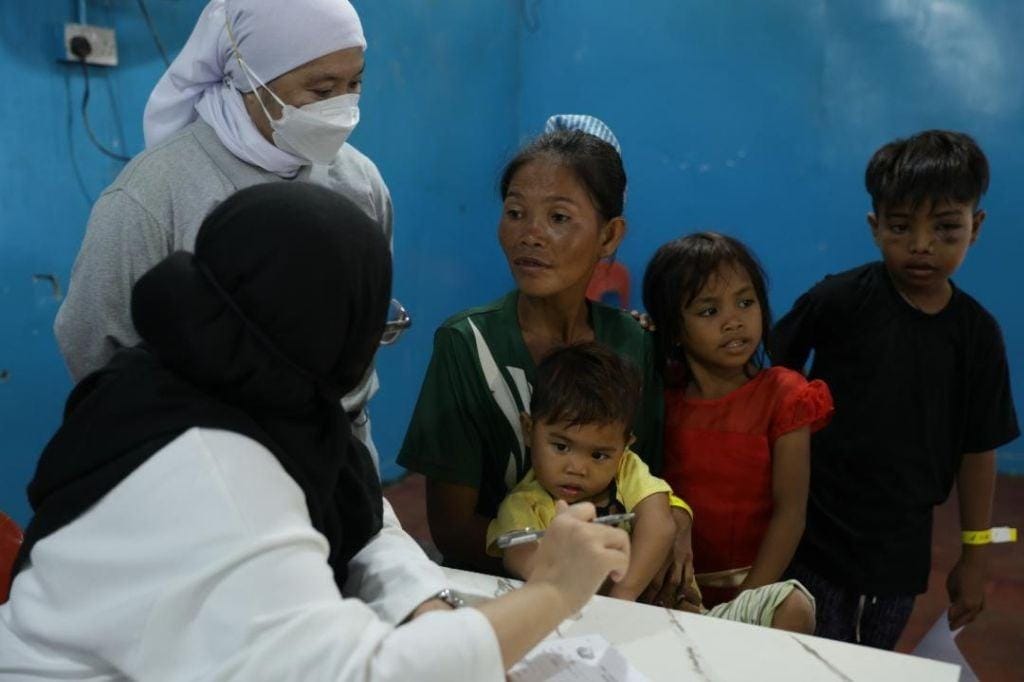
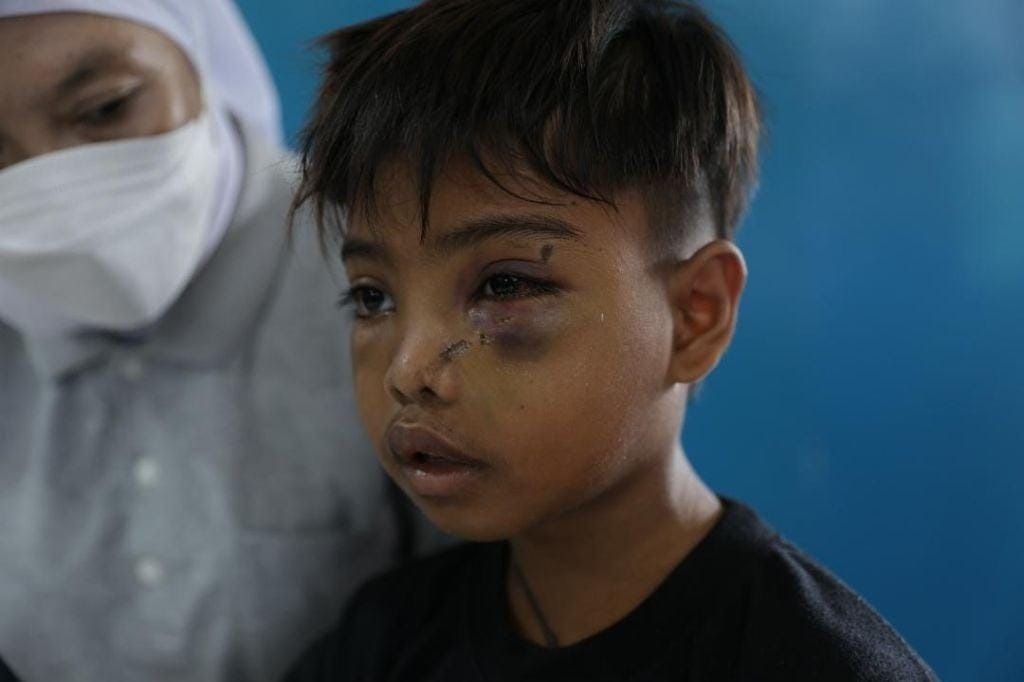
LEFT: Amina binti Victor (center) brings her child for a consultation, finding relief after the check-up. RIGHT: Amina's entrusted child suffered a bruised eye from a fall, but vision was unaffected. | Photos: Keat Yee Choong
Amina’s other child had fallen from a bridge and hit a boat, resulting in bruising and bleeding in the left eye. Following a detailed examination, the doctor confirmed that, fortunately the child's vision and the internal structure of the eye were unharmed. The medical team provided eye drops and advised Amina to monitor the condition. Amina, who was also treated for chronic dizziness, expressed profound relief.
I am very grateful that you came to check our bodies and care for our health. — Amina binti Victor, Resident
Recovery and gratitude
The health challenges in Kampung Panji are often compounded by years of delayed treatment. Aning, 45, first met volunteers during a relief distribution on July 14, 2024. At the time, she was suffering from a swelling on the right side of her face but could not afford a hospital visit. She had been using traditional herbal compresses for three years, yet the tumor continued to grow.
With the organization's assistance, Aning underwent surgery at the Lahad Datu Government Hospital on November 20, 2024. The tumor was benign, relieving her worries.
I was very scared at the time. If I passed away, what would happen to my children? — Aning, Resident
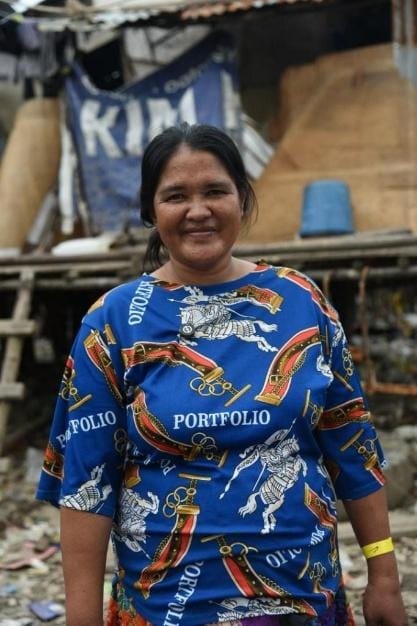
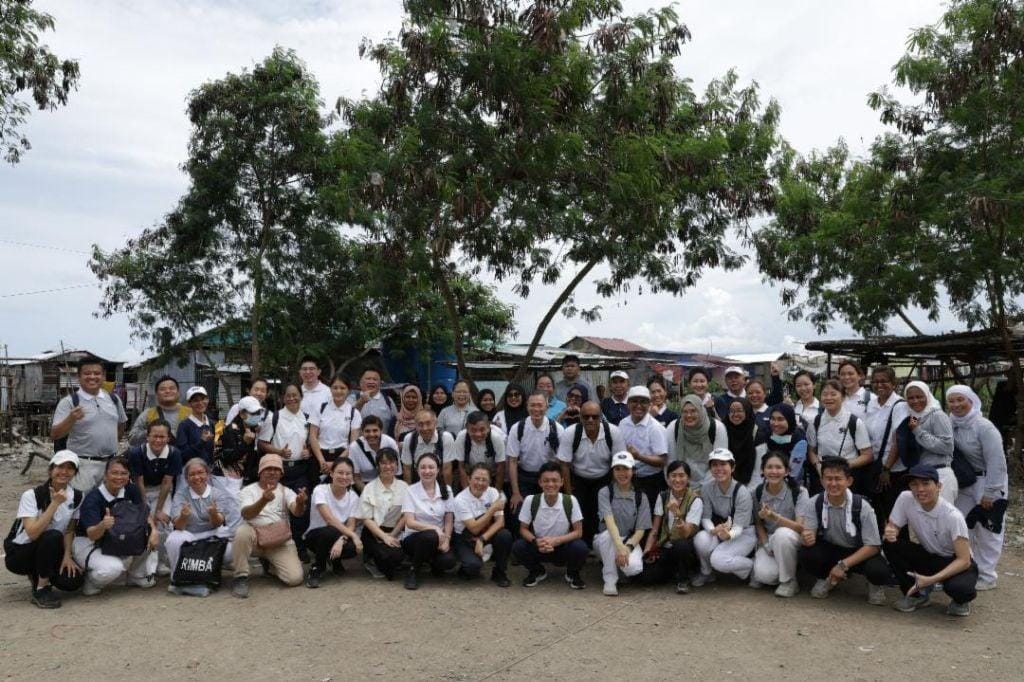
LEFT: Fully recovered, Aning smiles brightly. She visited the site for anti-itch medication and to express gratitude for her tumor surgery two years ago. | Photo: Mong-Ping Chai RIGHT: Following their free clinic on September 11, 2025, Tzu Chi Volunteers from Selangor and Kuala Lumpur, together with volunteers from Lahad Datu, Sabah, once again visited this area to provide free medical care to the village residents. | Photo: Keat Yee Choong
Now fully recovered, Aning visited the medical outreach to receive medication for a recent skin irritation and to personally thank the volunteers. Although her family still faces daily hardships—relying on her husband’s unstable income from catching crabs—the successful surgery has given her a renewed perspective on life. Seeing familiar faces at the clinic brought her a deep sense of comfort.
While a single medical outreach cannot resolve all the systemic issues faced by the village, it provides essential support and visibility to those who are often overlooked. By bringing healthcare directly into the community, medical professionals and volunteers are helping to alleviate immediate suffering and ensure that vulnerable families have access to the care they need.
Written by Ah Tong Sia (謝亞忠)
