


Before the first light of dawn reached the Hualien Jing Si Hall on May 10, a quiet assembly of monastics, volunteers, and community members gathered with palms joined in prayer. This year’s Buddha Day ceremony marked a historic milestone: the 60th anniversary of Tzu Chi. The event remains a unique "three-in-one" celebration, weaving together the spiritual significance of Buddha Day, the filial gratitude of Mother’s Day, and the humanitarian legacy of Global Tzu Chi Day.
What began six decades ago with thirty housewives saving coins in bamboo banks has grown into a global movement serving 139 countries and regions. More than 3,500 people attended the Hualien ceremony, while participants from 42 countries joined via live connections to sacred sites, including Vulture Peak in India.
Returning to the Spirit of the Bamboo Bank
The ceremony theme, “Remembering the Original Aspiration of the Bamboo Bank Era,” reflected a hope to carry Tzu Chi’s founding spirit into the future. At the Hualien venue, ten Buddha-bathing stations formed concentric circles symbolizing unity. Large characters representing “loving-kindness, compassion, joy, and equanimity” surrounded the prayer area, while four pairs of hands represented the missions of charity, medicine, education, and humanistic culture.
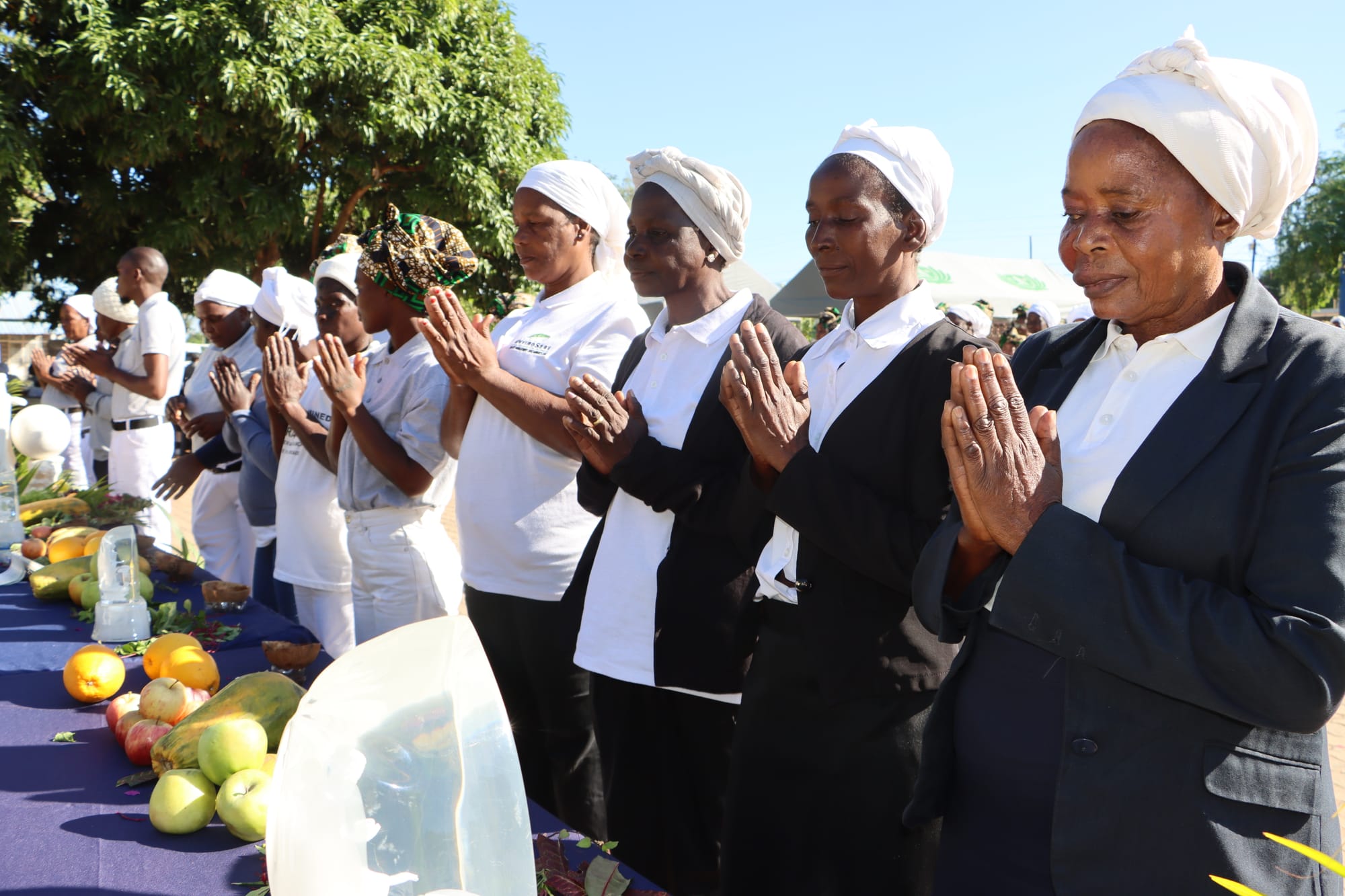


LEFT: The Buddha ceremony in Mozambique. Center: The Buddha ceremony in Thailand. RIGHT: The Buddha ceremony in Vulture Peak. Photos: Tzu Chi Foundation
Following the ceremony, Dharma Master Cheng Yen reminded participants that Buddha Day is an opportunity to reflect on gratitude for parents, teachers, and all living beings. She encouraged the assembly to transform the sincerity of the moment into harmony within their own families and society.
Treat your family with a Buddha’s heart and benefit humanity with a Bodhisattva’s heart. Together, let us create blessings for the world. I wish everyone joy in body and mind, and the cultivation of both blessings and wisdom. Always maintain a heart of gratitude—being mindful of the grace of the Triple Gem, our parents, and all sentient beings—and use wisdom to benefit humanity.— Master Cheng Yen

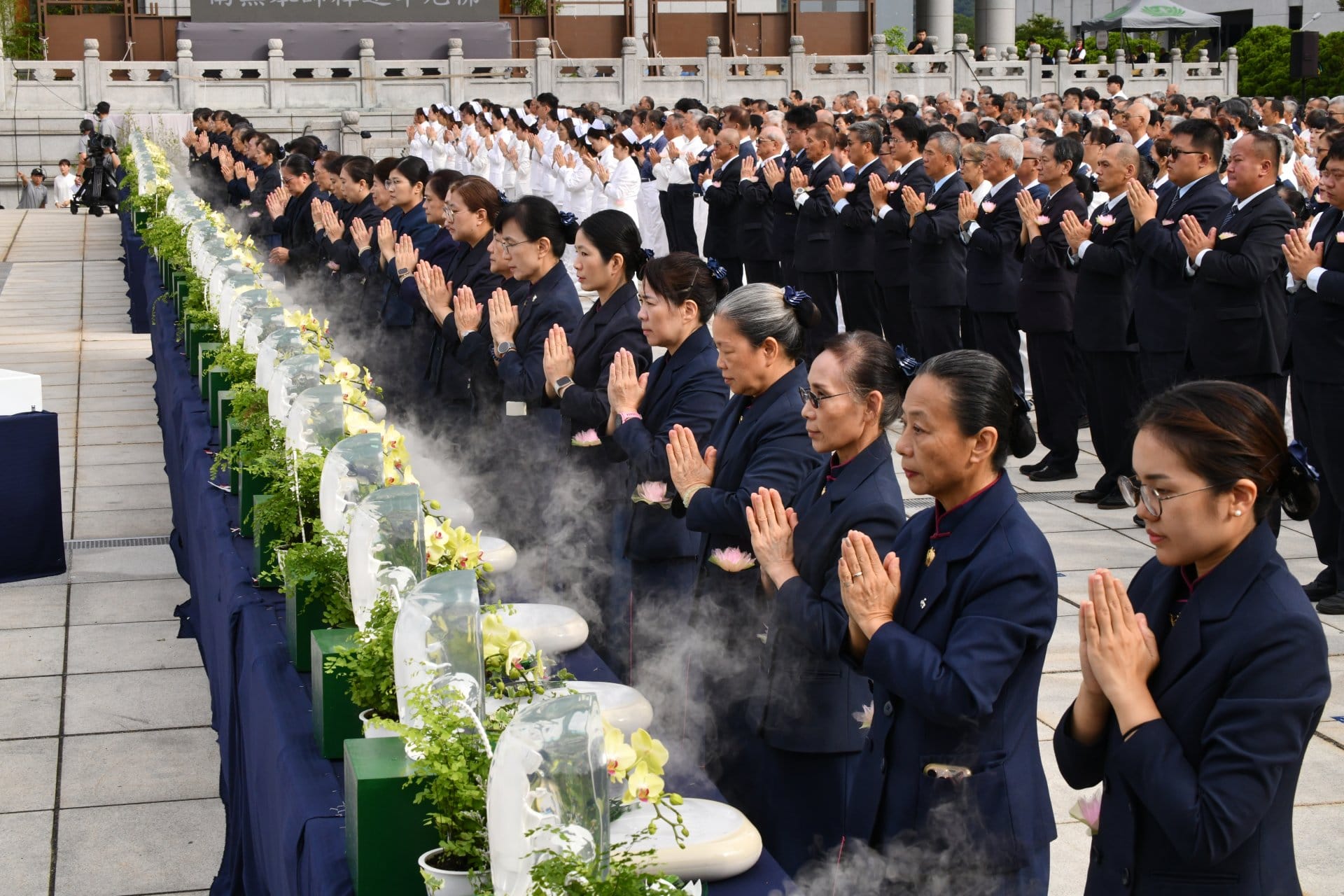
LEFT: More than 3,500 people gather at the Hualien Jing Si Hall at 7:00 a.m. on May 10 for the Buddha Day ceremony. RIGHT: Participants at the anniversary ceremony reaffirm their commitment to serving others with compassion. | Photos: Tzu Chi Foundation
Sixty years of walking alongside society
Earlier that morning, guests from Taiwan and overseas gathered for the official 60th anniversary celebration. Religious leaders and humanitarian partners reflected on the organization's growth. Vice President Bi-khim Hsiao (蕭美琴) described Tzu Chi as a vital force in strengthening social resilience, noting that volunteers consistently step forward during community crises.
Ms. Emily A. Abrera, Trustee of the Ramon Magsaysay Award Foundation, shared that while Taiwan is known for technology, its most meaningful export is the "power of goodness."
Taiwan is known for its innovative technology and exquisite craftsmanship. However, what is most meaningful about Taiwan is the power of goodness. For sixty years, Tzu Chi has upheld the spirit of compassion, bringing love and care to the world, entering disaster areas, hospitals, and schools, and warming countless lives in times of suffering. — Emily A. Abrera, Director of the Ramon Magsaysay Award Foundation

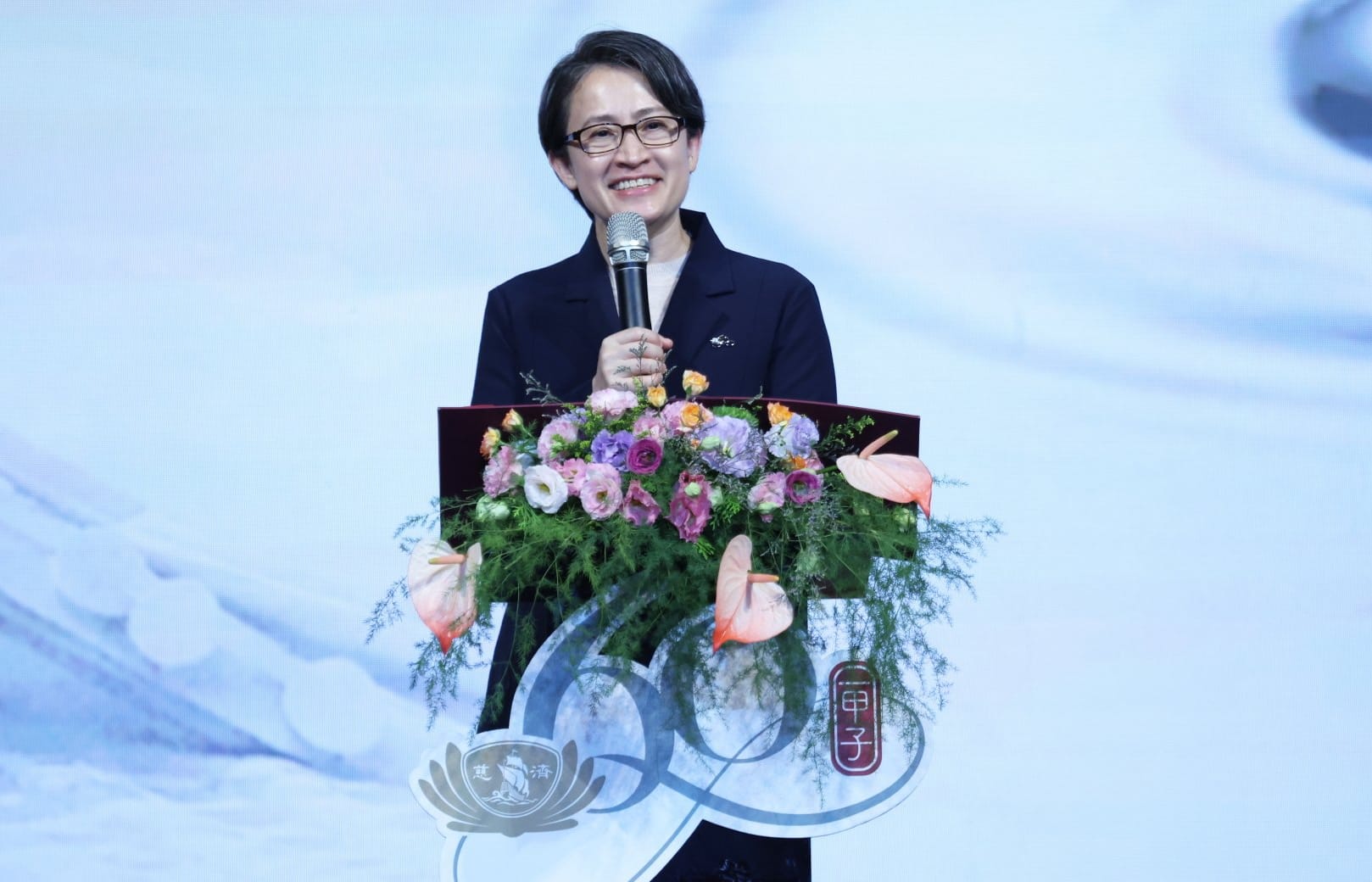
LEFT: Monastics and leaders from Tzu Chi’s four missions present an adaptation of the Sutra of Infinite Meanings during Tzu Chi’s 60th anniversary celebration. | Photo: Tzu Chi Foundation RIGHT: Taiwan Vice President Hsiao praises Tzu Chi volunteers for carrying compassion across borders. | Photo: Guang-hua Chen (陳光華)
A night of prayer in Taipei
That evening, another large-scale ceremony took place at the National Chiang Kai-shek Memorial Hall in Taipei, where more than 10,000 participants gathered. The ceremony brought together over 600 monastics, civic leaders, and diplomats, including Taiwan's President Ching-te Lai and American Institute in Taiwan Director Raymond Greene.
The venue design drew inspiration from Lumbini, the Buddha’s birthplace, featuring a large illuminated globe representing the aspiration to spread compassion worldwide. As chants filled the plaza, thousands of lanterns glowed in a moment of collective reflection. President Lai thanked the volunteers for their decades of service, stating that their actions help the world see the warmth of Taiwan.
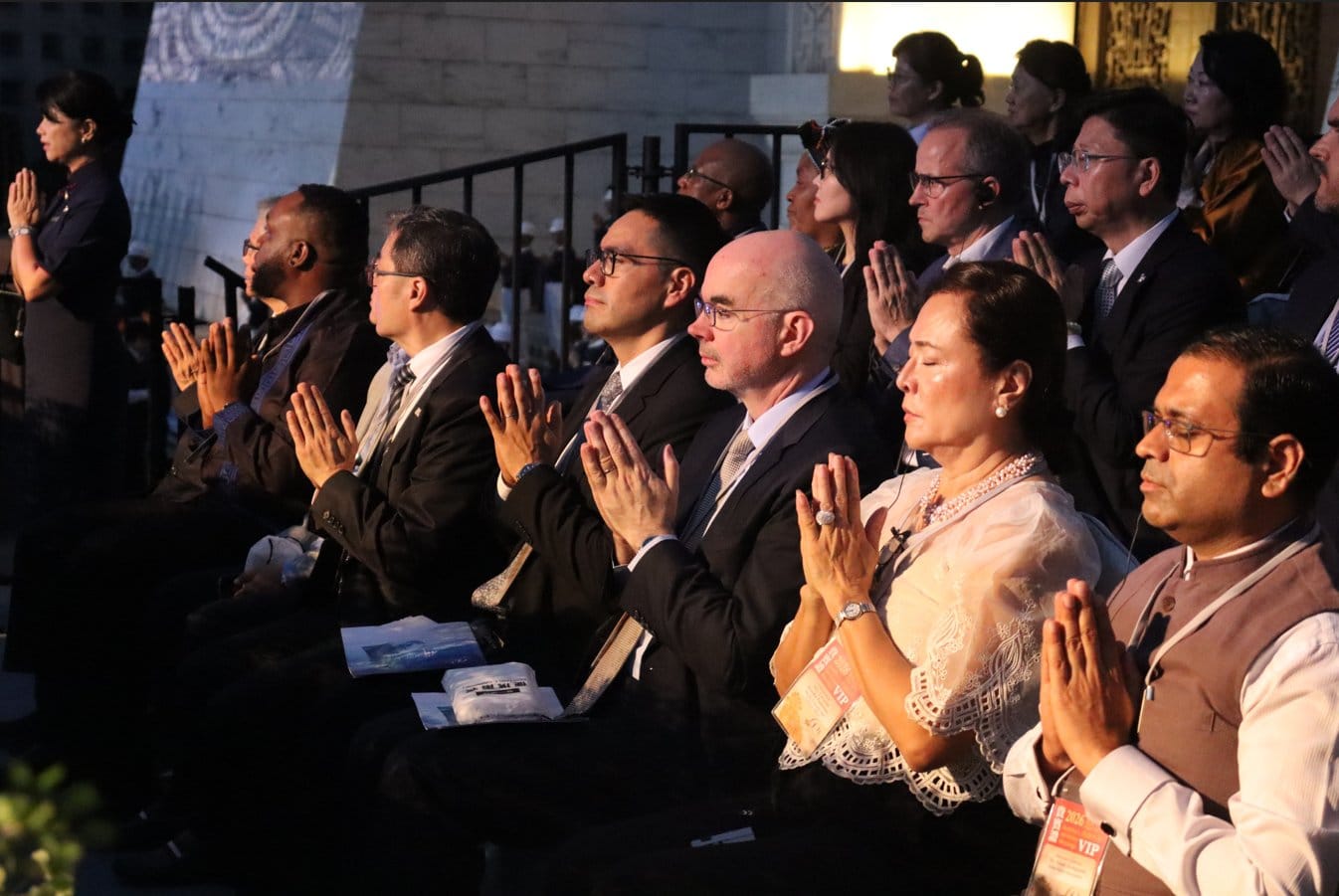
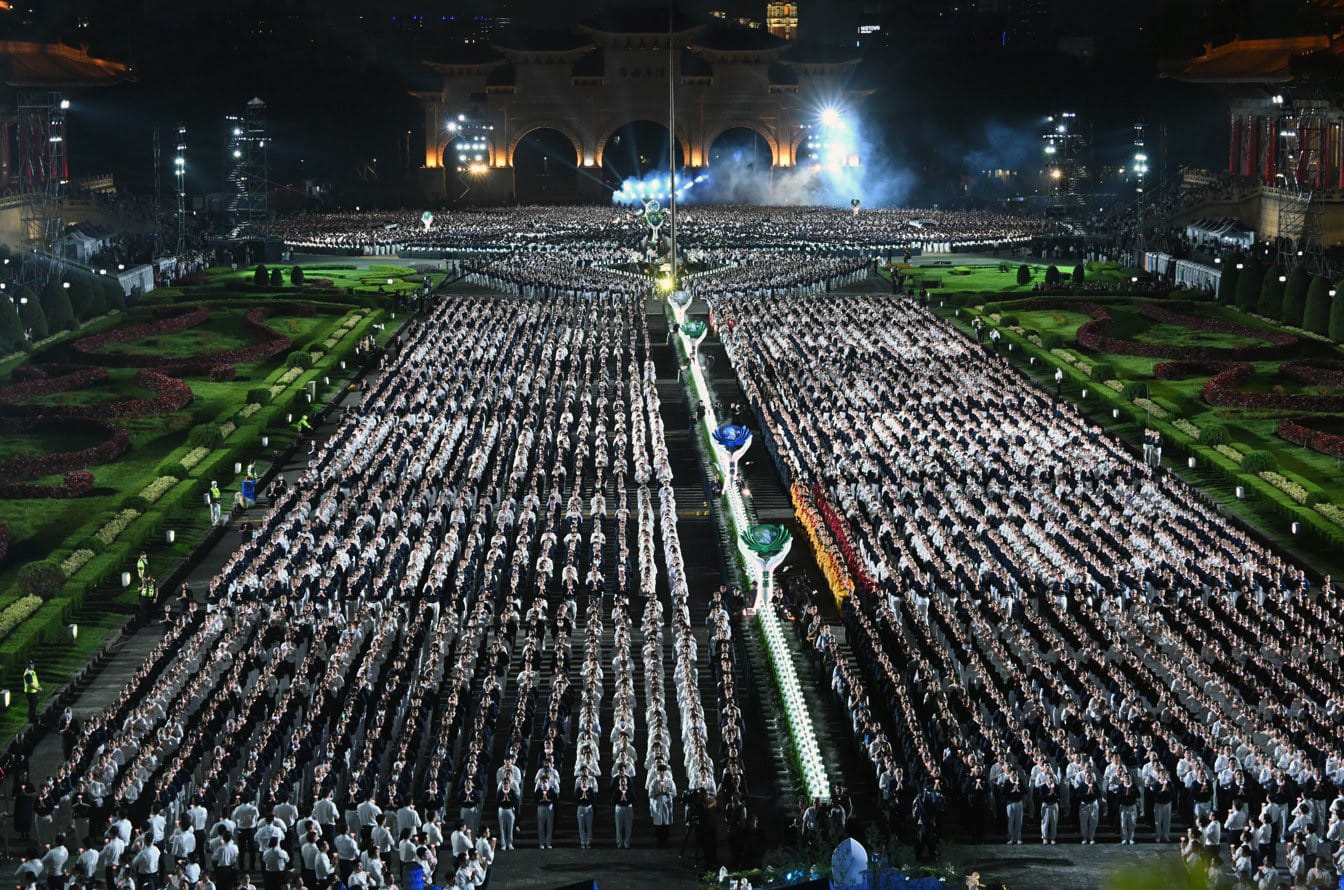
LEFT: American Institute in Taiwan Director Raymond Greene (third right) participates in the ceremony in Taipei, which drew dignitaries and representatives from various countries to pray for global harmony. RIGHT: The ceremony at Chiang Kai-shek Memorial Hall marks the 60th anniversary of Tzu Chi.| Photo: Tzu Chi Foundation
Compassion beyond borders
The anniversary events continued in Hualien the following day as international religious and humanitarian representatives visited the Jing Si Abode. Guests included representatives from the Vatican and Catholic Charities in Sierra Leone. Cardinal Peter Turkson shared that compassion is a form of wisdom expressed through action, transcending differences in religion or culture.
The representatives discussed ongoing humanitarian concerns, such as support for refugees in the Middle East and nutritional assistance for children in Africa. Master Cheng Yen reflected that although religions differ in form, their shared purpose is to guide people toward goodness. As Tzu Chi enters its seventh decade, the ceremonies served as a reminder that compassion begins with ordinary people and the willingness to care for others, generation after generation.
Every day, if each person contributes just a little love, that small effort can gather into a powerful force to help those who suffer.
Written by Fu-chiang Yen (顏福江), Yi-chien Chen (陳誼謙), Yu-chen Pan (潘俞臻)
