


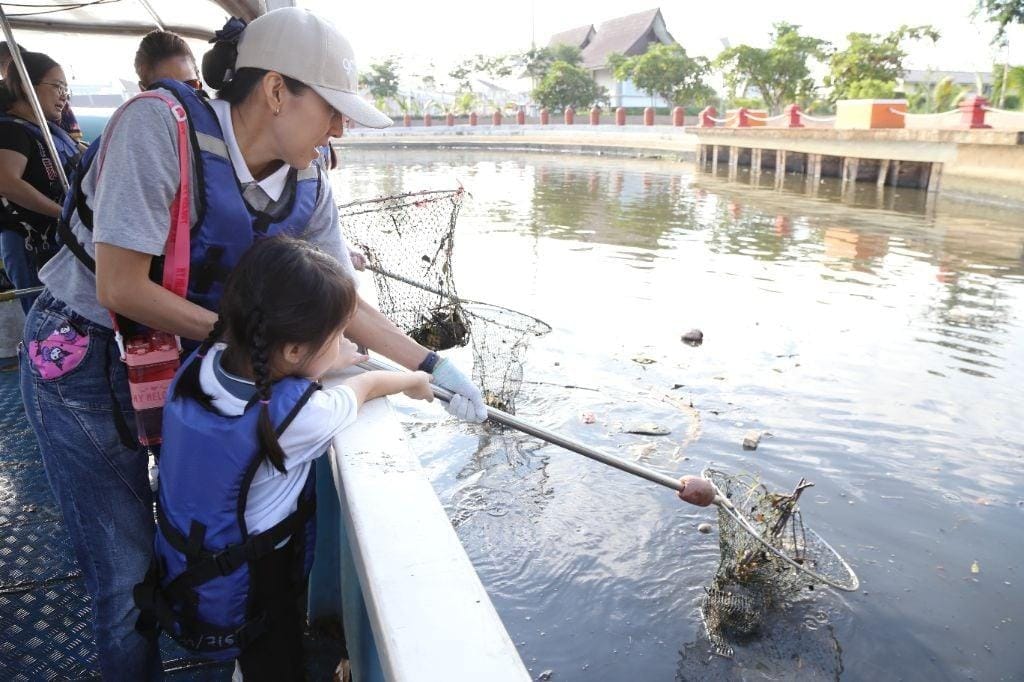
Environmental pollution has quietly crept into daily life, with trash floating in waterways and waste accumulating in residential corners. While industrialization brings economic development and convenience, it also results in severe pollution. To align with World Environment Day in June, local groups in Melaka organized two initiatives—a river cleanup by boat and a residential flat cleanup—encouraging the public to protect their homeland through direct action. On June 13, 2026, participants joined a river cleanup co-organized by the Melaka River and Coastal Development Corporation (PPSPM) and a large-scale community cleanup at the Taman Merdeka flats led by the government and various non-governmental organizations.
Yearning for clean waters
Two boats carrying 43 people slowly sailed to the center of the Melaka River. Young children gathered at the stern, eagerly searching for floating trash. The younger ones managed to scoop up leaves, while they cheered on stronger adults who hauled in large piles of waste.
Cuisong Chen (陳萃淞), a seven-year-old boy, actively scooped up durian shells, plastic cups, and rubber balls. His net was so heavy he needed assistance to lift it out of the water.
I hope the boat can go around a few more times so we can pick up all the trash together. If the river is clean, the fish will have a home and be able to continue living. — Cuisong Chen, Participant
His mother, Guifeng Li (李桂鳳), shared that Cuisong naturally picks up litter during walks. The experience allowed everyone on board to see firsthand how discarded waste ultimately threatens local waterways.

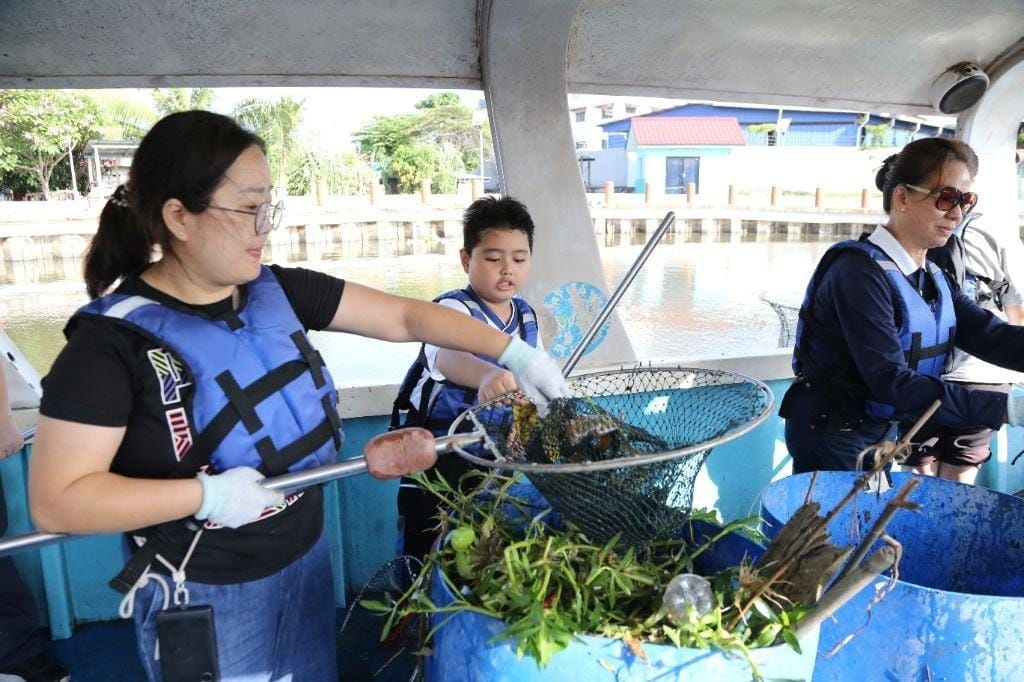
LEFT: Guifeng Li (second right) is happy to see her son Cuisong Chen (first right) actively involved in the cleanup. RIGHT: Xinghui Gan (顏瑆慧) (left) accompanies her nephew Weishun Gan (顏維舜) (center) to board the boat and clean the river. | Photos: Pearl Quek
Nine-year-old Weishun Gan (顏維舜), who usually spends time indoors with electronics, gripped a fishing net closely by the boat's edge. Seeing trash floating in the distance, he expressed his eagerness to help.
If I were a river, I would tell everyone, please do not pollute me. — Weishun Gan, Participant
His aunt, Xinghui Gan (顏瑆慧), was pleased to see his focused effort, hoping the hands-on experience would teach him to cherish nature long into the future.
A different perspective
Xinwei Luo (羅欣薇) and her family of five also joined the waterway efforts. She often wondered where the trash along the riverbanks came from during her regular runs.
Going into the river to scoop up trash is very different from picking up trash on land. We realize how small we are, and how much trash accumulates. Experiencing the hard work of cleaning the river helps us understand the consequences of littering. — Xinwei Luo, Participant
Her nine-year-old daughter, Minmin Chen (陳敏敏), worked hard under the sun and realized the difficulty of maintaining the environment. Another participant, Lianmei Liu (劉蓮美), felt that direct engagement was an essential awakening for the community to protect their surroundings together.
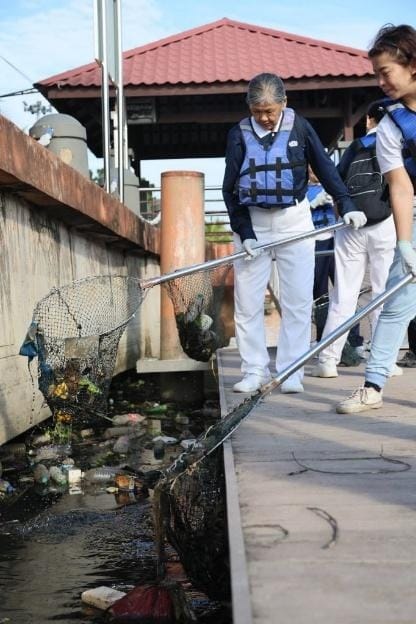
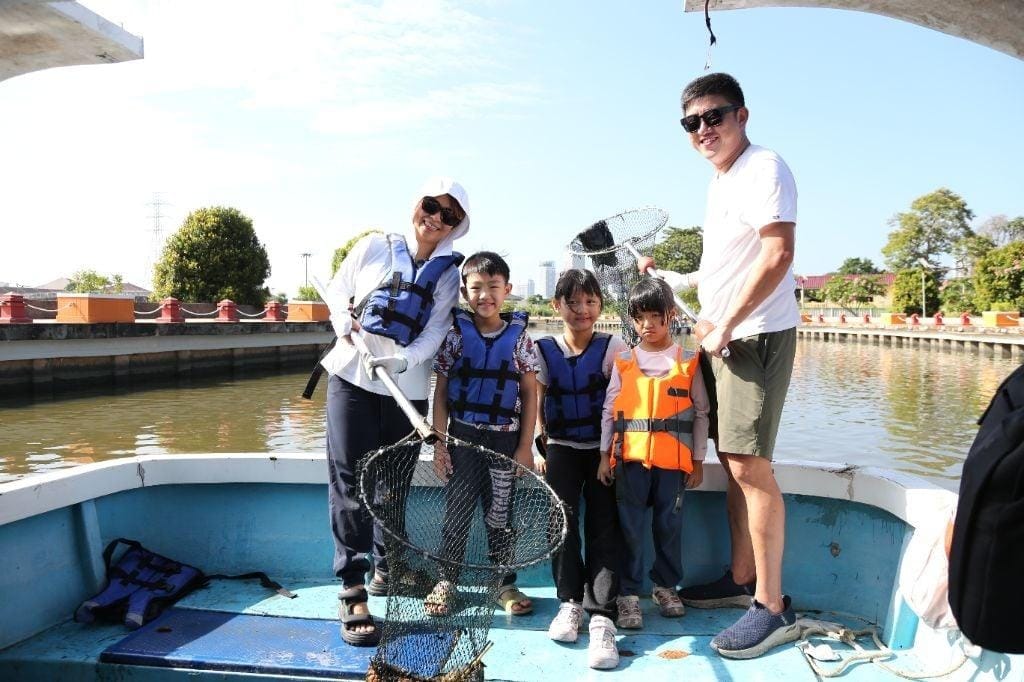
LEFT: The boat docks temporarily so volunteers can get closer to the shore to scoop up trash. | Photo: Zhi-Yan Liu (劉志彥) RIGHT: Xinwei Luo (left) brings her family to the river cleanup. Her daughter Minmin Chen (center) also participates. | Photo: Pearl Quek
Transforming living spaces
Meanwhile, at the Taman Merdeka flats, over a hundred people—including government agencies, solid waste management staff, students, and residents—gathered to clean the nine residential buildings and their surroundings. The area had faced severely clogged drains, foul-smelling garbage, and overgrown trees that posed safety concerns.
Seventy-year-old Runyou Liang (梁潤友) watched the bustling activity from her door. Volunteers approached to share practical recycling concepts.
I collect some cardboard, and if I see people looking for recyclables, I give it to them to sell, so they can supplement their income. — Runyou Liang, Resident
She then brought out a broken dry cabinet, plastic bottles, and buckets for recycling. Volunteer Xiuzhen Luo (羅綉甄) praised her efforts, noting that such daily habits greatly reduce neighborhood waste.
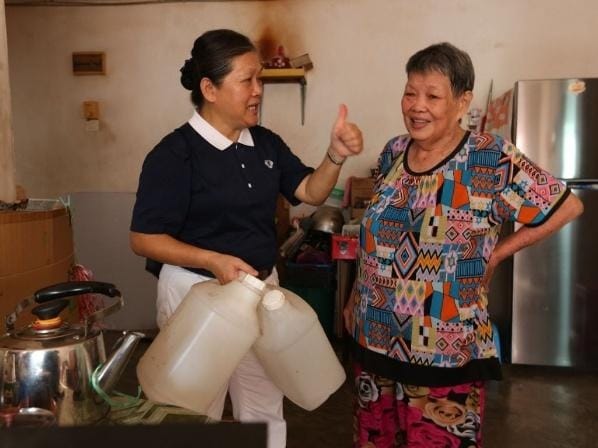
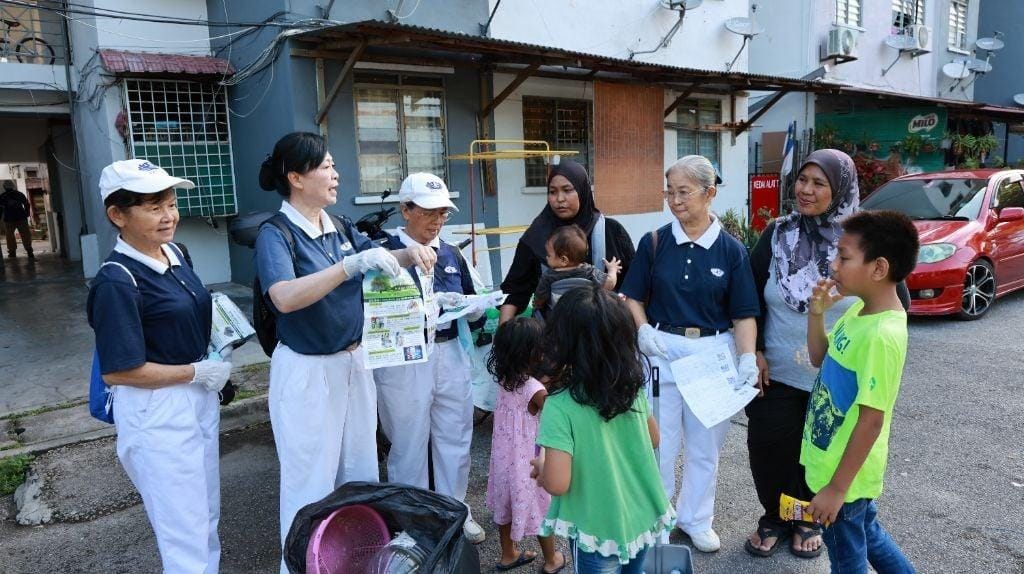
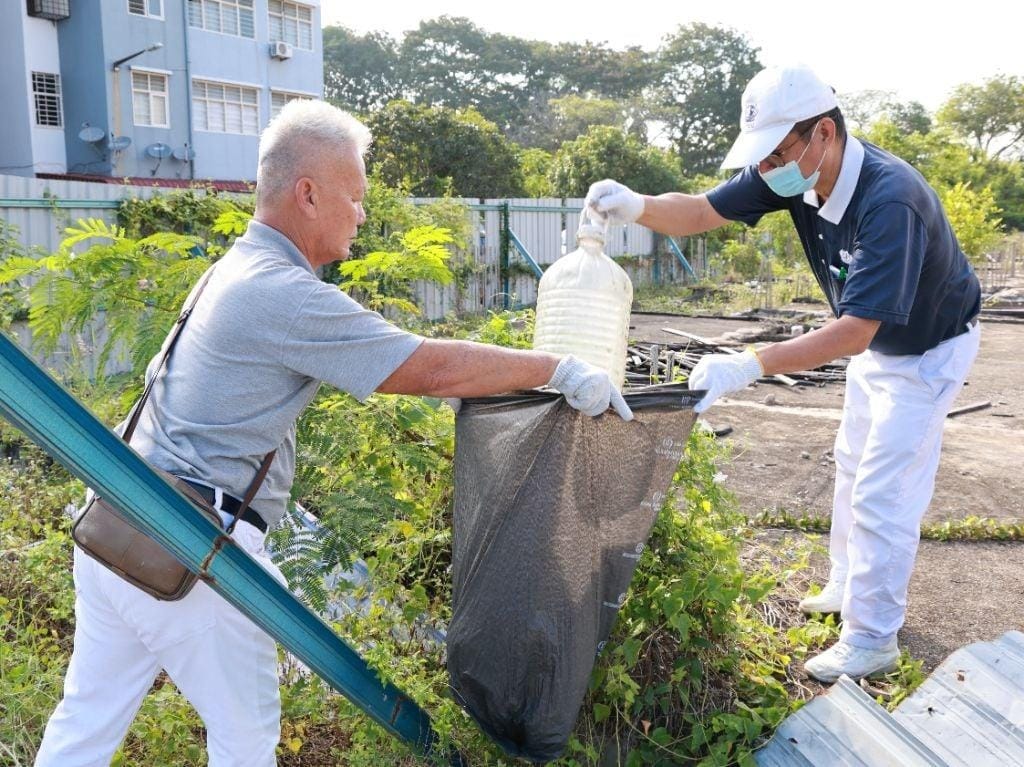
LEFT: Grandma Runyou Liang (right) hands over recyclables to volunteer Xiuzhen Luo, who praises her contribution. | Photo: Xiu-Juan Luo (羅秀娟) RIGHT: Volunteers participate in the cleanup and share environmental knowledge with the public. | Photo: Lian-Xi Chen (陳聯喜)
Property manager Jiancai He (何建財) admitted that maintaining the flats is challenging due to low management fee collection and instances of residents throwing trash from high floors.
Through cleanups like this, at least the environment can become much cleaner. — Jiancai He, Property Manager
Participant Hindon bte Zaafar enjoyed the diverse collaboration. Having received aid during past floods, she appreciated the ongoing care in the community.
Today, I saw volunteers not only participating in the cleanup but also teaching everyone how to pick up recyclables. I heard that the money from recycling can help the poor, and I am very grateful for Tzu Chi's care. The actions of these non-governmental organizations effectively make up for the lack of government resources. — Hindon bte Zaafar, Participant
Sustaining the effort
Ahmad Syahir bin Salim, a PPSPM official, was pleased to see youth involvement in the river. Having grown up near the banks, he recalled when the smell of garbage constantly filled the air. Daily cleanups have slowly restored the water, but heavy rains still wash loose trash from drains into the main channels. He hopes the public will proactively reduce waste at the source.
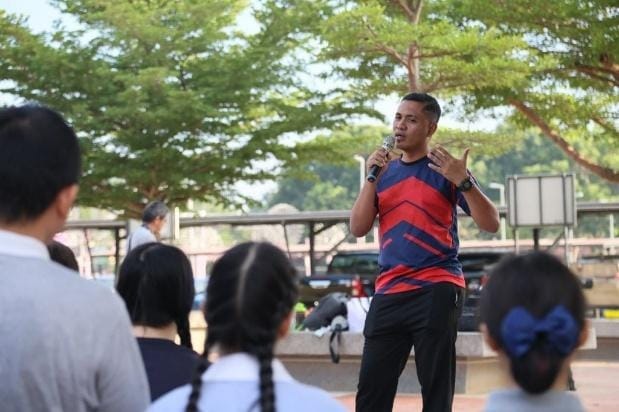
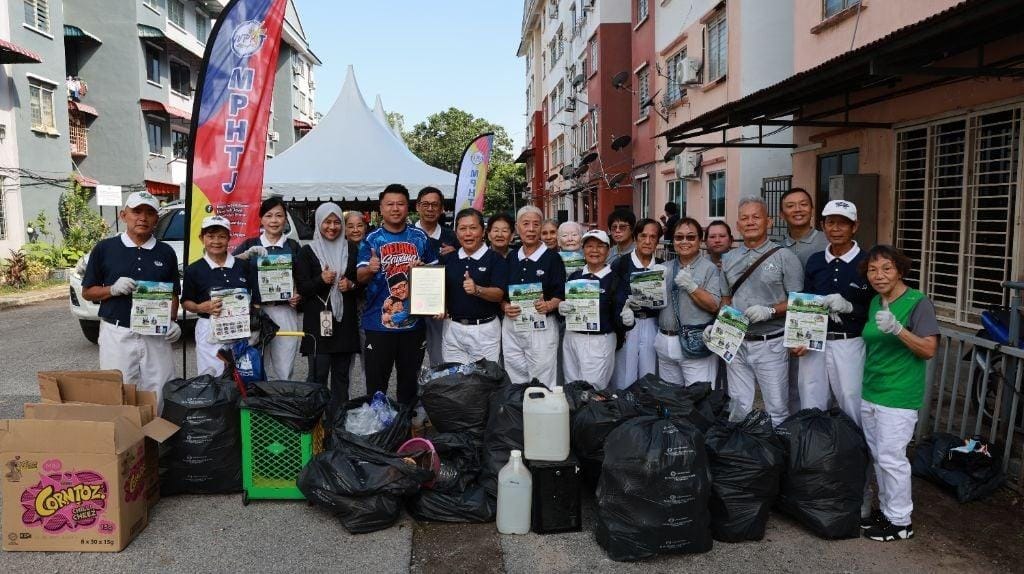
LEFT: PPSPM official Ahmad Syahir bin Salim is glad to see children participating, believing that river protection concepts must take root early. | Photos: Zhi-Yan Liu RIGHT: Volunteers collected several bags of recyclables within hours. | Photo: Lian-Xi Chen
Volunteer Yong Hock Ann (楊福銓) helped coordinate the flat cleanup and distributed environmental flyers. Noticing clogged drains filled with plastic bottles and aluminum cans, the team quickly sorted the recyclables to prevent stagnant water and mosquito breeding.
The day's cleanups cleared large amounts of waste, yet the work highlighted a broader need for sustainable habits. When more people take action to pick up discarded items, the ripple effect reaches deeper into the community, turning a single day of cleaning into a lasting commitment to environmental care.
Written by Siew Lian Low (羅秀蓮), Siew-Chien Loh (羅秀娟)
