


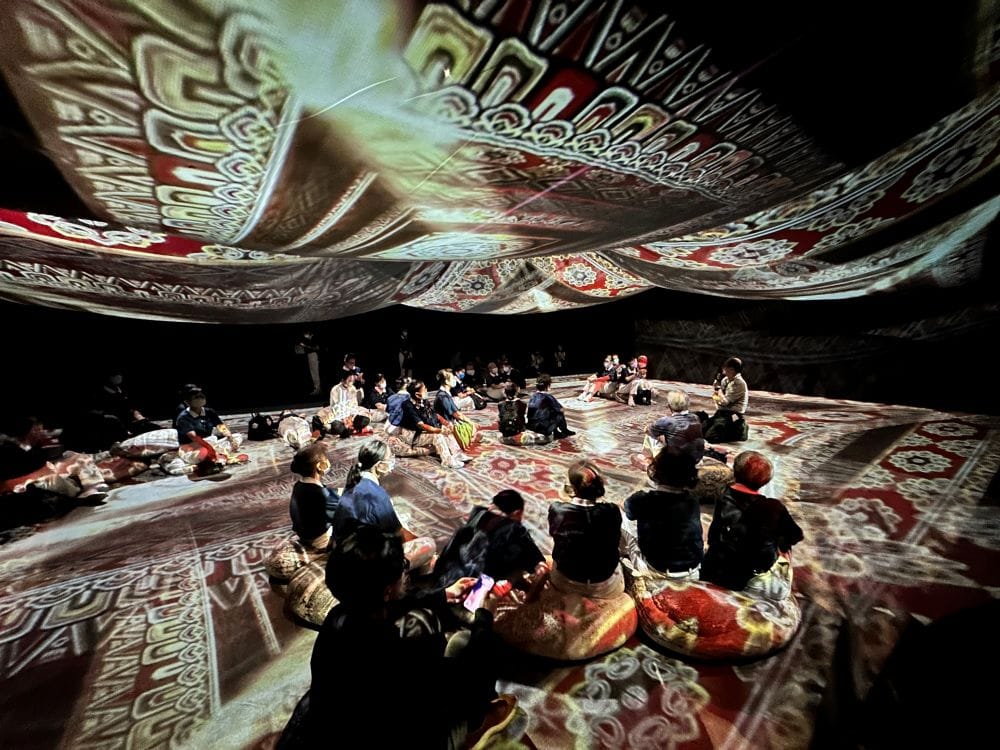
In an era defined by rapid advances in artificial intelligence, virtual reality, and digital media, a fundamental question emerges: are people merely consuming art, or is technology reshaping human existence? Historically, sacred architecture and stone carvings served as immersive spaces where spiritual teachings were experienced directly through sight, movement, and personal reflection rather than words alone. Today, modern technology provides innovative avenues to awaken empathy, deepen self-awareness, and convey universal values across cultures.
As part of the official opening of the Journey to Enlightenment exhibition at the Kaohsiung Science and Technology Museum, the 20th Tzu Chi Global Symposium for Common Goodness was held, centering on the theme "Reimagining Buddhist Art in the 21st Century: The Intersection of Technology and Humanities." Opening the forum, Po-Wen Yen (顏博文), CEO of the Tzu Chi Foundation, noted that while technological capabilities grow exponentially, societal anxiety and spiritual emptiness persist. He highlighted the importance of cross-disciplinary dialogue in nurturing inner calm and social harmony.

History of Buddhism as a history of images
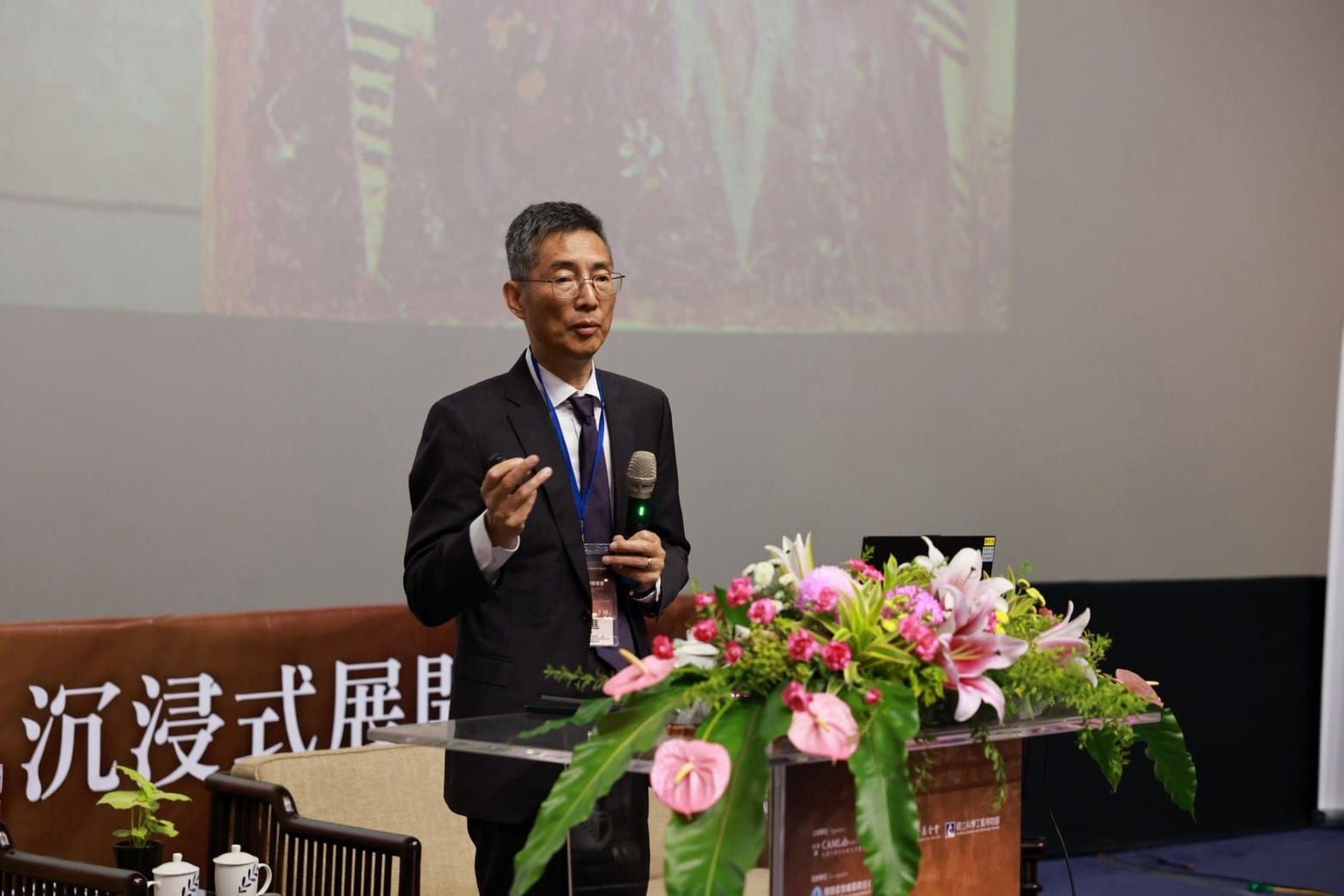
Delivering a keynote address, Professor Eugene Wang (汪悅進), Director of the Harvard FAS CAMLab (Cognitive Aesthetics Media Lab), introduced the concept that the history of Buddhism is intrinsically linked to the history of visual representation. Professor Wang noted that visual contemplation has long served to guide individuals past personal ego and toward spiritual clarity.
Drawing a contrast with classical Western philosophy—such as Plato’s Allegory of the Cave, where shadows are viewed as deceptive illusions to be escaped— Prof. Wang explained that Asian Buddhist traditions often utilize cave murals and physical images as transformative gateways to enlightenment. For instance, early cave carvings preserved spiritual teachings beyond physical form. Similarly, the overlapping depiction of past and future Buddhas in the Dunhuang Mogao Caves reflects a transcendence of physical limitations, demonstrating how wisdom and humanistic spirit endure across generations regardless of the presence of the physical body.
Combining data, light, and sacred aesthetics
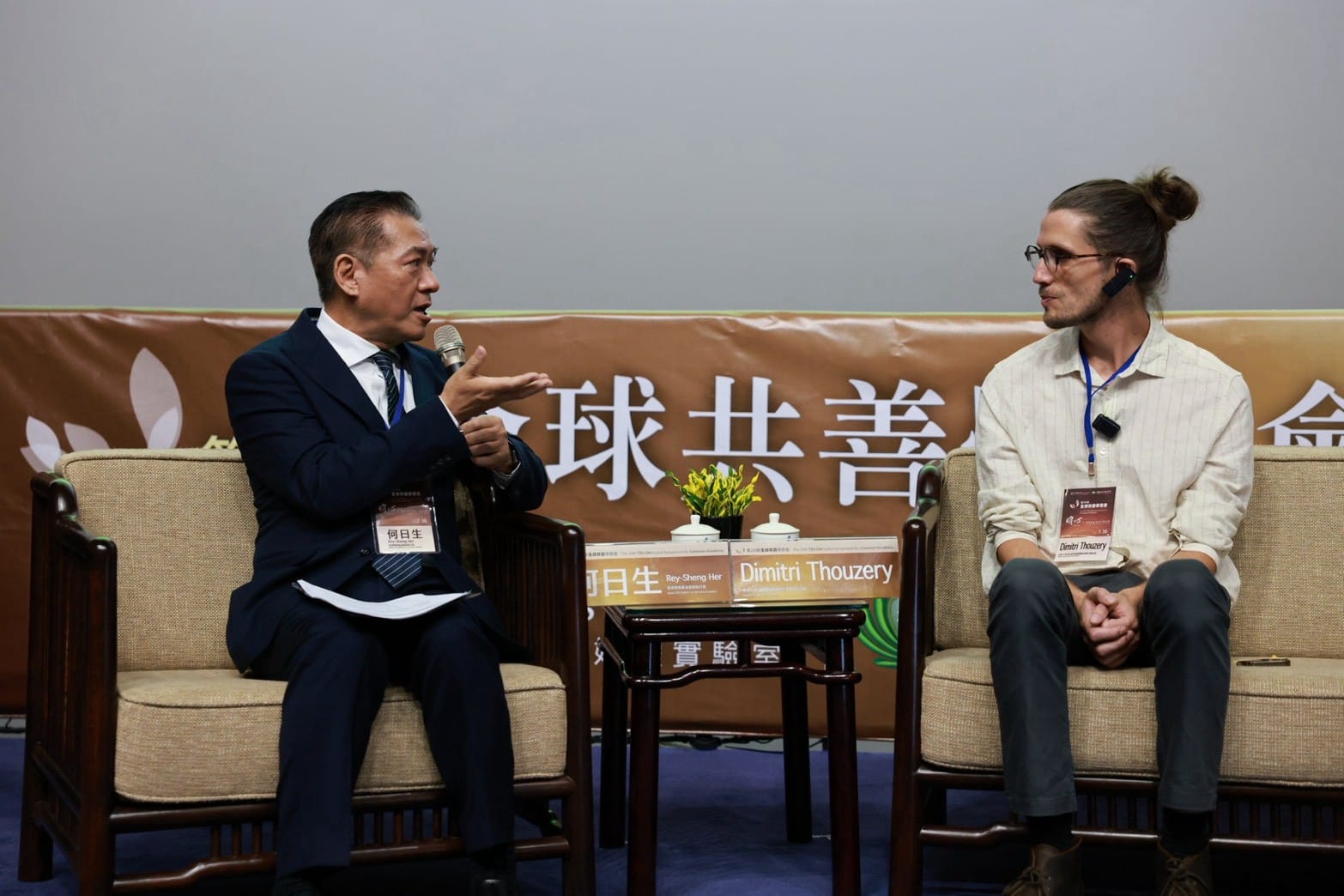
Transitioning from historical sites to modern digital spaces, new media artists shared how emerging technology can evoke peaceful reflection. Digital Artist Dimitri Thouzery utilized architectural data and 3D modeling to reconstruct the spatial structure of Borobudur in Indonesia, offering viewers fresh perspectives on ancient sacred geometry. Meanwhile, digital artist Sébastien Labrunie created dynamic light projections of Vulture Peak, weaving sacred scriptures around digital landscapes like rings of stars to gently guide audiences into quiet introspection.
Responding to these works, Dr. Rey-Sheng Her (何日生), Deputy CEO of the Tzu Chi Foundation, observed that the artistic presentation utilizes sand and light as core philosophical symbols. Sand forming into Buddha images before dissolving back into sand illustrates impermanence and the interconnected nature of cause and condition. Meanwhile, flowing light represents eternal Buddha-nature, creating a synthesis of analytical, intuitive, and sacred aesthetics.
Expanding the boundaries of the human spirit
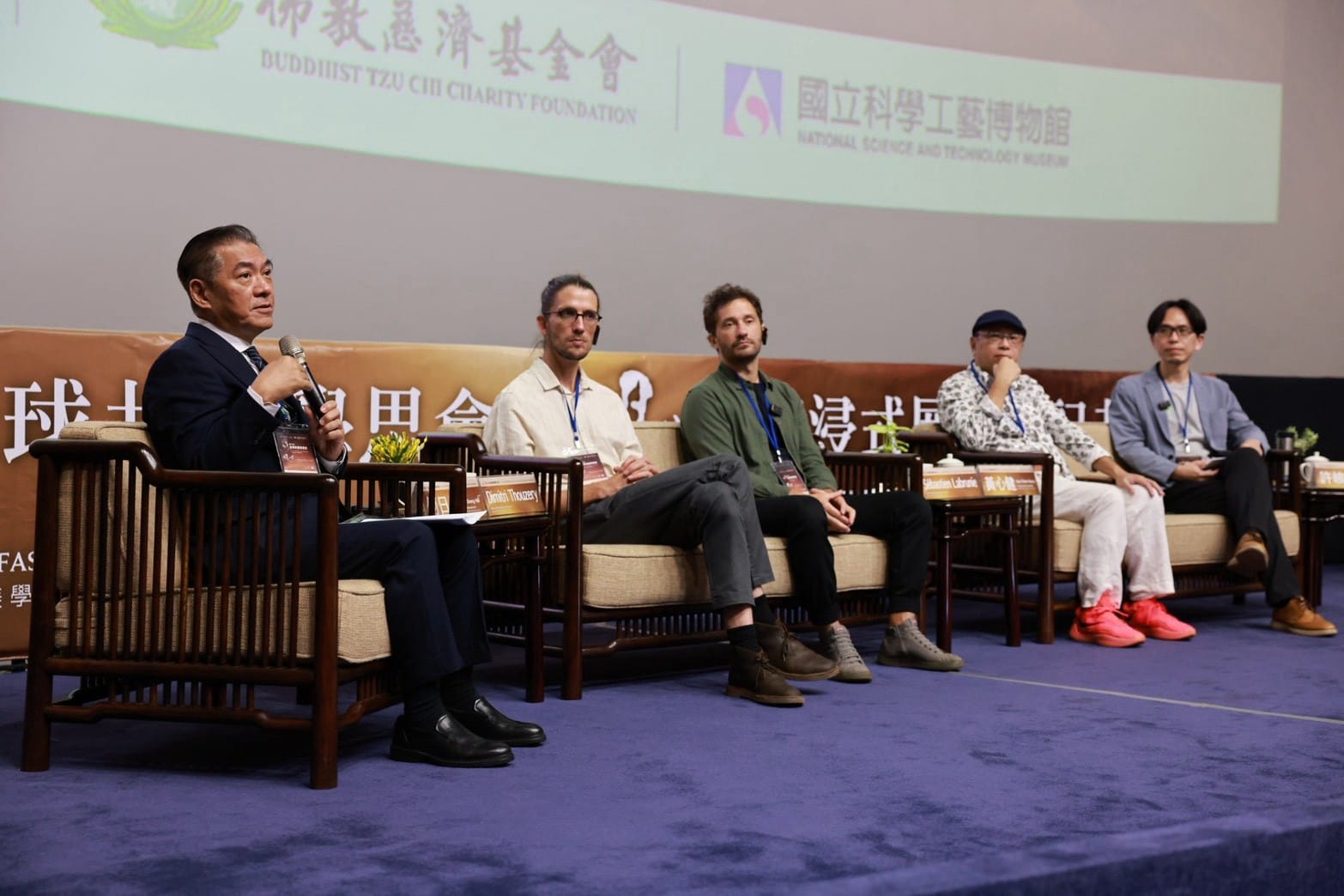
The dialogue further examined how digital environments influence human consciousness. Hsin-Chien Huang (黃心健), Professor in the Department of Design at National Taiwan Normal University, pointed out that while technology readily controls material elements, human spiritual growth often lags. Immersive tech, he noted, offers a rare opportunity to explore the inner world, allowing ego boundaries to soften and encouraging deep self-reflection.
Chun-Cheng Hsu (許峻誠), Professor at the Institute of Applied Arts at National Yang Ming Chiao Tung University, added that while immersive media expands where humanity can reach physically or virtually, humanistic values ultimately determine where the human heart is willing to go.
Dr. Her summarized that technology serves as a reflection of the human mind. By embedding altruism and compassion into digital mediums, technology becomes a tool to connect people and cultivate a more compassionate world.
Transforming heritage into living experience
In a panel on innovative narratives in Buddhist art, experts discussed the Journey to Enlightenment, a multimedia exhibition on Buddhist cultural heritage as an example of modern digital curation. Dr. Her stressed that 21st-century Buddhist aesthetics must go beyond merely recreating traditional statues, inviting audiences to actively walk in and immerse themselves in the experience of spiritual principles.
Professor Chenchen Lu (呂晨晨), Associate Director of Harvard FAS CAMLab, detailed how the exhibition draws inspiration from the Avatamsaka Sutra and the journey of Sudhana. The spatial design incorporates circular mirrors representing the "Great Perfect Mirror Wisdom"—a pure mind reflecting all phenomena without judgment.
Professor Lu explained that the infinite reflections created by the mirror hall allow visitors to look inward, mirroring the interconnected view of reality described in classical texts and translating complex philosophy into an experiential journey.
Panelists Tzu-yin Chung (鍾子寅), Assistant Curator at the Southern Branch of the National Palace Museum, and Yu-Chuan Ma (馬幼娟), Director of the Museum of World Religions, highlighted that future exhibitions should design spaces like readable scriptures, using cross-cultural curation to build understanding across diverse audiences.
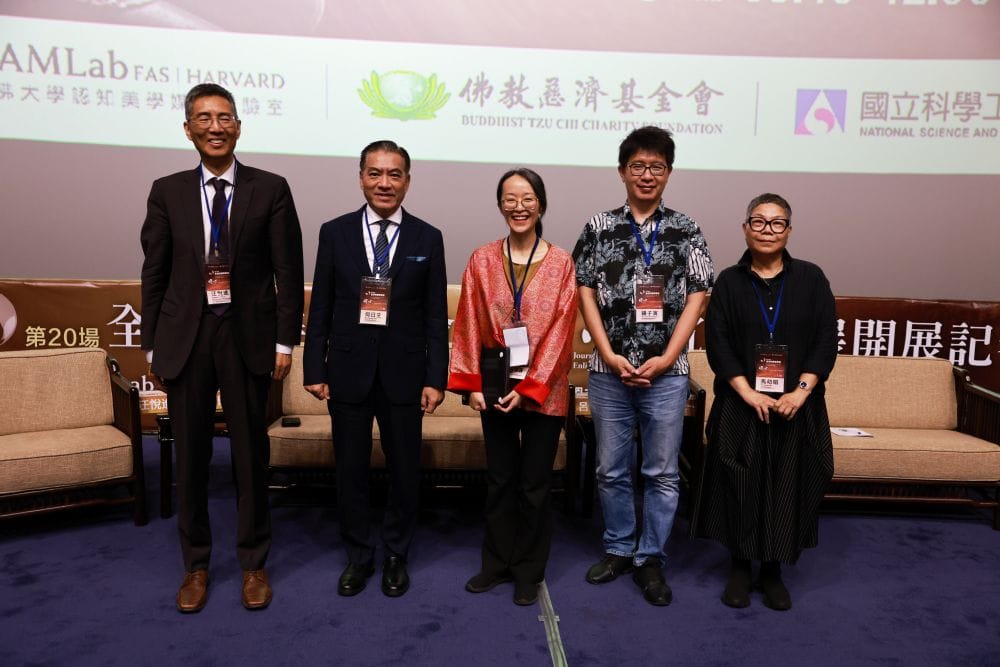
From ancient cave temples and Buddhist stupas to today's immersive exhibitions and digital experiences, technology is not replacing Buddhist art—it is becoming a new language for sharing the Dharma. As art evolves from something people observe into an experience that invites inner reflection, technology becomes more than a tool. It serves as a bridge connecting Buddhist teachings, contemporary society, and the human heart, allowing Buddhism's humanistic spirit to continue engaging the world in new ways throughout the 21st century.
