


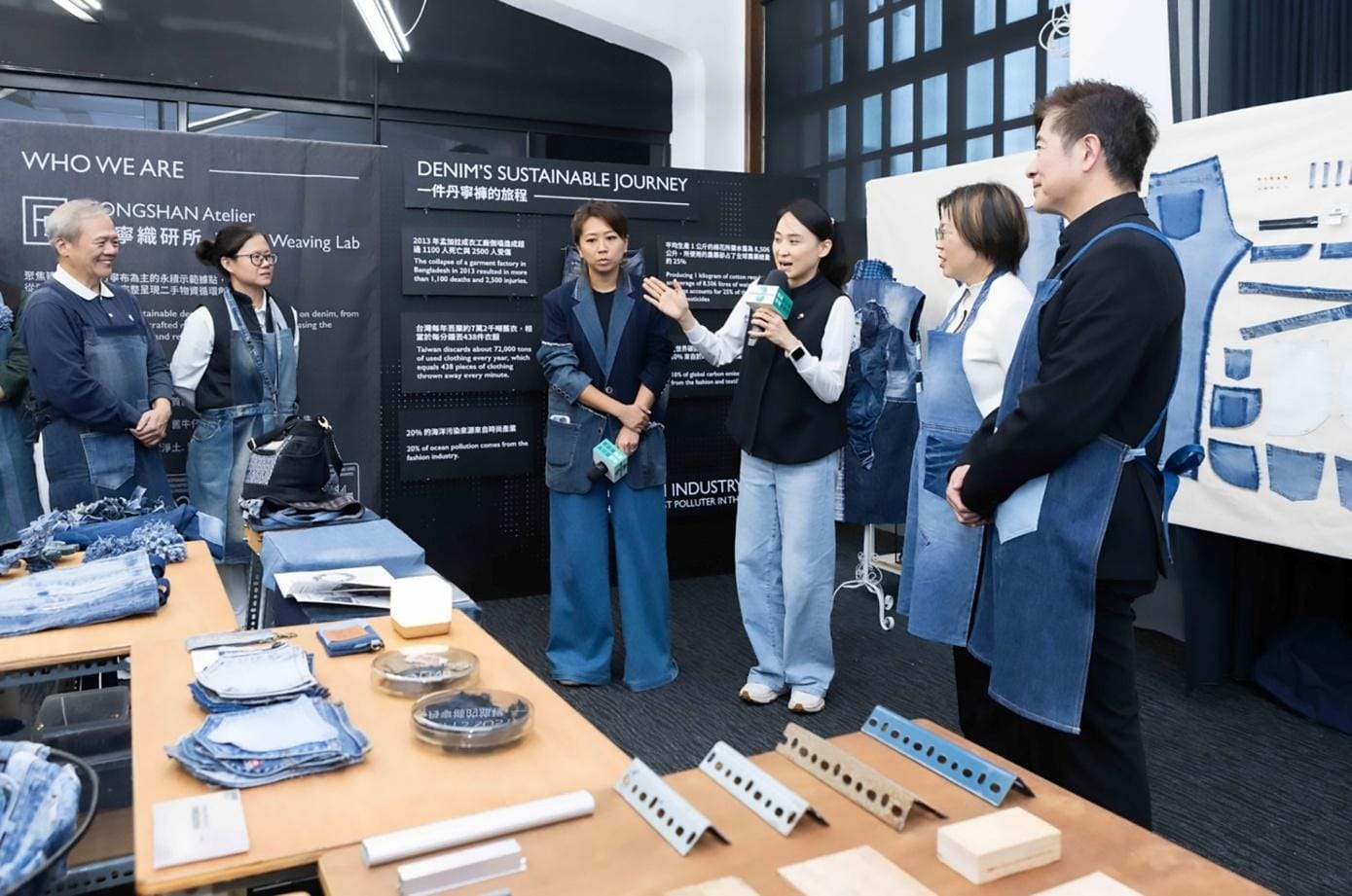
In recent years, the Fengshan Jing Si Hall in Kaohsiung has developed into a unique environmental protection space centered on circular design and resource reuse. Through two dedicated spaces—the Arts and Crafts Workshop and the Reborn Appliances Room—items that would otherwise be discarded are finding new value. The initiative expands the concept of environmental protection from basic recycling into lifestyle aesthetics, skill sharing, and community learning, bringing the circular economy directly into people's daily routines.
Weaving new value from old denim
Upon entering the Arts and Crafts Workshop, visitors are immediately drawn to a wall crafted entirely from spliced pieces of light and dark denim. These fabrics, along with zippers and lace, mostly come from donated or recycled clothing. After being sorted and categorized, they are given a fresh purpose by residents.
The waistband of jeans is the most durable, perfect for making handles. — Min-hsiu Shih (史敏秀), Handcraft Expert
Min-hsiu Shih has long been dedicated to creative design. In the basement's Denim Weaving Institute, she volunteers her time to guide community members in dismantling old jeans and redesigning them based on the fabric's characteristics. Together, they create bags, aprons, storage organizers, and even furniture accessories, turning discarded clothing into practical, aesthetically pleasing household goods.

Another inspiring presence in the workshop is Yin-feng (銀鳳), an elderly volunteer who leads tours. Although she relies on a cane to walk, her focus sharpens the moment she sits at the sewing machine. From selecting the fabric to cutting and sewing, her hands—marked by the passage of time—stitch together more than just practical items. They represent a life philosophy of cherishing resources. Following the 2023 earthquake in Turkey, Yin-feng and her partners made 500 handmade scarves, sending warmth from Southern Taiwan to the cold disaster zones and allowing old fabric to carry international goodwill.
Repairing appliances and mindsets
Down the hallway, the Reborn Appliances Room showcases a different kind of circular economy. The workbenches are lined with broken fans, vacuum cleaners, and air purifiers awaiting repair. Many of these household appliances only suffer from aging parts or poor electrical contacts and can easily function again with minor fixes.
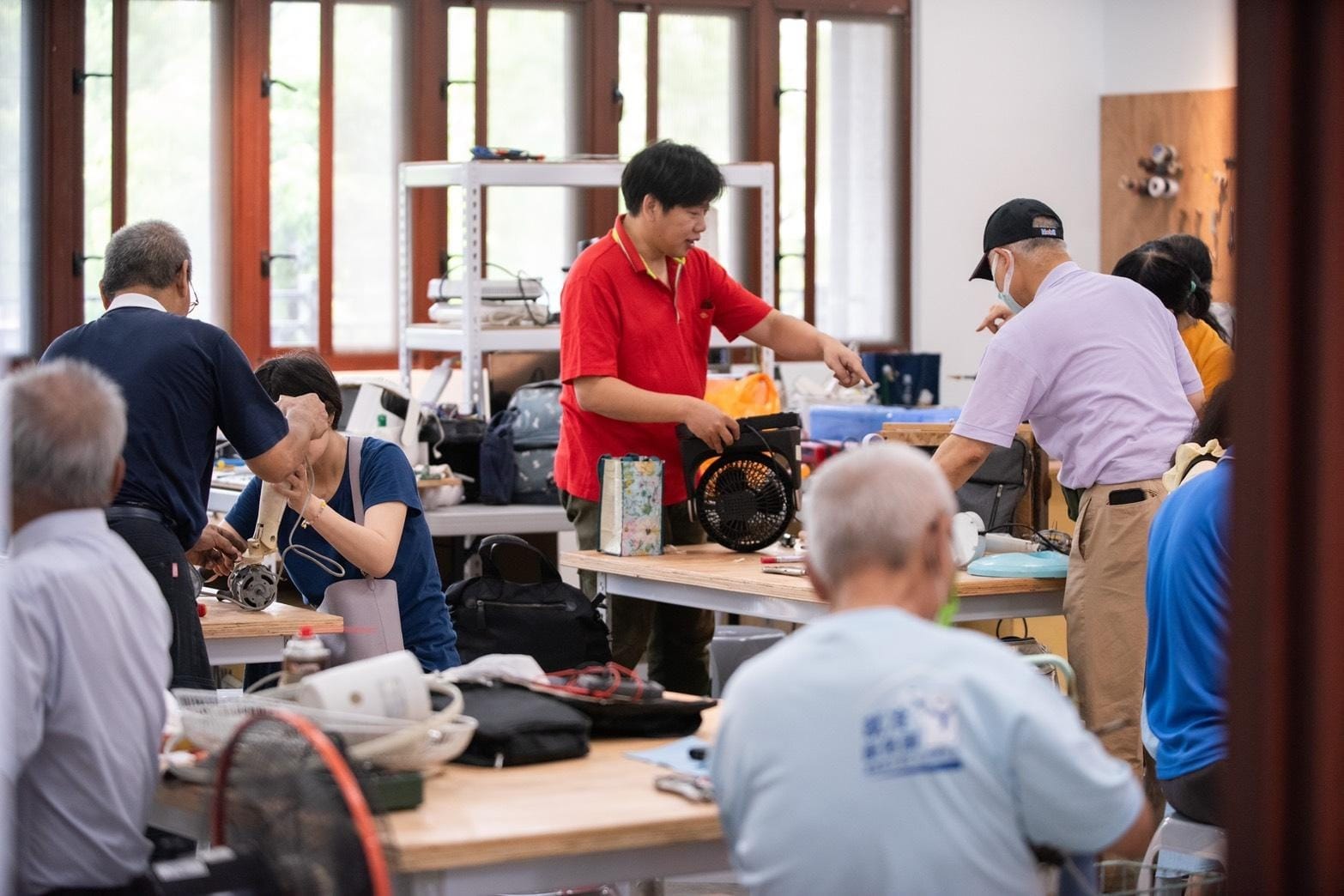
If it can be fixed, don't rush to throw it away. We hope to give items another chance to be used. — Chun-feng Chen (陳峻峰), Volunteer
Beyond the tools and spare parts, the repair area offers tea, coffee, and popcorn. Residents gather around to chat in a relaxed atmosphere while watching skilled individuals dismantle machines and explain the mechanics. This setup allows community members to learn repair skills while cultivating a habit of valuing their possessions.
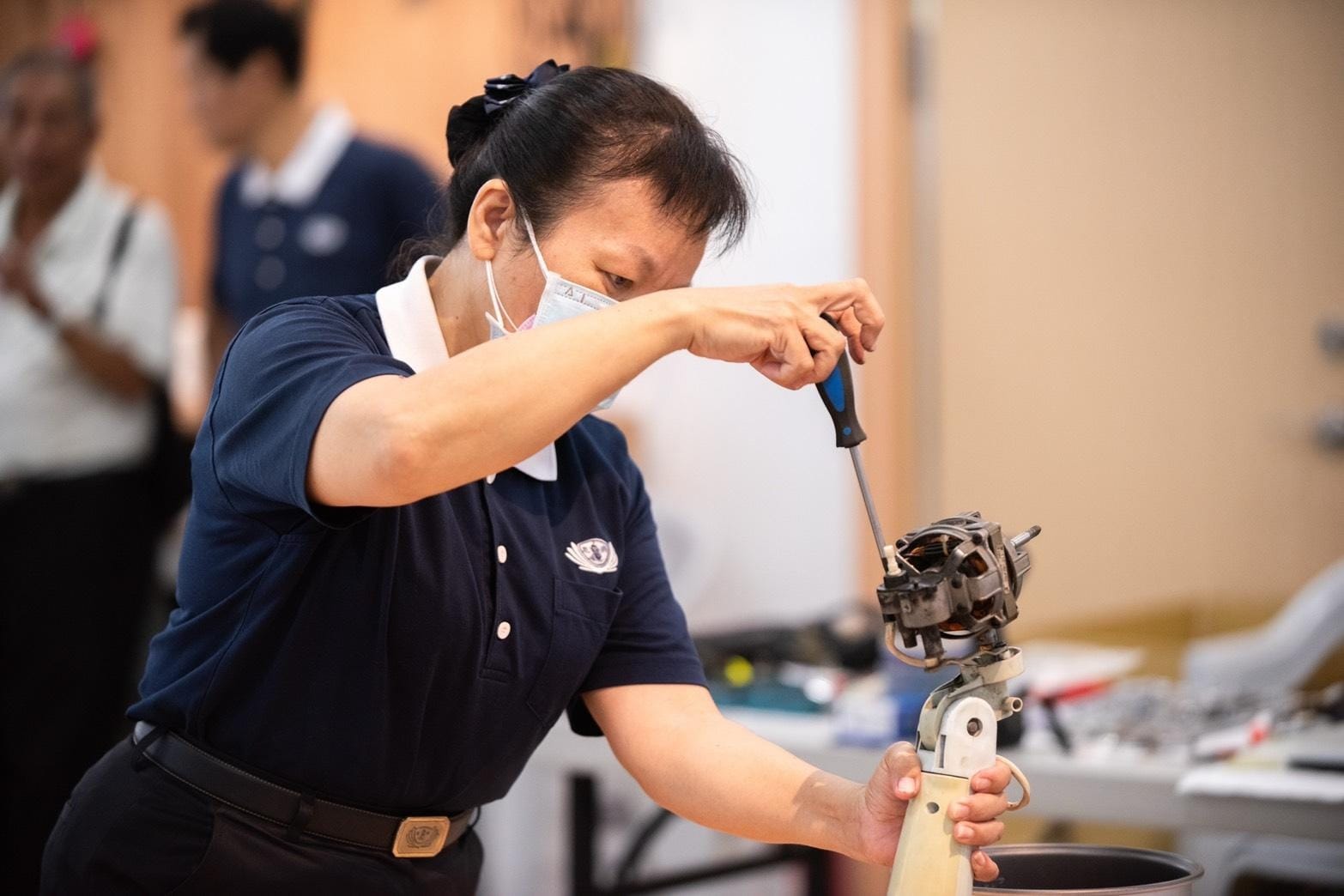
A broken fan or a damaged umbrella might seem insignificant, but repairing them requires an accumulation of structural, mechanical, and practical knowledge. By sharing this expertise freely, the knowledge flows between generations and even attracts international participants. Ling Li (李凌), a Tzu Chi International Medical Association volunteer visiting family from San Jose, brought an old fan from home to seek advice. She worked alongside the local team to diagnose the problem, exchanging experiences during the testing process and enjoying the quiet satisfaction of restoring a broken object.
From redesigning denim to repairing household appliances, the community at the Fengshan Jing Si Hall proves that recycling is a practical lifestyle choice. The fabrics and machines that were once cast aside have found renewed value through creativity, technical skill, and community care. Preserving resources is not about regressing to the past, but rather mending and renewing what already exists to build a more sustainable future for both the environment and the neighborhood.
Written by Chiu-yin Chen (陳秋吟), Edited by I-ting Wang (王藝婷)
