

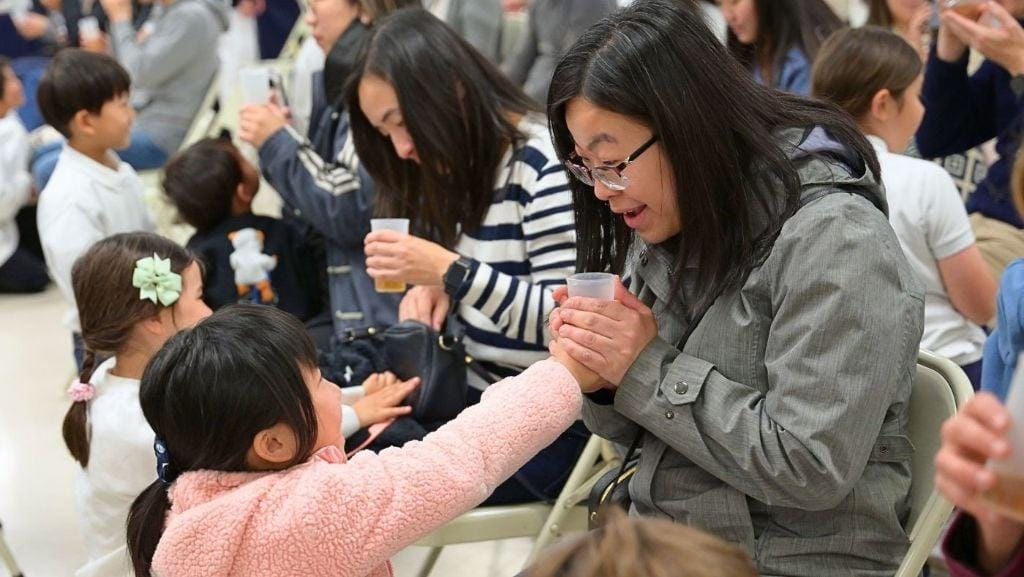
On April 25, 2026, the Tzu Chi Tri-Valley Academy in San Ramon, Northern California, held an expanded Filial Piety Day to mark the organization’s 60th anniversary. Through a sign language performance and a traditional tea ceremony, the event provided students with an opportunity to express gratitude to their parents through practical actions.
Before the performances began, Principal Shushan Chi (紀素珊) explained the profound meaning behind the "Kneeling Lamb" story. Chi pointed out that a lamb must kneel to nurse, a gesture that symbolizes humility and respect for the parents who nurture them. She reminded the students of a Jing Si Aphorism, encouraging them to be aware of their parents' grace, appreciate it, and actively repay it in their daily lives.
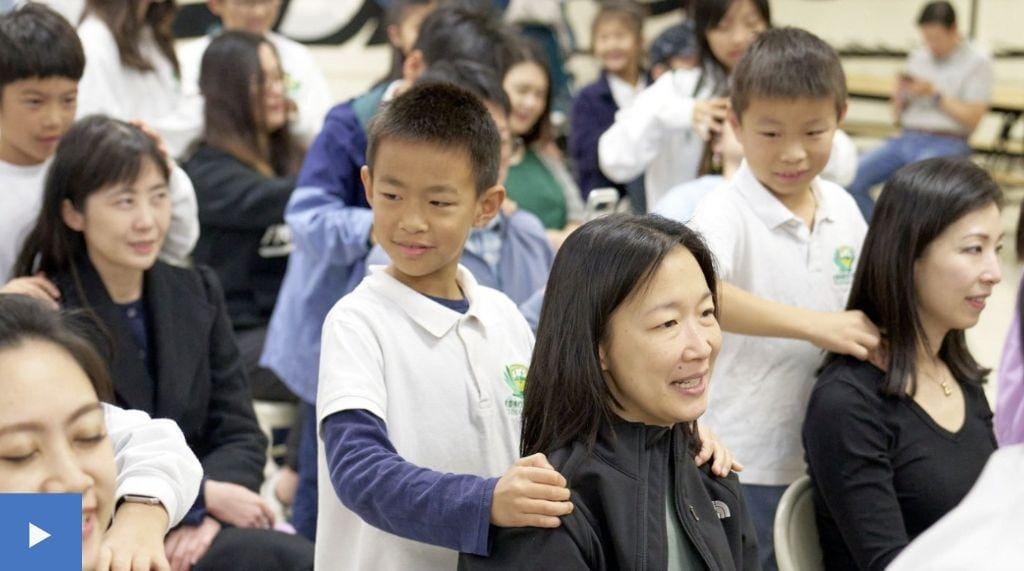
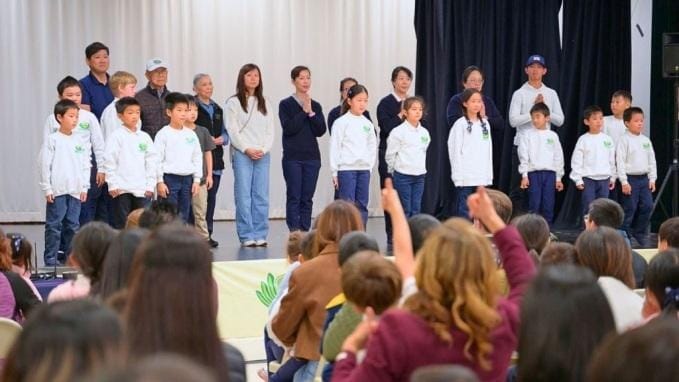
LEFT: Children massage their parents' shoulders. | Photo: Nicholas Lim (林維豪) RIGHT: The "Kneeling Lamb" performance is well-received. | Photo: Flora Lo
A reflection of real life
In the "Kneeling Lamb" sign language play, parents Chia-Heng Yeh (葉嘉恆) and Yen-Lin Lee (李燕琳) acted as a young couple saying goodbye to their elders for work. As a mother of two, Lee often finds herself caught up in her busy career, inadvertently reducing the time spent with her elderly family members. She noted that the role felt like a miniature reflection of her actual life.
Participating in this performance, to me, is not just about acting, but a profound self-reminder: no matter how busy we are, we must practice filial piety in a timely manner.— Yen-Lin Lee, Parent and Actor
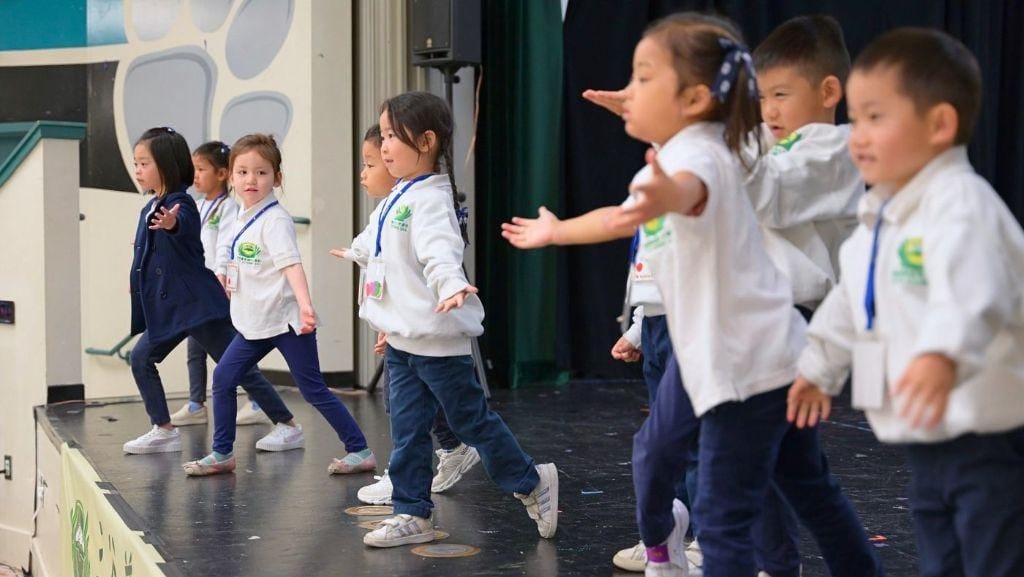

LEFT: Students perform a sign language song. RIGHT: Chia-Heng Yeh (front left), acting as a father, participates in a performance for the first time. | Photos: Flora Lo
Yeh, playing the father, initially felt nervous because he had no prior acting experience. However, as rehearsals progressed, he became grateful for the challenge. In one scene, he argued with his teenage son, who was glued to a smartphone. The son angrily threw the phone to the ground, leaving the father slumped in a chair—a moment Yeh found remarkably close to reality.
With his own children approaching their teenage years, Yeh admitted that asking them to put down their phones is a regular challenge that sometimes leads to frustration. The role allowed him to reevaluate his relationship with his children and reflect on his own parents. He realized that his constant traveling for work had caused him to forget how much his parents had sacrificed for him.
Gratitude beyond words
Following a seven-year pause prompted by the pandemic, the academy successfully revived its tea ceremony. Students knelt on one knee and respectfully served tea to their parents with both hands. As parents accepted the cups and embraced their children, many were moved to tears.
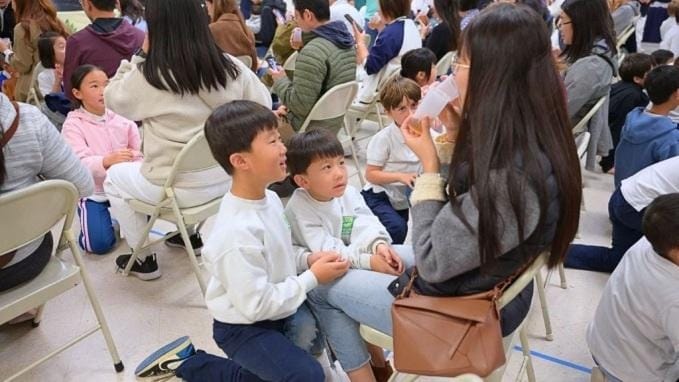
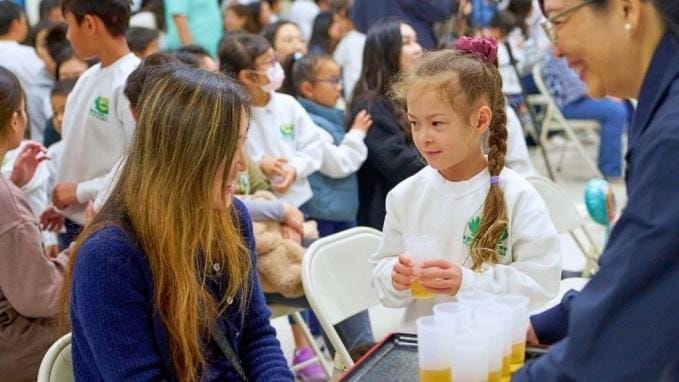
LEFT: A student kneels on one knee to serve tea to their mother. | Photo: Flora Lo RIGHT: A young child respectfully serves tea with both hands. | Photo: Nicholas Lim
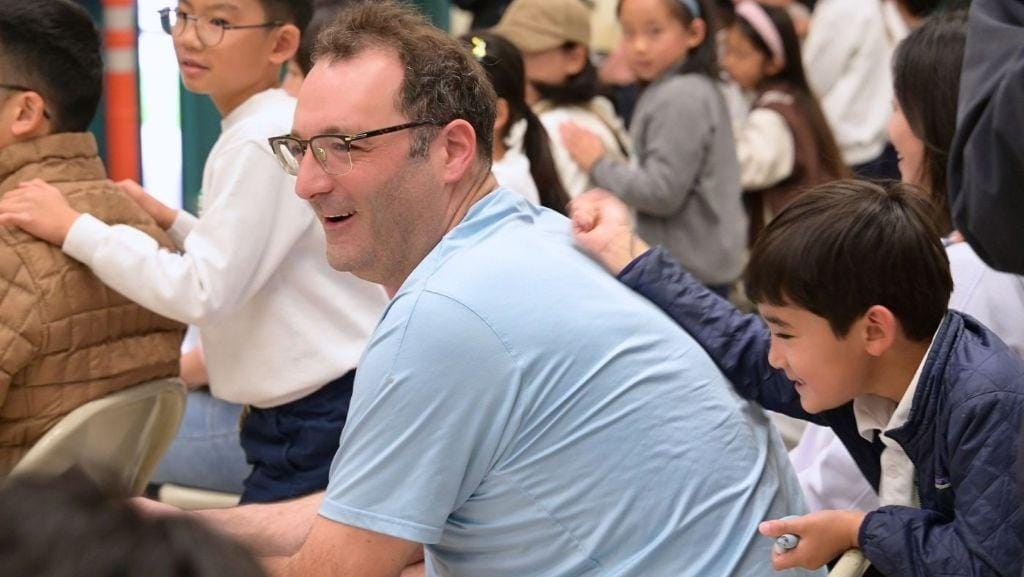
Daniel Holl, an American parent, observed the ceremony and appreciated the school providing a formal setting for his daughter to publicly show respect and love. Holl mentioned that seeing his daughter learn to appreciate the hard work of parenting brought him a sense of warmth and comfort.
This is a wonderful feeling. In my life, I have never done anything like this for my parents, but now, seeing my daughter do this for me, I am truly deeply moved. — Daniel Holl, Parent
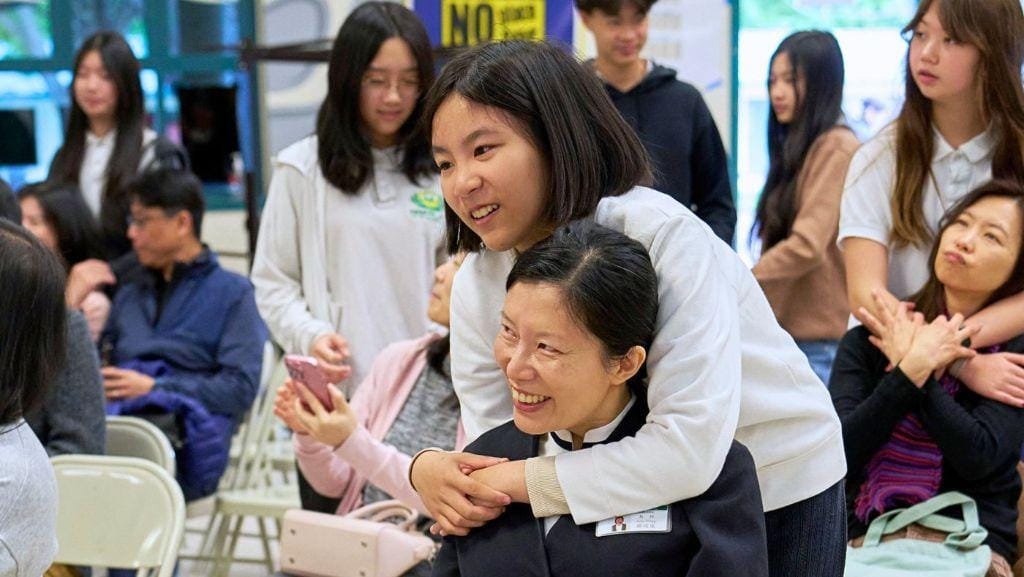
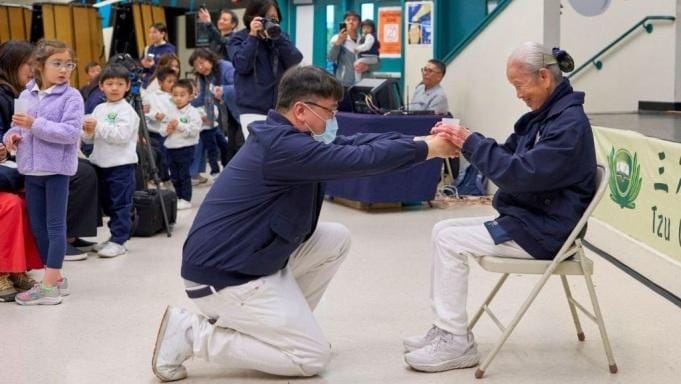
LEFT: Parents and children share a warm embrace. | Photo: Nicholas Lim RIGHT: Volunteer Kuan-Hua Chen (陳冠華) serves tea to his nearly 90-year-old mother. | Photo: Yen-Hua Lo
Holl added that the ceremony inspired him to think of new ways to show love to his own parents. While they might not be accustomed to such formal traditions, he felt motivated to find appropriate methods to practice filial piety. He praised the academy for integrating cultural values into its curriculum, noting that true education goes beyond language to include respect and humanistic development.
By the end of the day, Principal Chi gently reminded each student to make sure they thanked their parents once they returned home. The event successfully planted seeds of respect, allowing cultural virtues to take root in a new generation.
Written by Han-Ching Liu (劉翰卿)
