


As the sun begins to rise over New York City at 7:00 a.m., the central kitchen at the Tzu Chi New York office is already bright and bustling. From January 14 to 15, 2026, supported by New York Health Equity Reform (NYHER) 1115 Waiver, volunteer San-San Chiang (蔣珊珊) joined the head chef and two assistants to begin their weekly routine of preparing hot meals.
Within two hours, the team must complete 270 lunches. These must be handed over to delivery volunteers by 9:30 a.m. to be transported to communities in Brooklyn, Manhattan, Elmhurst, and Flushing. This initiative is more than just a meal service; it is a vital part of a broader effort to provide health support to vulnerable populations by combining government medical subsidies with private charitable resources.
From food distribution to hot meals
“We are participating in a project under the New York Health Equity Reform (NYHER) 1115 Waiver, which is part of Medicaid,” explained Shan-Shan. “There are different programs under this initiative. We originally focused on food pantry distributions, but we have now added a hot meal service.”
The NYHER 1115 Waiver is a significant three-year policy aimed at improving health outcomes, promoting health equity, and supporting social service needs related to health. For Tzu Chi, the hot meal program translates these policy goals into concrete action. Compared to traditional dry goods distribution, hot meals directly address the needs of families who cannot cook for themselves. For those living in shelters or temporary housing, a ready-made, balanced, and warm meal not only provides nourishment but also significantly reduces the stress of daily life.


LEFT: Volunteers are trained in standard operating procedures, from washing and cutting vegetables to packing lunch boxes. RIGHT: Every volunteer has a fixed station, working together to provide care through food. | Photos: Hector
Systematic efficiency in the kitchen
Precision and efficiency are essential in the kitchen. “We have to finish over 270 lunch boxes in two hours; everything must be ready by 9:30 a.m.,” San -an said.
The day's work focuses on cooking rice and preparing side dishes. Jasmine rice is washed and cooked fresh each day to ensure quality. Ingredients such as eggs and certain vegetables are provided at wholesale prices by partner supermarkets. Additionally, a local supermarket donates 42 cases of silken tofu every month, providing a stable source of protein for the meals.
All participating volunteers are trained in standard operating procedures. From washing and cutting vegetables to scooping rice and sealing boxes, every person has a specific station. This structured division of labor allows the team to maintain high efficiency as the program continues to scale up.
Nutrition and the ‘rainbow meal’
Unlike many large-scale meal programs that prioritize satiety alone, these meals emphasize nutrition and balance. “I'm responsible for designing the menu,” San-San shared. “The principle is to use less salt and oil while ensuring the food is healthy and colorful. We call it a ‘rainbow meal.’”
Each lunch box features a mix of tomatoes, green vegetables, eggs, and tofu, accented with seaweed. This not only adds layers of flavor but also makes the meal visually appealing. San-San believes that healthy food should be more than just functional; it should also be appetizing. “They really like our food,” she said. The positive feedback from the community serves as the primary motivation for volunteers to keep refining the menu.


LEFT: Each person has a clear responsibility, ensuring that the lunch boxes are prepared on time. RIGHT: The "rainbow meals" feature a balanced mix of vegetables, protein, and colorful ingredients. | Photos: Hector
Sowing seeds of kindness
The hot meal delivery follows a fixed schedule. Mondays are dedicated to Brooklyn, Manhattan, and Elmhurst, while Wednesdays focus on Flushing. Approximately half of the recipients collect their meals from the Tzu Chi office, while the rest receive door-to-door delivery. Every week, about 150 meals are delivered directly to the homes of those who cannot travel.
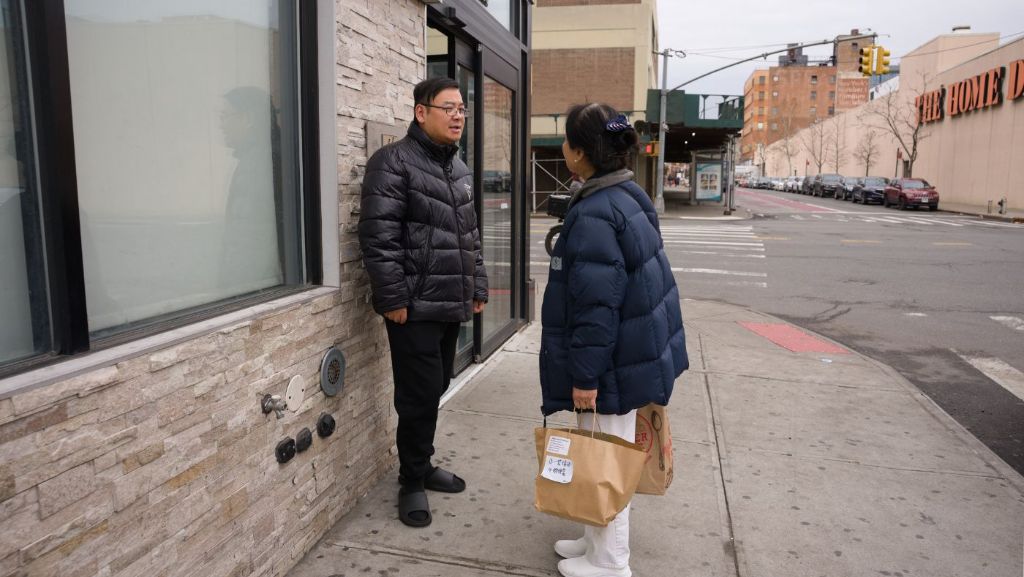
Yong-Zhi Sun (孫勇志) is one of the recipients. During the pandemic, he and his family left Wuhan and arrived in New York. With no relatives or friends to turn to, they spent seven months living in a shelter. “After we got off the plane, we didn't know where to go,” Sun recalled.
San-San is often moved by the stories she hears during her delivery rounds. “Hearing about their situations makes me think: if I were the one arriving in a strange country, how would I survive?” she said. However, even in difficult circumstances, there is hope.
As Sun accepted his meal, he expressed his gratitude. “You are doing a wonderful job, and I am very thankful. If one day I am able, I also hope to help others.”
For the volunteers, these words represent the true meaning of their service. It is not just about providing food; it is about sowing seeds of future kindness. “I am very grateful to be able to do this volunteer work and bring care to them,” San-San said.
Through nutritional support, these meals relieve the pressure on struggling families. When a recipient expresses a wish to help others in the future, health ceases to be just a medical issue and becomes a shared community responsibility. Every week, these 270 meals provide more than just calories; they offer a support system and a bridge of trust between neighbors.
Written by Chia-Li Liu (劉嘉麗)
