


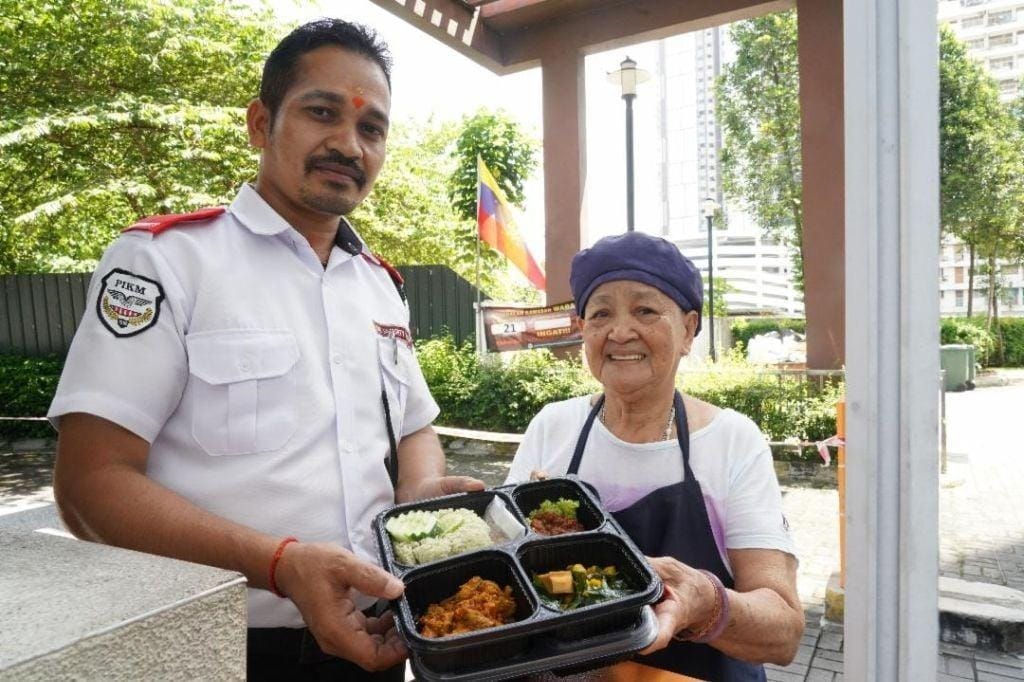
Neatly arranged vegetarian bento boxes line the tables. Some volunteers carefully plate the dishes, while others inspect each box to ensure no items are missing. Clean towels are used to wipe the edges of the containers, lids are securely fastened, and the final count is tallied before the meals are packed into large paper bags for delivery.
This is the routine for volunteers in Wangsa Maju, who dedicate three consecutive days each month to preparing and delivering 80 to 100 vegetarian bento boxes. Behind this seemingly simple task lies a series of challenges and a deep sense of community care.
Delivering comfort to migrant workers
For Pramod, a security guard from Nepal working at Residensi Teratai in Setapak, the arrival of the volunteers brings a bright smile to his face. Knowing that the community’s central kitchen is preparing vegetarian meals, he eagerly anticipates their visit.
Thank you so much for the vegetarian bento boxes; this is the food I look forward to the most. Being able to eat a comforting vegetarian meal in a foreign land makes me feel truly blessed. Thank you all so much! — Pramod, Security Guard
Pramod has been working in Malaysia for eight years. Finding vegetarian food in his work area has always been a struggle, as plant-based stalls are scarce. Over a year ago, with no options nearby, he bought a small rice cooker to prepare his own meals. When he discovered that volunteers operated a central kitchen on the ground floor of his apartment building for three days a month, he expressed his interest in vegetarian food. Since then, volunteers have been sharing two bento boxes with him during their cooking days.
After becoming a vegetarian, my skin allergies disappeared without any medication. I am even more convinced that a vegetarian diet is beneficial to health, so I have stuck to it to this day. — Pramod, Security Guard
He often shares his second bento box with a colleague or roommate. Whenever he receives the meals, he takes photos to share in group chats, sparking interest among his peers. After trying the food, one of his local friends, who previously disliked vegetarian meals, was pleasantly surprised and expressed a willingness to eat more plant-based dishes.
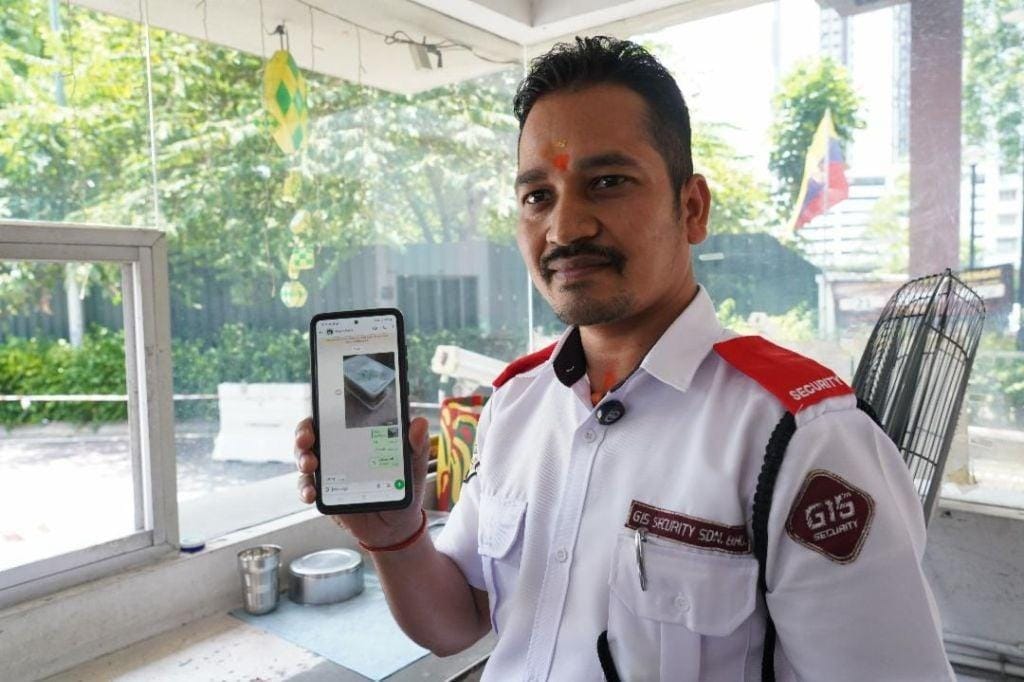
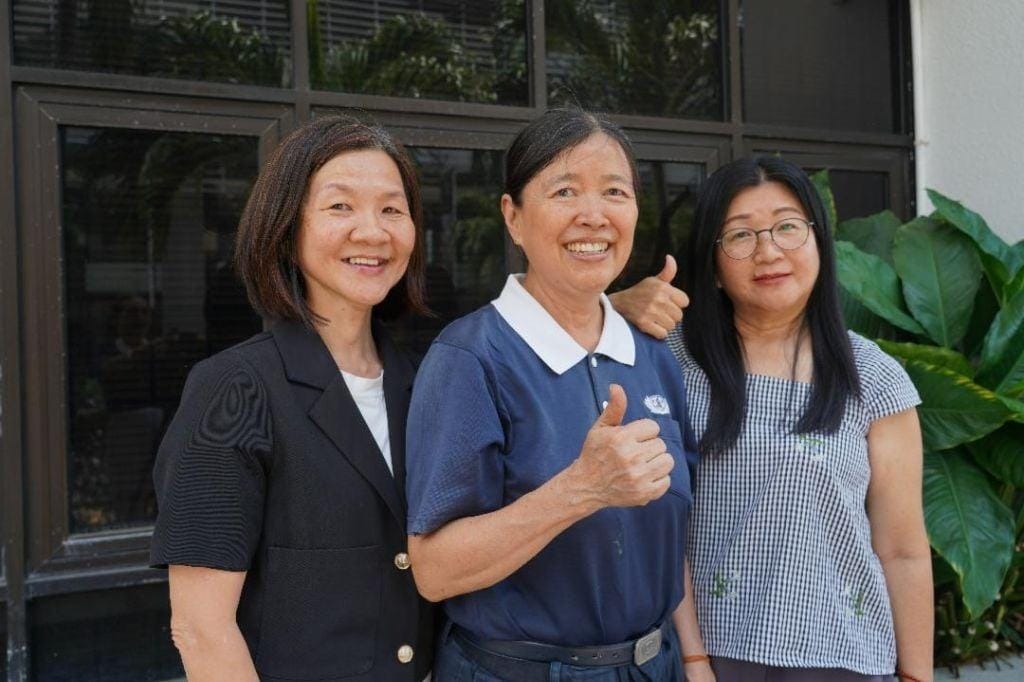
LEFT: Pramod takes photos of the vegetarian meals to share with his friends, encouraging a plant-based diet. RIGHT: Lay Sim Lee (center) receives positive feedback from a meal recipient, motivating her to continue the effort. | Photos: Aai Hoon Chia
Building a dedicated kitchen team
The initiative's coordinator, Lay Sim Lee (李麗心), was deeply moved to learn how precious a simple bento box could be to someone far from home. The effort originally began during the 2020 pandemic to promote healthier eating. Initially, Lee partnered with local restaurants to prepare the meals. However, issues with delivery delays and inconsistent flavor profiles prompted a change. Lee decided to form a dedicated cooking team to ensure timely deliveries and quality control.
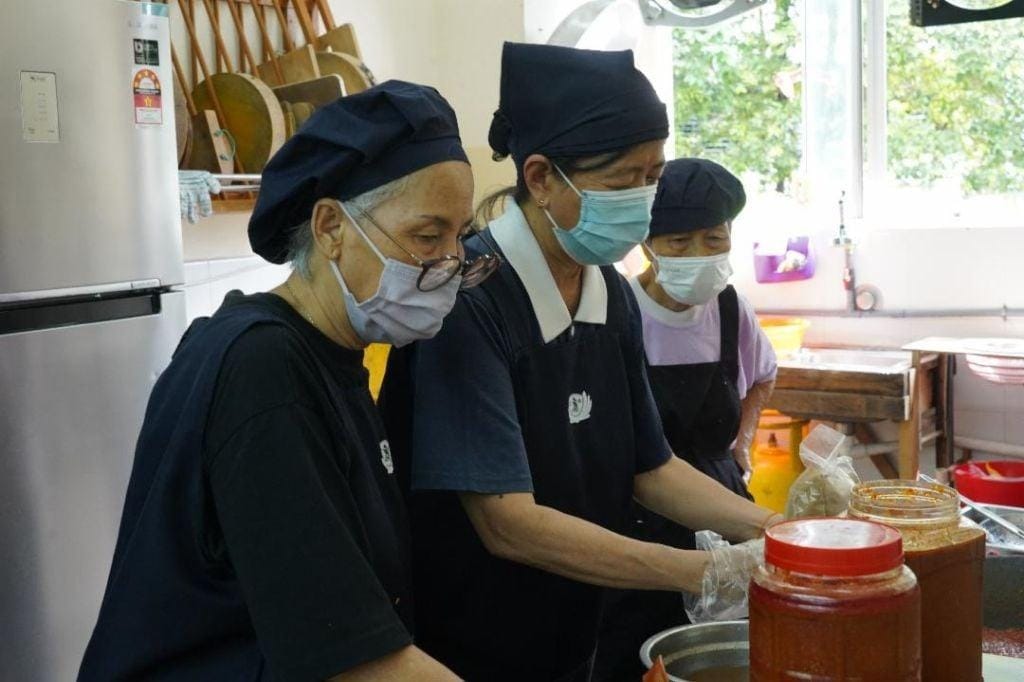
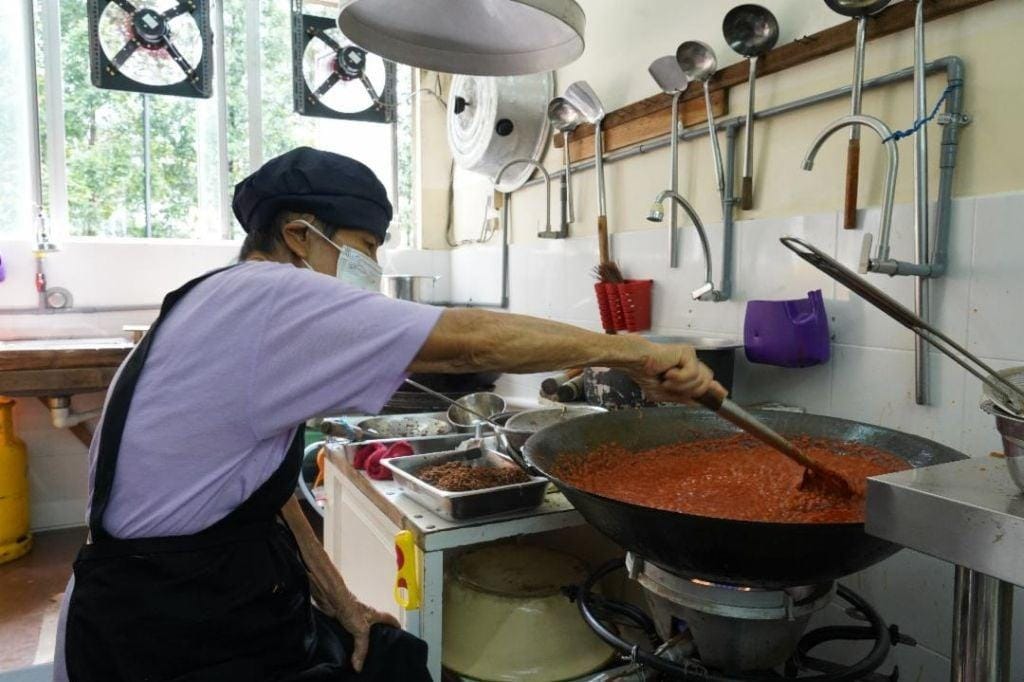
LEFT: Coordinator Lay Sim Lee (center) plans the menu with head chefs Kon Piak Ng (left) and Toh Lan Wong (right) to suit public tastes. RIGHT: Head chef Toh Lan Wong carefully stirs the chili sauce for hours to bring out a rich, fragrant flavor. | Photos: Aai Hoon Chia
Finding a generous donor who provided a space for the central kitchen, the team quickly gathered momentum. Eng-Lay Gan (顏榮來), a former cooking instructor, helped establish a diverse menu. Lee later took over coordination, managing a diverse group of helpers, including elderly volunteers and Chee-Guan Tee (鄭智源), the only male volunteer in the kitchen, who handles heavy lifting and quick supply runs.
Cooking with compassion
Toh Lan Wong (黃渡蘭), 78, serves as one of the head chefs. Having worked as a private chef for decades, she is highly skilled in the kitchen. For years, she struggled with the internal conflict of cooking meat while knowing the environmental and ethical impacts. After retiring three years ago, she fully embraced a vegetarian lifestyle. Her dedication to cooking remains unparalleled; she will spend hours stirring a pot of chili sauce just to achieve the perfect consistency and aroma.
I learned a lot about preparing ingredients from the monastics at the Jing Si Abode. I saw that they were meticulous with every dish, considering both nutrition and taste. Even when making simple vegetarian meatballs, they pay close attention to the filling and the texture. Food must suit people's tastes. When we cook with care, ensuring good flavor and nutrition, people will naturally be drawn to vegetarian food. This is the best way to promote it. —Toh Lan Wong, Volunteer and Head Chef
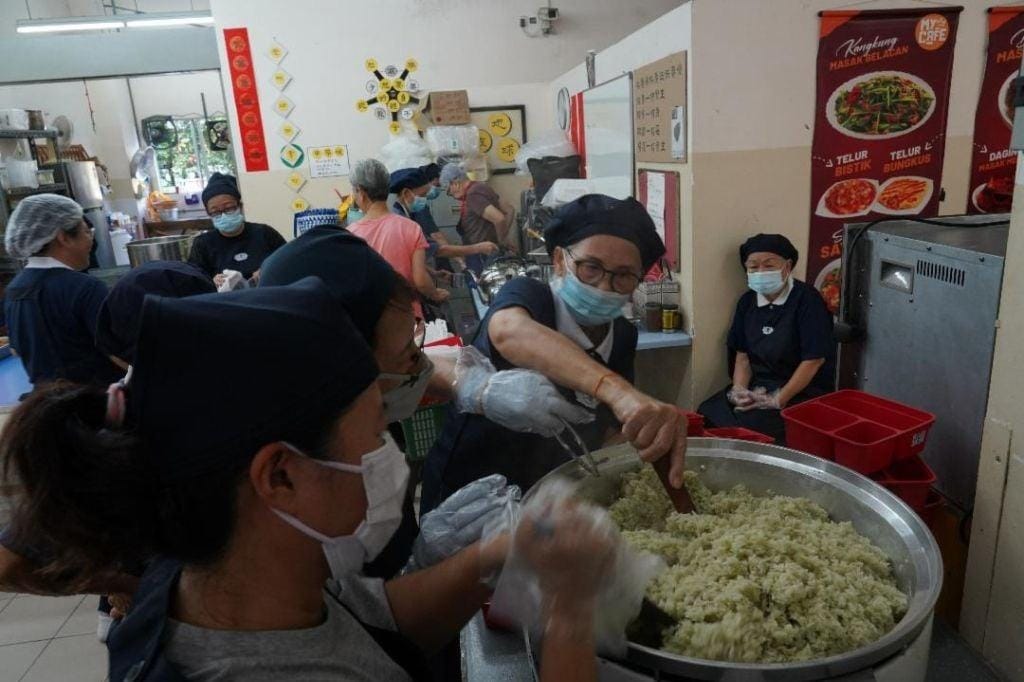
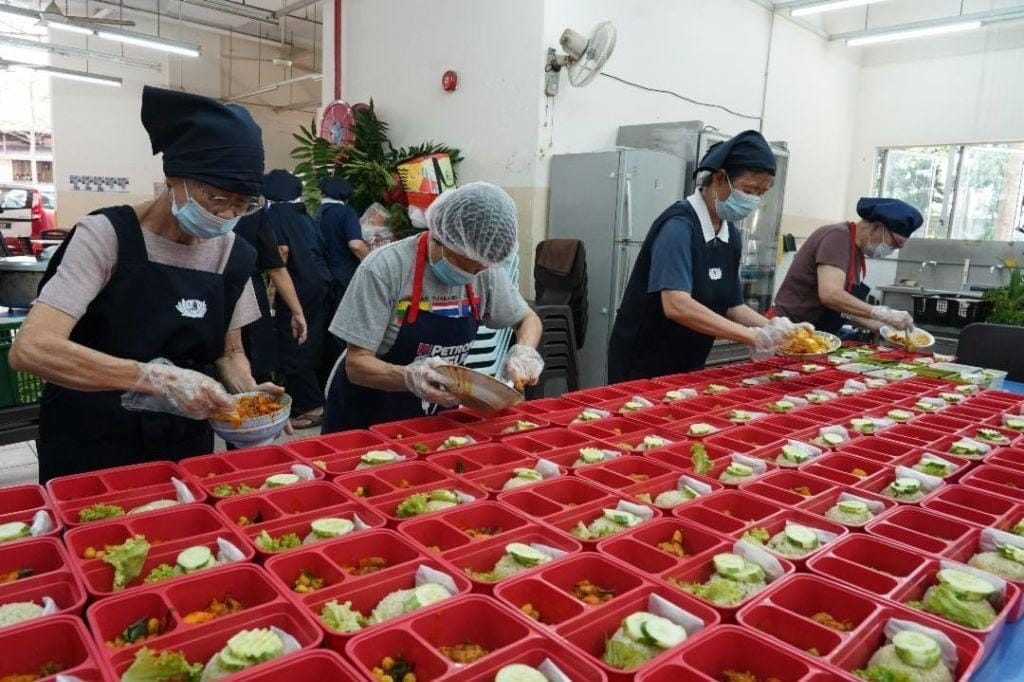
LEFT: Kon Piak Ng (second right) shares her technique for cooking perfectly fluffy and fragrant white rice. RIGHT: Volunteers carefully inspect the packed bento boxes to ensure the portions are sufficient for everyone. | Photos: Aai Hoon Chia
Wong's kitchen partner, Kon Piak Ng (黃君碧), 71, shares this dedication. Despite suffering from joint pain that requires frequent rest, she perseveres through the long hours. Recognizing the karmic impact of consuming meat, Ng transitioned to a vegetarian diet years ago to stop forming negative connections with living beings.
Accommodating every request
Behind the scenes, administrative volunteer Siau Eng Lim (林曉瑛) ensures the operation runs smoothly. She designs the menus, tracks orders, and manages deliveries. Handling frequent changes in orders can be challenging, but she approaches it with patience.
I learned to accept unexpected changes with a calm mind. When people ask for extra rice, more soup, extra chili, no fried food, brown rice, or omitting certain vegetables, I write it all down and try my best to meet everyone's needs. —Siau Eng Lim, Administrative Volunteer
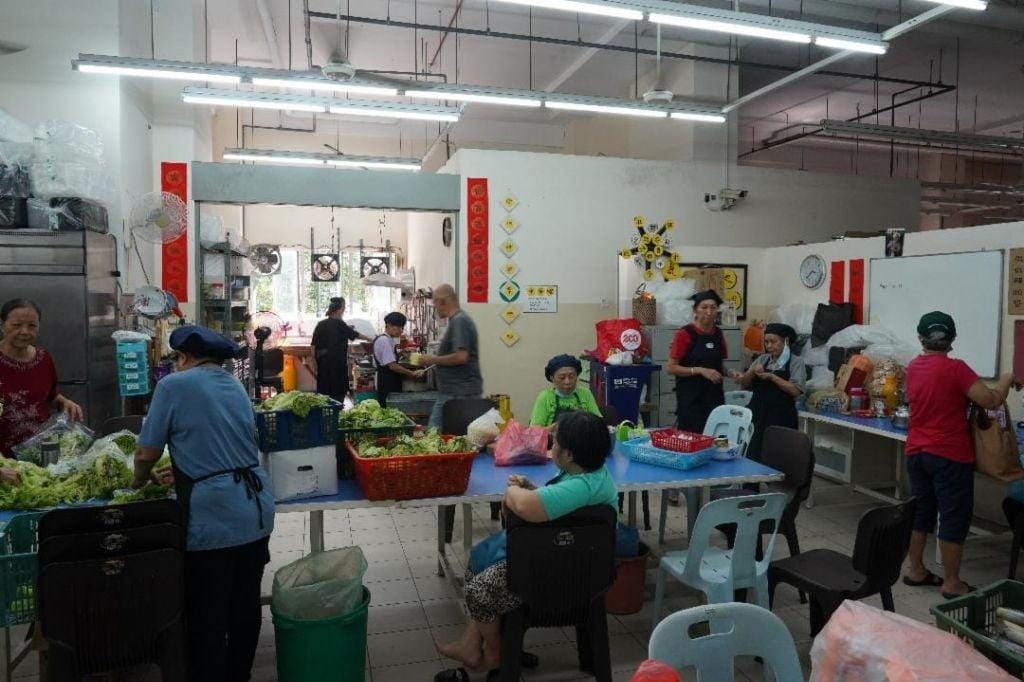
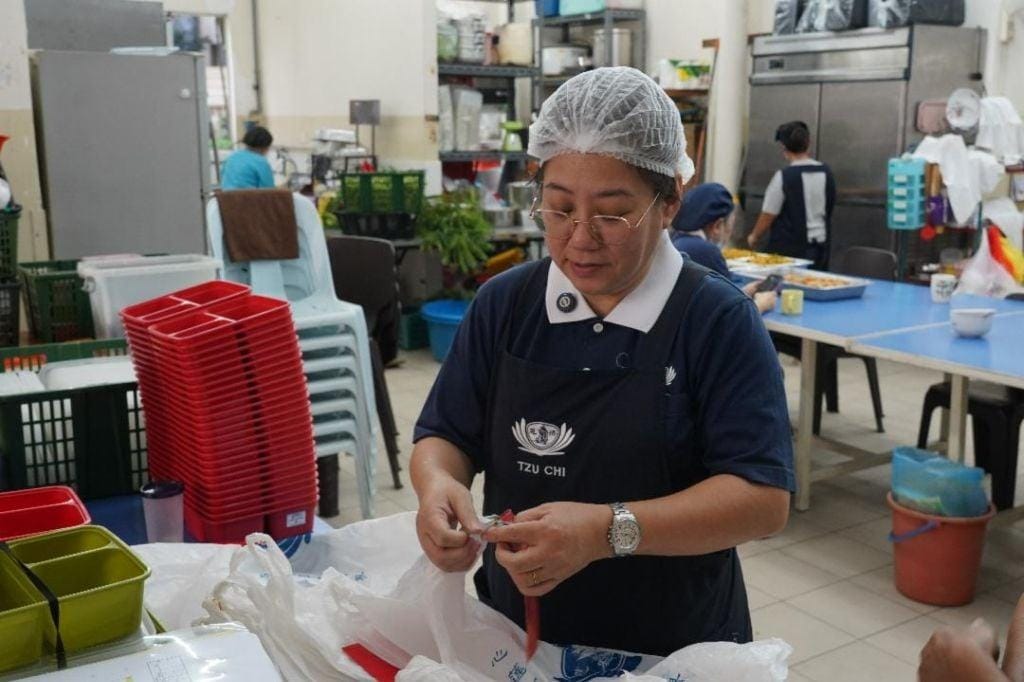
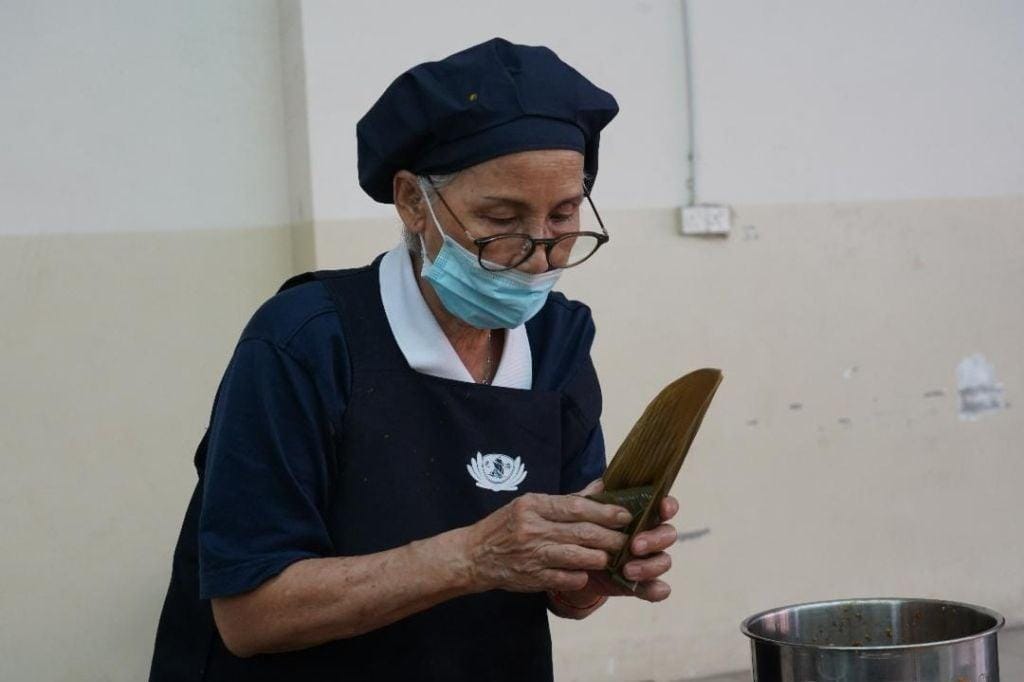
LEFT: Volunteers prepare vegetarian bentos at the central kitchen on the ground floor of Residensi Teratai. RIGHT: Admin volunteer Siau Eng Lim meticulously tracks orders and specific dietary requests for deliveries. | Photos: Aai Hoon Chia
To promote environmental sustainability, the volunteers use practical, heat-resistant, three-compartment reusable containers. Each small profit made from the bento boxes is donated back to charitable causes. Through careful preparation and a willingness to adapt, the Wangsa Maju volunteers prove that a simple meal can deliver immense comfort, supporting both the well-being of the community and the health of the planet.
Written by Kim-Hion Tan (陳金香)
