


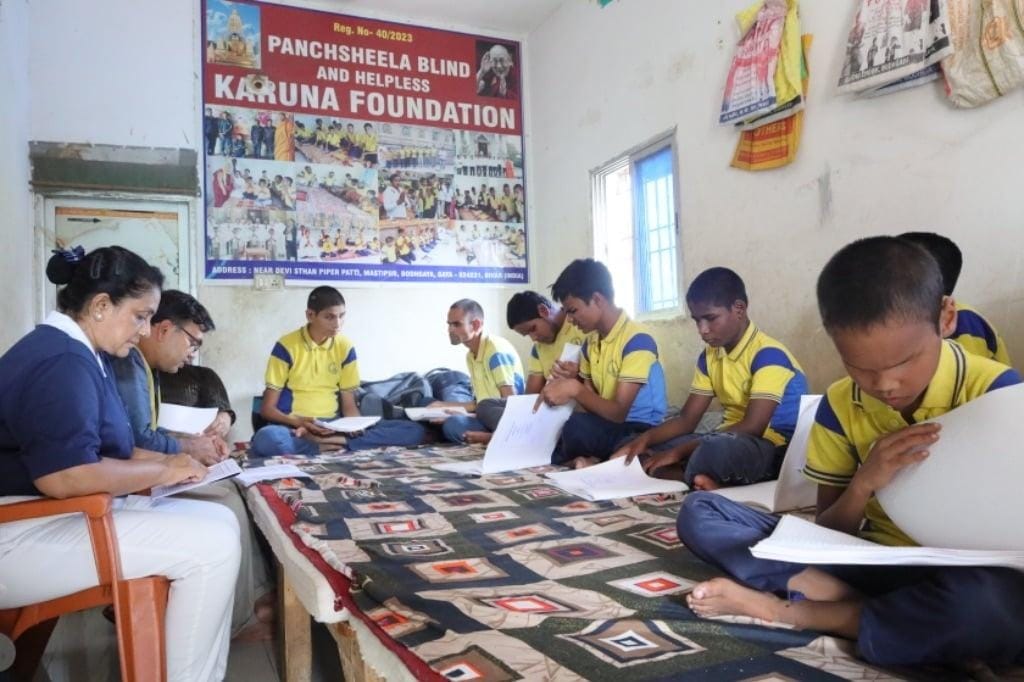
In Bodh Gaya, India, students at the Panchsheel Blind and Helpless Karuna Foundation in Mastipur Village are experiencing a new way to interact with ancient texts. For years, the visually impaired children at the school relied entirely on their hearing to learn and memorize scriptures during their daily visits to the Mahabodhi Temple. While they developed a habit of reciting sutras, reading the words themselves was an impossibility.
That changed when a collaborative effort began to translate the Sutra of Infinite Meanings into a format the students could read. After identifying the children's interest in scriptural study, volunteers facilitated the creation of a Braille version of the text based on a Hindi translation. Fifteen Braille copies were produced, with ten gifted directly to the school. For the first time, these students moved from merely listening to actively reading with their own hands.
Bridging the accessibility gap
The transition from auditory learning to reading Braille texts is a rigorous process. The children are currently studying the first chapter, which introduces numerous Pali and Sanskrit terms. Navigating these complex phonetic translations letter by letter through touch requires significant concentration and time.
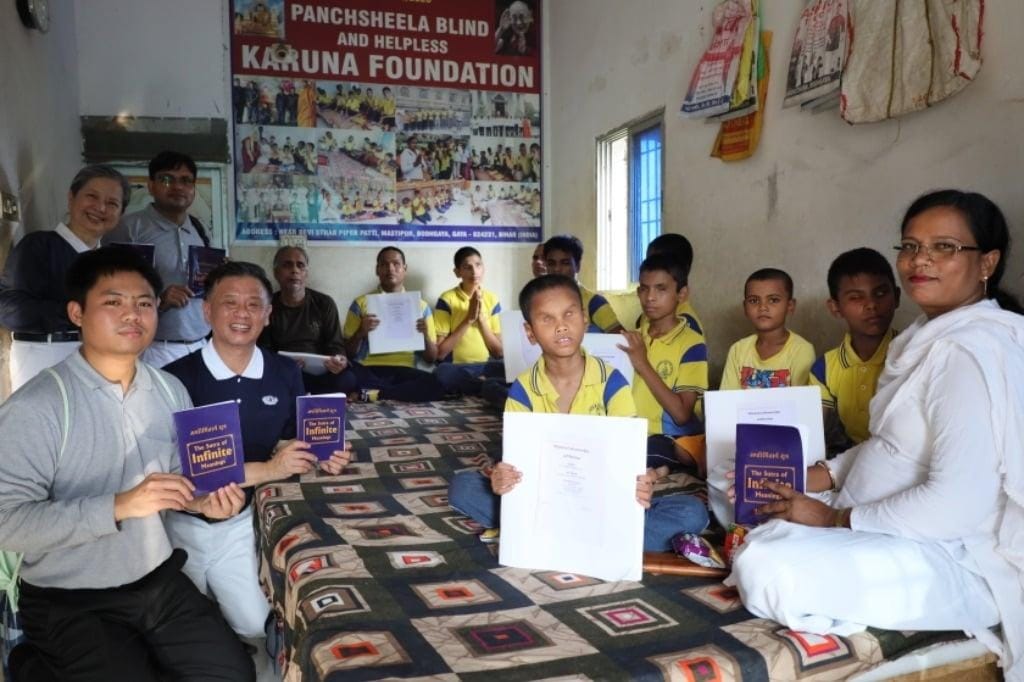
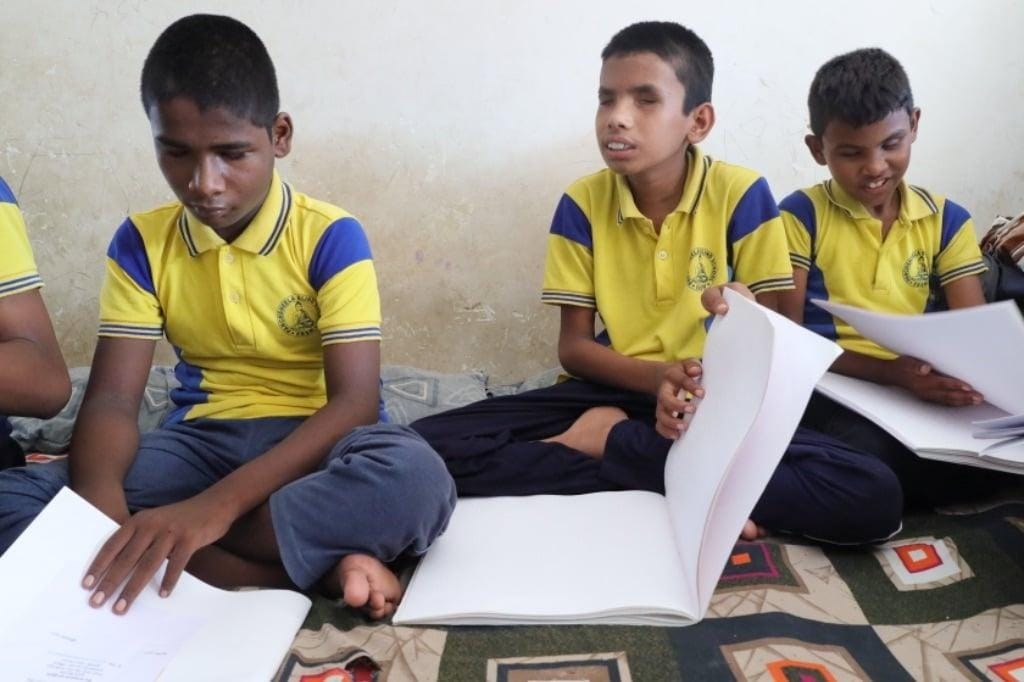
LEFT: Volunteer Raymond Kuo (front second left) reads with the children. RIGHT: Randhir (center) focuses on reading the Braille text independently. | Photos: Dana
During the initial reading sessions, five out of the eight participating students were able to read the Braille text. Students like Chiku Kumar and Randhir Kumar demonstrated notable progress, though it took over an hour just to complete the first chapter. Despite the steep learning curve, the students have not retreated. With teachers dedicating at least thirty minutes a day to guide their practice, the children are slowly beginning to internalize and memorize the verses.
This is the children's first time encountering the Sutra of Infinite Meanings. Pronouncing and understanding the Pali and Sanskrit vocabulary is not easy, especially since reading Braille requires tracing word by word. — Prakash Kumar, Local Volunteer
Tracing scriptures by touch
The daily practice goes beyond simple memorization. Principal Lalita Devi observed that having access to their own reading material has boosted the students' confidence. They are no longer passive recipients of spoken words but active participants in their own education.
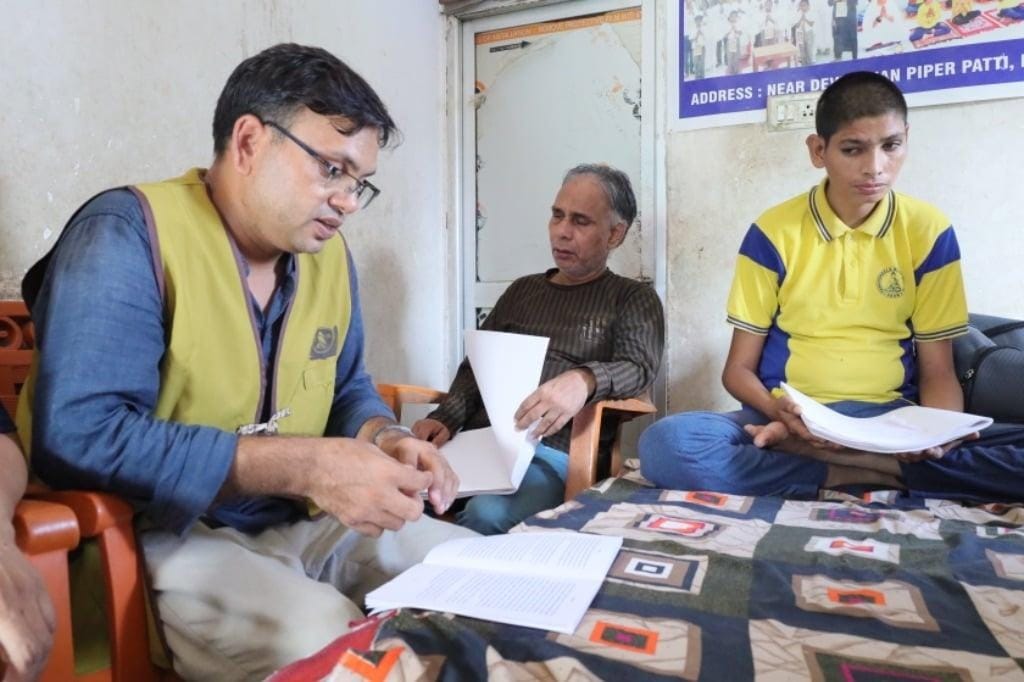
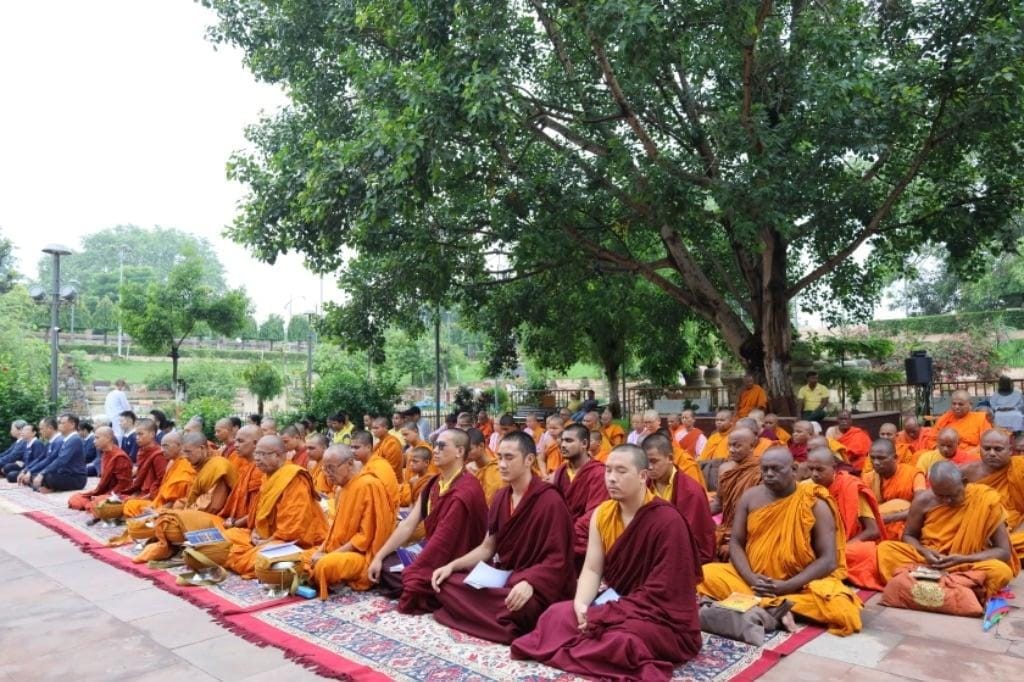
LEFT: Local volunteer Prakash Kumar (left) visits the blind school to guide the students. RIGHT: Volunteers recite sutras under the Bodhi tree. | Photos: Dana
For those assisting the students, the process has been a lesson in patience and perseverance. Malaysian volunteer Raymond Kuo (郭糧鳴) noted the sheer difficulty the children face in trying to match the recitation speed of sighted individuals. Witnessing the students trace the raised dots word by word, he reflected that their determination to study serves as a strong reminder for others to appreciate their own accessible educational resources.
Shared traditions at the Mahabodhi Temple
On August 6, the students traveled to the Mahabodhi Temple, the site of the Buddha's enlightenment, to participate in a larger recitation event held on the 24th day of the lunar month. Following the gathering, the students engaged in Ānāpānasati Bhāvanā, a form of mindfulness of breathing, to cultivate a sense of calm and focus.
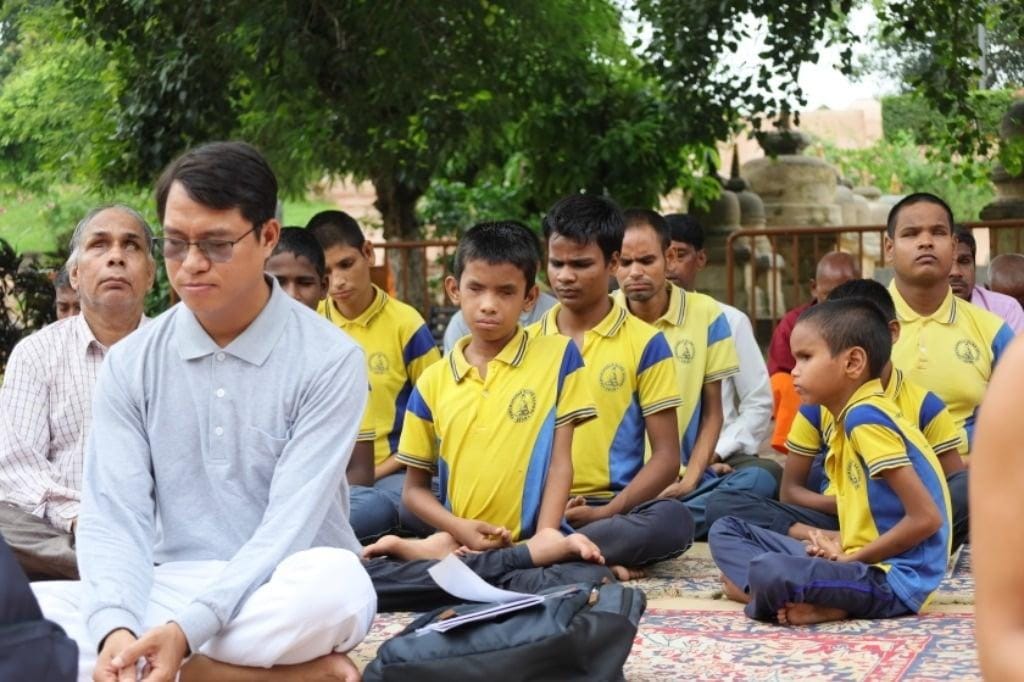
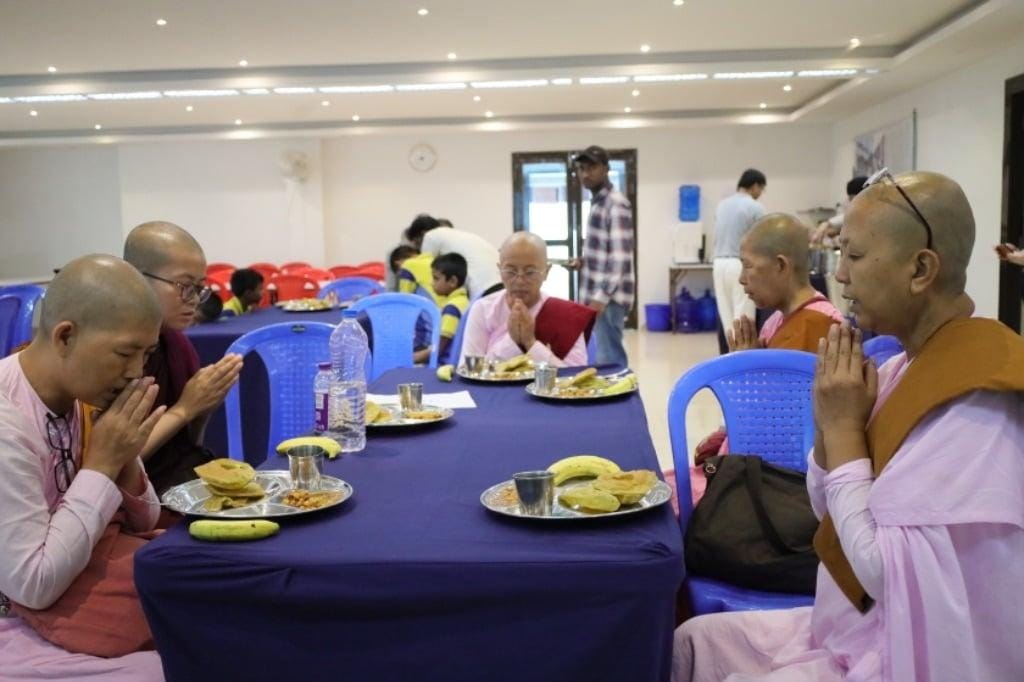
LEFT: Attendees practice mindfulness of breathing to cultivate calm. RIGHT: Myanmar nuns from the Dhamma Meditation Center enjoy breakfast. | Photos: Dana
The gatherings have also become a point of convergence for different Buddhist traditions. Bhikkhuni Mijjima, a nun from the Dhamma Meditation Center who originates from Myanmar, attended the session with nine other nuns. She noted that while the Sutra of Infinite Meanings is a new text for Theravada monastics, its core principles of discipline, meditation, and wisdom resonate deeply with their own practices.

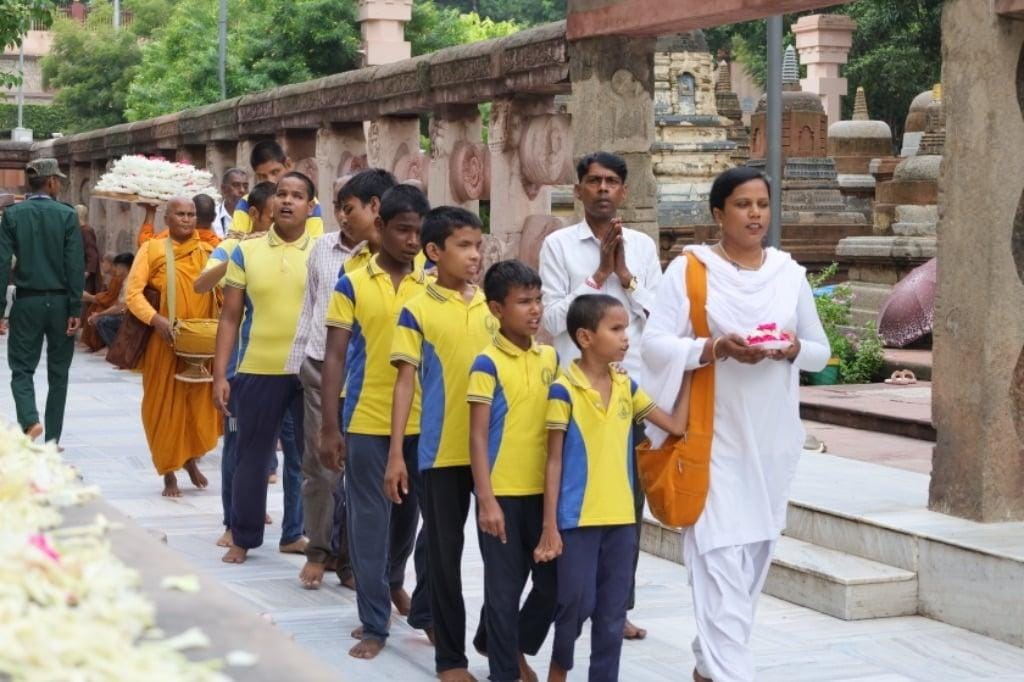
LEFT: Abhaya Yogi notes interest among Theravada practitioners. RIGHT: Principal Lalita Devi (right) accompanies the children on their path. | Photos: Dana
Historically, the recitations were primarily attended by Mahayana practitioners. Recently, an increasing number of Theravada monastics have shown interest in texts like the Lotus Sutra and the Sutra of Infinite Meanings.
These beautiful classics are gradually being recognized by more people, and the Dharma is slowly spreading among different Buddhist traditions. — Abhaya Yogi, Local Volunteer
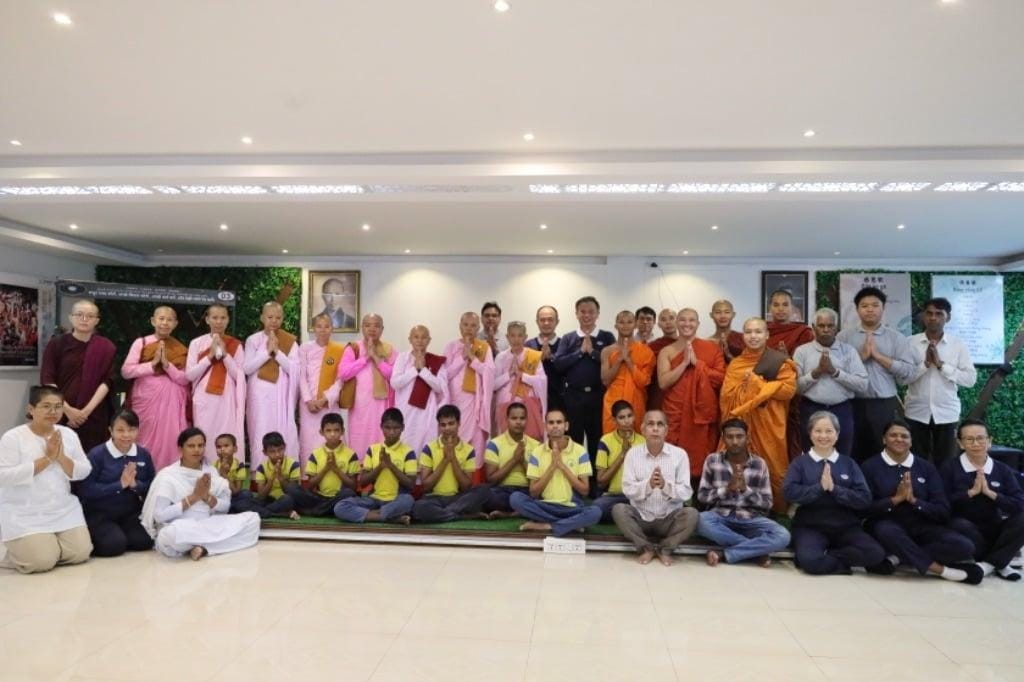
Through a single Braille book and the dedication of their teachers, the visually impaired students of Mastipur Village have claimed their right to read. Whether reading with their eyes or tracing dots with their fingertips, the students are finding their own rhythm, navigating a path of learning and quiet determination.
Written by May Wang (王承瑄), Prakash Kumar
