


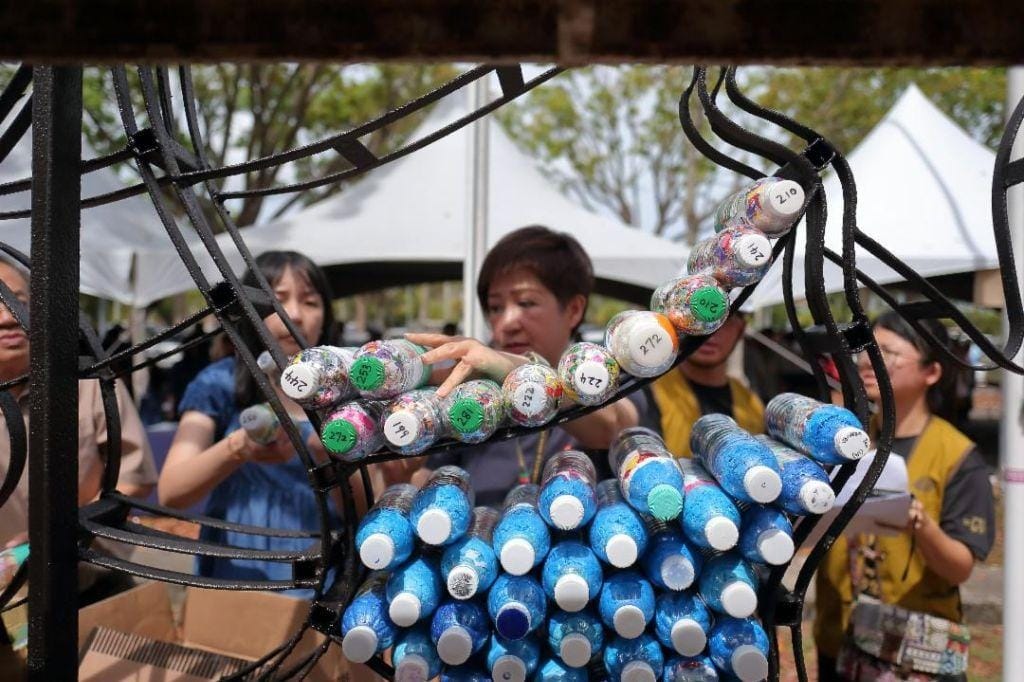
On May 10, 2026, a 3.7-meter-tall seahorse sculpture crafted entirely from eco-bricks was officially handed over to the Miri City Council in Sarawak, Malaysia. Placed permanently at Eco Cliff Park, the public art installation stands as a collective achievement of 1,416 community members, schools, medical professionals, and local organizations working together to reduce plastic waste.
Turning waste into a city landmark
The sculpture, measuring 3.7 meters high and four meters wide, was built using 1,494 verified eco-bricks—recycled PET plastic bottles densely packed with cleaned, single-use plastic waste. The community effort successfully diverted 319.9 kilograms of plastic waste from landfills, equivalent to saving 639.8 liters of crude oil and preventing 1,919 kilograms of carbon dioxide emissions.
Organizers engaged 17 local institutions, including universities, primary and secondary schools, kindergartens, government departments, and private companies. Students, parents, and local residents cleaned, sorted, and packed household plastics into the bottles, transforming everyday refuse into structural building blocks.
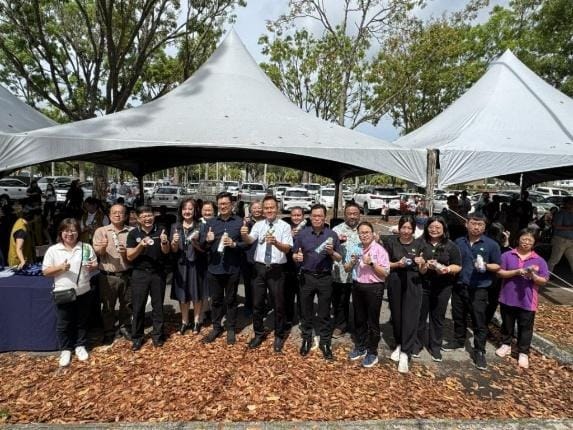
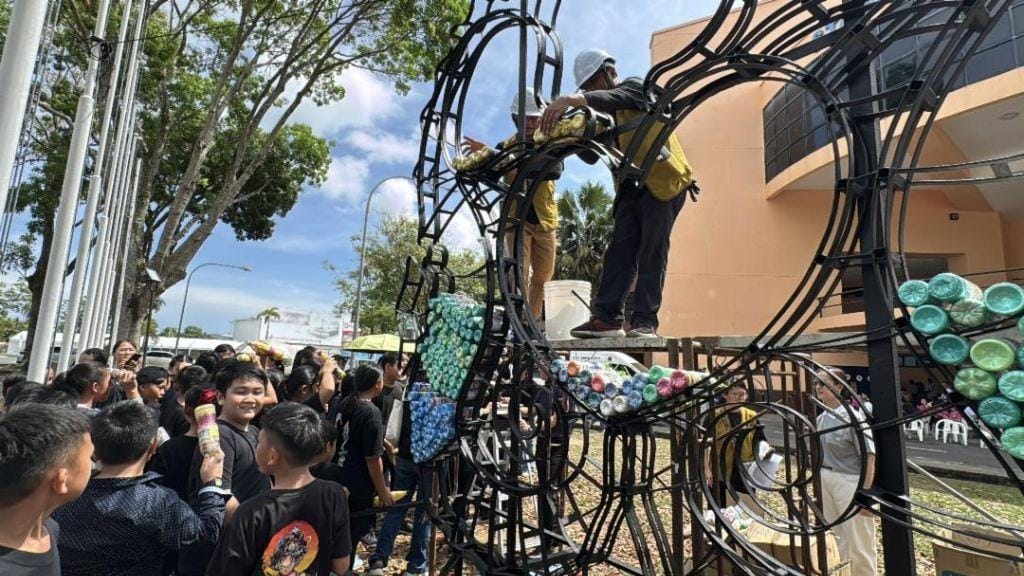
LEFT: Participants from various schools and organizations join Tzu Chi volunteers to celebrate the completion of the eco-brick seahorse. RIGHT: Students queue up eagerly to attach their eco-bricks to the seahorse sculpture. | Photos: Hui-San Hu (胡慧珊)
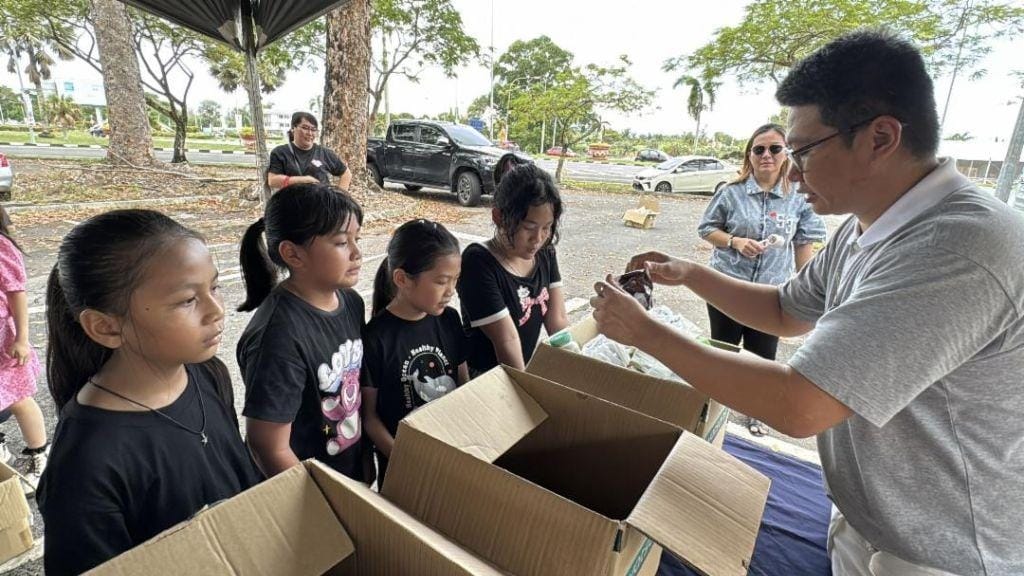
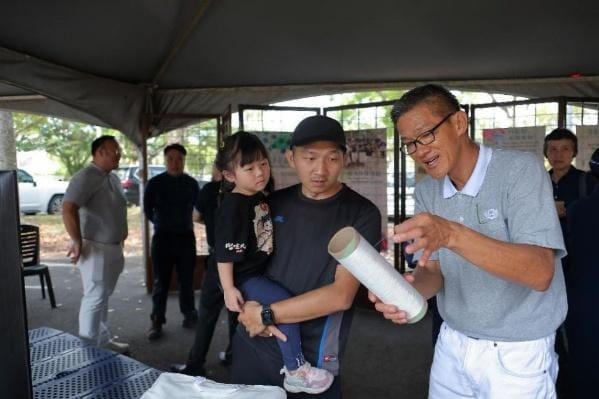
LEFT: Volunteer Yiu-Leung Wong (黃耀良) (right) teaches primary students how to sort plastic waste at the source. | Photo: Hui-San Hu RIGHT: Volunteer Hua Seh Hwong (方孝西) (right) explains how recycled plastic bottles are transformed into eco-friendly products. | Photo: Hui-Wing Lai
Bringing sustainability into daily life
The project encouraged participants to re-examine their daily consumption habits. At Miri Hospital, Director Dr. Jack Wong (黃修儒) led medical staff and their families in producing eco-bricks from non-hazardous hospital waste, such as discarded packaging and plastic bottles. He noted that integrating recycling into daily routines serves as a practical reminder for healthcare workers, helping sustainable habits spread from the workplace to homes and the broader community.
The educational impact has already extended beyond the initial installation. Following the event, three local schools—SJK (C) Chung Hua Sibuti, Riam Road Secondary School, and SJK North Miri—announced plans to continue eco-brick creation programs, inviting students to design original eco-friendly art pieces for their own campuses.
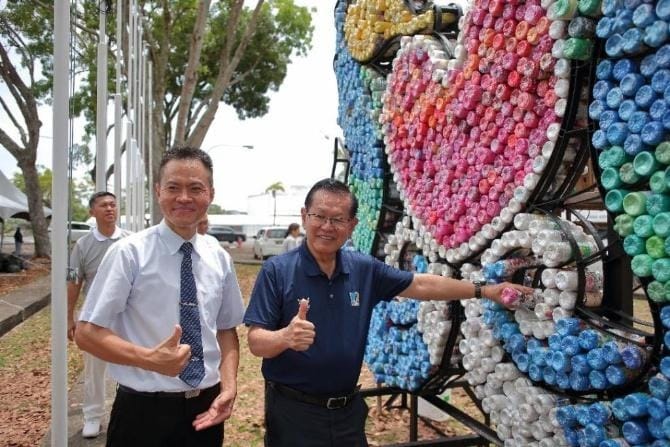
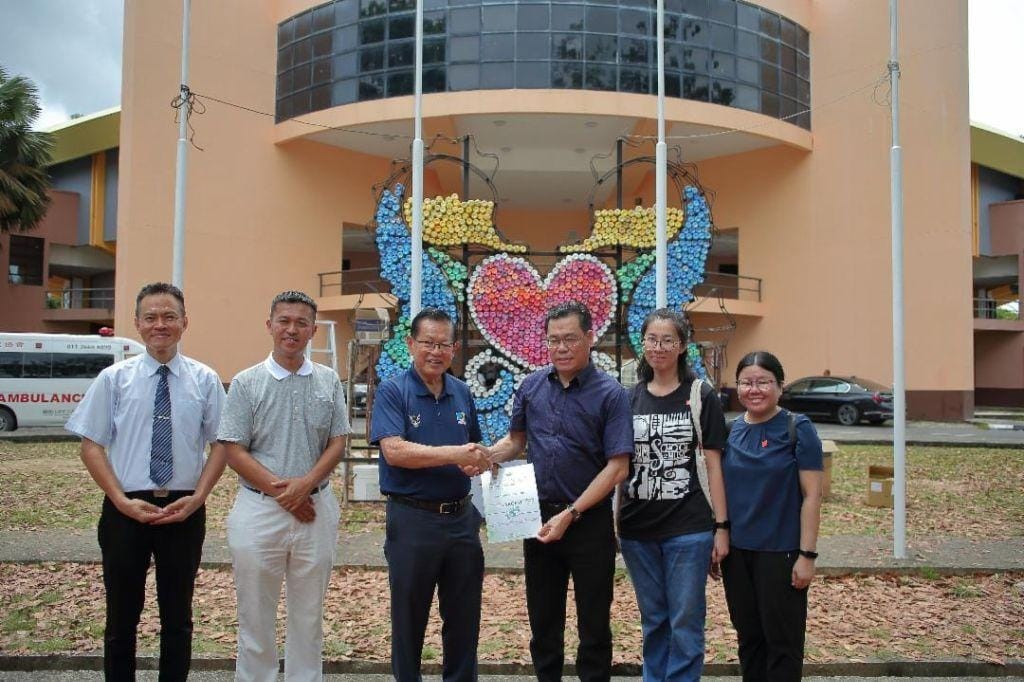
LEFT: Sarawak Minister of Transport Kim Shin Lee (李景勝) (right) adds an ecobrick to the sculpture alongside Bryan Hwong (方文光) (left). RIGHT: SJK (C) Tudan Principal Si-Khuen Lau (劉世坤) (third right) receives an official letter from Minister Lee (third left), accompanied by volunteer Bryan Chia (second left) who actively promoted the creation of eco-brick seahorse. | Photos: Hui-Wing Lai
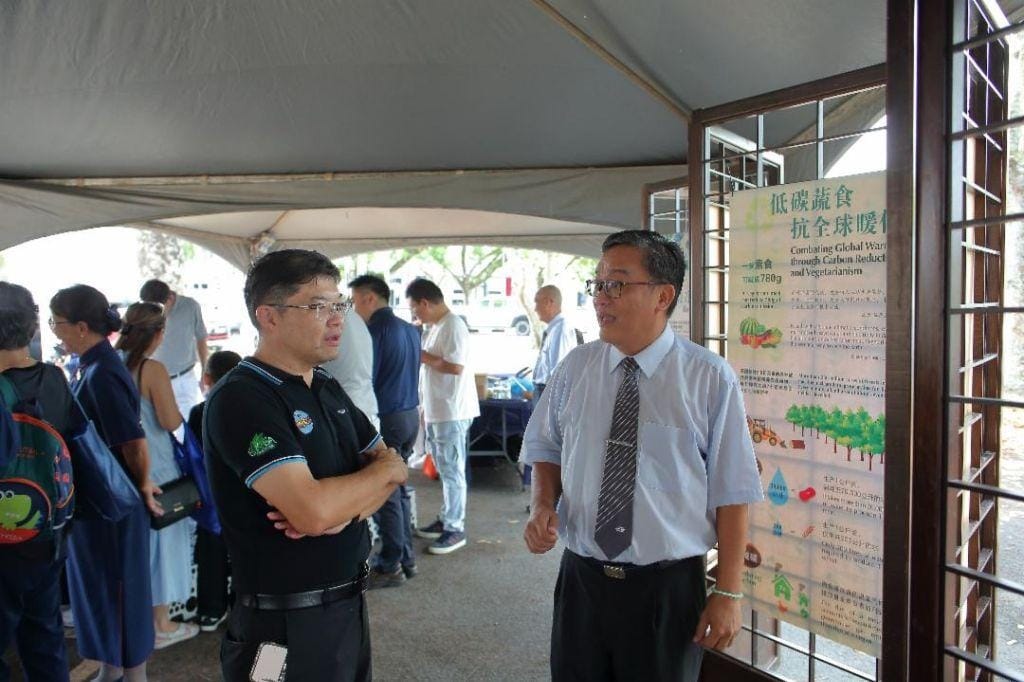
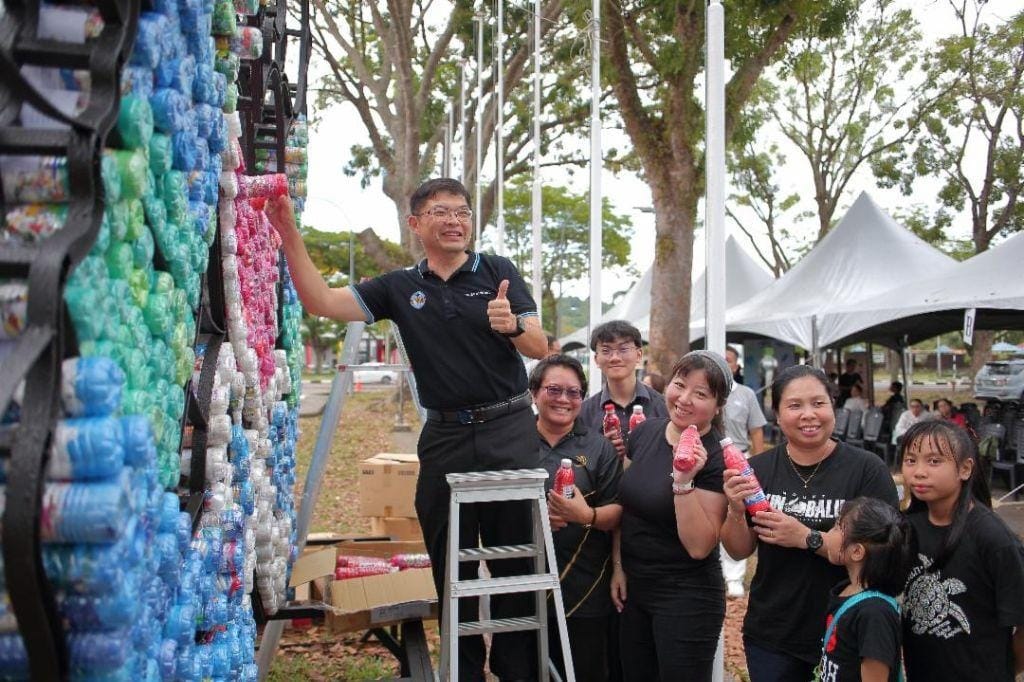
LEFT: Environmental coordinator John Poh (傅友頌) (right) discusses low-carbon plant-based living with Dr. Wong (left). RIGHT: Miri Hospital Director Dr. Wong (front left) leads his medical team in committing to environmental protection. | Photos: Hui-Wing Lai
A shared vision for a green city
Miri Mayor Adam Yii Siew Sang (俞小珊) noted that small behavioral shifts aggregate into significant urban transformation. By providing municipal land for environmental education, the city council aims to make resource conservation a visible lifestyle choice, highlighting that every one percent increase in the recycling rate preserves vital space for future generations.
Sarawak Minister of Transport Kim Shin Lee (李景勝) supported the effort, linking the installation to the municipal "EcoPark – The Green Wall of Miri" initiative, which combines green infrastructure with public community spaces.
For volunteer project coordinator Bryan Chia (謝碩虔), the installation's primary value lies in its community engagement.
The most important thing about eco-bricks is not how many works are completed, but whether it inspires people to start making a change. — Bryan Chia, Tzu Chi Volunteer
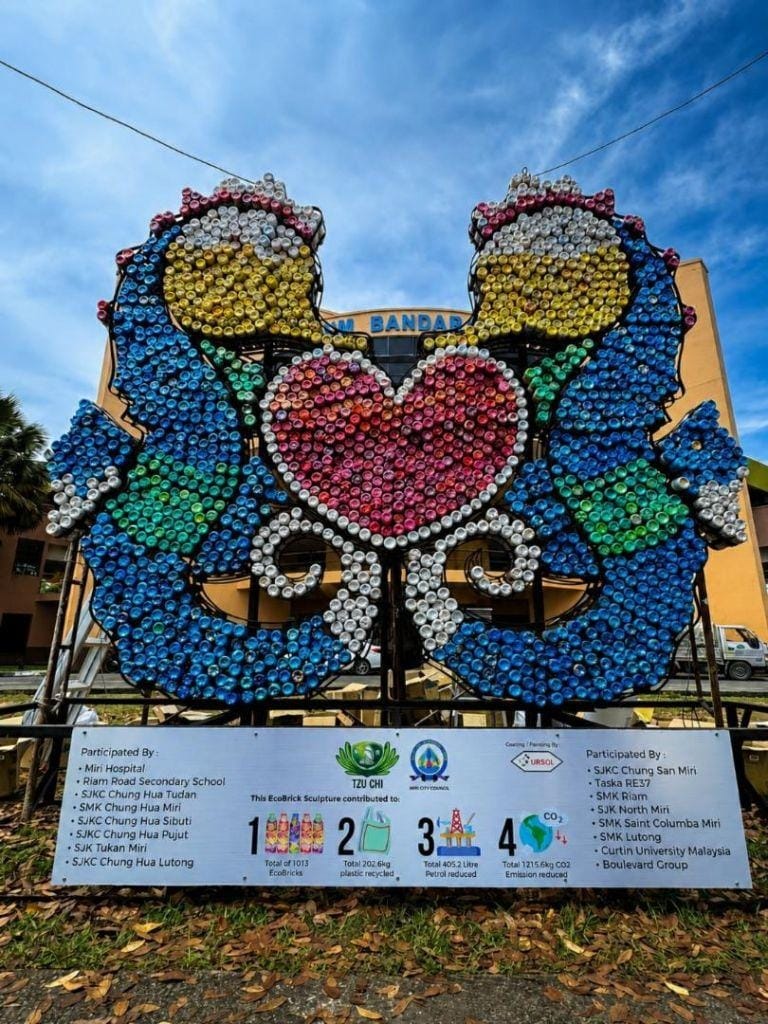
As the seahorse—Miri’s official municipal mascot—stands overlooking Eco Cliff Park, it serves as a lasting symbol of local civic action. By giving discarded materials a new purpose, the community demonstrated how collective effort can reshape urban environments.
Written by Ming-Yang Xu (許明揚)
