


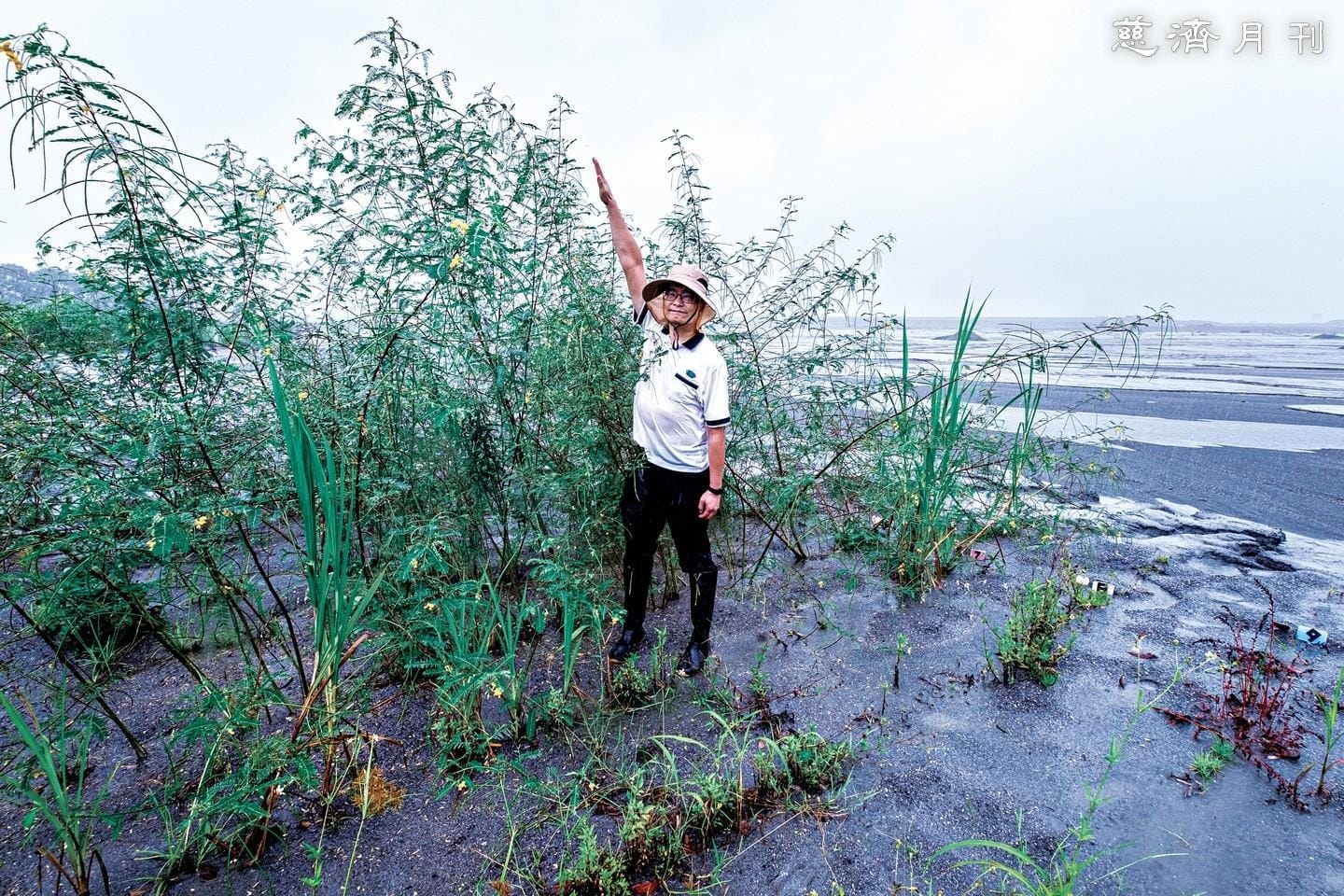
After massive siltation from barrier lake overflows, agricultural land in Guangfu, Hualien, initially resembled the surface of the moon. Yet, life is steadily returning to these barren tracts, prompting a deeper reflection on how communities can enhance their resilience when facing environmental uncertainties. Through university-led ecological experiments and community partnerships, local educators and residents are transforming disaster-stricken soil into thriving ecosystems.
Regenerating barren land through ecological experiments
After severe flooding along Lintian Main Road and Fuzu Street, the land was left bare and highly alkaline, with a pH of 8.3 to 8.5 and little organic matter or microbial life. Led by Yie-Ru Chiu (邱奕儒), a professor in Tzu Chi University's Master's Program in Sustainability and Disaster Prevention, the University Social Responsibility (USR) team established three soil restoration experimental fields alongside a food forest at Banchang (邦查) Farm.
During the first experimental phase, the team planted pasture grass to increase soil organic content. Although a subsequent typhoon washed away a portion of the crops, the surviving vegetation offered valuable insights into microbial symbiotic relationships. Building on this, Chun-Yao Chen analyzed plant-microbe interactions to identify cost-effective soil rehabilitation strategies. In the second phase, the team cultivated hemp sesbania, a leguminous plant whose root nodules actively fix nitrogen and restore nutrients to the soil, proving that life can be successfully rekindled in severely degraded land.
Strengthening disaster preparedness and survival systems
Experiencing natural calamities often triggers widespread fear, which can be mitigated through proactive preparation. Disaster readiness begins at the household and community levels by securing essential lifeline systems—such as water, food, sanitation, energy, and communication—while accounting for vulnerable groups like seniors and individuals with medical needs.
To systematically evaluate and improve preparedness, households can utilize a five-circle framework:
- Home Safety: Inspecting electrical systems, fire prevention, carbon monoxide safety, and anchoring furniture to prevent indoor hazards.
- Alternative Lifeline Systems: Maintaining emergency stockpiles of water, food, fuel, and sanitation supplies for both home storage and mobile use.
- Emergency Backpacks: Packing essentials near the exit door, including water filters, cash, identification, thermal clothing, medical supplies, and personal items that provide emotional support during crises.
- Neighborhood Mutual Aid: Fostering close communication with nearby residents to ensure mutual assistance during emergencies.
- Evacuation Centers: Identifying local shelters ahead of time and verifying that adequate emergency resources are in place.
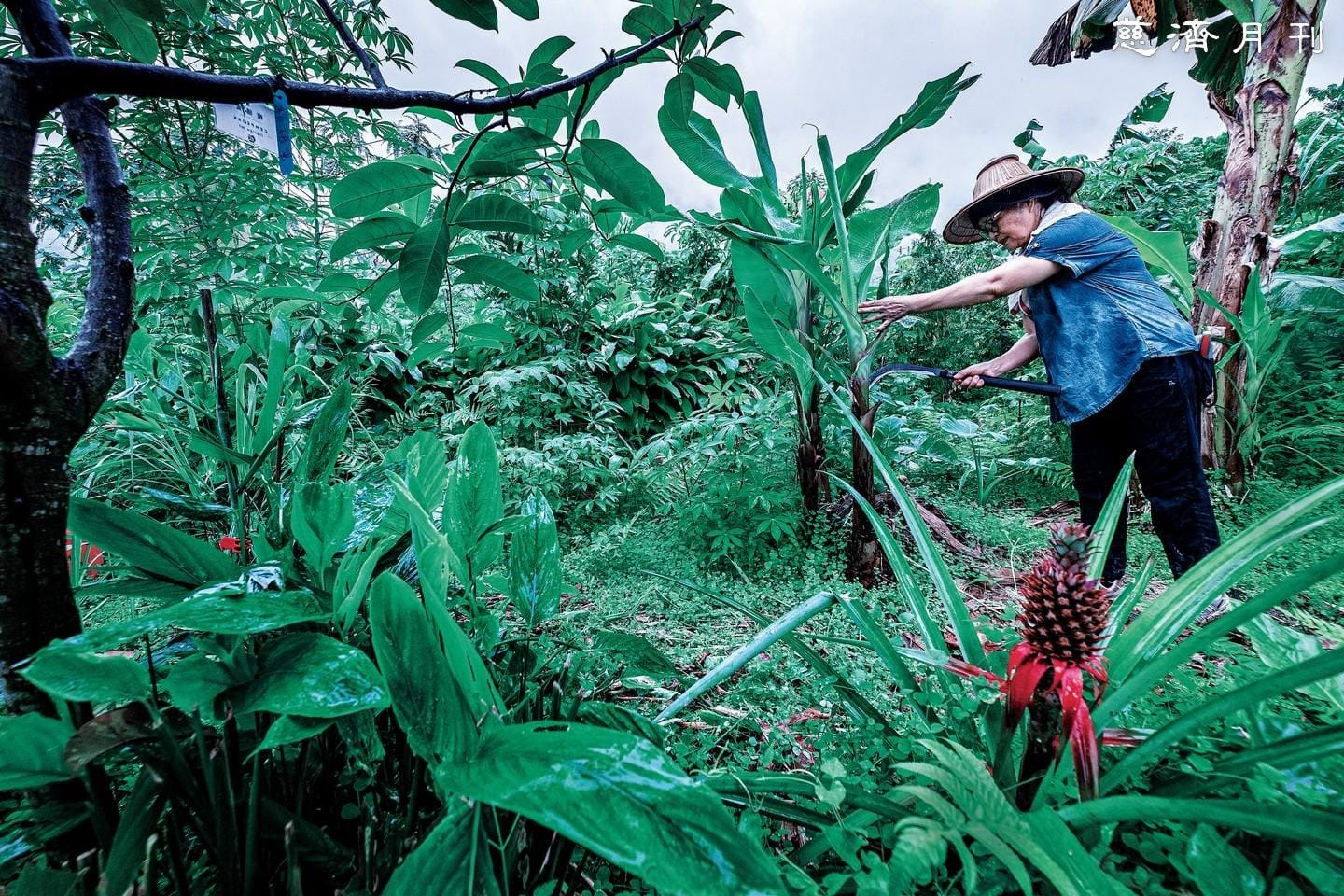
Cultivating food forests for climate resilience
Agricultural recovery extends beyond immediate cultivation to encompass sustainable consumption and resilient farming models. Through the "Eat Sustainably Consumer Cooperative," Tzu Chi University has spent over eight years connecting consumer demand with small-scale producers and indigenous agriculture, directing financial resources back into rural communities.
On the production side, the USR team promotes food forest farming methods that mimic natural ecosystems. By interplanting crops like bananas with diverse fruit trees and leguminous plants, farms achieve greater wind resistance compared to monocultures. This approach improves soil structure, enhances rainwater absorption during heavy downpours, and increases water retention during dry periods. By embracing these natural agricultural practices, communities across Hualien are developing sustainable ways to withstand frequent environmental hazards.
The journey from clearing thick mud to cultivating flourishing food forests demonstrates that communities can adapt and recover from severe natural disruptions. By strengthening household preparedness, supporting responsible local agriculture, and working in harmony with natural ecological processes, residents are building lasting resilience against future environmental challenges.
Written by Yu-Hua Yeh (葉又華)
