


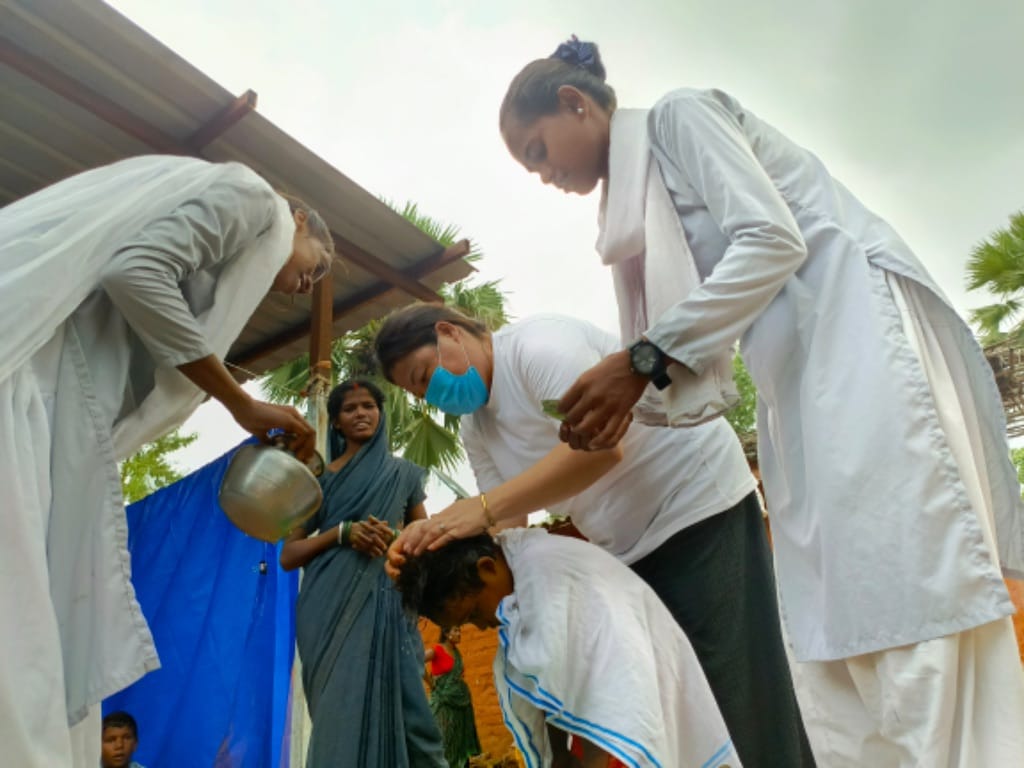
As the monsoon rain fell over Rajgir, the dirt paths of Badripur village turned wet and muddy. Nestled at the foot of a mountain, the village is surrounded by palm trees and greenery, with cows resting quietly by the roadsides. On August 14, a group of 13 volunteers and staff traveled from Bodh Gaya, carrying medicated shampoo, fine-tooth combs, and bamboo banks into the village to provide health education and care.
When the team arrived, the rain intensified, prompting the gathering to move to a sheltered area near the home of Sandeep Kumar, a boy who previously received medical care through Tzu Chi. Volunteers walked through the rain to invite women and children to join. A total of 60 residents attended, including 25 boys, 28 girls, five adult women, and two men. Among the volunteers was Abhishek Kumar Gunjan, who had previously helped connect Sandeep with medical assistance.
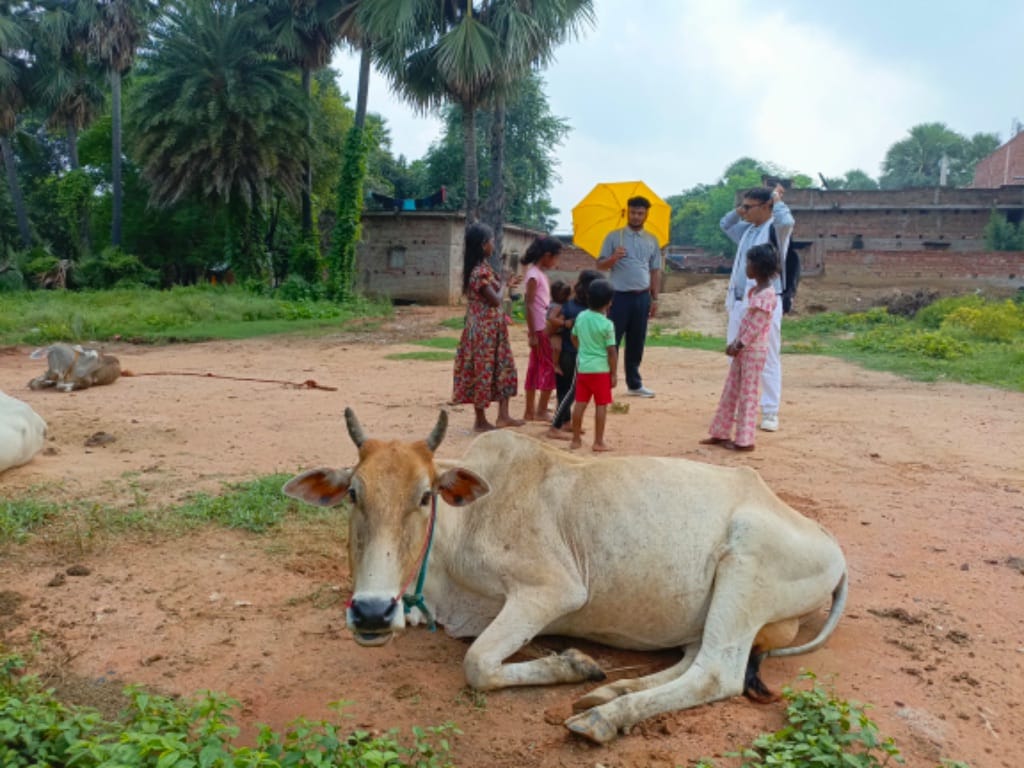
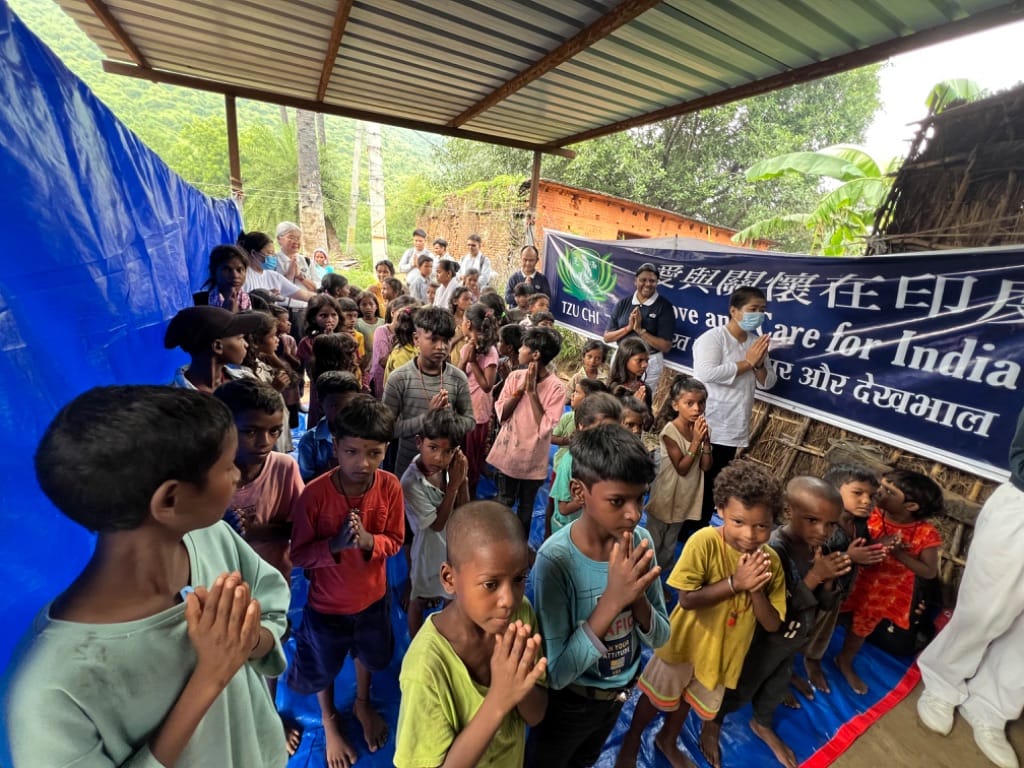
LEFT: Badripur village in Rajgir is nestled at the foot of a mountain, surrounded by greenery with cows resting by the road. RIGHT: As the rain intensified upon arrival, the gathering moved to a shelter near Sandeep Kumar's home. | Photos: Boon Tiong Tan (陳文忠), Sharon Tan (陳美平)
Practical hygiene education
The primary focus of this outreach was addressing head lice, a common issue among children in rural areas. Due to limited medical resources, challenging living environments, and a lack of sanitation facilities, head lice easily spread among children. The persistent itching causes discomfort and often distracts students from their learning and daily school activities.
To help the families manage this, Rinku Chakma led an educational session. Using simple language, Rinku explained the causes of head lice, how they spread, and practical methods for daily prevention and treatment. The session involved a question-and-answer format, keeping the children engaged. The goal was to ensure the children understood these hygiene practices and could share them with their parents at home.
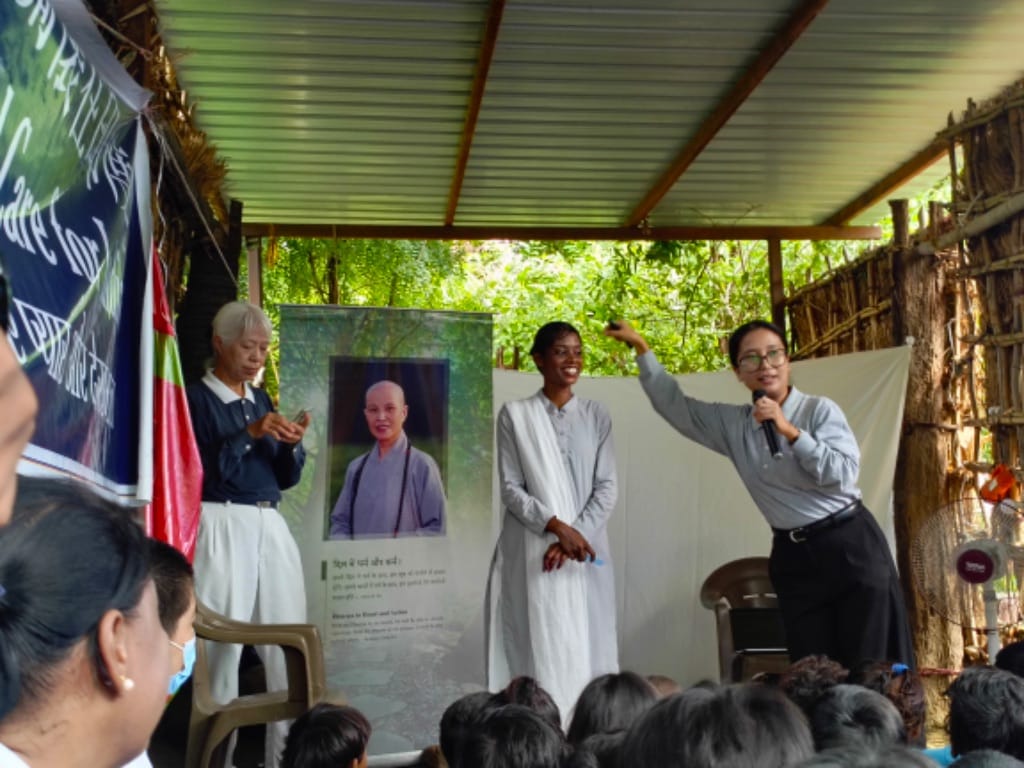
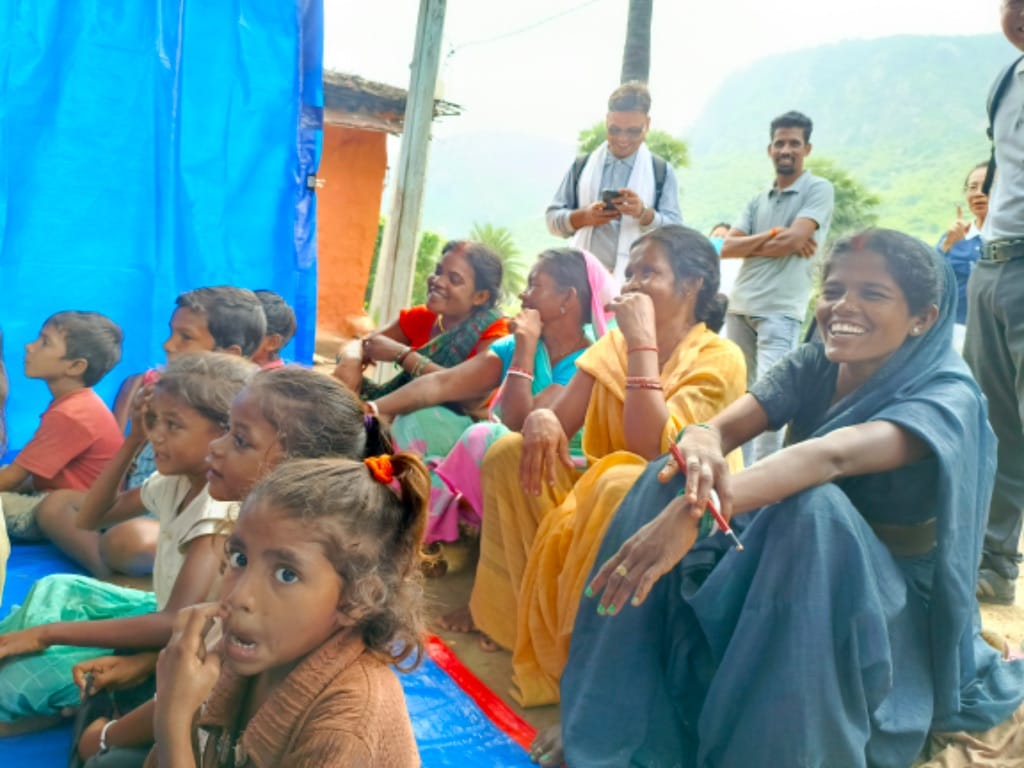
LEFT: Rinku Chakma explained the causes and spread of head lice to the children using simple, accessible language. RIGHT: The interactive question-and-answer session engaged both the children and the local women. | Photos: Boon Tiong Tan
A five-year-old girl volunteered for a practical demonstration. Sonam carefully washed her hair before using a fine-tooth comb to remove the lice and eggs. Tetari Kumari and Renu Kumari helped rinse the child's hair. During the ten-minute process, they made sure the little girl felt comfortable, allowing the watching children to learn the proper cleaning steps without fear.
After the gathering, every participating family received four bottles of medicated shampoo and a fine-tooth comb. Local women helped distribute the items to the mothers in the village, ensuring the hygiene practices could continue seamlessly in their daily household routines.
Cultivating a spirit of giving
Following the health session, volunteer Boon Tiong Tan (陳文忠) shared the origins of the foundation, with Prakash Kumar translating the story into Hindi. The villagers learned how a simple wish to help a poor woman afford medical care led 30 housewives to save a few cents each day in bamboo banks.
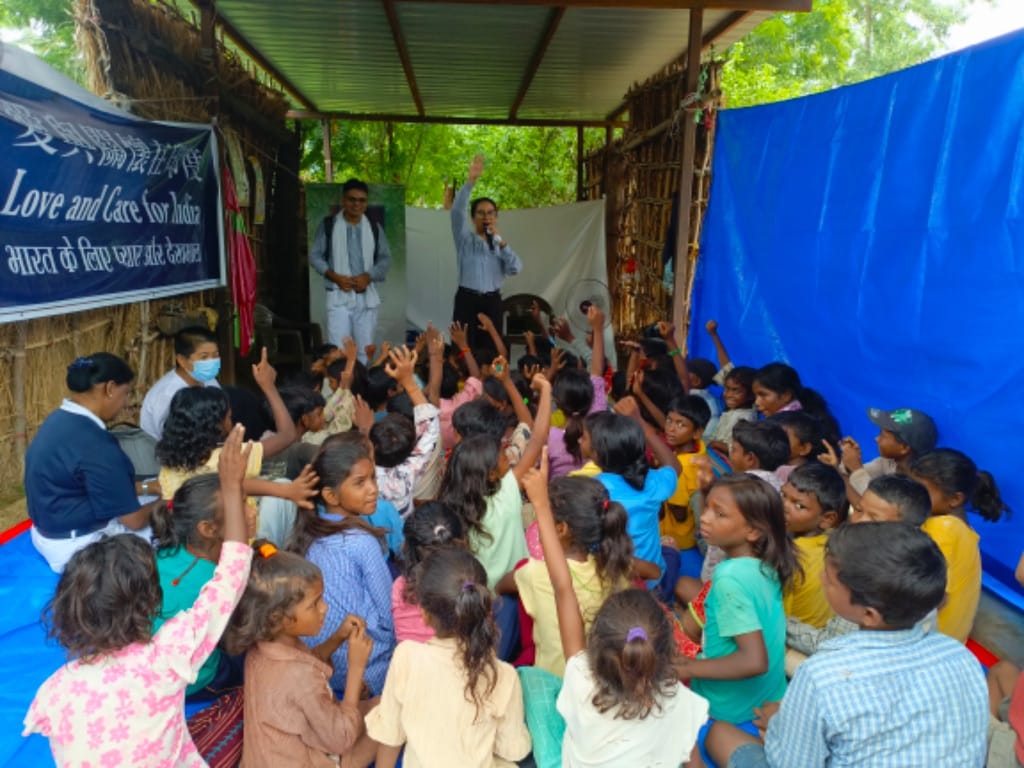
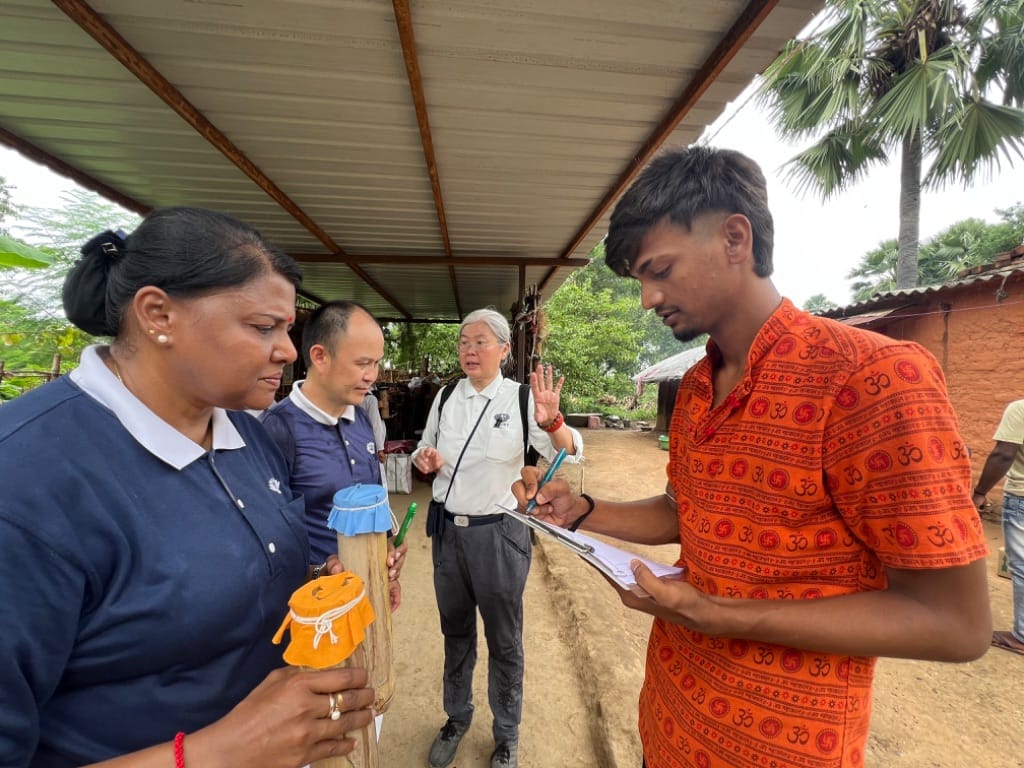
LEFT: Children eagerly raised their hands, willing to bring the new hygiene concepts home to share with their families. RIGHT: Three bamboo banks were adopted, including two by village youths like Kalaiselvi (left). | Photos: Boon Tiong Tan, Sharon Tan
Inspired by the story, residents adopted three bamboo banks. Anup Kumar, the principal of Badripur Government Primary School, took one home, while local village youths adopted the other two. The bamboo banks serve as a tool for the villagers to transition from receiving aid to helping others, allowing them to collect small, daily contributions to support those in greater need.
Supporting local students
The care effort naturally extended into the realm of education. Principal Anup shared that his school currently has about 100 students, most of whom come from farming families or households relying on daily wages. Recognizing the financial strain these families face, Boon Tiong Tan discussed the Bodh Gaya women's sewing class, noting that the class could help produce school uniforms for students who need them. Anup welcomed the idea and invited the volunteers to visit the school in the future to share more stories of giving with his students.
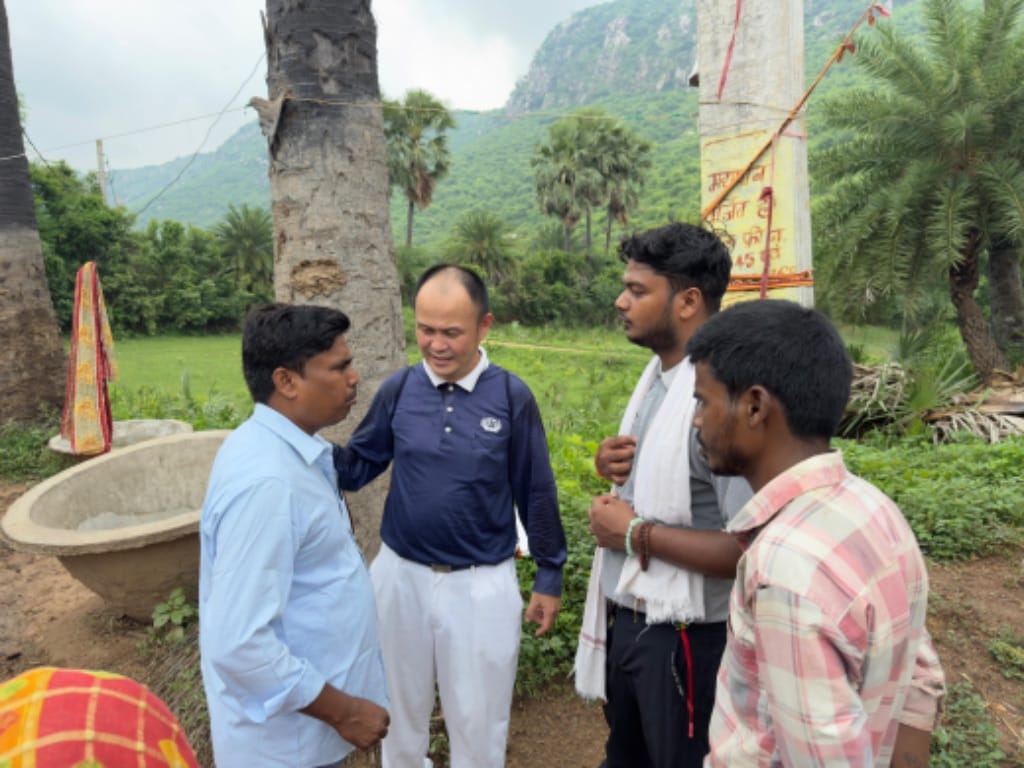
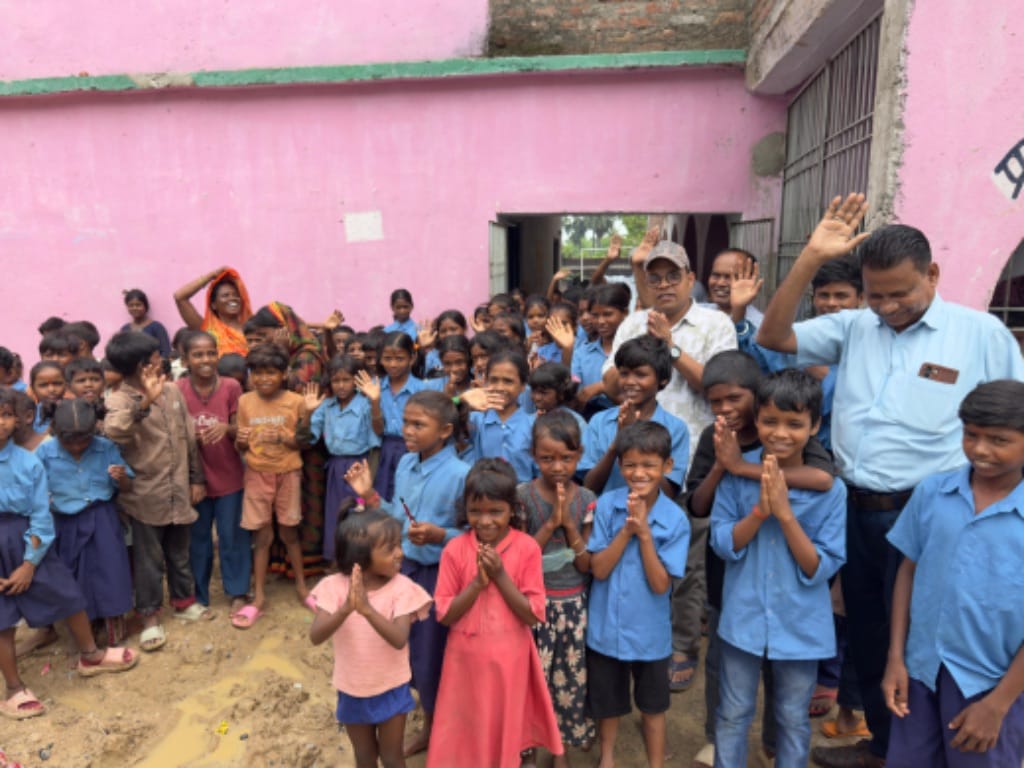
LEFT: Anup Kumar (left), principal of Badripur Government Primary School, looks forward to volunteers visiting his school. RIGHT: The team visited Krayannagar Government Primary School, where former medical recipient Radha Kumari currently studies. | Photos: Prakash Kumar
Leaving Badripur, the team traveled to Krayannagar Government Primary School. This connection was made possible through Radha Kumari, a student there who had previously received medical assistance. The volunteers met with Principal Tinku Kumar and the school’s teachers, demonstrating how to measure students for uniforms. The school staff agreed to compile a list of students in need, along with their measurements, to coordinate future assistance.

Starting with a bottle of shampoo and a fine-tooth comb, the rainy day in Rajgir expanded into a broader effort involving educational support and community giving. The health education provided families with the tools to manage their daily well-being, while the school uniform initiative offered practical help to local students. Through consistent companionship and addressing clear community needs, trust continues to grow between the volunteers and the rural villages.
Written by Prakash Kumar, May Wang (王承瑄)
