


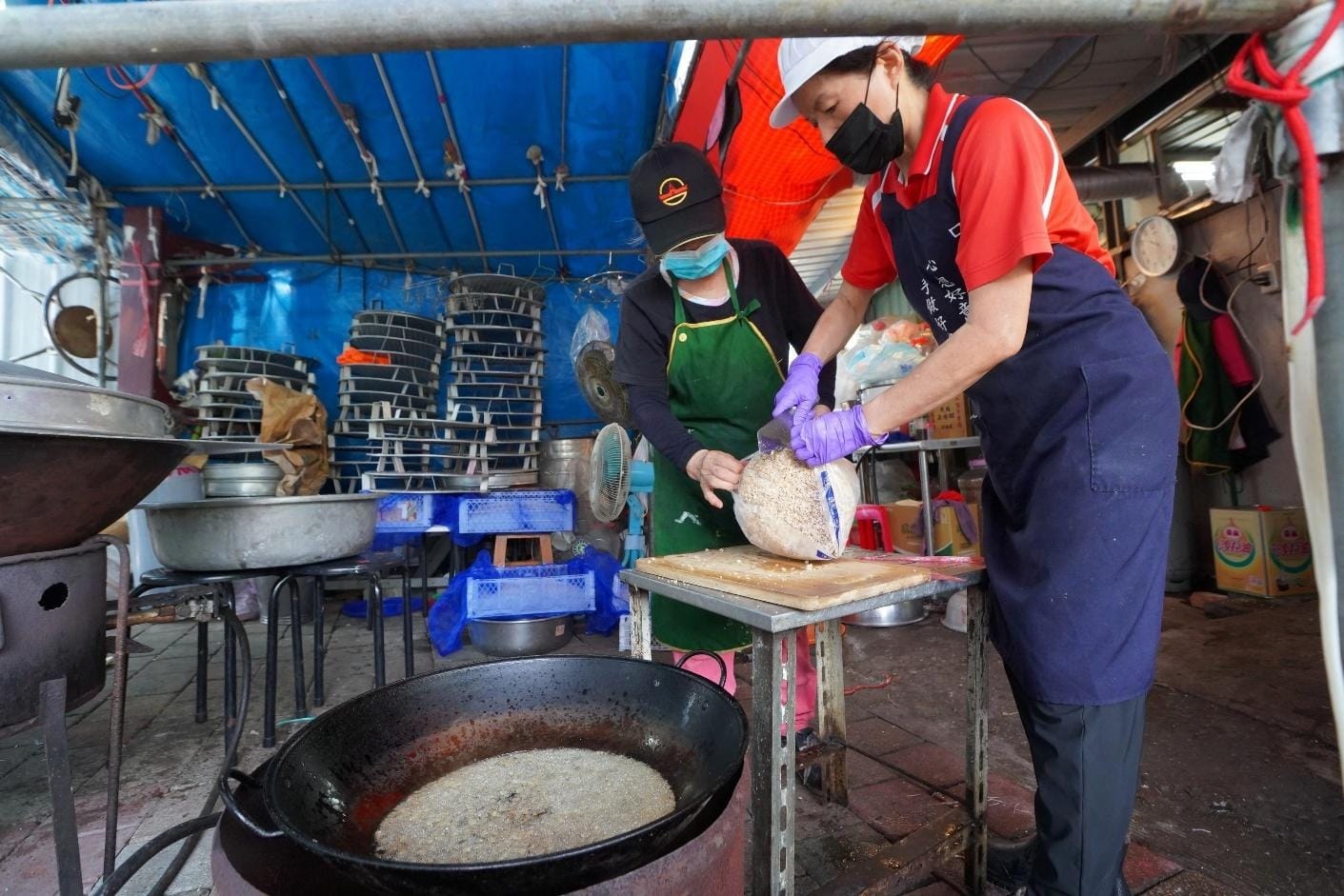
In Taiwan, "Shu-Hui" is a common name. If you call it out in a traditional market, several people might turn around simultaneously. However, at the Jiude Recycling Station in Wuri District, Taichung, this name represents the warmth of a kitchen and the comforting aroma of home-cooked meals.
We have two 'Shu-Huis' here. They are like mothers, taking care of everyone meticulously. —Su-Yang Hung (洪素養), Volunteer Leader of Heqi Group in Wuri District
These words were shared during a gathering with Master Cheng Yen on July 3, 2026, introducing the heartwarming story of the two dedicated women who anchor the station's culinary team.
A warm meal for the community
The Jiude Recycling Station began under very humble circumstances. Before its official establishment in 2013, volunteers worked out of a simple, cramped tin shack covering barely 70 square meters. They sorted recyclables while exposed to the intense sun and unpredictable weather.

At the time, Shu-Hui Huang (黃陳淑惠)—affectionately known as "Big Shu-Hui"—had just closed her street food stall. Her daily life was heavily burdened by caring for her young grandson and her 90-year-old mother-in-law, who had dementia. She lived just across the street from the small tin shack. One morning, while walking her grandson, she saw a group of people sweating profusely as they sorted recyclables.
Everyone is so loving. I have also created a lot of pollution in this world; shouldn't I also contribute a little effort? —Shu-Hui Huang, Culinary Team Volunteer
Observing that the workers regularly bought boxed lunches, Huang Chen realized they were spending a significant amount of money and missing out on the warmth of a home-cooked meal. Utilizing an old, unused food cart next to the station, she began cooking meals at home and bringing them over. She frequently varied the menu, serving rice noodles one day and savory rice pudding the next. When ingredients ran low, she paid out of her own pocket to ensure everyone was fed.
It costs too much money for so many people to buy food. From now on, I will cook at home and bring it over! I am so clumsy, yet there are actually people who like to eat what I cook. I feel this life hasn't been in vain. Being able to cook for everyone makes me truly happy. — Shu-Hui Huang, Culinary Team Volunteer
Her selflessness deeply moved her family. Inspired by her actions, her son partnered with Dr. Wen-Te Chen (陳文德) to fund the purchase of the land where the current recycling station stands. Officially opened in March 2013, the expanded 660-square-meter facility now features a proper kitchen and a Buddhist hall for weekly study groups, providing a space for both environmental work and spiritual growth.
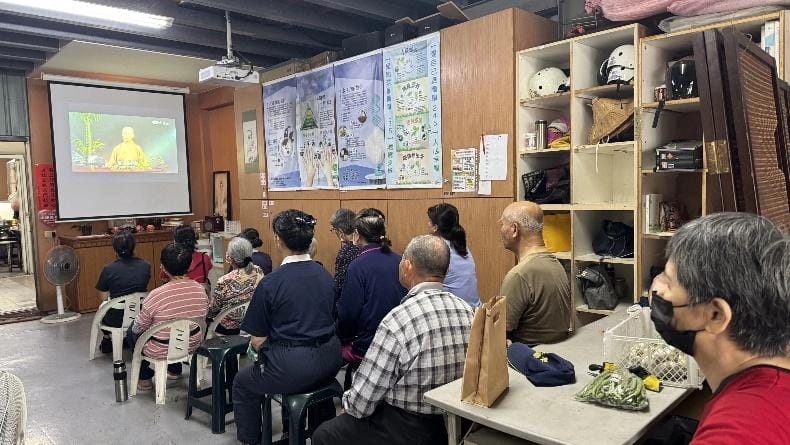
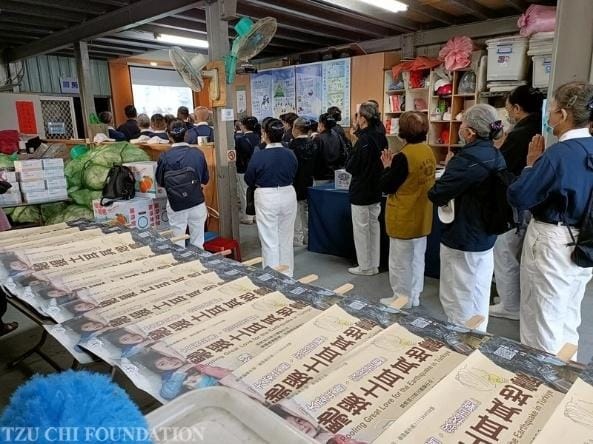
LEFT: Every Friday at Jiude Recycling Station holds a reading group where environmental volunteers listen attentively to the Master’s teachings. | Photo: Su-yang Hung (洪素養) RIGHT: Tzu Chi volunteers from Wuri District gathered at the Jiude Recycling Station to pray for the disaster victims in Turkey and Syria. | Photo: Rong-zhe Ling (凌榮哲)
Although Huang Chen has recently been unwell and is undergoing medical treatment, her spirit remains strong. Whenever she thinks of the work being done, her eyes well up with tears as she gently reminds herself:
I must get well quickly; I still need to return to the kitchen and continue cooking for everyone! —Shu-Hui Huang, Culinary Team Volunteer
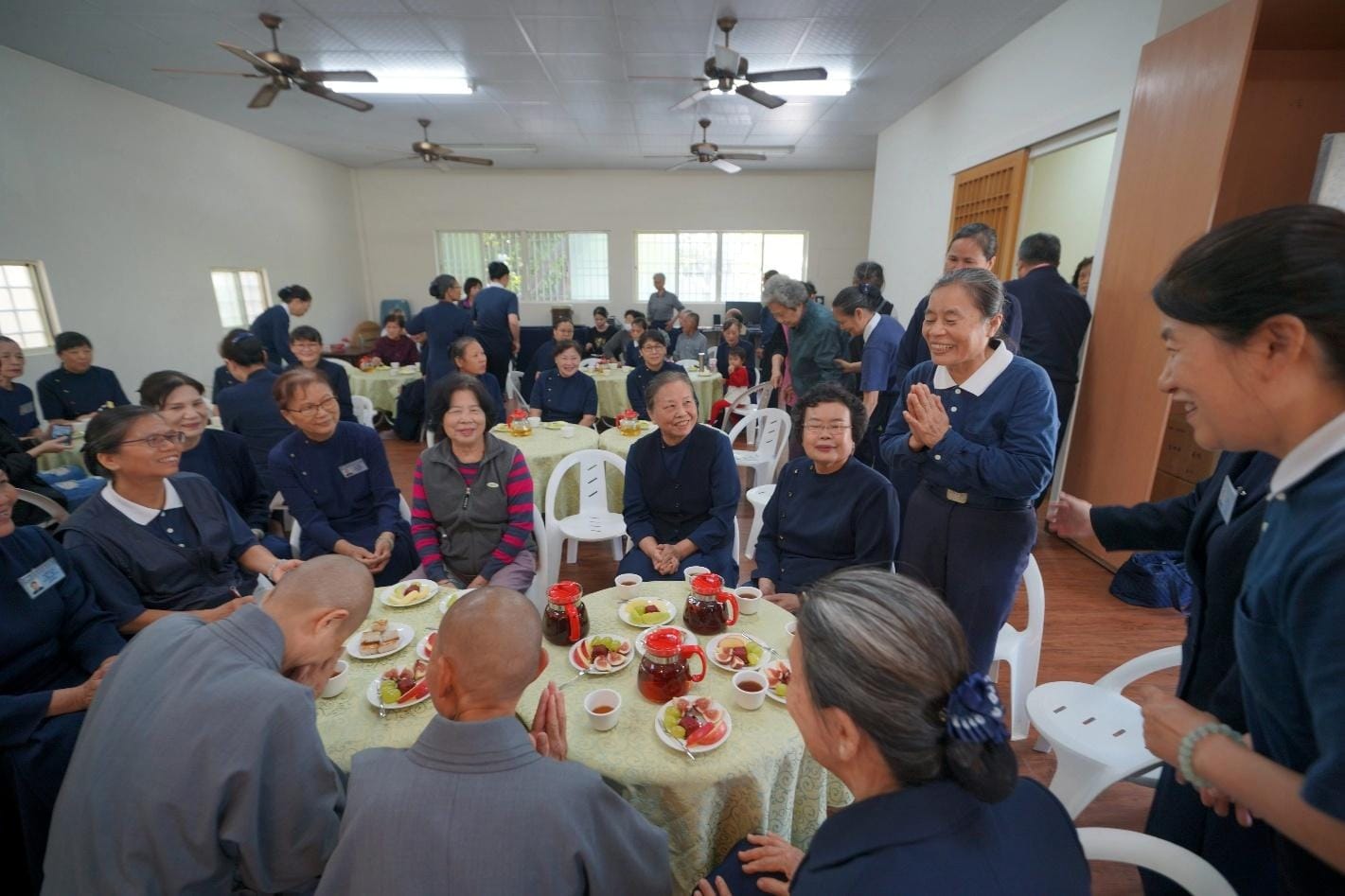
Treasuring food and sharing blessings
The station’s other culinary coordinator is Shu-Hui Chen (陳淑惠), fondly known as "Little Shu-Hui." A vegetarian for 35 years, Chen brings immense passion to plant-based cooking. She actively sought out her role, believing that encouraging others to eat vegetarian meals helps reduce the suffering of animals.
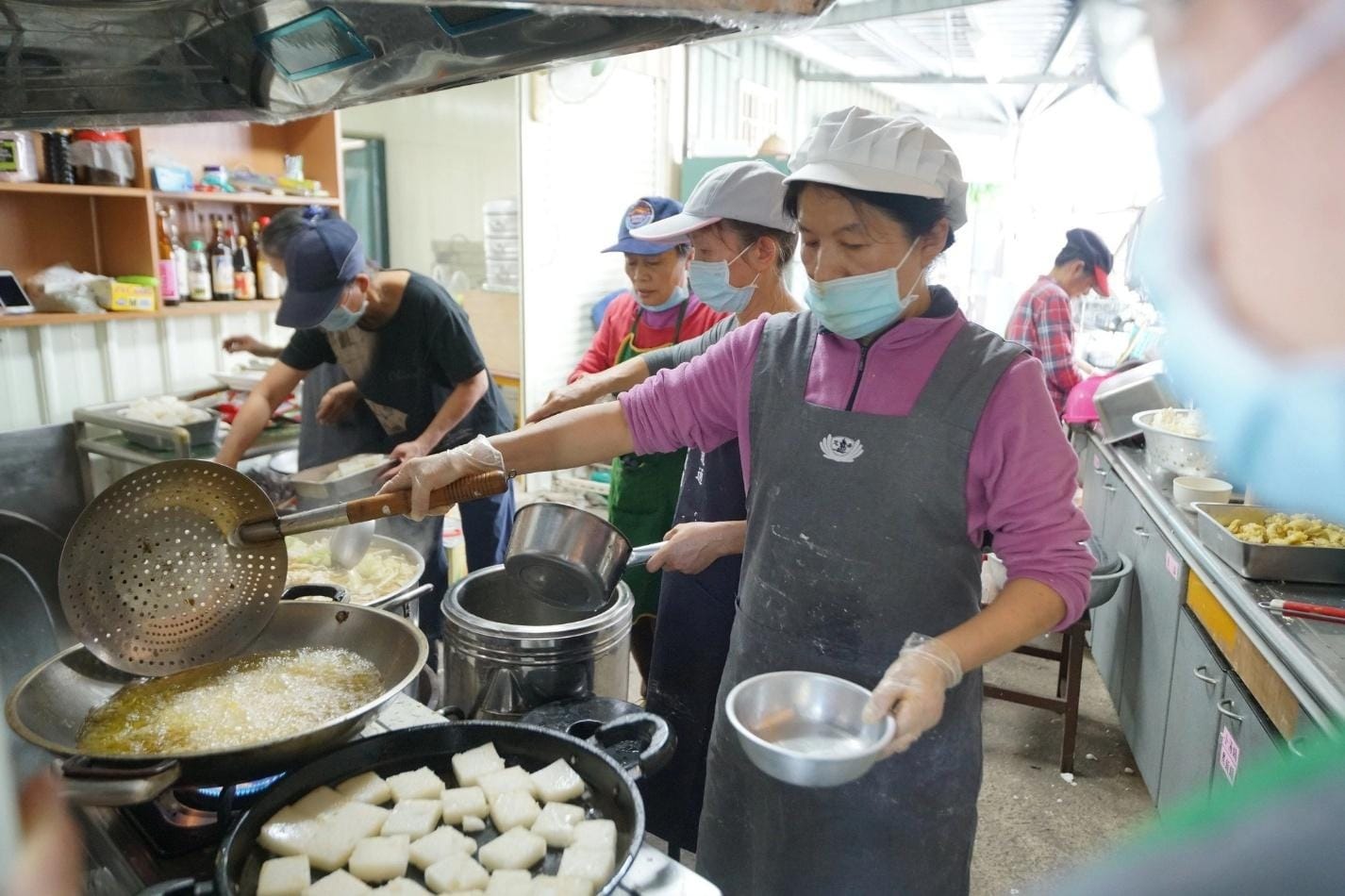
Chen’s deep-rooted compassion traces back to her mother, who made a modest living selling soy milk. Despite their financial struggles, her mother always saved small coins to donate to an orphanage. Her mother often imparted a traditional Taiwanese proverb: "Clear a path to share, don't scrape the road bare for yourself." This taught Chen to always share good things with others and never be stingy.
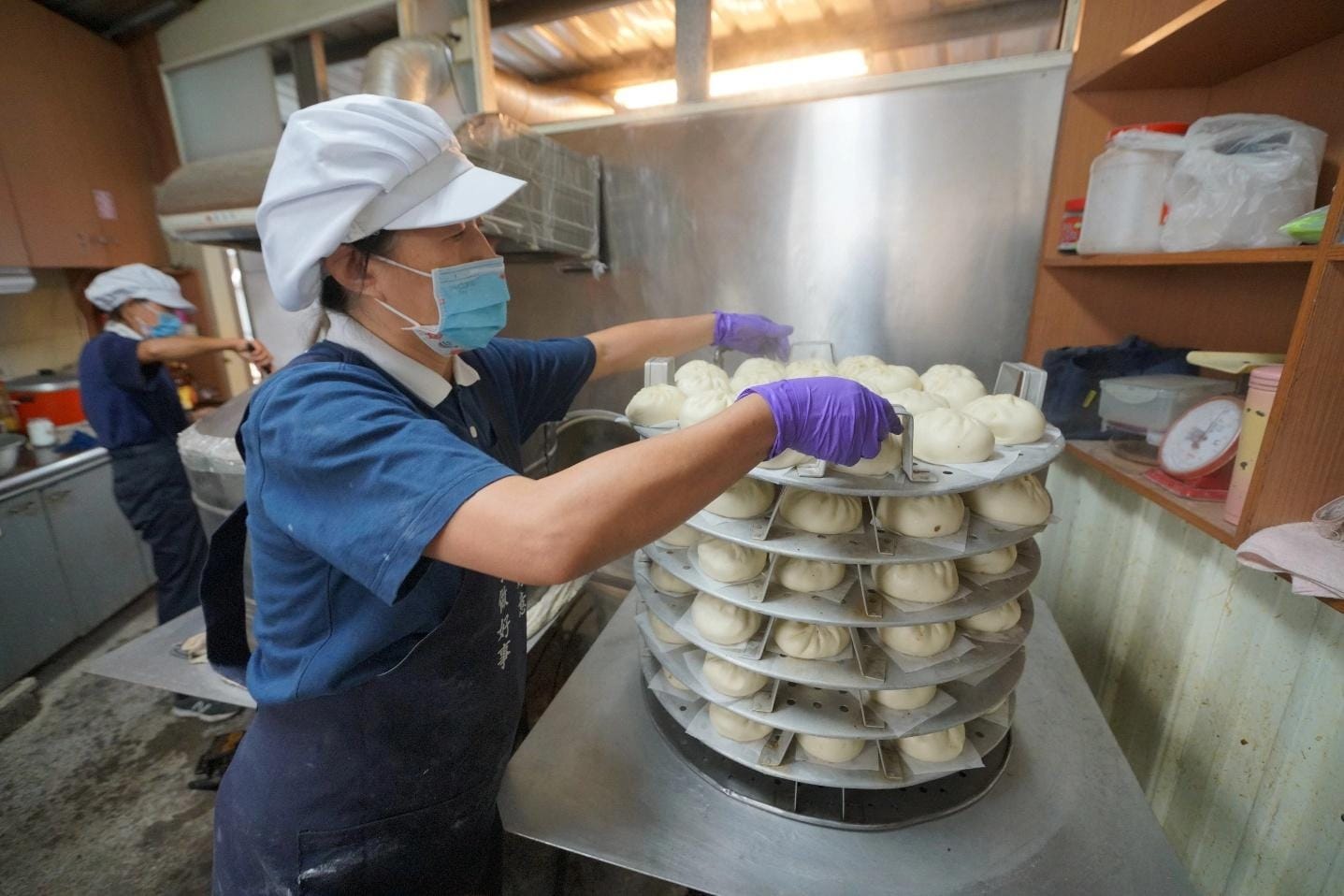
Carrying on her mother’s thrifty nature, Chen maximizes every ingredient at the recycling station. Whenever the community has surplus produce, she rallies the team to turn it into steamed buns, bamboo shoot pastries, cabbage rolls, and zongzi (rice dumplings). The proceeds from selling these handmade snacks are entirely dedicated to international disaster relief and charitable funds, creating an incredible cycle of love.

The culinary team’s dedication to sustainability often takes them straight to the source.
The Jiude Recycling Station doesn't have much farmland, but if there's any left in other people's fields and they are willing to share their surplus, we go and harvest it! —Shu-Hui Chen, Culinary Team Volunteer
In June 2026, the team ventured into the fields of Yunlin under the blazing sun to glean leftover edamame after the main harvest. They transformed the beans into delicious snacks for over 3,000 people. For the Dragon Boat Festival, they pulled radishes, preserved them, and made 7,600 rice dumplings for charity sales.
When volunteer Mei-yu Huang (黃美玉) noted that her family's bamboo shoots in Zhushan were growing too fast to harvest, the team traveled into the mountains to help. The bamboo forests are dense, filled with mosquitoes, and occasionally snakes. Before entering, the women—who typically wouldn't hurt an ant—quietly prayed:
Master! Please protect us, and we also ask the creatures on the mountain to temporarily step aside. — Culinary Team Volunteers
With pure intentions, they navigate the challenging terrain to gather the most natural ingredients, creating authentic dishes that form positive connections with the community.
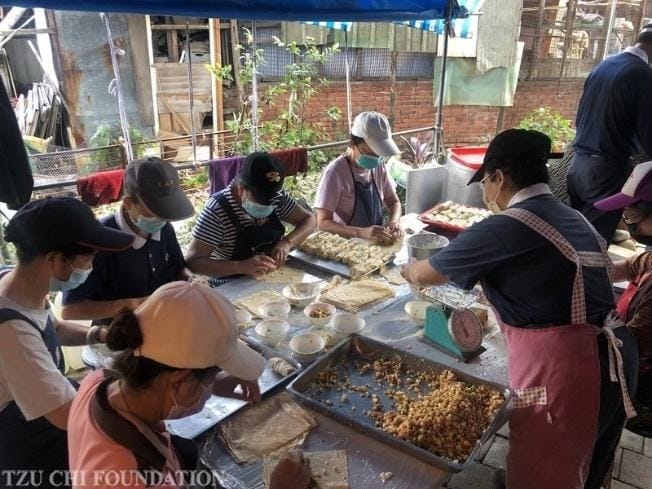
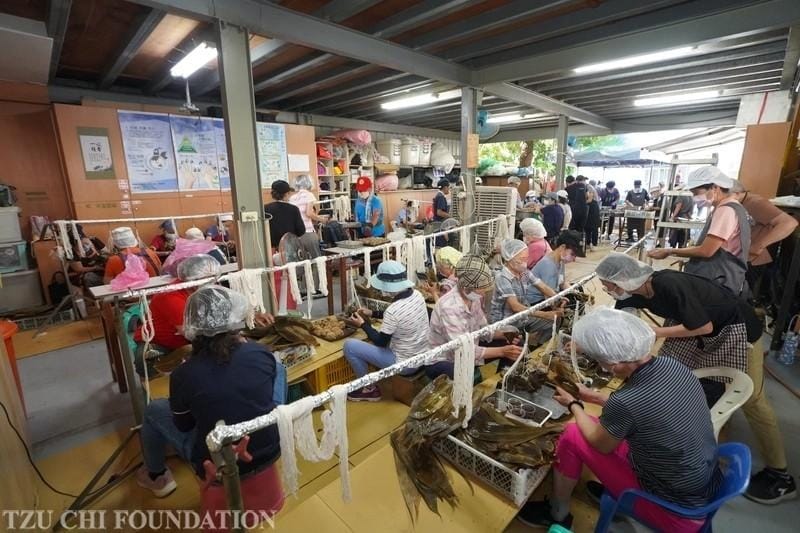
LEFT: A tent set up under a large tree in the kitchen's backyard serves as the perfect spot for the culinary team to prepare handmade bamboo shoot dishes. | Photo: Su-Yang Hung RIGHT: Tzu Chi volunteers and a group of elderly women worked together to make rice dumplings at the Jiude Recycling Station, attracting skilled rice dumplings makers from the community to gather together. | Photo: Shun-Hsing Hsu
Protecting the earth with working hands
Observing the relentless dedication of these volunteers, Master Cheng Yen expressed deep comfort and profound respect. She noted that their work goes far beyond sorting recyclables; it is about protecting the health of the Earth, which in turn protects life and love.
In this life, how many heavy things have these two hands held? From a kilogram to hundreds of kilograms, it can add up to hundreds of thousands of kilograms! — Master Cheng Yen
Today, the Jiude Recycling Station continues to serve over 50 lunch meals every day. This is not just a lunch service; it functions as a form of community care for the elderly, care recipients, and the hardworking volunteers.
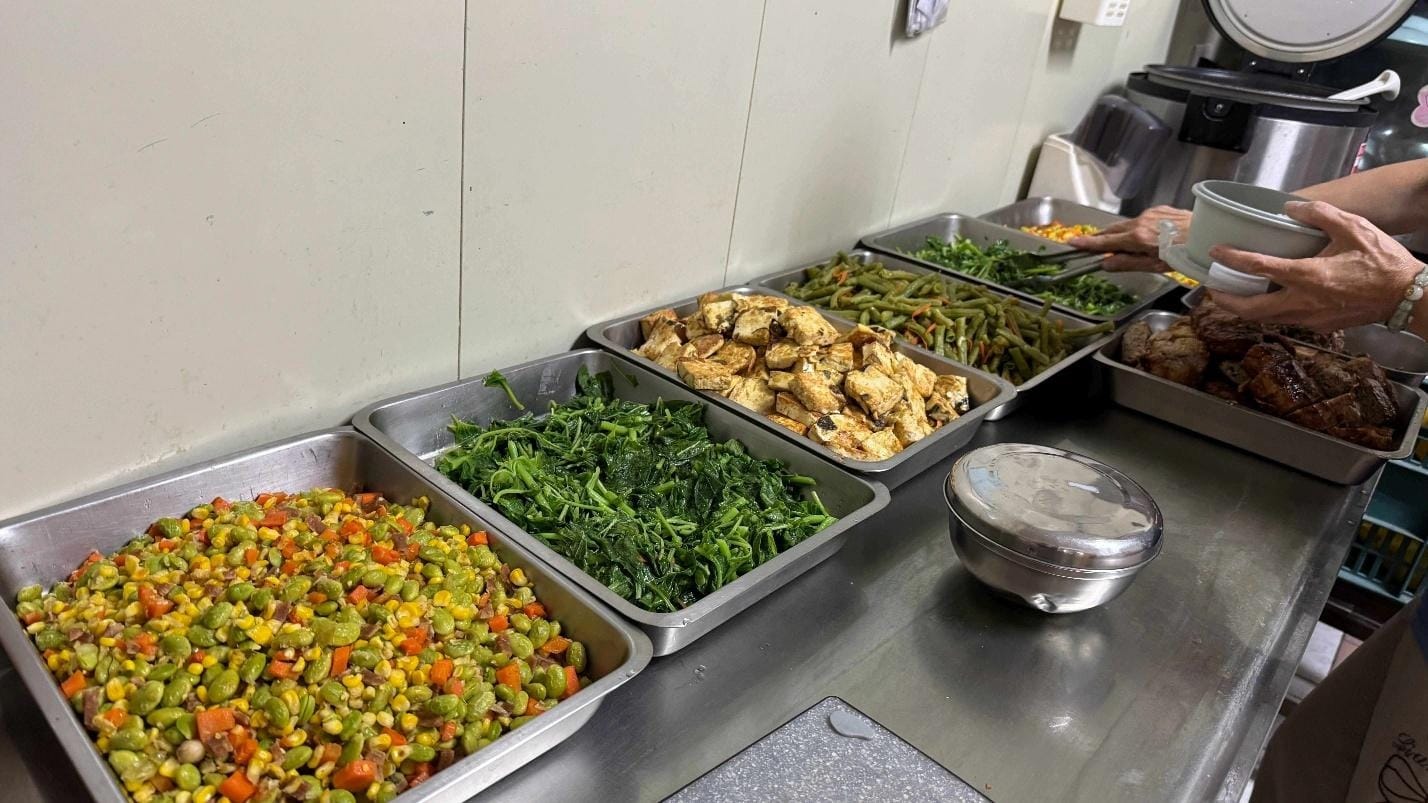
Through the simple act of cooking a bowl of noodles or rolling a cabbage leaf, "Big Shu-Hui" and "Little Shu-Hui" continue to walk a path of compassion. Amidst the daily chopping and stirring, they provide a nourishing anchor for a community dedicated to healing the planet.
Written by Ling-Li Lin (林玲悧)
