


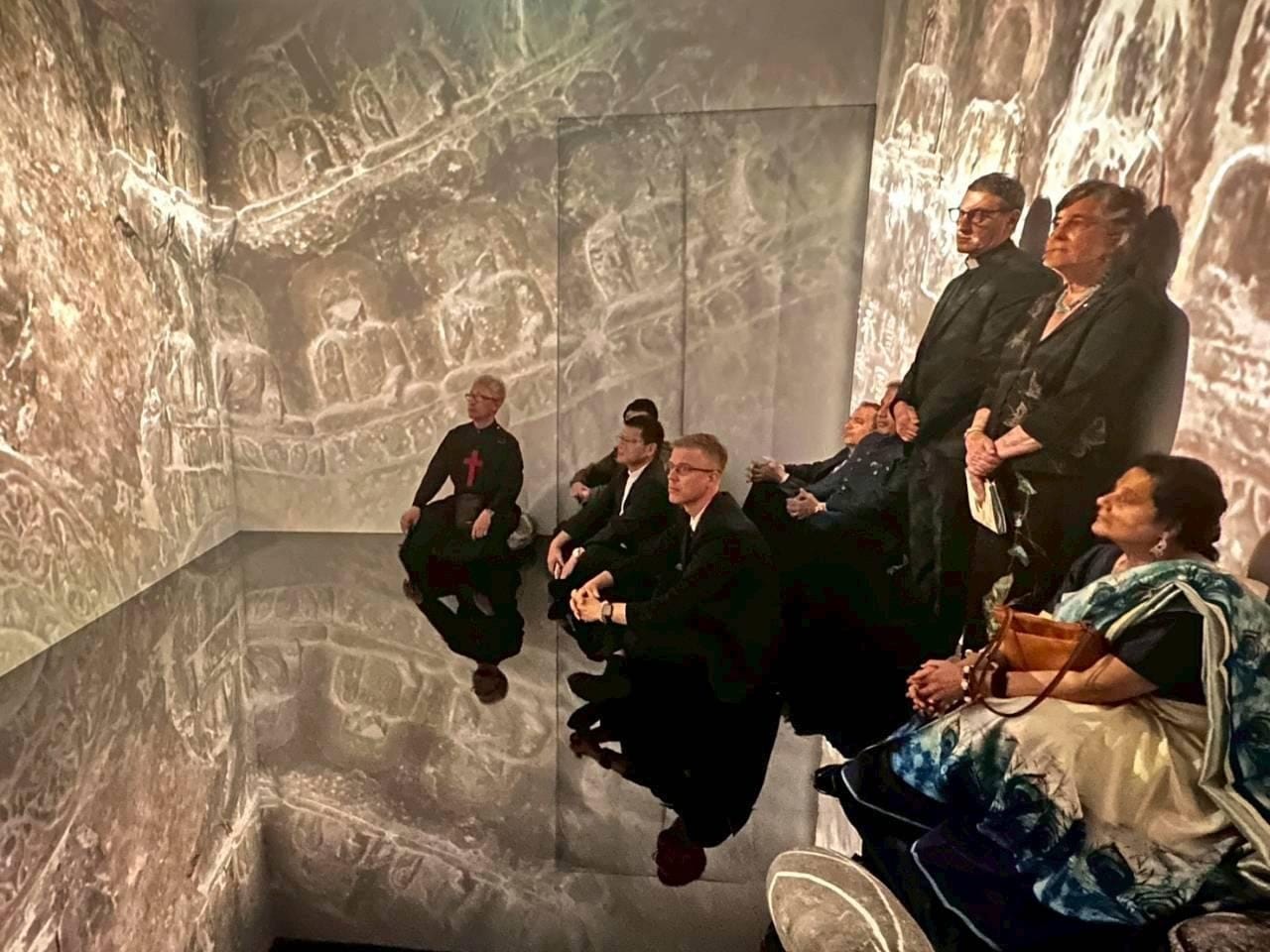
An immersive exhibition combining history, art, and technology opened its doors on May 10, transporting visitors in Hualien over 2,500 years back in time. Co-curated by the Tzu Chi Foundation and Harvard University's Cognitive Aesthetics and Media Lab (CAMLab), the "Journey to Enlightenment" Buddhist heritage art exhibition utilizes imagery, sound, and spatial design to guide audiences through significant historical scenes and illustrate how ancient wisdom continues to resonate with modern society.
Reconstructing ancient narratives
The exhibition connects eight major themes of Buddhist cultural heritage, including sites in Bodh Gaya, Sarnath, the Mogao Caves in Dunhuang, and Borobudur in Indonesia. Through digital modeling and immersive projection, it reconstructs historical spaces and cultural contexts. Visitors can witness the evolution of Buddhist art and architectural ruins, experiencing the depth of history and the preservation of human civilization.
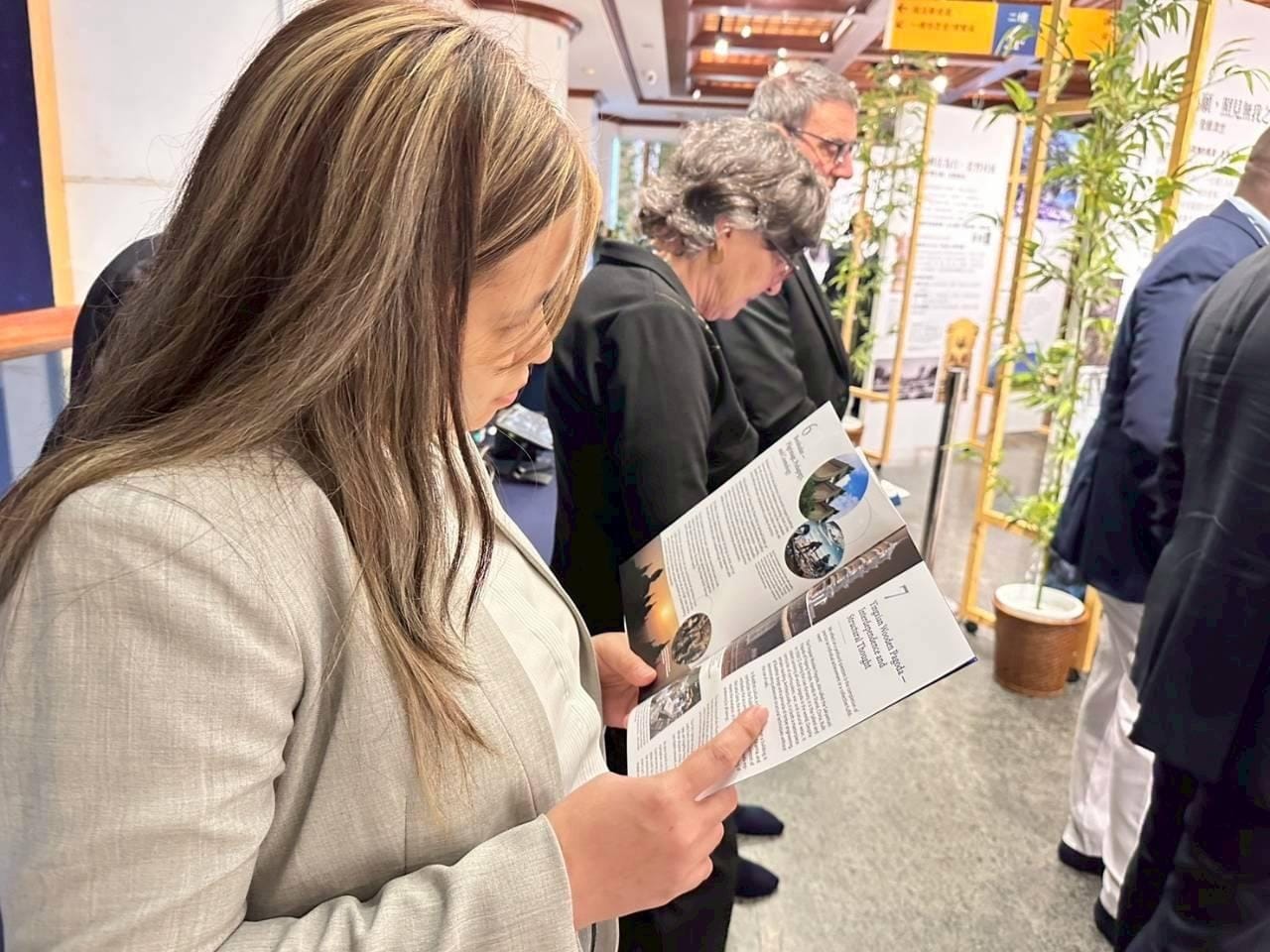
Po-Wen Yen (顏博文), CEO of the Tzu Chi Charity Foundation, noted the extensive research and digital technology employed by the Harvard team to restore damaged heritage sites, murals, and statues.
By utilizing their expertise in architecture, aesthetics, and technology, the team has ensured that history is not merely preserved in books but can be experienced authentically. The exhibition not only presents the results of cultural asset preservation but also helps the audience understand how the humanistic spirit of different eras continues today. — Po-Wen Yen, CEO of Tzu Chi Charity Foundation
Dialogues across time
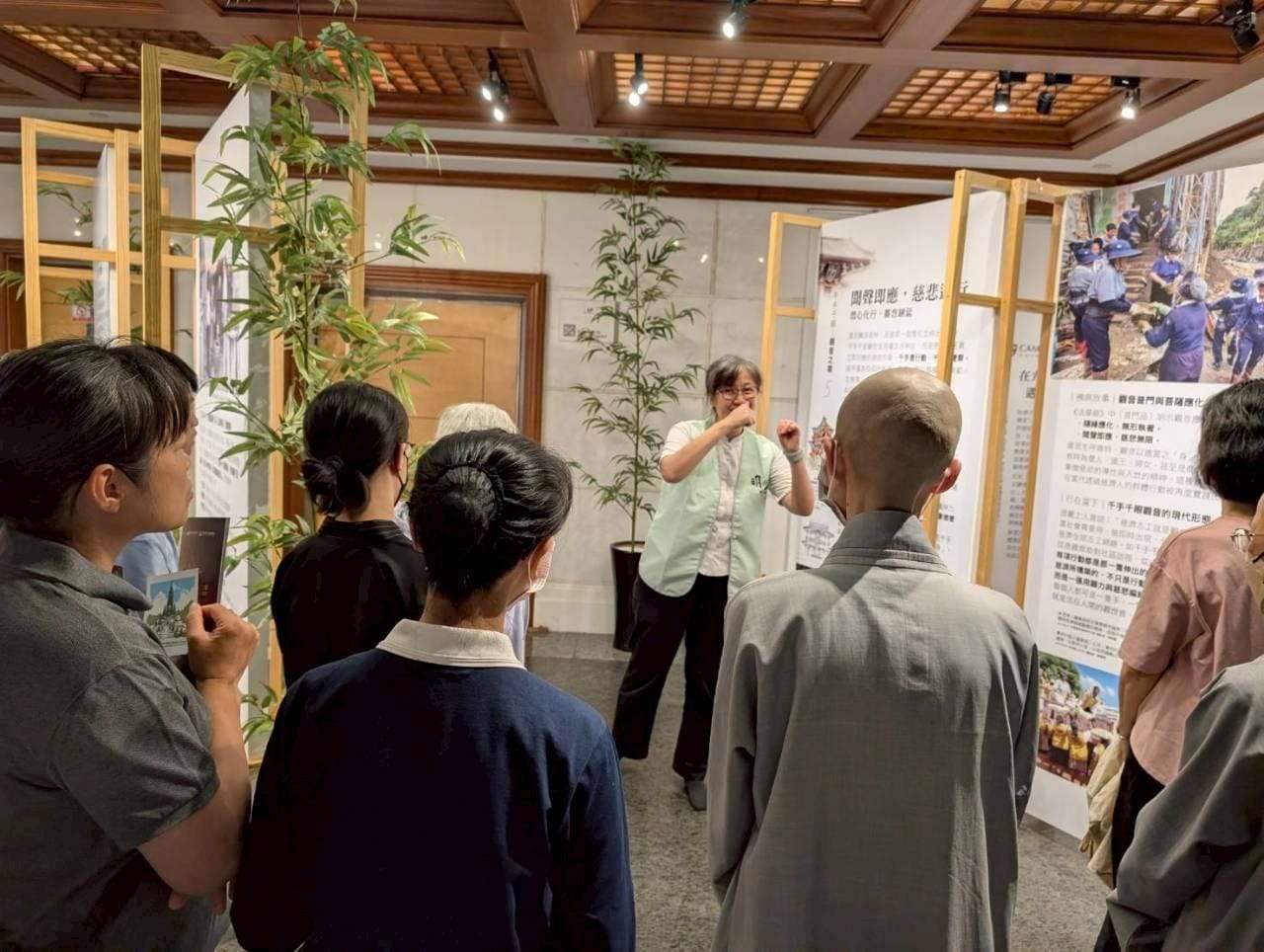
The exhibition content also integrates the long-term humanistic care and international outreach promoted by Tzu Chi. By juxtaposing historical scenes with contemporary stories, it encourages visitors to reflect on interpersonal relationships and how kindness can transcend time.
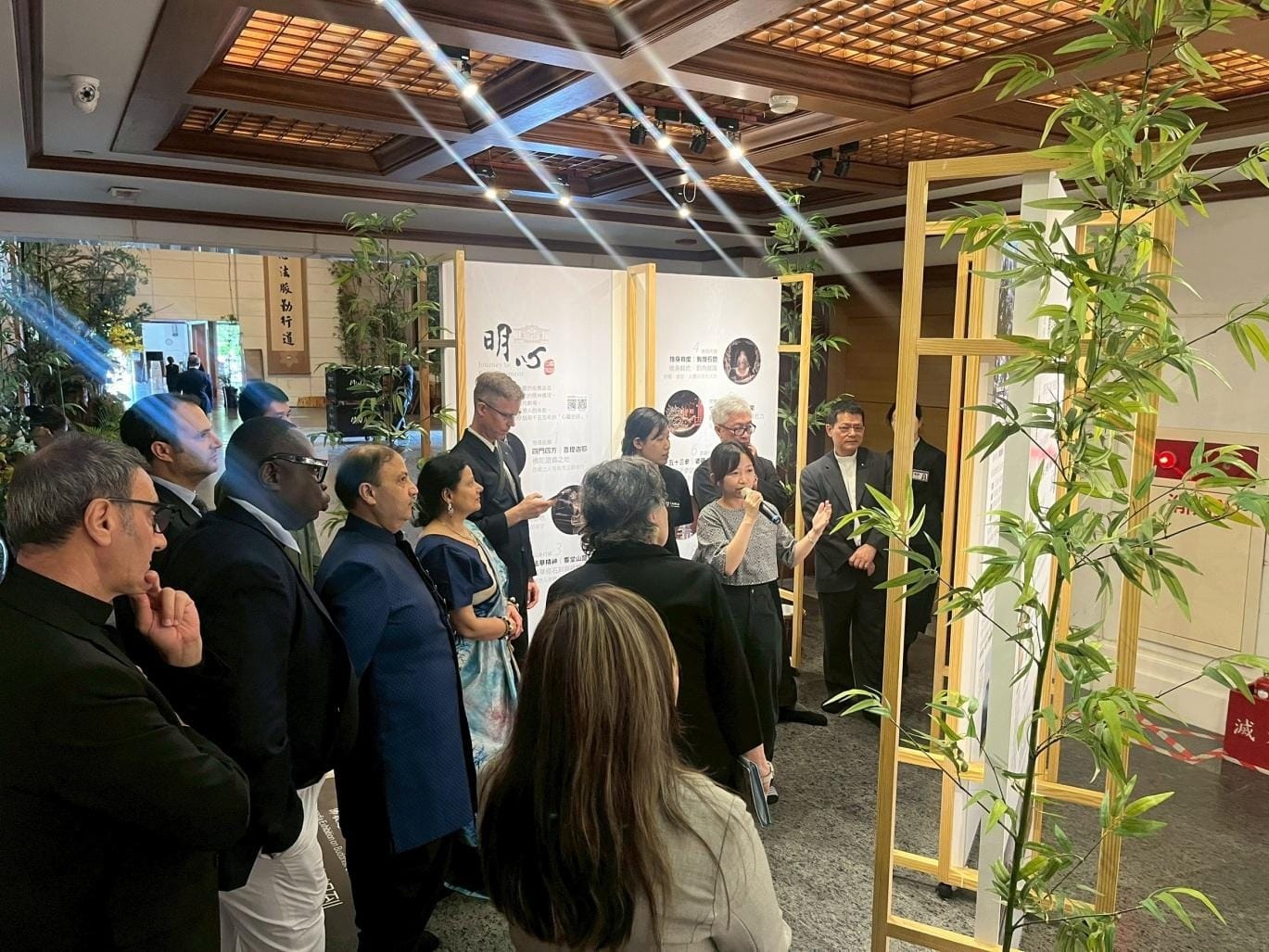
Cheng-Chung Lo (羅政忠), Director of the Design and Promotion Office under the Department of Literature and History, explained that during the curating process, the Harvard team identified spiritual cores within the eight heritage sites that closely align with Tzu Chi's values in public service, medicine, and humanistic culture. This alignment prompted a deeper exploration of the connections between historical context and contemporary practices, allowing the audience to better grasp the continuity of cultural values.
Another major highlight is a 1/25 scale model of the Yingxian Wooden Pagoda in Shanxi, China, one of the world's three major existing ancient towers. The model is constructed from 19,000 wooden pieces without a single nail, relying entirely on mortise and tenon joints. The curatorial team intentionally left a quarter of the cross-section open, allowing visitors to directly observe the internal structure and craftsmanship of the five-story wooden tower.
Due to space limitations, the Hualien venue presents a 20-minute highlight version of the entire exhibition. Chaiyee Liao (廖彩羽), a researcher at Harvard FAS CAMLab, shared her hope that the audience can understand the ancient history from a contemporary perspective, while also recognizing the practical efforts Tzu Chi has accumulated over the past 60 years.

Following its debut, the complete eight thematic sections of the exhibition will move to the National Science and Technology Museum in Kaohsiung in August, offering more people the opportunity to experience this cross-cultural dialogue.
Written by Yi-Ting Wang (王藝婷)
