


In Tijuana, Mexico, as the morning sun begins to rise, a figure is already at work in the campus garden. Fabian, a staff member at the Tzu Chi campus, arrives before 7 AM each day. Even before his official duties begin, he walks through the garden he personally cultivated, watering the plants and preparing for another day of growth.

A labor of love
This gardening work is not part of Fabian’s official job description. He dedicates his personal time to transforming what was once barren land into a vibrant green space. Over two and a half years, his consistent effort has brought this garden to life. While the produce cannot meet all the campus’s needs, it significantly supplements the students’ meals and allows them to share fresh vegetables with their families.
“We are here every day, but we do different things each day,” Fabian explains. “Today we might be harvesting lettuce, tomorrow carrots. Today we water, tomorrow maybe not.” He adds that even when there’s no planting, they are always tending to the various plants. “Today we fertilize to help them grow, and tomorrow we check what else they need. We are in the garden every day, ensuring all the plants grow healthy.” For Fabian, the garden is more than just work or a hobby; it is an act of love.
Nourishing young lives
Fabian has a particular fondness for the latest batch of green beans in the garden. “We are currently planting green beans so the children can enjoy delicious and nutritious green bean stew with eggs,” he says. He emphasizes that legumes are naturally healthy and rich in nutrients, making them ideal for the daily meals of the children at the Tzu Chi campus. “We plant every seed here with love, hoping that the children will grow up healthy and strong.”
Fabian’s understanding of the land and climate is both deep and nuanced. The garden yields different crops throughout the year: carrots, lettuce, sugarcane, and jicama in winter; tomatoes, green beans, and pumpkins in summer. Pulling up a tomato plant, he notes, “Right now, we are harvesting tomatoes and carrots. Tijuana’s climate is excellent, allowing us to plant almost year-round, so we are always busy planting and harvesting.” His words reflect the practicality of a farmer and the patience of an educator.
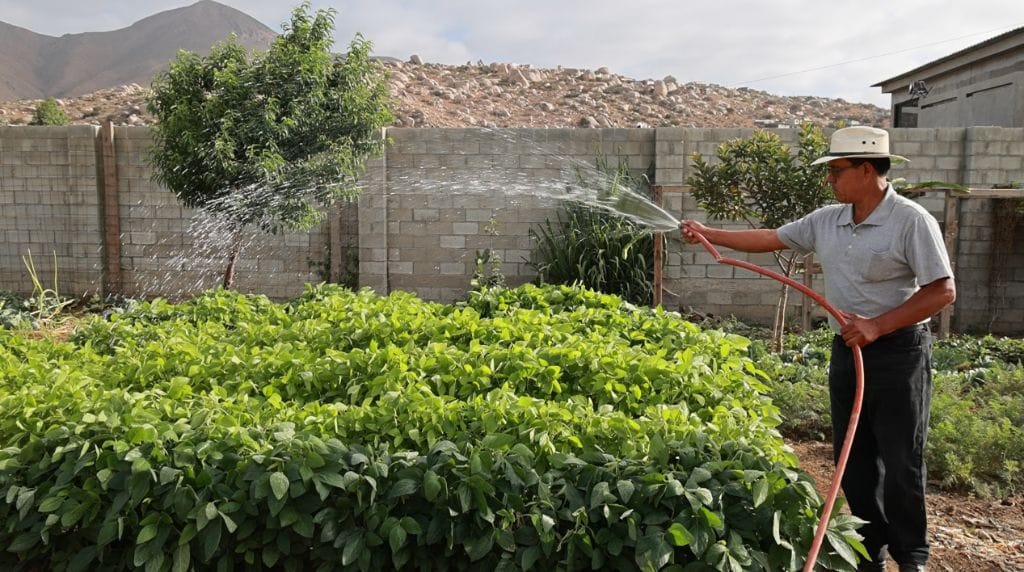

LEFT: Fabian waters the green beans, hoping the children can enjoy delicious and nutritious green bean stew with eggs when harvested. RIGHT: The campus’s green farming enriches the lunch ingredients for the children of the Hope Classroom. | Photos: Mandy Lo
From hard soil to thriving beds
The soil in Tijuana was initially hard and dry, making the beginning of the gardening project challenging. “The soil here is very hard and dry; when it’s dry, it’s incredibly tough,” Fabian gestures to the ground. However, he notes that with cultivation and watering, it softens. “Though the soil is difficult, proper management leads to a harvest.” He recalls that two and a half years ago, they began digging deep into the empty lot and adding fertilizer, especially natural compost made from basil. “Over two and a half years, the soil has improved significantly, getting better almost every year,” he says with a sense of accomplishment.
Under Fabian’s guidance, students from the “Hope Classroom” have also joined the gardening efforts. Children who arrive early for school learn to water, weed, fertilize, loosen the soil, and pick out stones. Harvesting, especially discovering ripe fruits hidden beneath leaves, brings them immense joy. Student Ángel happily shares, “Mr. Fabian taught me how to do things, like fertilizing and weeding. I love helping here.” Fabian also enjoys working with the children, finding satisfaction in watching them grow from hesitant beginners to skilled helpers.

Nurturing land and children
Tzu Chi volunteer Shiu-Yun Tsai (蔡慈璽) often assists in the garden, turning kitchen scraps and fruit peels into compost, and personally experiencing the arduous work of cultivating the land. She recalls a day when her hoe struck the hard soil, sending a jolt through her. “In that moment, I truly understood how difficult Fabian’s work was,” she reflects. She compares the soil to children: “The soil here is like the children; sometimes it’s as hard as rock, but with diligent care, it can soften and sprout.” She gently touches a strawberry plant, her movements mirroring the tenderness of caring for a child.
We hope that with our loving companionship, they can feel our sincerity and understand that education can change lives.
— Shiu-Yun Tsai, volunteer
The garden’s vegetables eventually make their way to the kitchen, becoming part of the children’s lunch. From carrots and tomatoes to beetroot and pumpkin, every crop transforms into a delicious meal. After careful preparation and cooking, the beetroot is slow-cooked into a sweet dish, and the garden’s bounty becomes nutritious and flavorful vegetarian meals. Pumpkin seeds are saved for new life next spring, and if the harvest isn’t enough for a full dish, teachers allow students to take vegetables home to share the “happiness they grew themselves” with their families.
From dry, hard ground to flourishing vegetable beds, Fabian and the volunteers have nurtured this garden with their hands and hearts. This garden not only yields vegetables but also cultivates hope. Here, children learn to contribute, appreciate the gifts of the earth, and understand the value of food from farm to table. The land has been reawakened, and Tzu Chi’s compassion quietly blossoms within this space.
Written by Mandy Lo (駱淑麗)
