


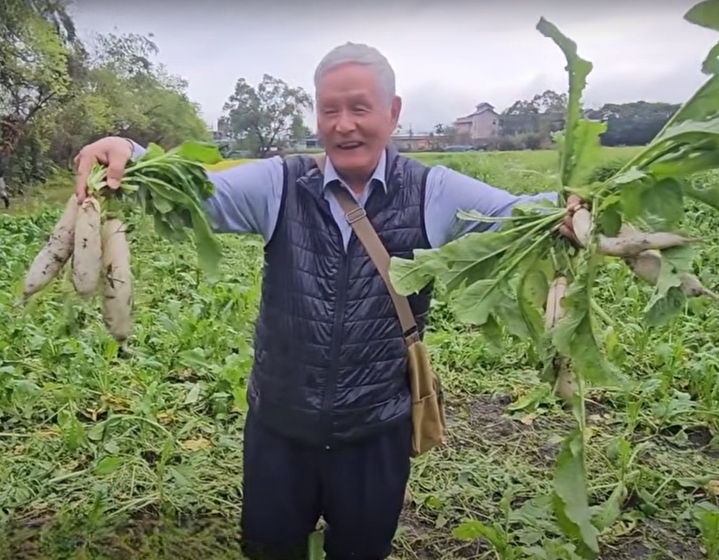
In the wake of devastating overflows from the Mataian River in October 2025, Tzu Chi launched the "Guangfu Farmland Restoration Project" in Hualien County, Taiwan. Facing vast areas of heavy clay sedimentation, the initiative combines humanitarian care with professional land repair. By blending traditional ecological wisdom with scientific assessments, volunteers are walking alongside farmers through one of the most challenging chapters of their lives.
Ecological wisdom restores hope
The floods struck the Pangcah Farm in Guangfu Township particularly hard, a site long dedicated to the preservation of upland rice seeds. Witnessing the destruction of his seedling rooms and fields, red quinoa expert Chih-Chung Lin (林志忠) proposed the "Red Quinoa Field Circles" concept—an attempt to repair the earth using natural engineering methods.
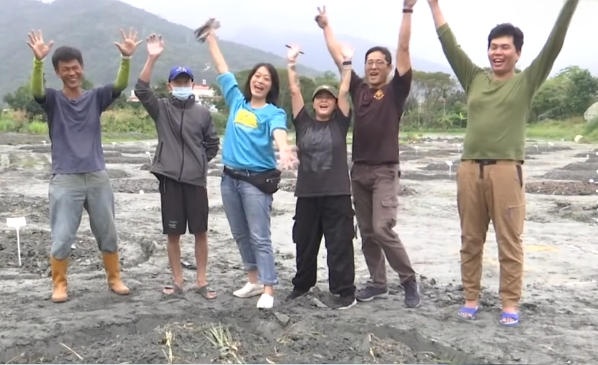
Volunteers dug circular trenches in the muddy fields, filling them with bamboo tubes, silvergrass, rice husks, and soil. This design mimics the "Palakaw" traditional aquatic ecosystem of the Matai'an Amis people, but adapted for land to improve aeration and drainage.
Red quinoa has a deep and extensive root system. After harvest, the decaying roots naturally create pores in the soil, accelerating the repair of compacted clay.
—Chih-Chung Lin, red quinoa expert
This ecological approach, which avoids heavy machinery, not only improved the soil structure but also injected hope into the hearts of the community.
Scientific solutions for Barren Earth
In Changqiao Village, Fenglin Township, farmers Ching-Po Hsieh (謝清波) and Ling-Ling Lu (盧玲玲) are members of a production and marketing group long supported by the Tzu Chi Foundation. Their 7-hectare organic soybean field was buried under more than 30 centimeters of silt. With soil that had become alkaline and nearly void of organic matter, resuming cultivation seemed like a distant dream.
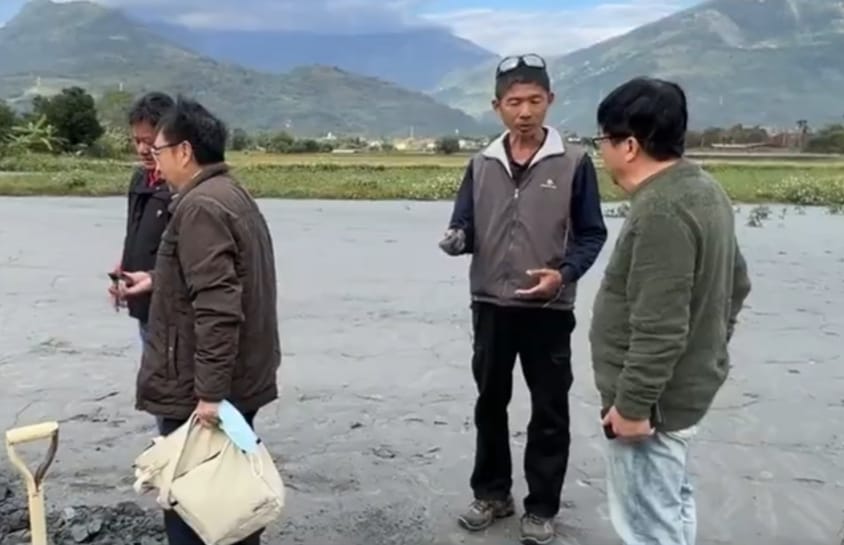
Tzu Chi invited the Agricultural Research Institute and other authorities to conduct an on-site inspection. Testing revealed the silt had a pH value higher than 8.0 and an organic matter content of only 0.01%. The expert team used sulfur to adjust the pH levels and supplemented the soil with organic fertilizers.
Using a deep-plow to turn over 40 centimeters of soil, they ensured the clay, soil conditioners, and original base soil were evenly mixed. Fields that would typically have required one to two years of fallow time were ready for replanting in about a week, saving precious time for the farmers' livelihoods.
Resilience through transition
Faced with varying depths of silt across her land, local farmer Chun-Chi Ko (柯春伎) focused on structural adjustments. Nearly six hectares of her 22-hectare farm were affected. For areas with 10 to 20 centimeters of silt, she added large amounts of organic matter and wood chips to improve fertility and structure, while installing drip irrigation to precisely deliver water and nutrients.
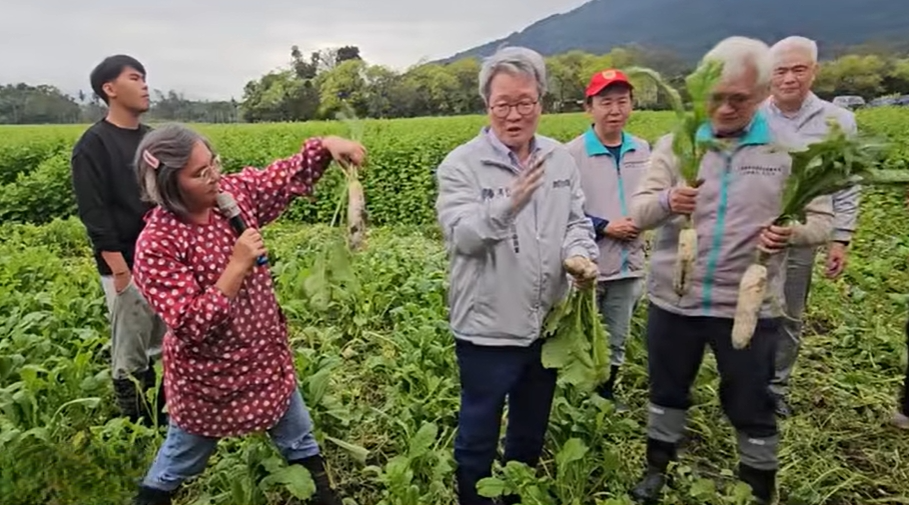
Originally focused on grain crops, Ko shifted her model toward short-term organic leafy vegetables. Although this transition requires higher technical skills and carries greater risks, she is gradually finding her footing. She also communicated with organic distributors in advance to ensure her crops had a market, easing the financial anxiety of the recovery period.
As the new season’s crops are successfully harvested, confidence is returning to the disaster-affected agricultural zone. From ecological methods to scientific soil improvement, the restoration of the land is about more than just production; it is the starting point for rebuilding lives.
Written by Yi-Ting Wang (王藝婷)
