


More than six months after devastating floods inundated the community of Cape Horn, Washington, in December 2025, over 40 households were still struggling to restore their properties. Floodwaters left behind mounds of waterlogged waste, ruined vehicles, destroyed appliances, and heavy silt. For many residents—particularly seniors, individuals with disabilities, and low-income families—clearing the massive accumulation of debris proved overwhelming. On June 27, 2026, volunteers returned to the disaster site to help residents clear their yards, reduce environmental risks to the nearby Skagit River, and take another step toward recovery.
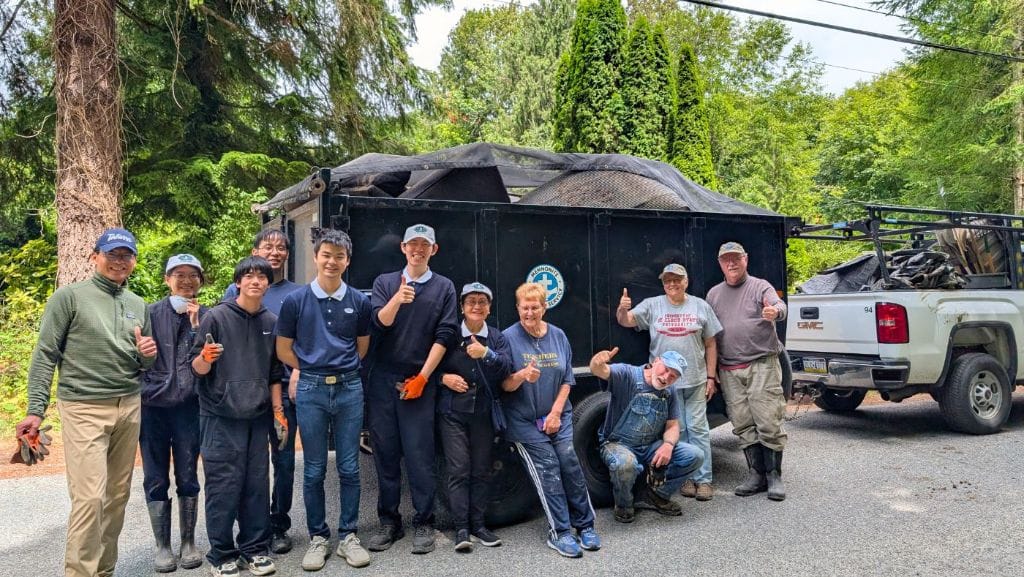
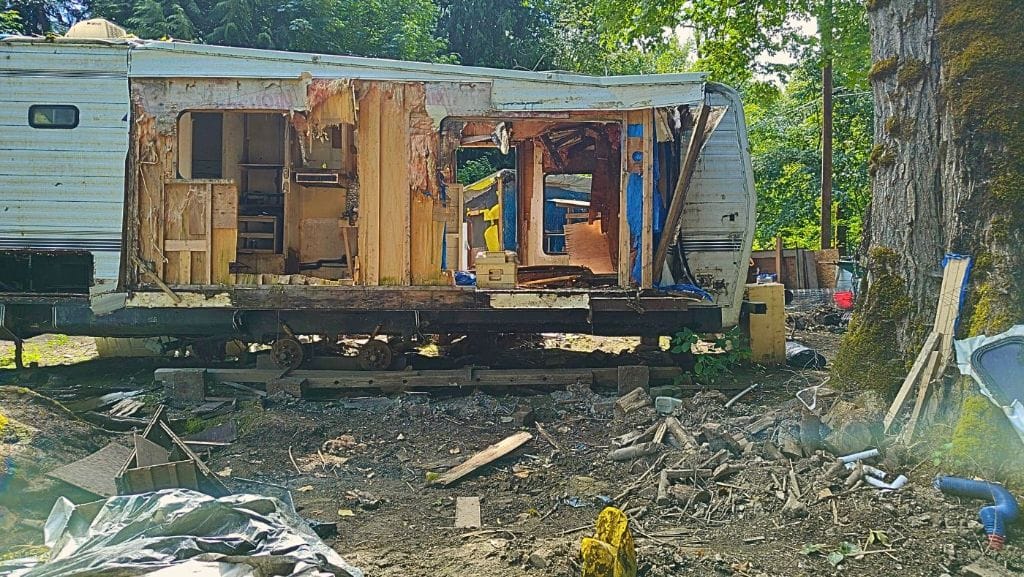
LEFT: Eight Tzu Chi volunteers drive nearly two hours to Cape Horn, Washington, to assist residents with flood cleanup. | Photo: Po-Chen Yang (楊珀宸) RIGHT: More than six months after December 2025 floods hit Cape Horn, Washington, yards remain piled with debris. | Photo: Roger Chou
Joint effort to restore disaster-affected homes
Coordinated by United Way and responding to a volunteer call from Washington Voluntary Organizations Active in Disaster (WAVOAD), eight volunteers from the Tzu Chi Seattle Branch traveled nearly two hours to Cape Horn. Partnering with Mennonite Disaster Service (MDS), the volunteers assisted four families in hauling, sorting, and removing long-accumulated flood debris. By the end of the day, the team had filled an entire utility trailer and a pickup truck with waste, noticeably easing the emotional and physical strain on residents.
Beyond assisting individual households, removing the accumulated waste helped prevent future floodwaters from washing debris into the Skagit River. Clearing the area protected local water quality, salmon habitats, and downstream communities, combining disaster recovery with environmental protection.
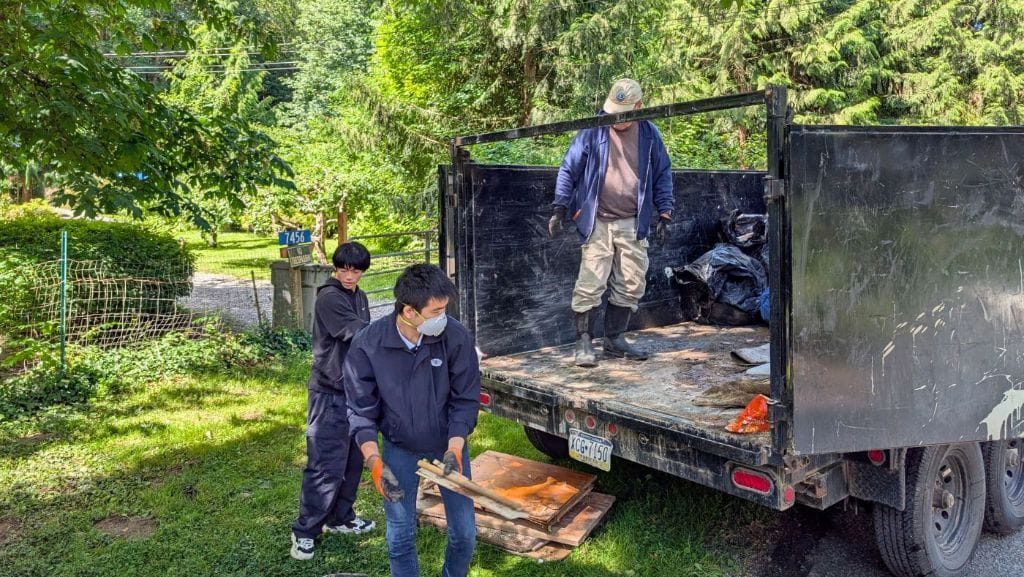
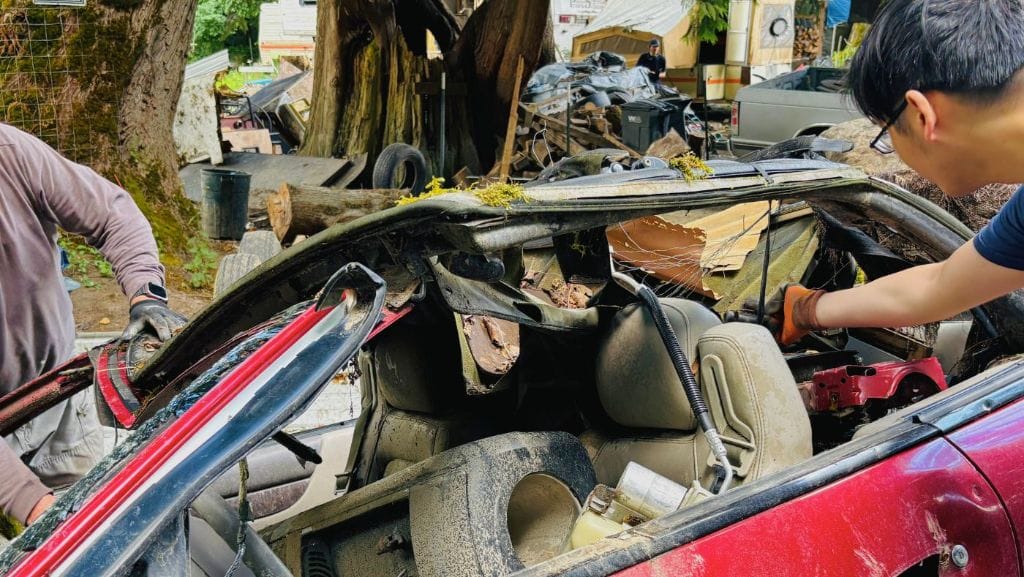
LEFT: Cleaning up flood debris requires collective effort and team coordination. | Photo: Po-Chen Yang RIGHT: Resident Carol Van Noy shares that clearing the grounds and restoring her home takes immense effort. | Photo: Lu-Chih Liao
Uncovering memories in a restored garden
Among those receiving assistance was Carol Van Noy, who has lived on her property since 2011. Since her husband passed away in 2018, she has cared for the home alone. Recalling the day the flood struck, Carol remembered the sudden evacuation notice as water rose rapidly across her property, forcing her to stay in a hotel for three days. When she returned, thick mud covered her yard and surrounding structures, ruining her washer, dryer, and numerous belongings.
Your arrival relieved so much of our stress. This help is truly warm and important, and I thank you from the bottom of my heart.
— Carol Van Noy, Resident
Volunteers spent hours clearing heavy items and scattered trash from her yard. As volunteers removed bags of waste, the land beneath gradually reappeared, revealing the garden her late husband had carefully cultivated with apple and plum trees, blueberries, and roses. Seeing her yard restored allowed Carol to reconnect with familiar, cherished scenery.
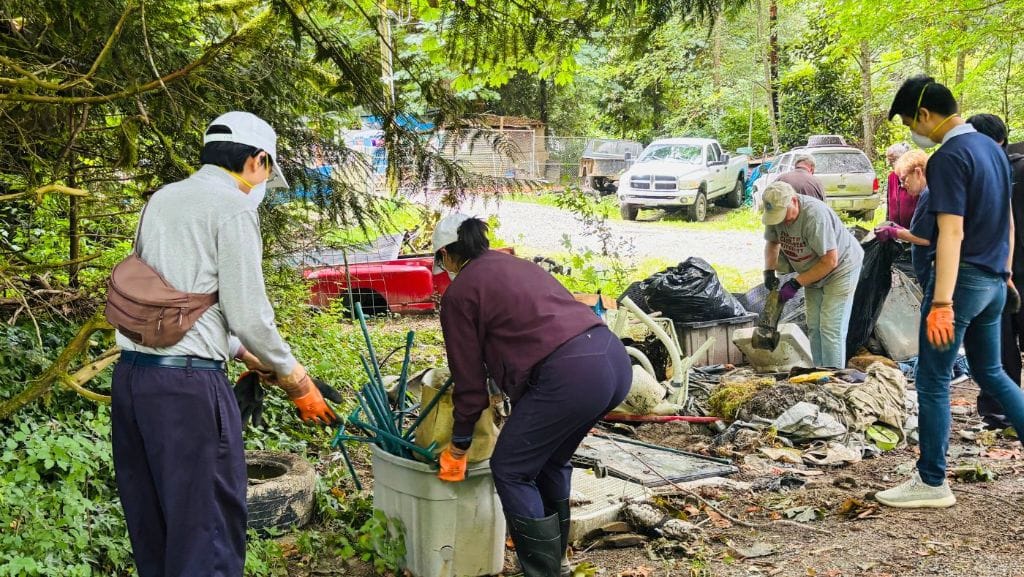
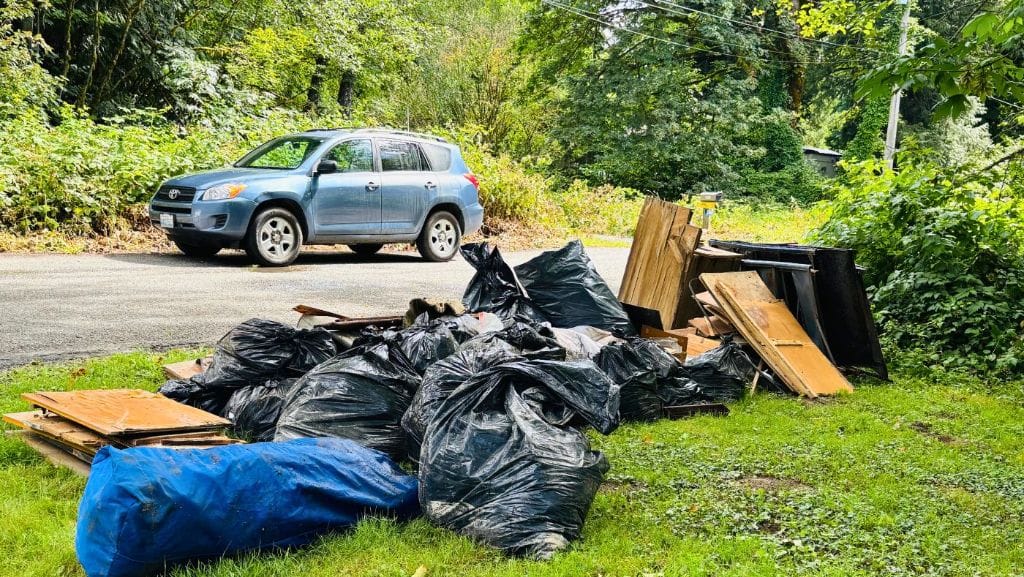
LEFT: Volunteers work together to remove flood waste scattered across residential yards. RIGHT: Bags of cleared debris line the roadside for removal. | Photo: Lu-Chih Liao
Ongoing support from emergency aid to cleanup
The relief effort also brought a reunion between volunteers and residents Morgan Thomas and Elda Thomas. Volunteers had first visited the family on Christmas Eve in 2025 to distribute emergency financial assistance cards. Morgan recalled how volunteers drove into the flooded area shortly after water receded to deliver immediate help.
Over the following months, recovery progressed slowly. Organizations like Team Rubicon helped gather mud and waste, while a neighbor from Big Lake brought a small excavator to remove approximately 38 cubic yards of silt. However, floodwaters had seeped deep inside their home, causing black mold behind drywall and rendering the building uninhabitable. With $11,000 in assistance from the Federal Emergency Management Agency (FEMA), Morgan’s family spent about $9,000 to purchase a camping trailer for temporary housing.
The financial aid received from Tzu Chi earlier in the recovery process proved critical, helping cover waste disposal costs, purchase gravel, and meet basic daily needs. Morgan used his pickup truck to haul gravel and repair driveways for his family and surrounding neighbors.
Back when the flooding hit, it was a total disaster. The water was pure mud back then. When your cars drove in, they were white; when they left, they were brown. Thank you for everything you did back then, and thank you for coming back again today. — Morgan Thomas, Resident
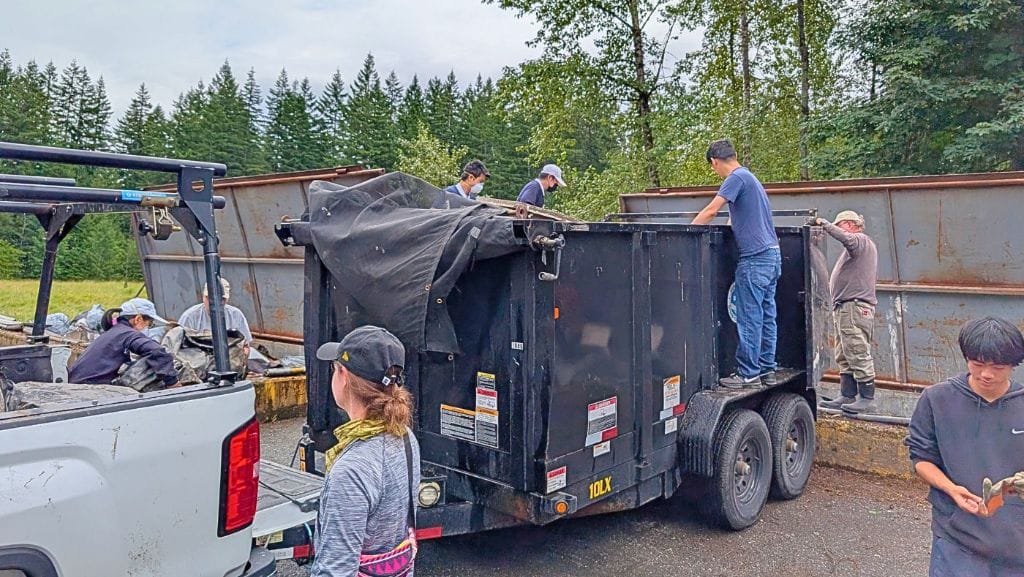
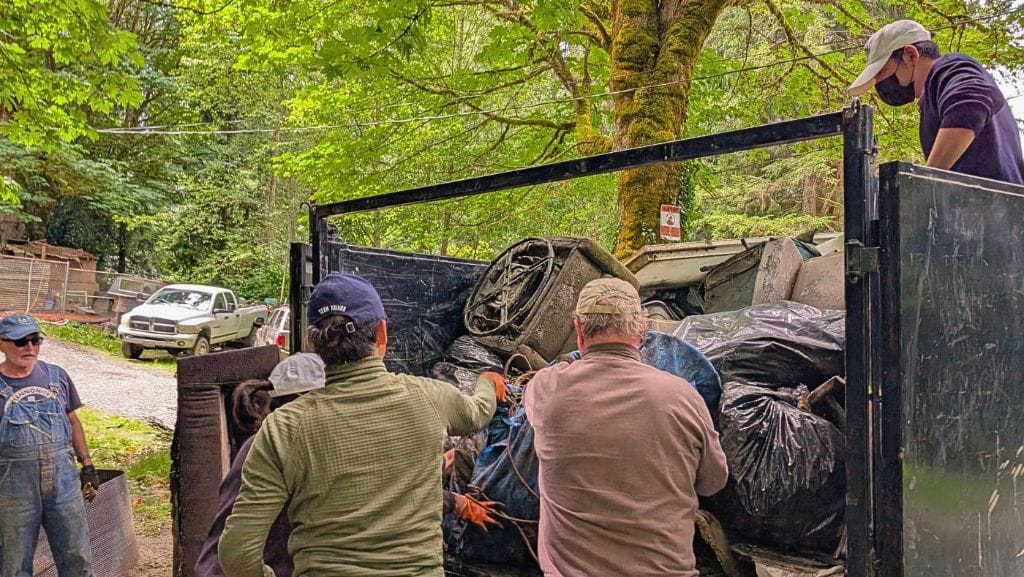
LEFT: Volunteers load damaged auto parts, mattresses, and household debris onto a trailer. RIGHT: Over a full day of cleanup, volunteers fill an entire trailer and a pickup truck. | Photos: Po-Chen Yang
Youth engagement and community collaboration
The cleanup initiative brought together volunteers across generations, including Tzu Ching alumnis of the Tzu Chi Youth Association who have since become certified volunteers. Eric Su (蘇宥昇), who works an office job during the week, spent his weekend hauling waterlogged furniture, wiring, and heavy trash.
When we show up, it helps residents realize that the burden in front of them might not be as impossible to overcome as they thought. — Eric Su, Tzu Chi Volunteer
Seeing volunteers work inspired residents to join in, turning an intimidating task into a shared effort. Other volunteers, including Shelley Chang (張懿文) and high school student Tzu-Yun Chang (張祖允), noted that even after six months, much work remains in the affected areas.
We put in a lot of physical effort today, but knowing that even a little bit of change can help these families rebuild their lives makes it entirely worth it. — Shelly Chang, Tzu Chi Volunteer

Mennonite Disaster Service representatives Joyce Royce and Andy Royce also worked alongside the team. MDS has dispatched mud-clearing trailers and debris removal equipment to Cape Horn every few weeks since January. Andy noted that without sustained volunteer collaboration, many residents would have had no way to complete the daunting cleanup process.
Recovery from a natural disaster is rarely a swift process; it requires sustained commitment and community collaboration. From emergency financial distributions during the initial winter flood to hands-on clearing of debris months later, ongoing volunteer efforts provide both practical help and moral support. As cleared yards reveal the soil underneath and familiar landscapes re-emerge, residents gain renewed strength to rebuild their lives and look toward the future.
Written by Roger Chou (周赫巖)
