


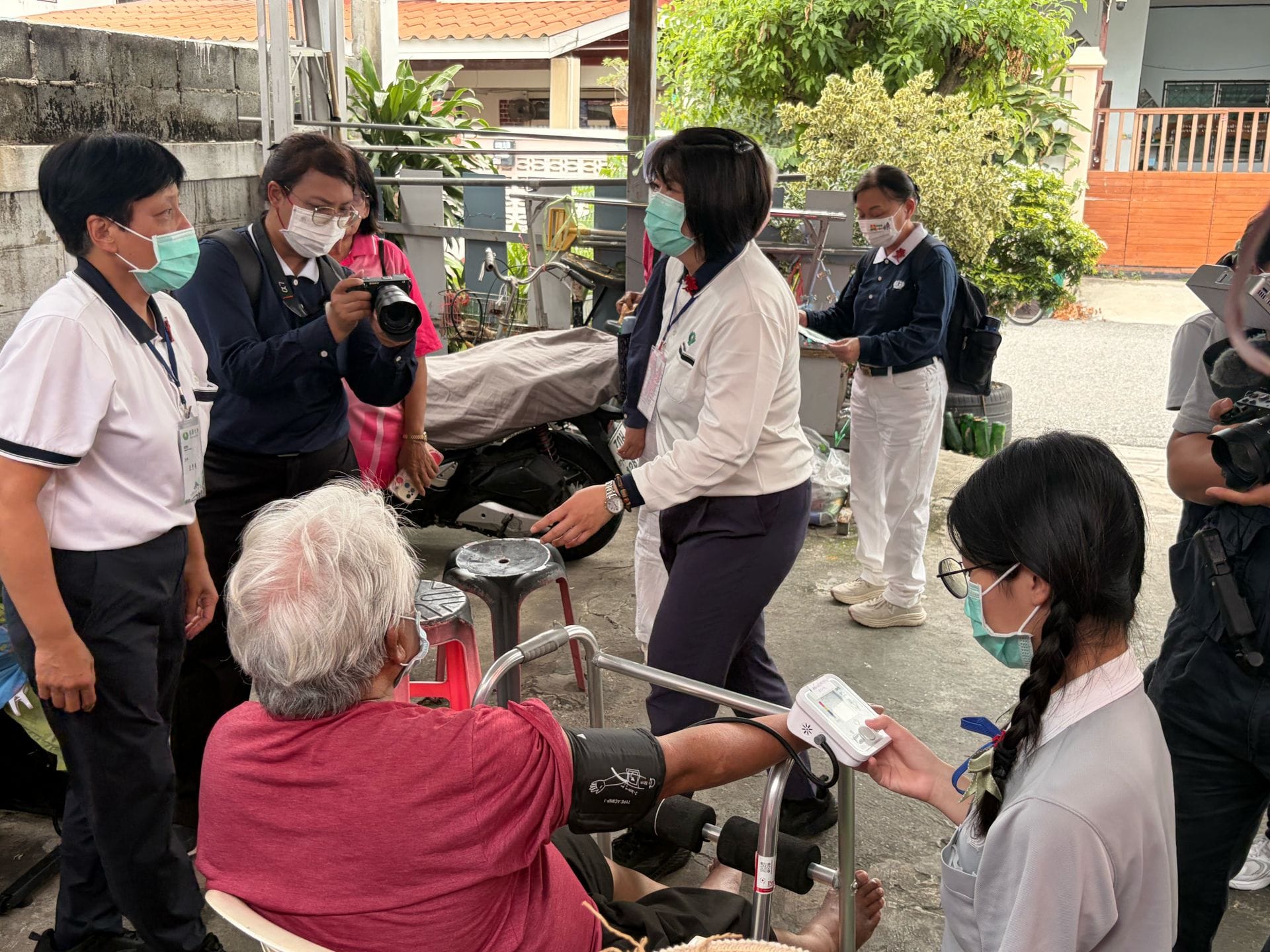
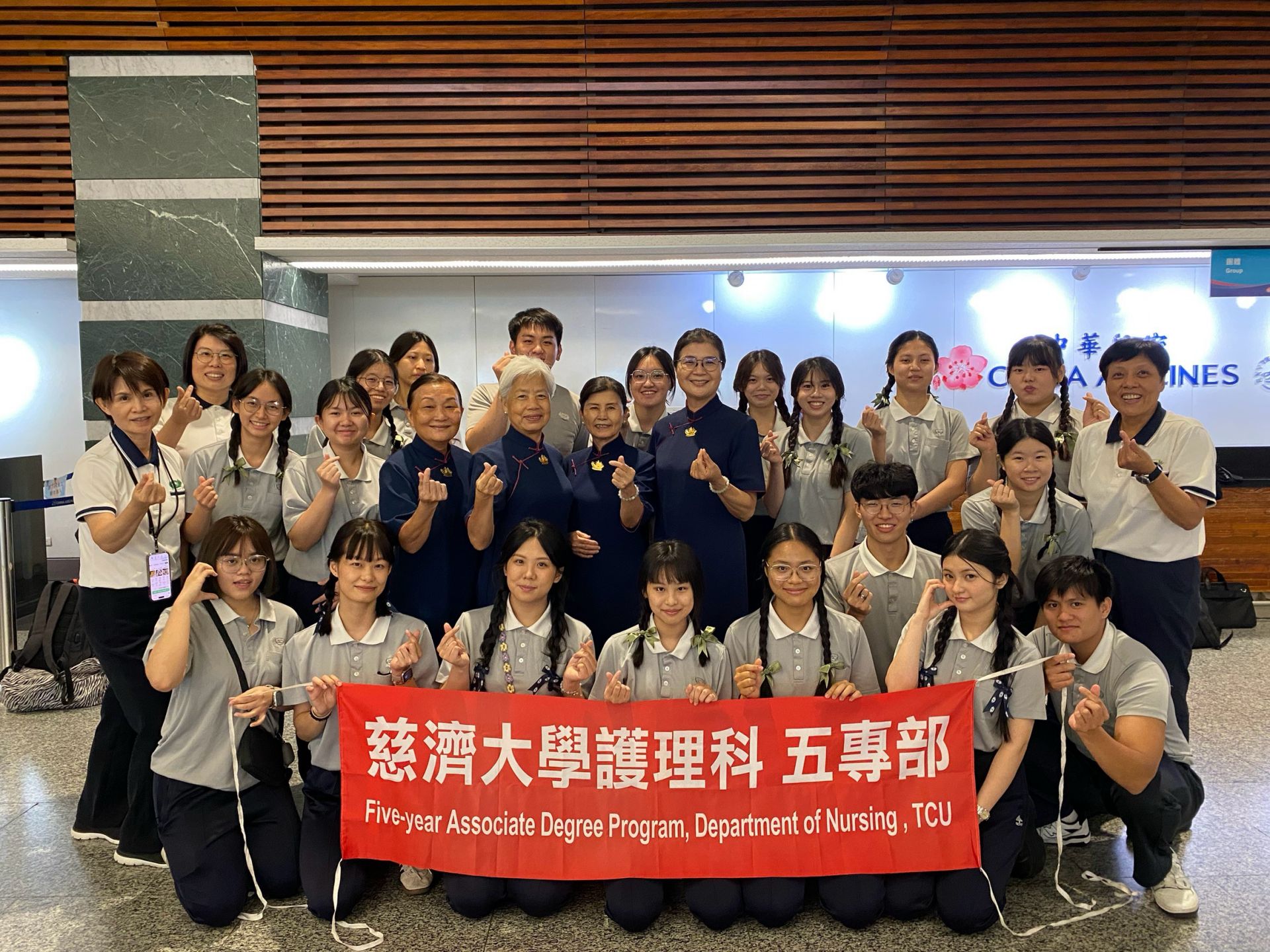
From August 20 to 30, vulnerable communities and urban refugee families in Bangkok, Thailand, received targeted healthcare services through an 11-day outreach program. A visiting delegation of 19 nursing and long-term care students from Tzu Chi University in Taiwan, guided by faculty members Shao-Hui Hsu (徐少慧), Hsiu-Mei Wang (王秀美), and Hsin-Feng Su (蘇信鳳), as well as local team members, provided free health checks, home care assessments, and health education to individuals living in resource-limited settings.
Healthcare access for refugee communities
Before the free clinics opened, the team collaborated with local staff from Tzu Chi Thailand to review patient demographics and clinic workflows, ensuring the sessions were structured to address the specific health needs of displaced residents. Instructors assigned duties based on each student's experience level, helping them refresh essential clinical procedures beforehand.
During the initial clinic sessions, many refugee patients, facing unfamiliar medical settings and language barriers, received dedicated attention as student volunteers quickly adapted to the clinic flow. Moving between stations, the team cared for patients with warm smiles, simple English, and gentle gestures to provide a comfortable and stress-free experience.
Students learn knowledge and skills in the classroom, but true education does not only take place in a classroom. It gains deeper meaning when students step into communities and experience different life circumstances. — Shao-Hui Hsu, Nursing Instructor
Targeted home care for complex needs
Accompanied by local social workers and community volunteers, the team conducted home visits across Bangkok to assist low-income residents and homebound refugees. In addition to receiving essential living supplies, residents underwent comprehensive health evaluations tailored to elderly individuals, patients managing chronic illness, bedridden care recipients, and young children.
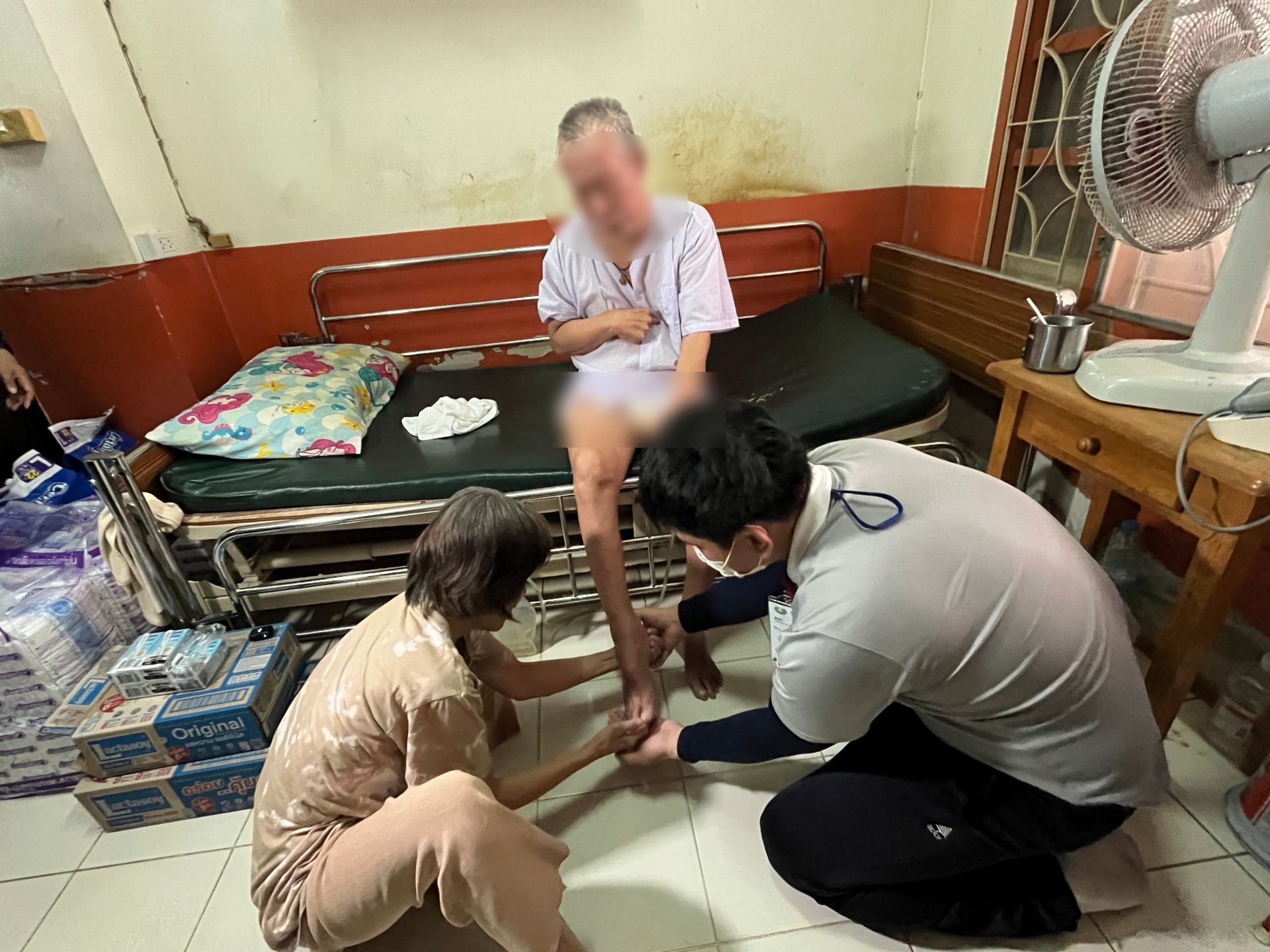
In one household, a bedridden grandmother was struggling with a 5x6 centimeter Stage III pressure sore on her lower back. Experiencing pain during dressing changes, she groaned in discomfort, while students held her hand to provide emotional support. Working with available household items, Hsu showed the team how to position folded towels beneath the patient for proper support. She then instructed family members on performing regular position changes and joint mobility exercises to relieve pressure and prevent further complications.
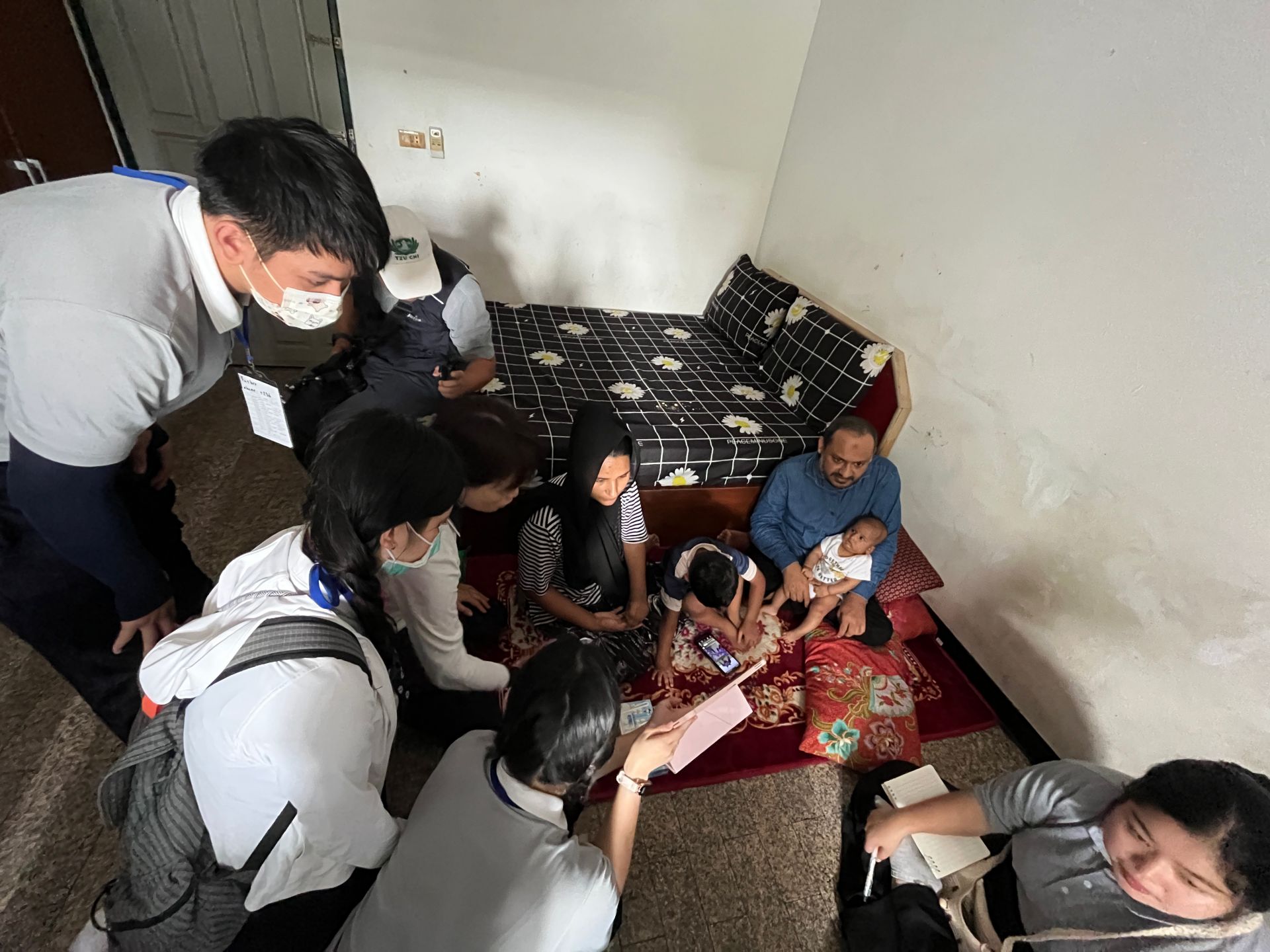
During these visits, residents living with hypertension, diabetes, vision or hearing loss, and social isolation received personalized care. Volunteers adapted their communication by speaking slowly, using concise phrases, and employing non-verbal cues to explain health conditions and daily care instructions. To support new mothers struggling with physical strain, students also provided practical demonstrations on correct posture while holding infants, helping relieve persistent lower back pain.
Reflecting on these visits, nursing student Yu-Ying Chu (朱昱纓) noted that entering each home highlighted how every household faces distinct challenges. Student Ying-Chen Liao (廖瑩蓁) observed how instructors and senior peers noticed minor details in the home environment to better support the residents. Student Yi-Hsuan Liu (劉宜璇) shared that seeing families manage difficult health conditions with resilience reinforced that patient care extends beyond physical treatment to include emotional well-being.
Educational skits and program continuity
To bridge communication gaps for residents, Wang, a long-term care instructor and Thai Chinese, taught basic Thai phrases to the team and provided real-time translation during patient consultations and community visits.
Beyond individual care assessments, local youth participated in interactive educational skits focused on influenza prevention. Though initially reserved, the young participants quickly engaged with the interactive demonstrations. Wang noted that international service allows students to evaluate their clinical capabilities in real-world environments while encouraging them to prepare bilingual educational materials in English and Thai for future outreach trips.
Preparation for the 11-day initiative began a month before departure, with senior students taking an active role in planning and mentoring junior peers. For Chu, who had participated in a similar Thailand trip during her earlier studies, guiding younger classmates allowed her to pass on the knowledge and guidance she once received.
Through these combined efforts in community clinics and private homes, residents and refugee families gained direct access to health monitoring and practical home care support.
Written by Tzu Chi University
