


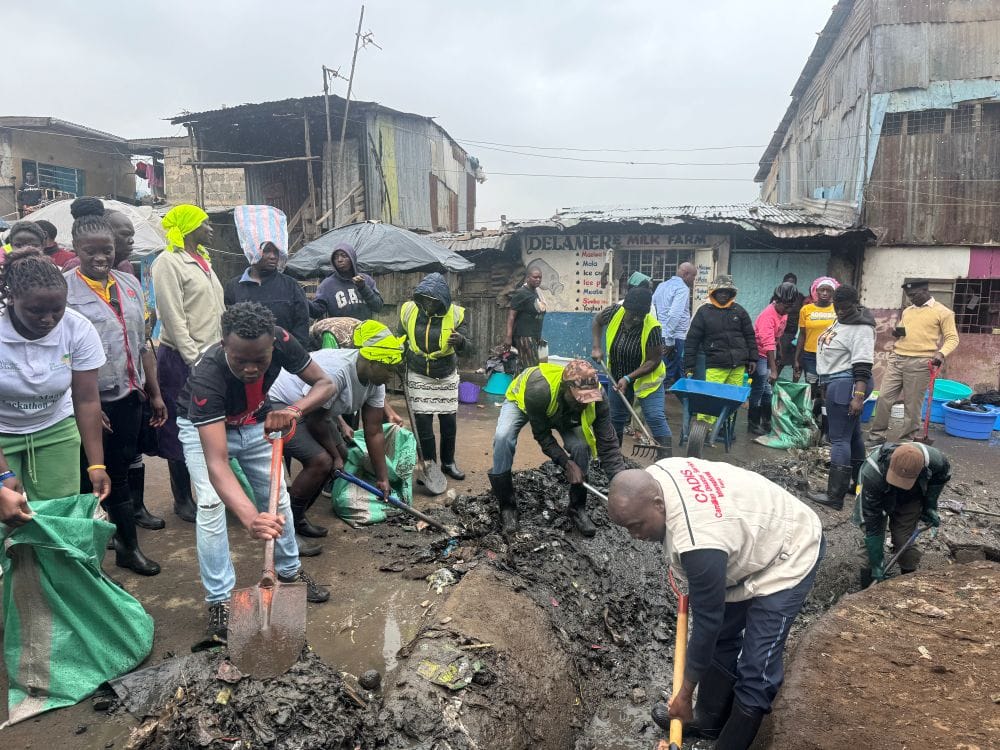
In Mathare 4A, Nairobi, Kenya, inadequate infrastructure and youth unemployment estimated at 70% to 90% make daily life a constant struggle. For years, municipal waste collection has not reached the settlement, leaving plastic and other rubbish piled along streets and in open drainage channels. When seasonal rains hit Nairobi, blocked drains stop water from draining away and send contaminated floodwater into tin-roofed homes, washing away families' few possessions.
Rather than waiting for disaster to strike, Tzu Chi Foundation has supported CADIS Kenya (the Camillians) in tackling the crisis's root causes by improving the local environment and supporting the settlement's most vulnerable residents.
A living from waste
More than 70% of Mathare's residents are under 35. With few opportunities available, many young people have struggled with unemployment and the risks of petty crime and drug use.
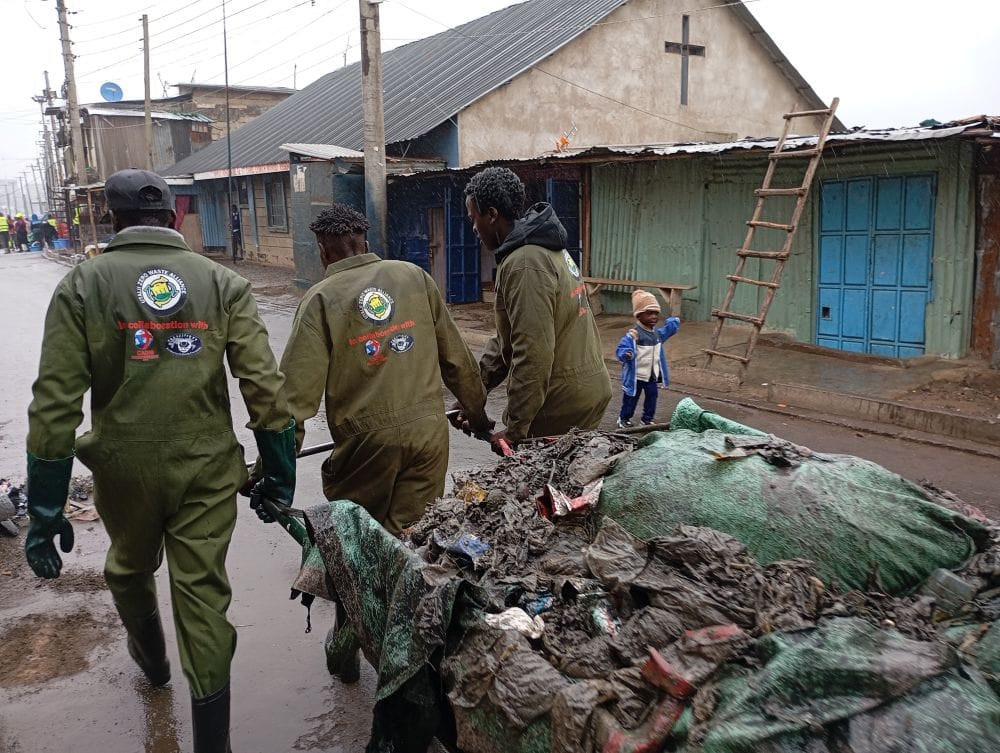
With Tzu Chi's support, CADIS Kenya (Camillian Disaster Service International - Kenya) organized 140 young men and women into the Utalii Zero Waste Alliance. Equipped with protective boots, heavy-duty gloves, uniforms, and handcarts, and trained in waste sorting, recycling, and financial literacy, the members now work every Saturday from 5:00 a.m., going door to door to collect household waste and clear open drainage channels.
Each week, the Alliance diverts about 20 tons of waste to municipal facilities and serves more than 1,500 households. Members earn an income by sorting and selling 500 kilograms of recyclable material a week and by charging modest collection fees, and each saves KES 20 (US$0.15) a week in an Alliance Bank account, building financial discipline and a more secure future.
Once viewed with suspicion by their neighbors, these young people are now welcomed and respected as community members who help keep Mathare clean and protect it from flooding.
Clearing drains before the rains
With forecasts warning of heavy rains during Kenya's October 2026 rainy season, CADIS Kenya coordinator Fr. Francis Maina and his team moved early to prepare the community for potential flooding.
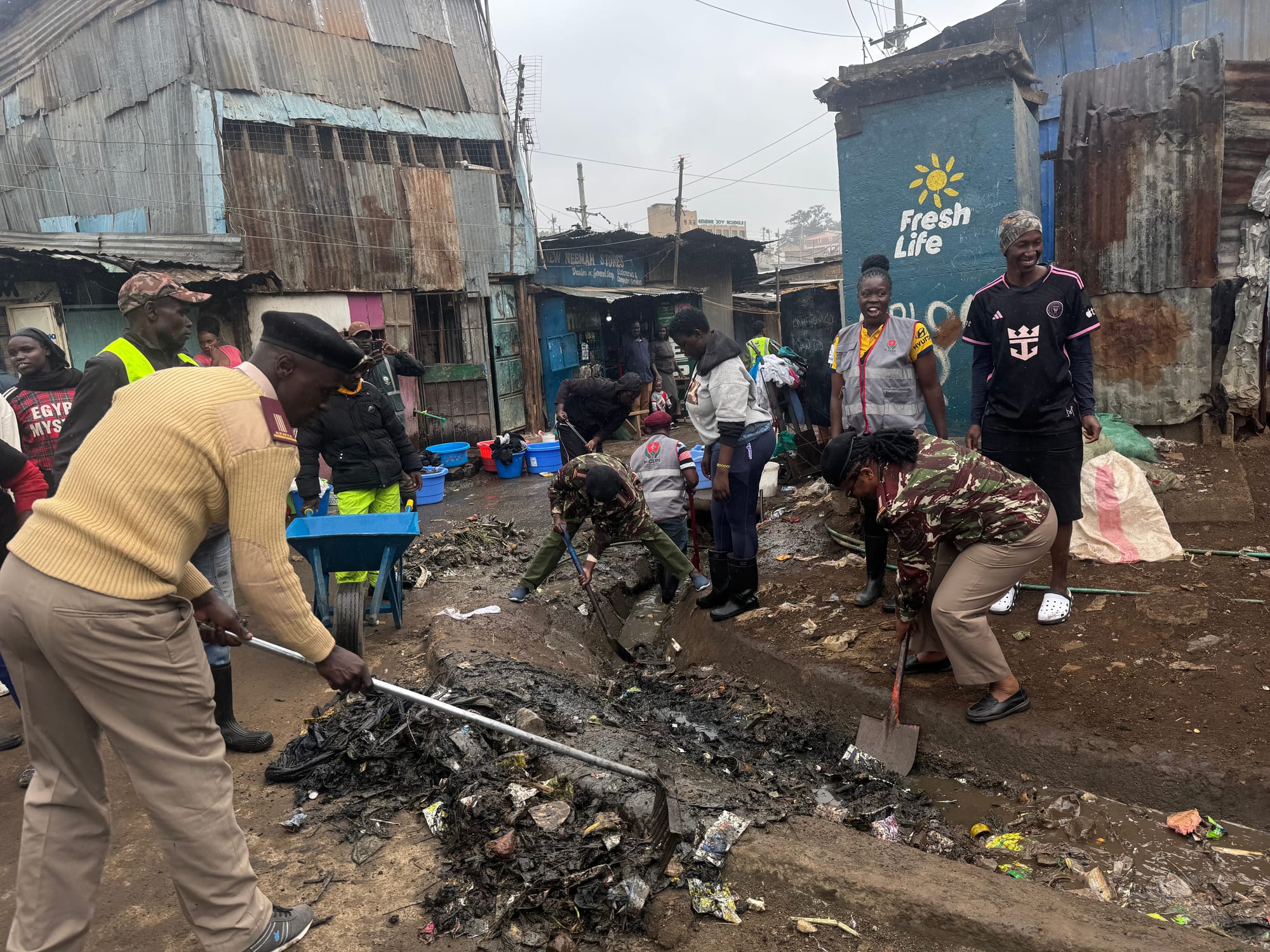
On September 18, 2026, approximately 300 community members—including youth groups, village elders, the area chief, police representatives, and environmental officers—joined an intensive clean-up and public awareness campaign.
Equipped with donated wheelbarrows, rakes, and shovels, the youth cleared several tonnes of accumulated sludge and debris from blocked drains, allowing rainwater to flow freely and reducing the risk of flooding in nearby homes. The collected waste was taken to designated holding grounds in Mathare North to dry before being transported to the Dandora dumpsite.
Meanwhile, village elders walked through the settlement with a portable public address system, reminding families that keeping drainage channels clear is a shared responsibility. Seeing the young people working to protect their community, a local sound technician offered his own loudspeakers free of charge so the message could reach more households.
Beyond the clean-up
The work is not finished: drains silt up, and every rainy season brings a new test. But the young people who were once viewed with suspicion are now the ones residents rely on before the rains come.
Written by Tzu Chi Foundation
