


A new path in Harare
On March 3, 2026, a memorial service was held at the Tzu Chi Zimbabwe office in Harare. Before the ceremony began, Biggie Samson, a staff member, was busy managing the livestream equipment. To many who know him, Biggie is the "Computer King" of the local office. He has a calm, steady presence and a warm smile that masks a difficult past.
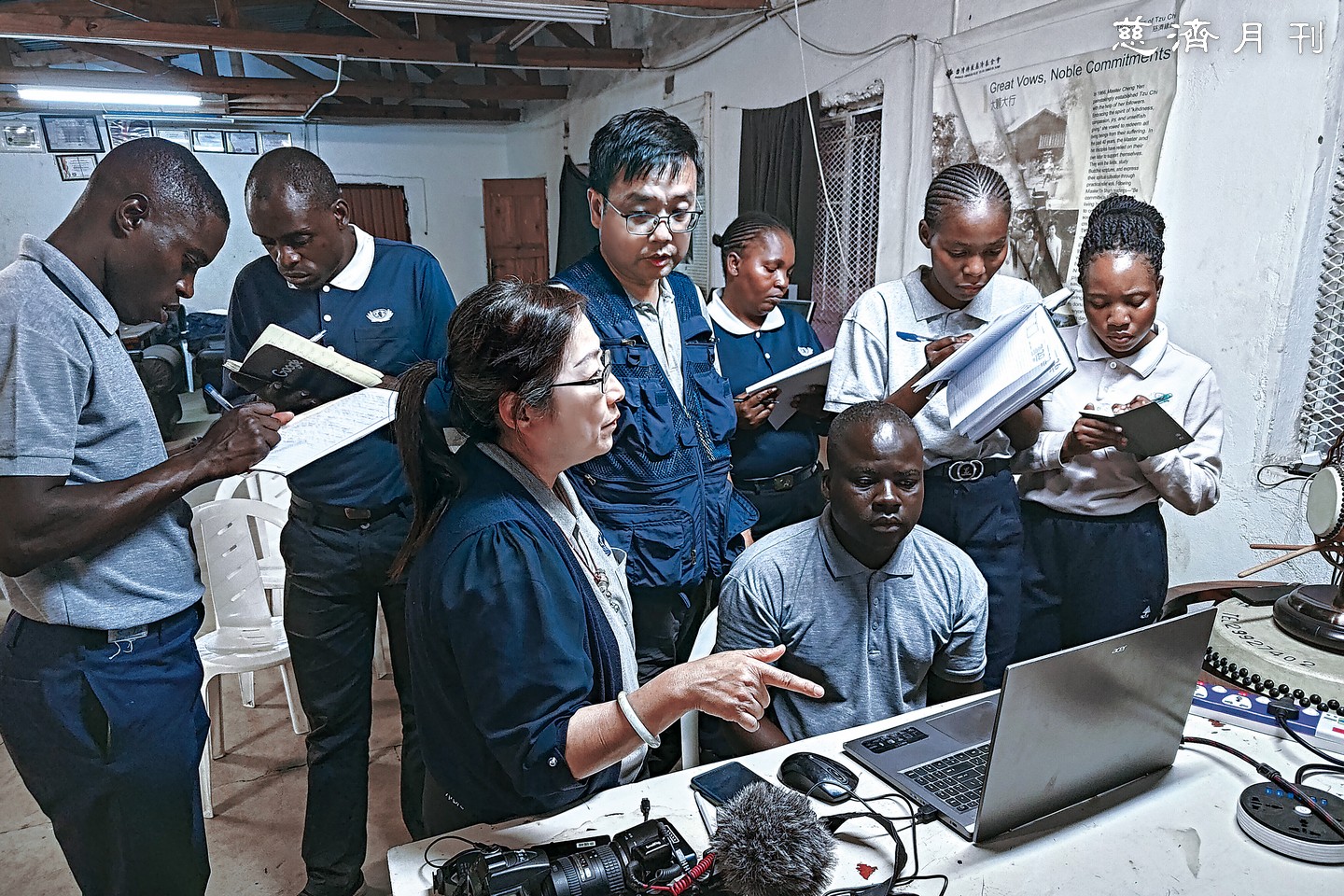
During a documentary filming trip in September 2025, Biggie stood out for his technical curiosity. While other volunteers were just beginning to learn video editing, Biggie was already asking advanced technical questions. When the visiting team asked who among the local group was the most skilled with technology, everyone pointed to him.
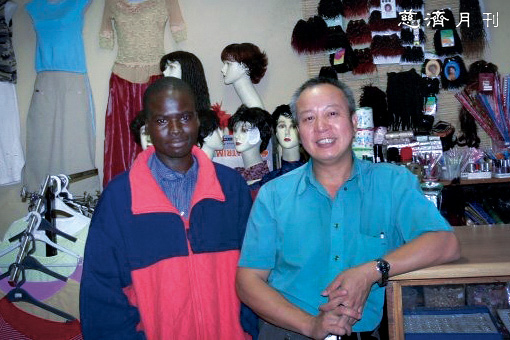
Biggie’s journey with technology began years ago at an internet cafe called "Chuweb." In Zimbabwe, where internet access was once rare and expensive, Chuweb was a lifeline for students and locals. It was managed by Tino Chu (朱金財), a volunteer who had lived in the country for over 30 years.
Overcoming loss at sixteen
Biggie’s life took a drastic turn in 2002 when he was only 16 years old. Living in the town of Chinhoyi, he lost both of his parents within days of each other. His father, who suffered from high blood pressure, collapsed at work and passed away; his mother, overwhelmed by grief, died shortly after the funeral.
Suddenly, Biggie was the head of a household with three younger sisters and a brother to support. The weight of the responsibility was nearly unbearable for a teenager.
"I was in secondary school and had to work to support everyone because there was no one else to look after us," Biggie recalled. The depression and pressure were so intense that he felt he could no longer go on.
At the time, Chu was running a retail shop in Chinhoyi. An employee told him about Biggie’s desperate situation. After hearing the boy's story, Chu offered to take him in and provide for him.
After listening to my story, he very lovingly expressed his willingness to take care of me. From that time on, I stayed with him. He has always supported me, just like family. — Biggie Samson
From a "son" to a community leader
Biggie moved to Harare and began working at Chuweb. Under Chu’s mentorship, he mastered computer operations. The salary he earned allowed him to pay for his sisters' education back in his hometown, finally bringing him peace of mind. For over 20 years, Biggie remained a part of the family, eventually getting married and starting his own family while staying connected to the mission that saved him.
Chu and his wife, Chao-Chin Li (李照琴), opened their home to many orphans and young people who were struggling. They provided food, clothing, and guidance to keep them away from drugs and alcohol, helping them lead responsible lives until they were ready to be independent.
In 2018, Biggie officially became a Tzu Chi volunteer, receiving the Dharma name Ben Shi (本實). Today, he plays a vital role in the borehole team, coordinating documentation and reports for community water projects. His fluency in English and high efficiency make him a bridge between local needs and international support.
Biggie reflects that the most important lesson he learned from his mentor was not about technology, but about character. He saw how Chu forgave those who had wronged him and gave to others without expecting anything in return. By turning his own grief into a drive to help others, Biggie now ensures that the same compassion he received is passed on to his community.
Written by Felicia Hsu (許斐莉)
