


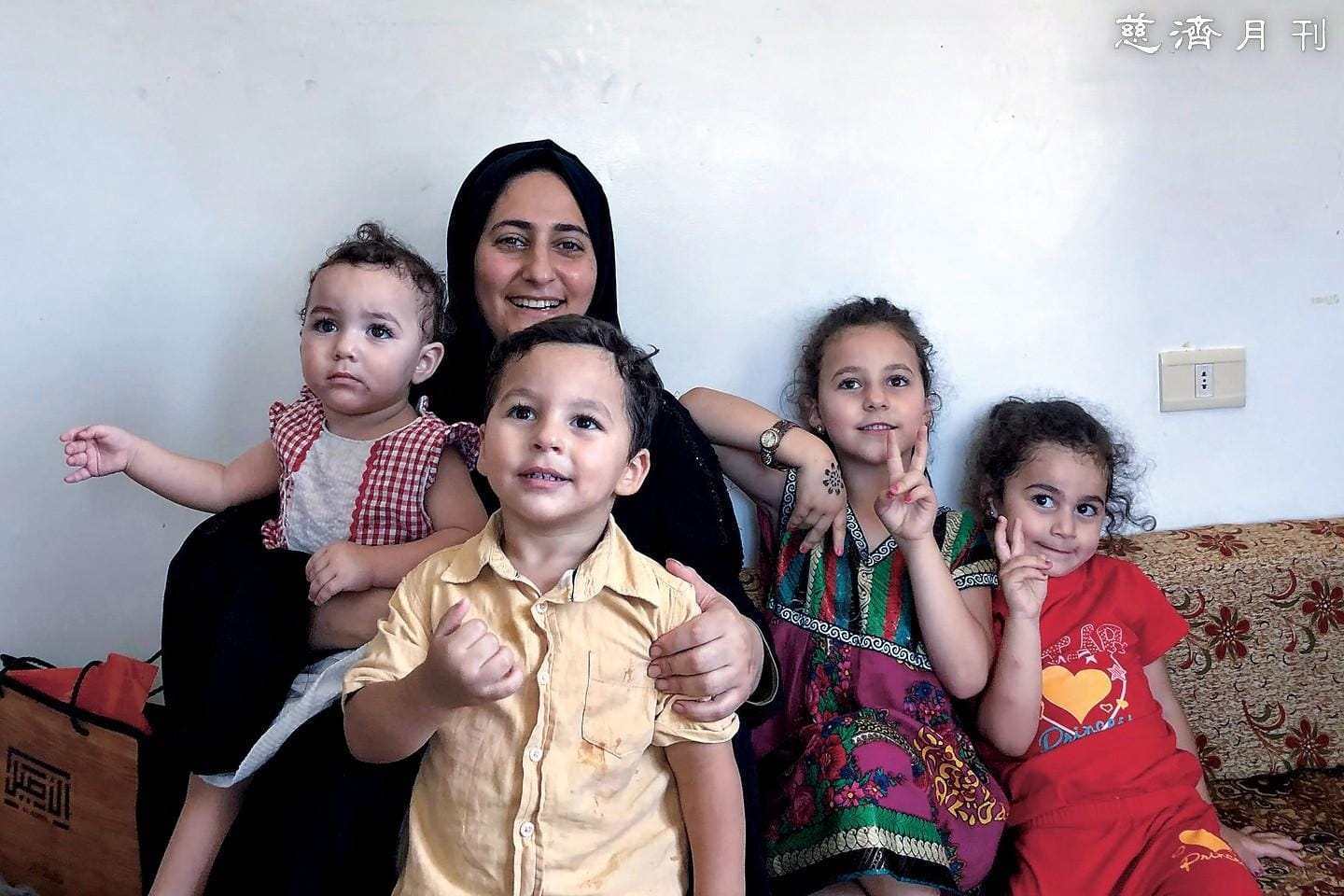
Every June, a familiar phone call brings an invitation to pick wild vegetables in northern Jordan. The voice on the line belongs to Aya Aljarrah, who returns to the rural countryside of Irbid from Abu Dhabi each summer with her four children. Like a migratory bird, she never fails to visit the people who helped shape her life. This connection has endured for nearly three decades, rooted in a traditional agricultural community where foreign charitable organizations were once met with hesitation.
A mother's resilience
Naweir Aljarrah, fondly known in her community as Um Aya, lives in Mazar, a conservative village where early marriages are common. Married to her cousin at the age of twelve, she gave birth to her eldest daughter, Khawlah Aljarrah, at fourteen. Khawlah was born with galactosemia, a rare genetic disorder requiring a specific diet. Due to a lack of advanced medical resources at the time, Khawlah suffered irreversible damage to her motor and speech development. In the following years, two more daughters, Ann and May, were born with the same condition.
Blaming Naweir for the children's illnesses, her husband started a new family elsewhere, leaving the three girls without support. Fearing societal judgment and wanting to protect her children from the community's whispers, Naweir largely kept her daughters at home, dedicating her life to their daily care. In 1998, a local trader’s wife learned of the family's situation and sought help, bringing volunteers to Mazar for the first time.
Despite the immense daily difficulties, Naweir refused to walk away from her daughters.
These three children are my treasures. If I divorce, their father will send them to a government nursing home, and they won't get good care there. — Naweir Aljarrah, Mother
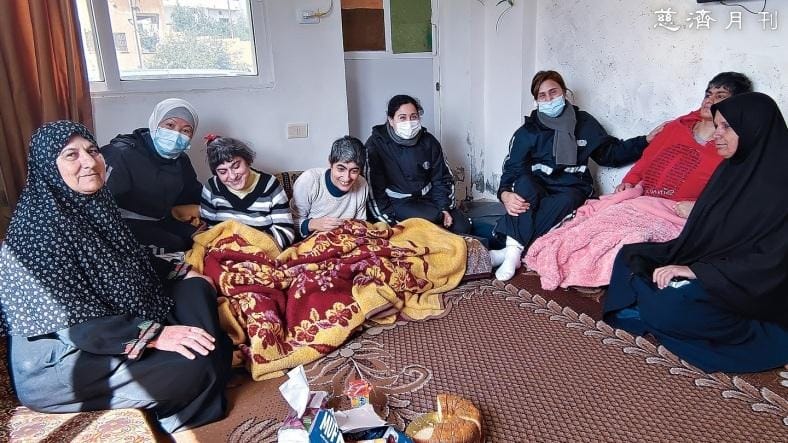
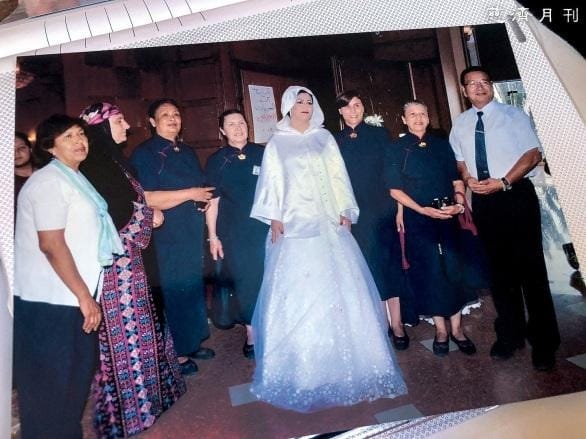
LEFT: Long-term care recipient Naweir (first left) and her family receive continuous home visits. | Photo: Chiou-hwa Chen (陳秋華) RIGHT: At Aya's wedding, Chiou-hwa Chen (first right) and volunteers attended as her family. | Photo: Lu-ching Lin
A tin of childhood memories
Aya was born in 1993. Worried about her health, Naweir fed her special formula, allowing her to grow up healthy and without the genetic disorder affecting her sisters. However, caring for three disabled children left Naweir with little time or energy to focus on Aya.
When Aya was five, a steady presence entered her life. Volunteers, including Hui-Chen Lin (林慧真) and later Chiou-Hwa Chen (陳秋華), began visiting the home monthly. They brought daily necessities to ease the mother's burden, but for young Aya, the occasional small gifts—beaded bracelets, hair clips, and coloring books—became her most treasured possessions. She carefully kept them in a tin box, a precious collection she took with her even after she married and moved to the United Arab Emirates.
To improve the family’s living conditions, volunteers occasionally helped repaint their home, aiming to create a comfortable environment that would prevent the older sisters' health from deteriorating.
Choosing a different path
At eighteen, Aya scored high enough on her exams to study medical laboratory science at a national university. It was a crucial moment, but her father reappeared, insisting she abandon her studies to marry according to his arrangements, stating he could not afford the tuition.
Encouraged by Chiou-Hwa to pursue her education so she could eventually support her mother, Aya received a scholarship that covered her tuition and commuting expenses. This allowed her to attend the Jordan University of Science and Technology, located 25 kilometers from home. The opportunity opened a new chapter, enabling her to step outside her village and build a secure future.
Building a life of purpose
During her senior year, Aya met a fellow student from her village studying emergency rescue. They soon decided to marry. On her wedding day, volunteers attended in suits and traditional attire, stepping in as the bride's family representatives to ensure she felt celebrated.
After graduation, Aya and her husband established their family in Abu Dhabi, where they found stable work amid Jordan's rising living costs. Today, they have four healthy children. During a recent visit, when asked about the challenges of raising a large family, Aya reflected on her past.
I always felt lonely growing up. After becoming a mother, I slowly discarded that loneliness. — Aya Aljarrah
The bond with those who supported her remains strong. Whenever she faces life's challenges, Aya turns to a translated copy of Jing Si Aphorisms, finding particular resonance in the concept of giving without expectations and maintaining gratitude.
During her summer visits to Jordan, Aya puts these lessons into practice. She collects second-hand backpacks, carefully mends them by hand, and distributes them to local schoolchildren in need. Through these quiet acts of care, she passes on the support she once received, ensuring that compassion continues to grow in her rural community.
Written by Lamiya Lin (林綠卿)
