


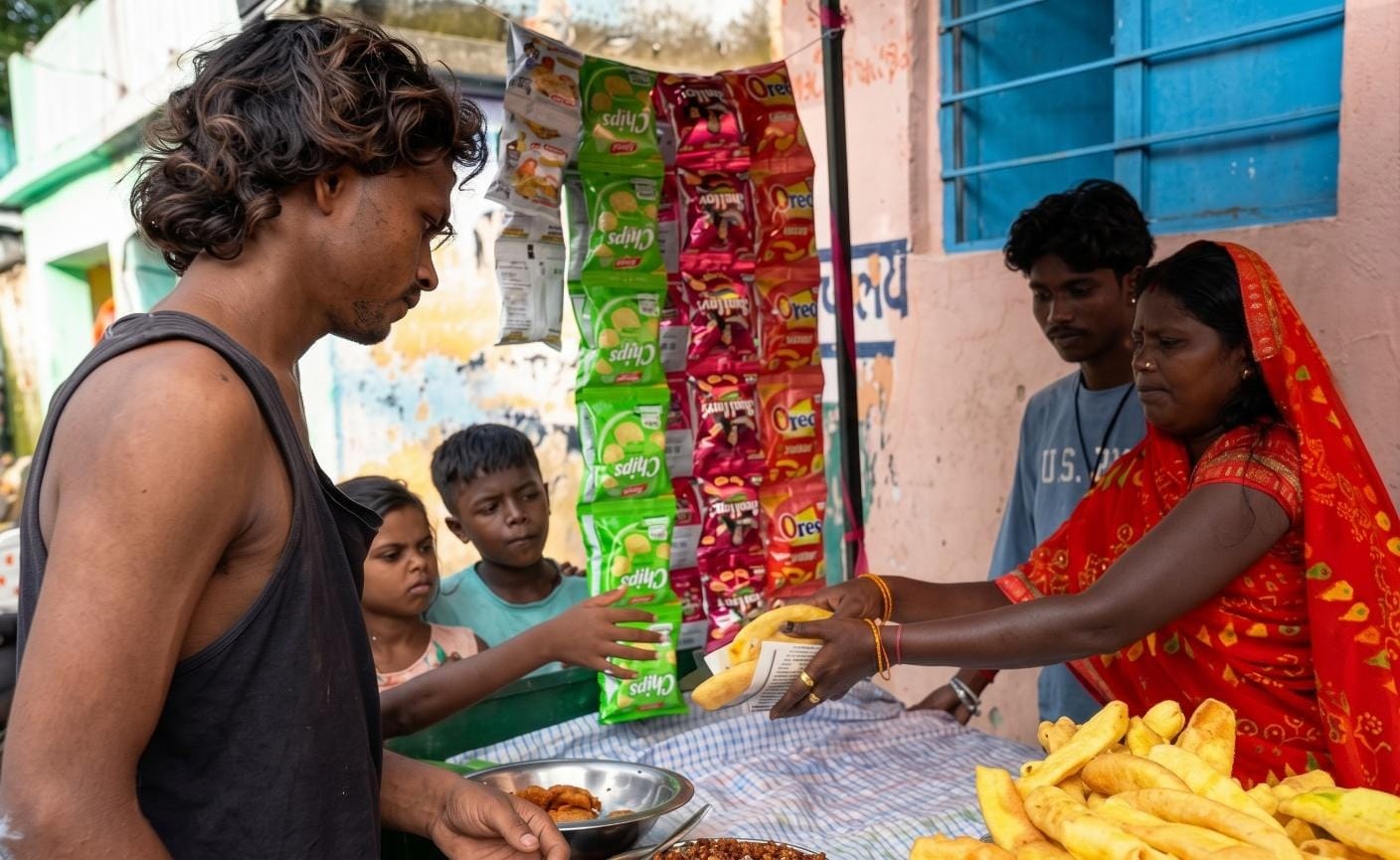
For families facing sudden hardships, finding a way forward can feel insurmountable when the primary breadwinner is unable to work. In Bodh Gaya, India, households often rely entirely on daily labor to make ends meet, leaving little margin for survival when unexpected crises strike.
Restoring stability through enterprise
Living in Baidyapur, Bodh Gaya, Shanti Devi and her family faced profound difficulties after her husband suffered a bone fracture that left him unable to work. Providing regular meals for a household of nearly ten people became an overwhelming daily challenge.
Following an assessment by local volunteers, Shanti received support through Tzu Chi's Carts of Hope program, which provides mobile vending carts to help families start small businesses. With the new pushcart, the household began preparing and selling snacks together, including falafels and samosas, turning these homemade treats into a steady source of income.
Operating the cart daily, the family generates modest daily returns that help stabilize their household. Shanti plans to gradually expand her offerings, including adding masala tea as colder weather approaches and moving to busier local markets to reach more customers.
Building self-reliance across villages
This initiative has shown encouraging results across neighboring villages in Bodh Gaya. Shahnaz Khatoon, who operates another pushcart, initially sold vegetables before adapting her inventory to local preferences by switching to prepared foods and snacks. The venture allowed her to achieve self-sufficiency and eventually build a permanent home for her family.
Now, no matter how much or how little we earn, at least the children at home can eat their fill. — Shahnaz Khatoon, pushcart owner
As more families take up the opportunity to work toward financial independence, the pushcart initiative provides a practical pathway out of poverty, allowing recipients to support their loved ones with dignity and renewed hope.
Written by Yu-Chen Pan (潘俞臻)
