


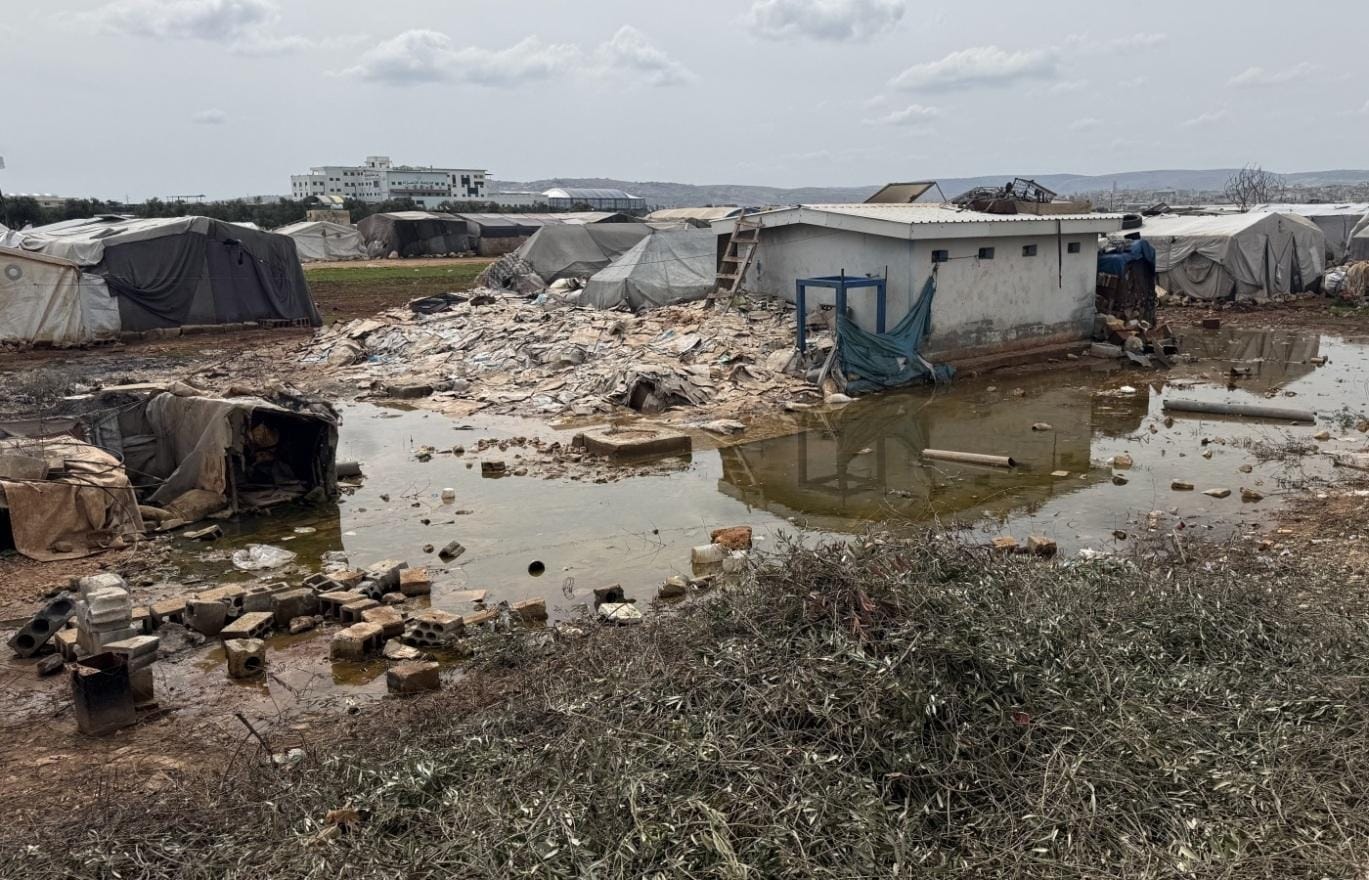
Living conditions for displaced families in Idlib Province, northwest Syria, reached a breaking point following severe flooding in February 2026. The region, already struggling with the aftermath of a decade-long civil conflict and the devastating 2023 earthquake, faced a new crisis as torrential rains submerged camps and destroyed the few belongings survivors had managed to keep. In response, local partners and volunteers organized an emergency distribution on April 1 to provide essential warmth to those most affected.
Survival in the mud
The impact of the storms was immediate and devastating. In the makeshift camps along the border, residents attempted to protect their shelters by stacking stones around the base of their tents, but the rising water quickly bypassed these defenses.
"Water seeped in from the bottom of the tent," shared Ahmad, a resident of one of the affected camps. He explained that the simple stone barriers were no match for the deluge, which soaked nearly everything inside his home. Another survivor, Hassan, recalled the terror of the water arriving in the middle of the night. The sudden surge forced many families to flee immediately, leaving behind mattresses and carpets that were eventually swept away by the current.
A growing need for aid
The flooding hit at a particularly difficult time as families were preparing for Eid al-Fitr. Many had saved what little they had to buy new clothes or special household items for the holiday, only to see them ruined by mud and water. The Idlib Social Affairs Bureau noted that the damage was widespread, significantly increasing the demand for basic necessities across the province.
While the civil war in the region has seen a cessation of major hostilities for two years, the hope of returning home remains a distant dream for most. These families continue to live in a state of perpetual displacement, where even a single storm can wipe out years of gradual recovery.
Coordinated relief efforts
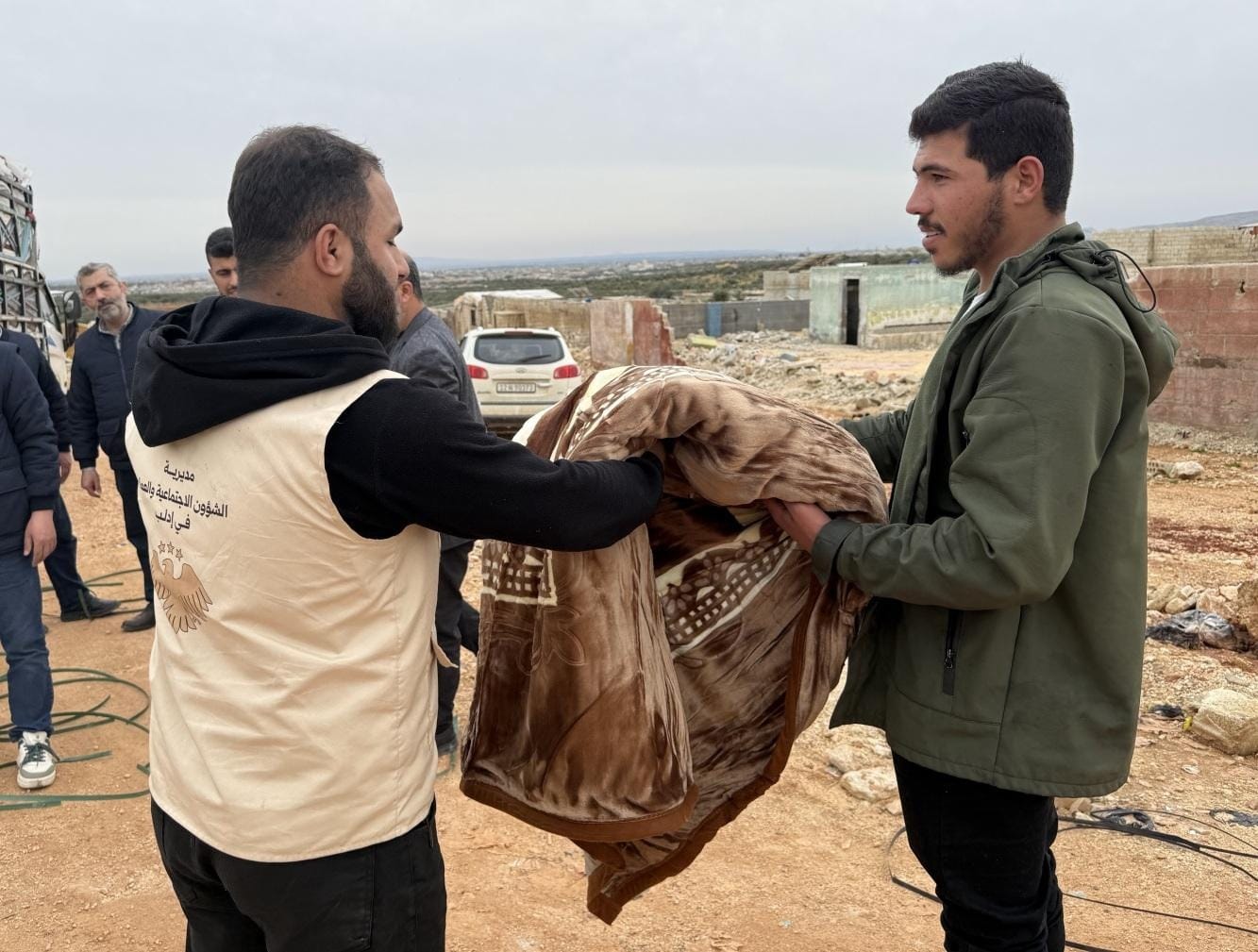
Recognizing the urgency, volunteers coordinated with the local Social Affairs Bureau to cross into the region and reach 841 of the most vulnerable families, bringing the total to approximately 4,072 families. During the distribution of 2,788 heavy blankets, volunteers meticulously verified recipient lists to ensure the aid reached those in the lowest-lying and most flood-prone areas.
Volunteer Munir emphasized that the lack of basic infrastructure in Idlib makes it nearly impossible for residents to acquire supplies on their own after a disaster. The muddy, waterlogged terrain of the camps continues to pose a health and safety risk, and volunteers remain committed to monitoring the situation as families attempt to dry out their remaining possessions and repair their damaged shelters.
Written by Mustafa Hamwieh, Abdurrahman, Emine
Edited by Yu-Chen Pan (潘俞臻)
