


In late 2024, the guns finally fell silent in Syria. Yet a year later, large parts of the country still lie in ruins.
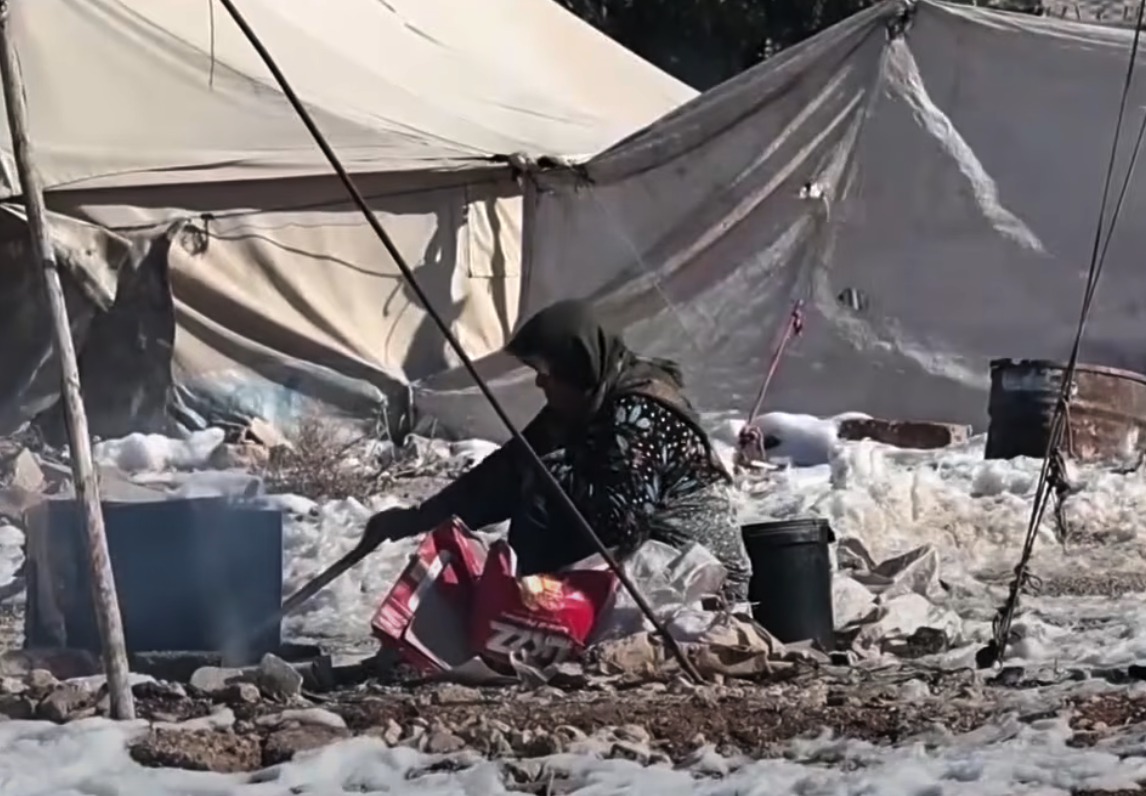
In the rural areas of Idlib Province, winter came early. Night temperatures plunged, cold winds cut through torn canvas and broken walls, and many families faced the season with only thin shirts and worn-out shoes—if they had shoes at all.
For those living in tent settlements, the cold was not just uncomfortable. It was dangerous.
Young and old crowded into thin tents, huddling together to share body heat. Families burned small bundles of branches gathered from snow-covered fields to try to keep warm. When the fire went out, there was little to shield them from the freezing night air.
A call for help before the cold bites
In October 2025, as another harsh winter approached, the local authorities in Idlib Province knew many displaced families would not survive another season without better protection from the cold. At the end of the month, the provincial government formally appealed for winter assistance.
The request set in motion a cross-border effort that would stretch across Taiwan, Türkiye, and Syria. Over two and a half months, partners worked through needs assessments, multiple layers of approval, border procedures, and on-the-ground coordination to make one simple goal possible: deliver warm blankets into the hands of those who needed them most.
From warehouses in Türkiye, 4,000 thick blankets were secured, packed, and cleared to cross the border. The plan was to reach 2,064 households in Idlib, a total of 9,529 people living in damaged homes or temporary shelters.
A long road into Idlib
On January 7, workers in a warehouse completed loading two trucks to capacity. Each bundle, each stack of blankets, represented a night made safer for someone sleeping on bare ground.
Two days later, on January 9, the trucks began their journey: about 1,200 kilometers over winter roads, across checkpoints and formalities, before finally entering Syria and moving toward Idlib.
Local volunteer Ahmed described what they saw when they arrived:
Most people there were dressed almost like it was summer. They had no shoes, no proper winter clothing. Even though the procedures were complicated, we kept trying to follow the right path for providing aid so that we could help them.—Ahmed, Local volunteer
His words reflected both the severity of the need and the determination behind the effort. The blankets were not a luxury. For many, they would be the only real barrier between their bodies and the cold.
Distributions by name, blanket by blanket
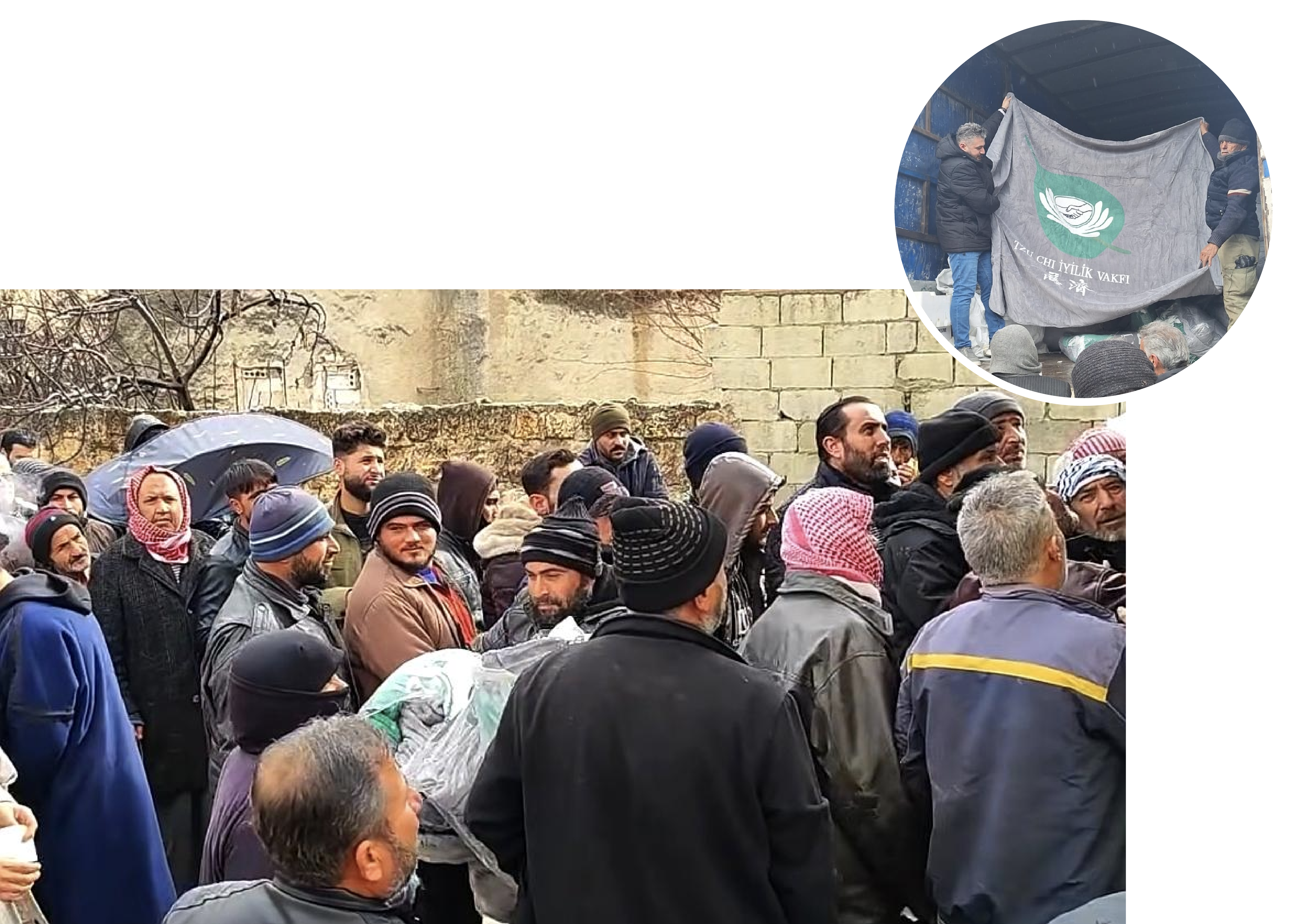
On January 12 and 13, distributions began, organized according to lists provided by the local social affairs bureau. This ensured that families already identified as especially vulnerable would be included.
People waited quietly as the trucks were unloaded and stacks of blankets were carried into the distribution points. There was no pushing, no shouting—only a steady line of people, each holding a piece of paper or calling out a name.
One by one, they received their blanket. Some wrapped it around their shoulders immediately. Others folded it carefully over an arm, holding it as if afraid it might be taken away.
The principal of El Menahil International School, Munir, helped observe the process and later shared how his view shifted:
At first, I thought these blankets were just pieces of cloth to keep away the cold. But when I saw the recipients wrapped in the blankets, holding them tightly, I felt that these blankets gave them warmth and a sense of safety—as if the whole world was embracing and protecting them.
—Munir, El Menahil International School Principal
What might look like a standard relief item to an outsider had, in that moment, become something much larger for the families receiving them: proof that someone, somewhere, had not forgotten them.
Families in tents, seeking warmth and dignity
Many of the 2,064 households served were not living in permanent buildings. Years of conflict had destroyed homes and infrastructure, pushing families into makeshift camps or abandoned structures.
Inside these tents, children often slept directly on the ground or on thin mats. When cold waves rolled across the plains around Idlib, frost would form on the outside of the canvas—and sometimes on the inside as well. Without insulation or heat, temperatures in the tent could not be kept much higher than the air outside.
A thick blanket cannot rebuild a house or restore a lost life. But it could mean that a child would not shiver through the night. It could allow an elderly person with weak circulation to sleep without fear that the cold would trigger illness. It could give a mother the reassurance that she had at least one more layer to wrap around her baby.
For families already stretched by years of displacement, this matters.
A chain of care across borders
Behind each blanket was a long chain of unseen effort: local authorities who flagged the urgent needs; teams that carried out assessments and secured permissions; logisticians who arranged for transport and customs clearance; and volunteers on both sides of the border who stayed with the process until the trucks were safely inside Syria.
Among them was volunteer Faisal Hu (胡光中), who had followed the operation from planning through to distribution on the ground.
He shared a quiet wish for every person who received a blanket:
He hoped that when they lay down to sleep at night, they would feel the warmth as coming from people around the world who cared for them. Even though they would never meet, someone, somewhere, had chosen to help in the middle of winter.
In that sense, each blanket carried not only physical warmth but also a message:
You are not alone.
Holding on to hope in a fragile peace
Syria’s war may have paused, but daily life for millions remains precarious. Electricity can be unreliable. Jobs are scarce. Reconstruction is slow, especially in rural areas like the outskirts of Idlib.
The 4,000 blankets that reached Idlib in January do not solve all these problems. But for 9,529 people, they made this winter a little less threatening. In a landscape where so much has been lost, even small gains in safety and comfort help people hold on to their strength and dignity.
Written by Yu-Chen Pan (潘俞臻)
