


Around the Mahabodhi Temple in Bodh Gaya, India, pilgrims gather daily alongside many residents who rely on begging to survive. Among them was 25-year-old Neha Kumari, who had spent over ten years begging near the sacred site after a severe childhood illness left her with physical disabilities. Despite her daily hardships, Neha began saving coins in donation jars to help others, eventually becoming a regular contributor to local charitable efforts. Recognizing her determination and generous spirit, community volunteers are now supporting her through medical rehabilitation and official documentation, guiding her toward self-reliance and independence.
Compassion in the midst of hardship
At age five, Neha suffered a severe fever and brain infection that permanently affected her mobility, speech, and hand movement. As the only family member with a disability, she relied on daily alms near the temple to assist her family, as her father works as a daily-wage laborer and her mother cares for the household.
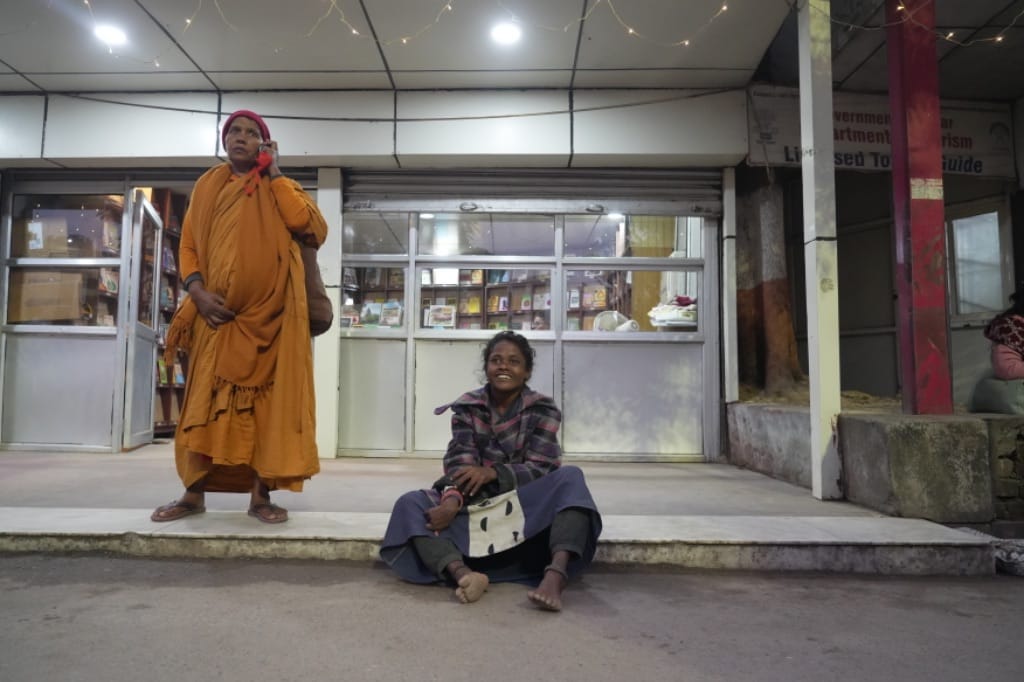
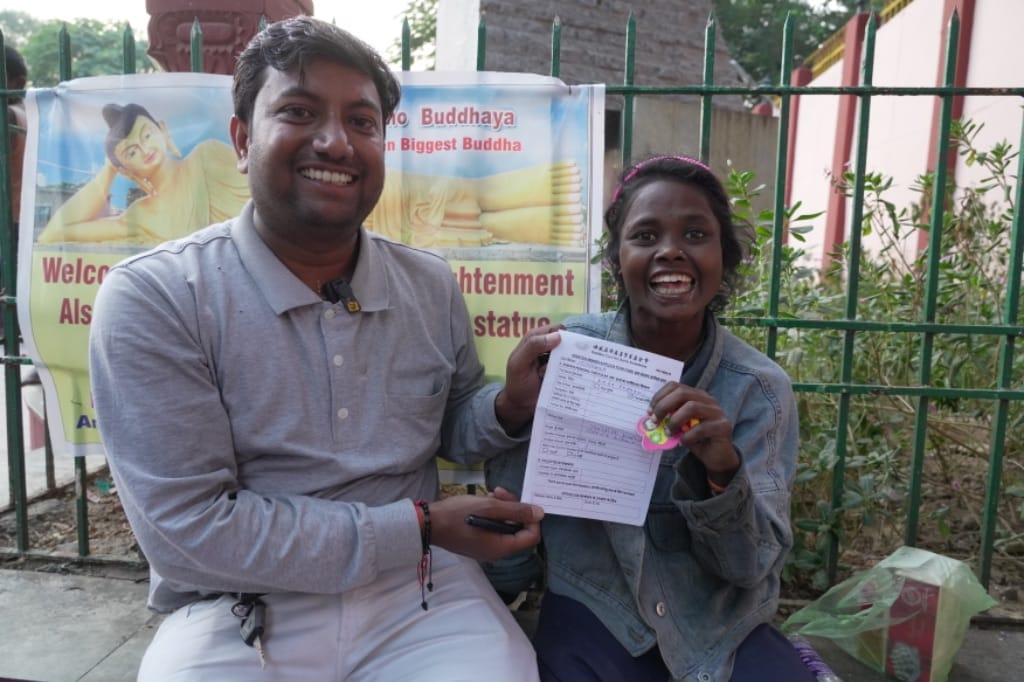
LEFT: Neha Kumari, 25, developed a physical disability from a childhood illness and begged near Mahabodhi Temple for over a decade. RIGHT: In November 2024, local volunteer Amar Kumar (left) invites Neha Kumari (right) to become a regular donor. | Photos: Mun Fei Yong (楊文輝)
Her connection with local volunteers began in November 2024 when local volunteer Amar Kumar invited her to join a small daily donation movement. Amar had known Neha for years near his father's market stall, where he frequently offered her tea and snacks—items she always insisted on paying for herself. Even in poverty, Neha eagerly contributed her own small coins into the bamboo coin bank to support others in need.
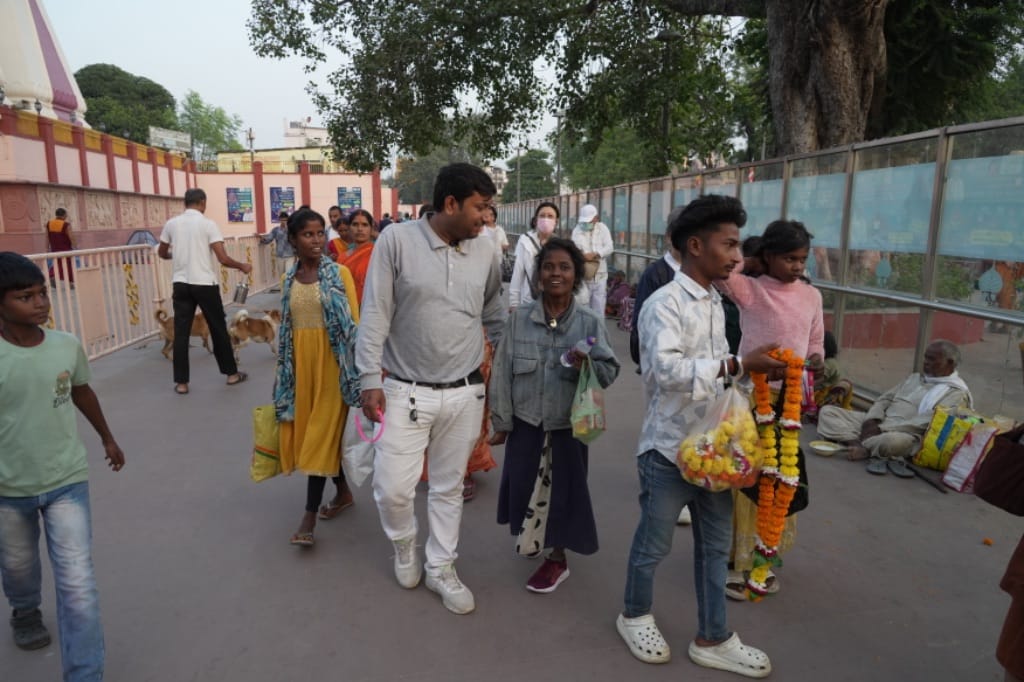
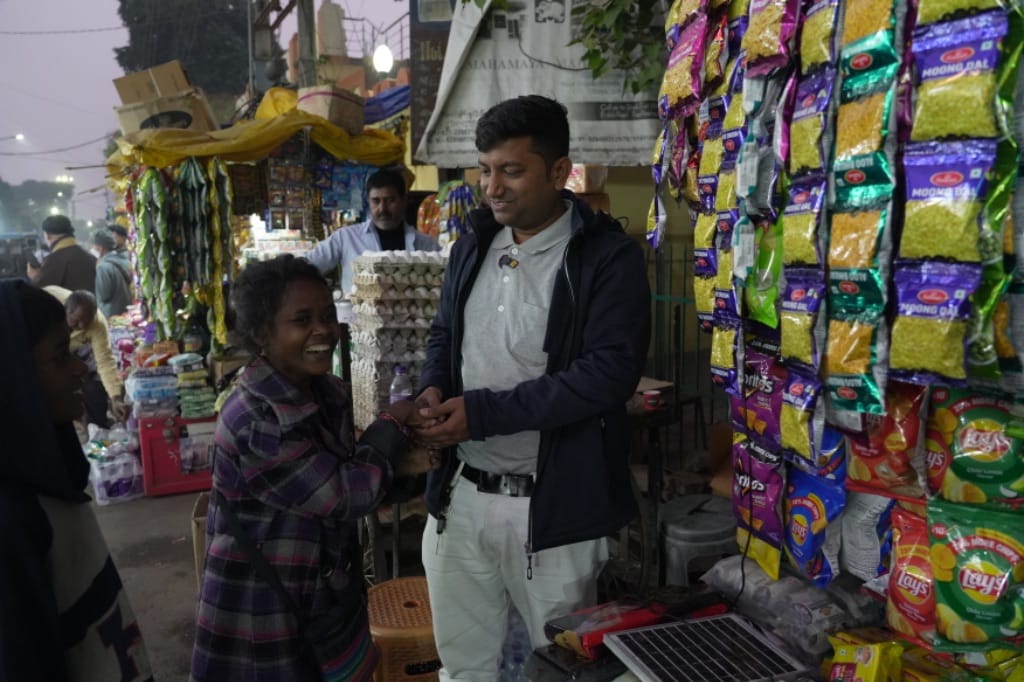
LEFT: Neha Kumari suffered a severe fever and brain infection at age five, impairing her speech, mobility, and hand movements. RIGHT: Amar Kumar (right) has known Neha Kumari (left) for years, often offering tea and snacks that she insists on buying. | Photos: Mun Fei Yong
By January 2026, during street fundraising initiatives around Mahabodhi Temple, Neha consistently stepped forward to contribute whenever she saw volunteers. In late May 2026, Vice President Lin learned of Neha's situation during a visit and initiated a comprehensive medical charity plan for her.
Breaking through documentation barriers
In June, volunteer Bee Hua Lok (駱美花) and local volunteer Prakash Kumar visited Neha's home to assess her living conditions. They discovered a long-standing hurdle: Neha lacked an Aadhaar card, India's national identity card necessary for accessing government social welfare programs.
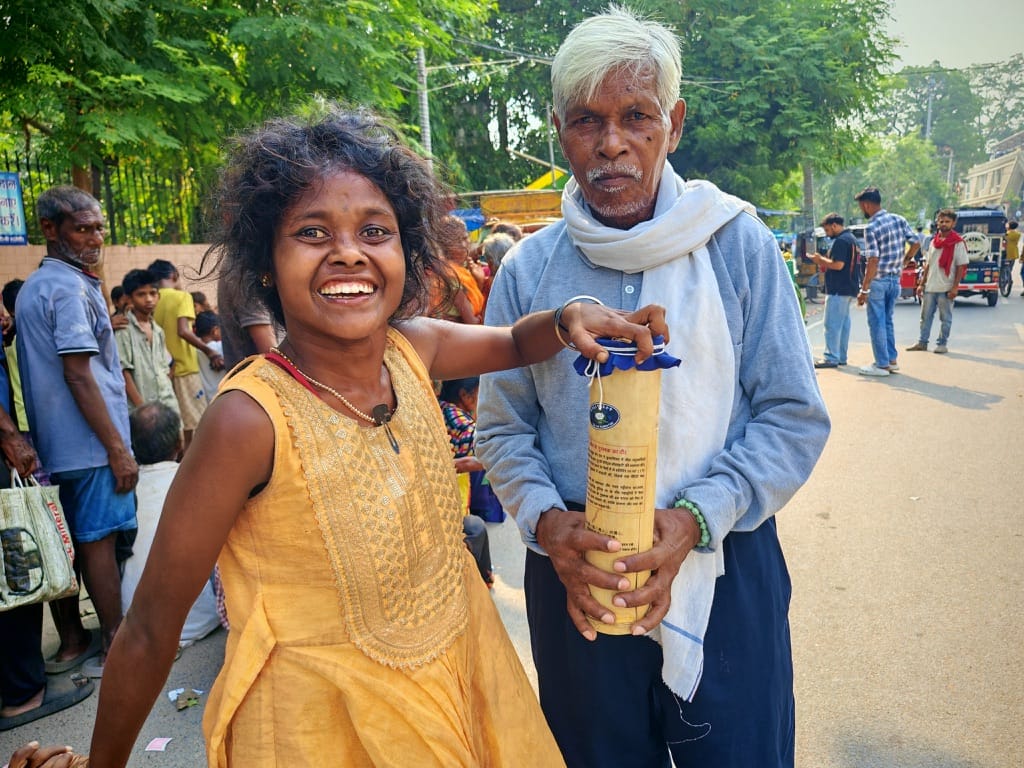
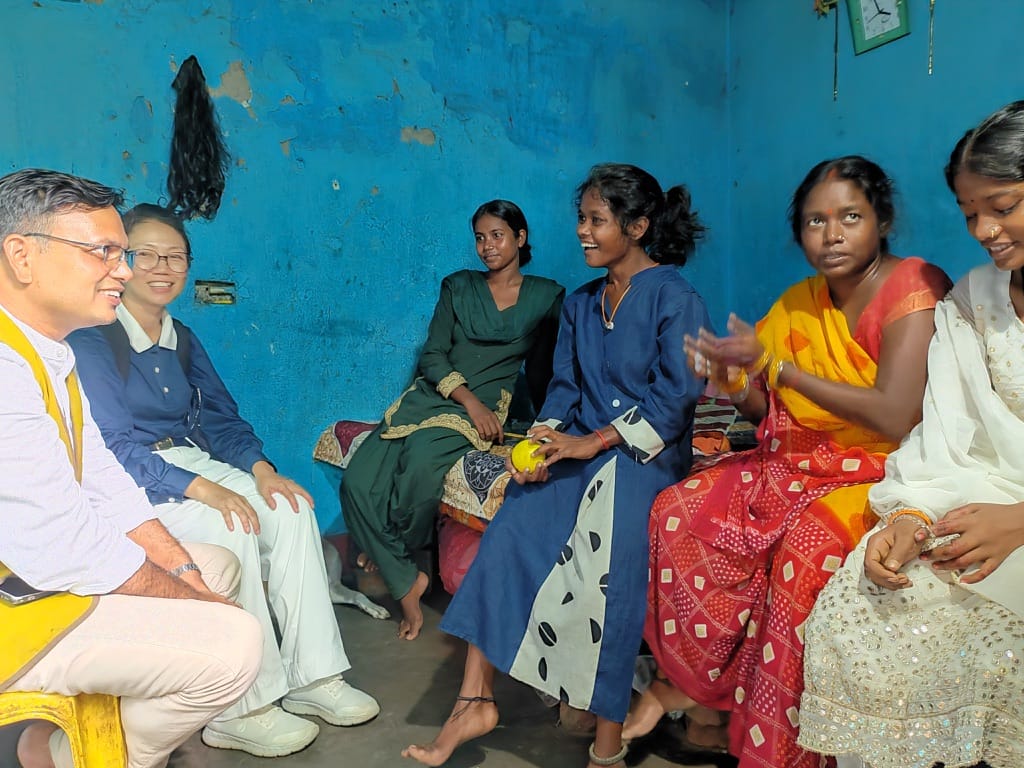
LEFT: Neha Kumari (left) donates coins into a bank during a street drive, joined by volunteer Gaina Manjhi (right). | Photo: Guit Tho Ong (王玥陶) RIGHT: In June, volunteer Bee Hua Lok (second left) and local volunteer Prakash Kumar (left) visit Neha Kumari's home. | Photo: Kundan
Without an Aadhaar card, she could not register for the Unique Disability ID (UDID) card, Ayushman Bharat healthcare scheme, or monthly disability allowances. Previous attempt to apply had failed because her right hand was curved backward with contracted fingers, preventing standard digital fingerprint scanning.
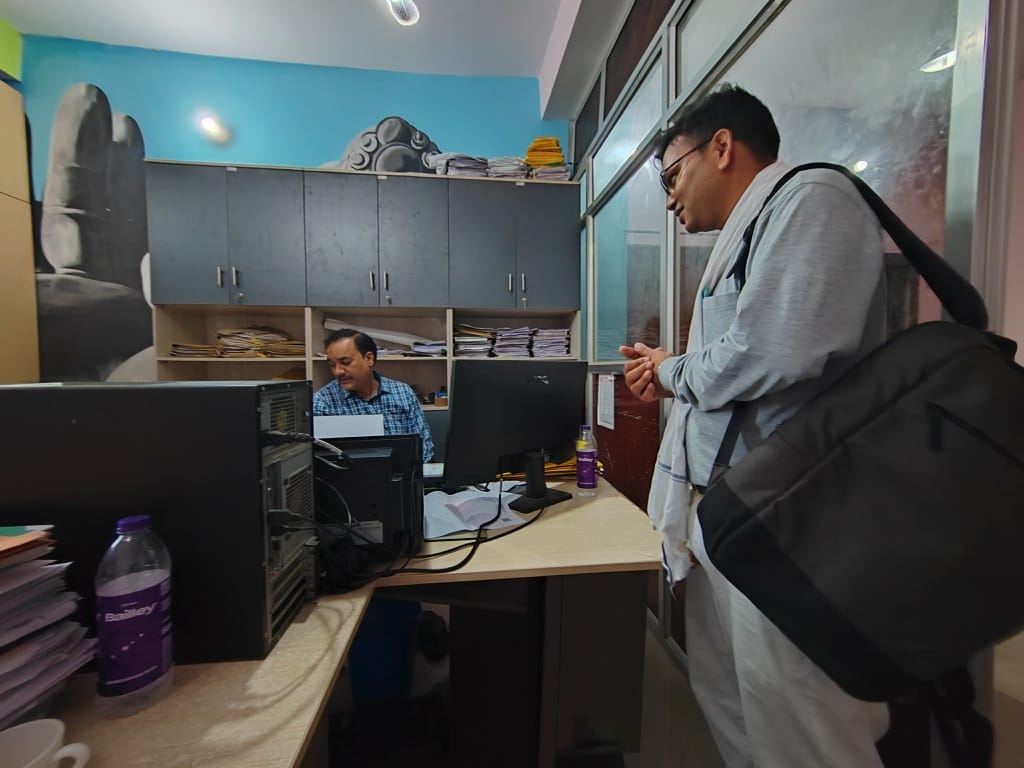
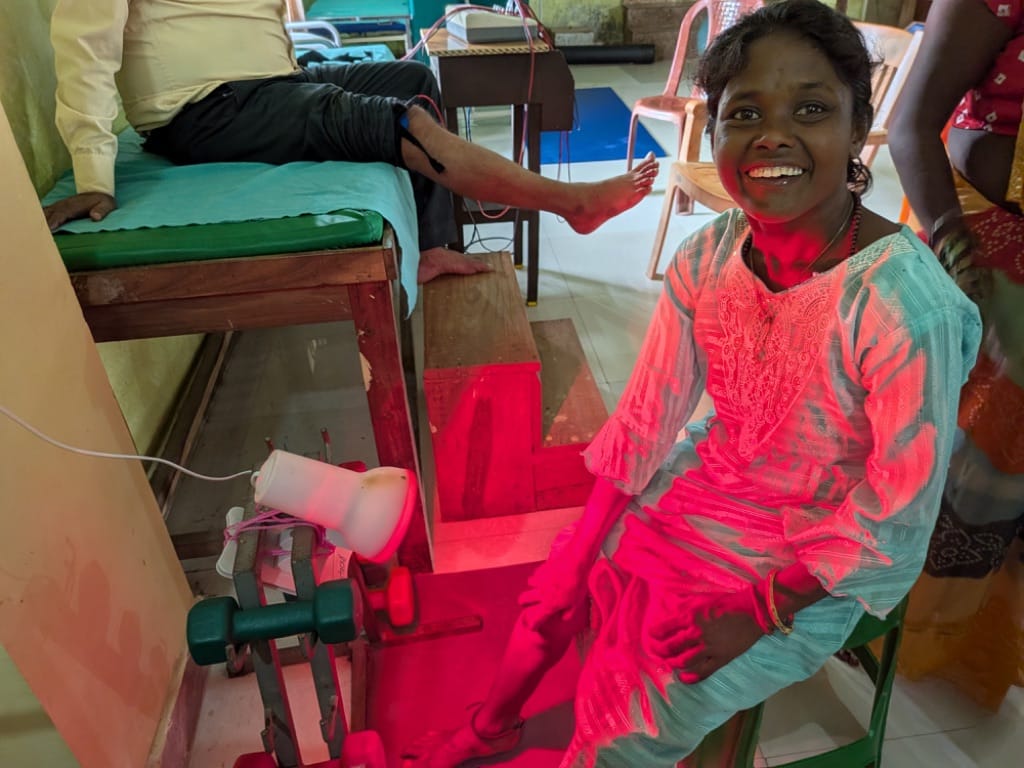
LEFT: Local volunteer Prakash Kumar (right) helps Neha Kumari obtain her birth certificate and identity cards. | Photo: Bee Hua Lok RIGHT: Neha Kumari receives infrared therapy as part of her rehabilitation to regain full use of her hands. | Photo: Chuey Shan Lee (李翠珊)
To solve these challenges, volunteers arranged both legal assistance and medical treatment. Starting in June, Neha began attending daily physical therapy sessions at Shechen Clinic, accompanied by her mother and sisters. Through regular exercise, medication, and infrared therapy, her hand flexibility and control improved significantly.
Restoring dignity and independence
With her physical progress underway, volunteers encouraged Neha to step away from begging and focus on rehabilitation and personal growth. Volunteers assisted her family in obtaining her birth certificate, Aadhaar card, UDID card, medical cover, and official disability certification, securing her entitlement to state assistance.
Work is also ongoing with her family to shift their focus toward vocational skill development, establishing a path toward sustainable household self-sufficiency.
On August 30, during a community gathering in Bodh Gaya, Neha joined both hands together in prayer for flood survivors in Nepal—a testament to her physical recovery and enduring empathy. Her journey from seeking alms on the street to gaining legal identity, receiving medical treatment, and actively contributing to her community highlights how targeted support can restore dignity and open new possibilities.

Written by Prakash Kumar, May Wang (王承瑄)
