


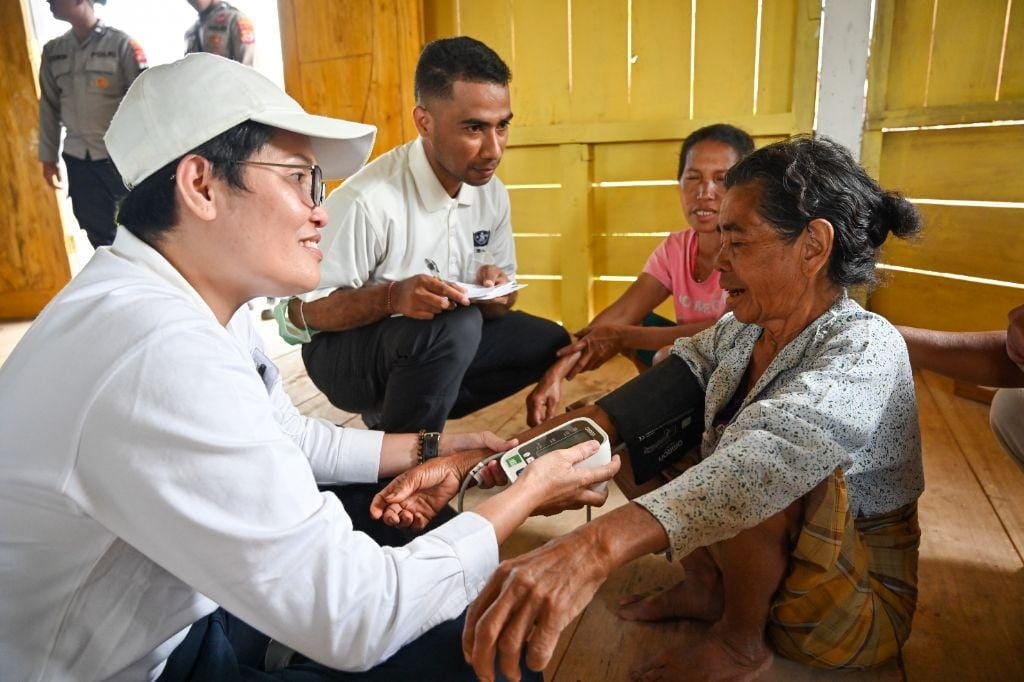
The chilly nights in Manggarai Regency, East Nusa Tenggara, bring another layer of hardship for earthquake survivors residing in temporary shelters. With temperatures dropping to 11 degrees Celsius after dark, many have begun to experience a range of health issues, including widespread body aches, coughs, runny noses, and high blood pressure.
On August 26, 2026, the Tzu Chi International Medical Association (TIMA) medical team organized a free clinic in the villages of Golo Mendo and Tadong, providing care to 197 individuals.
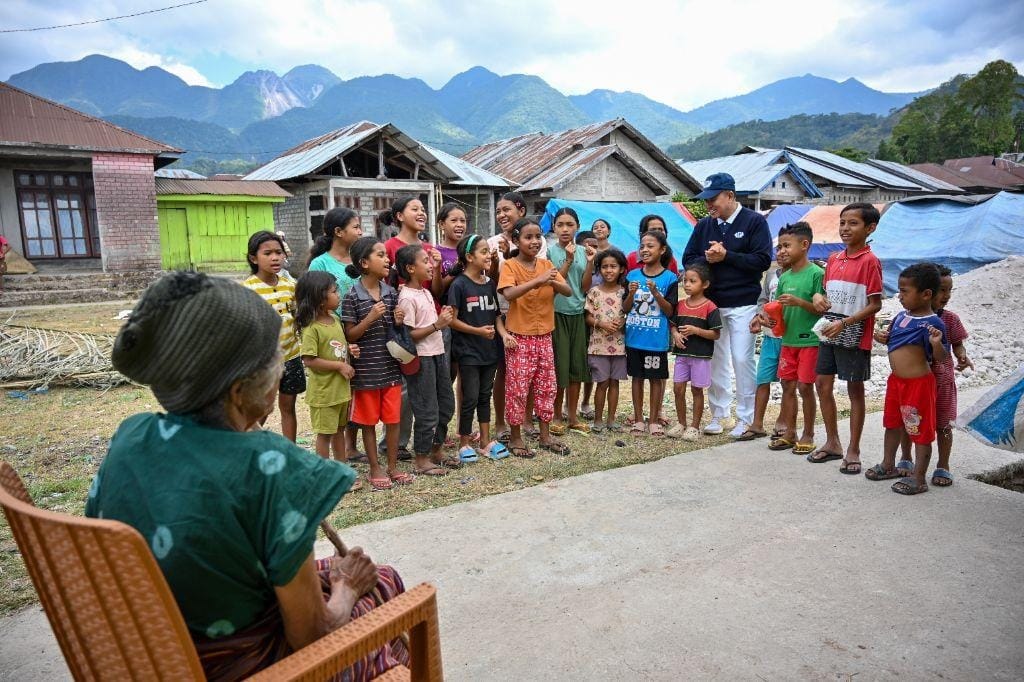
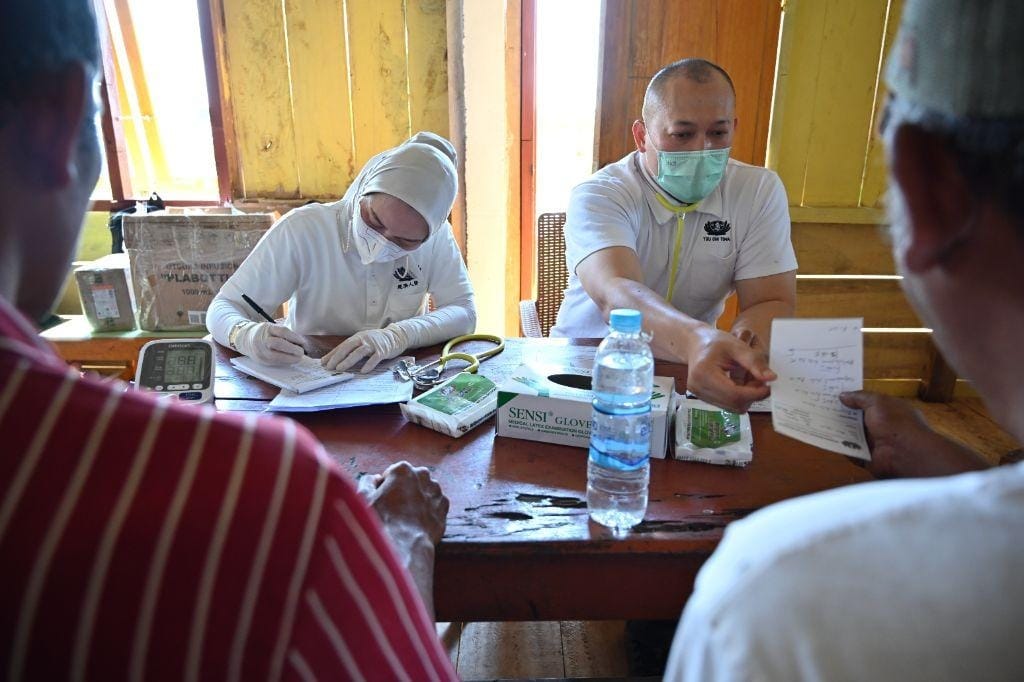
LEFT: Volunteer Sudarman LIm (林孟坤) leads the children in singing and hands out biscuits at the free clinic. RIGHT: TIMA Dr. Ruzbih Bahtiar (right) prescribes medication to alleviate the patients' suffering. | Photos: Fikhri Fathoni
Navigating extreme weather conditions
Medical professionals like Dr. Ruzbih Bahtiar carefully diagnosed and treated the patients, aiming to relieve their discomfort.
The symptoms survivors are experiencing include body aches, high blood pressure, coughs, and runny noses, as the weather on Flores Island can be quite extreme, with night temperatures dropping to 11 degrees Celsius. The survivors are heavily affected by the weather. Living in tents, they are exposed to the scorching heat during the day, and at night they suffer from the cold. As a result, their bodies weaken and they become more susceptible to illnesses. — Dr. Ruzbih Bahtiar, TIMA Doctor
In addition to medical services, volunteers distributed cash relief to those who were severely injured and required special care, helping to ease the financial strain of their treatment and daily needs. Words of comfort served as a vital source of strength, encouraging the community to maintain their courage as they rebuild.
I hope the survivors can maintain good spirits and stay strong in facing these trials. May their bodies and minds recover soon. —Mulyady Salim (林文發), Tzu Chi Volunteer
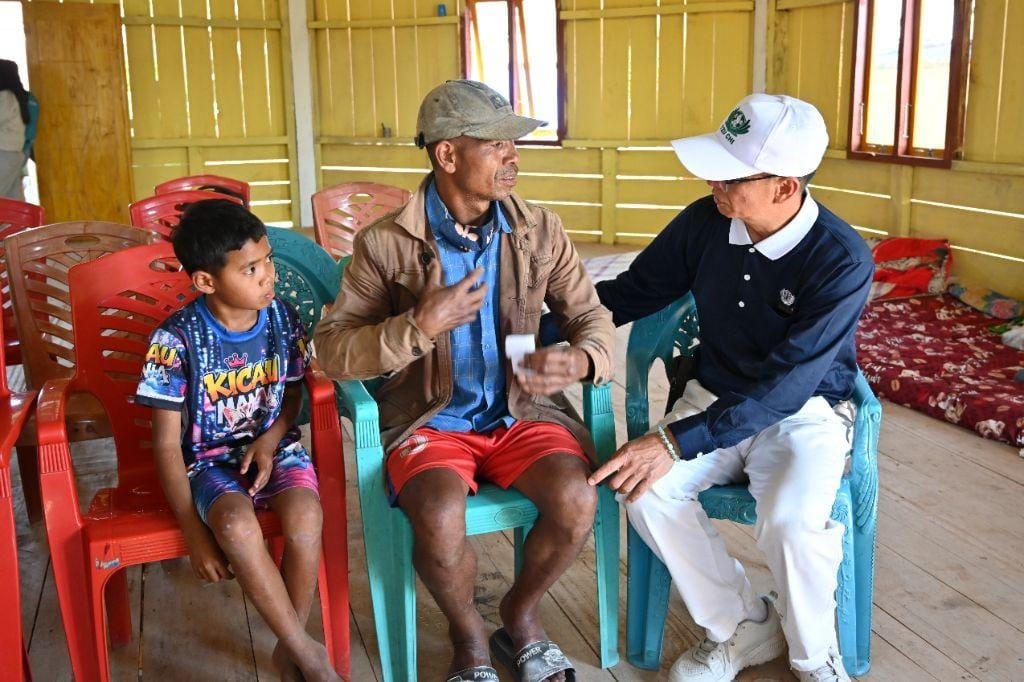
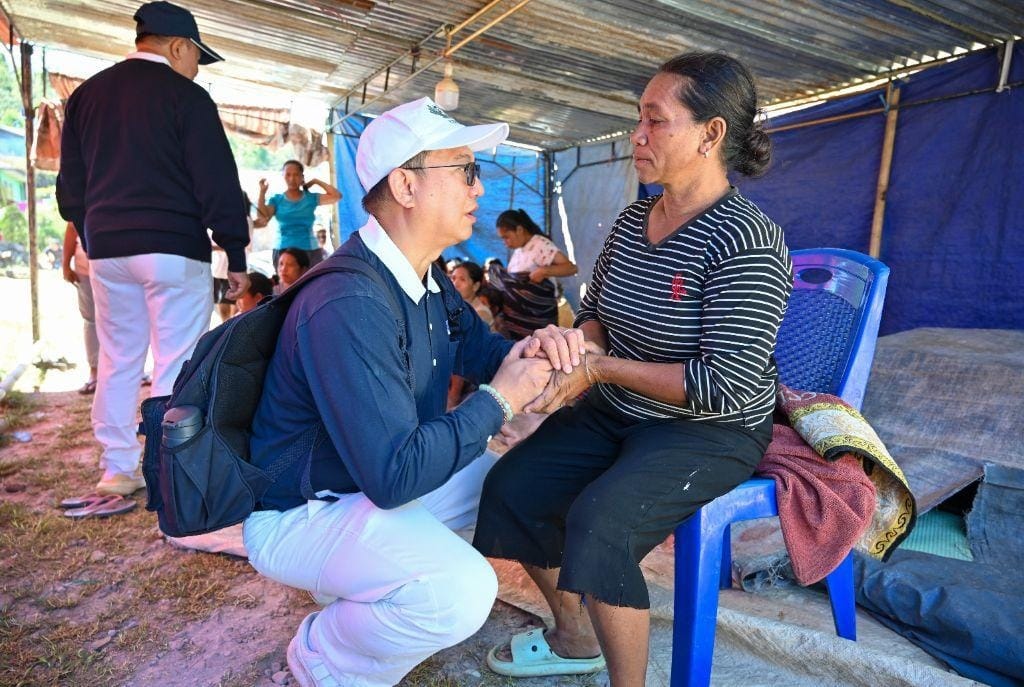
LEFT: Mulyady Salim (right) accompanies a patient during a medical checkup. RIGHT: Survivor Maria Pin (right), 53, experiences worsened health, high blood pressure, and severe pain after the earthquake. | Photos: Fikhri Fathoni
Healing the invisible wounds
For 53-year-old Maria Pin, the earthquake brought both physical and emotional trauma. Following the disaster, her health deteriorated significantly. High blood pressure, coupled with severe pain in her legs and waist, made mobility a daily struggle. The fear instilled by the earthquake also lingered heavily in her mind.
Before the disaster, Maria made her living as a farmer, tending to rice paddies. The traumatic experience left her fearful of returning to work. Compounded by the ongoing dry season affecting local agriculture, her opportunities to earn a living became even more restricted. During this difficult period, the presence and care provided by the volunteers offered Maria a sense of warmth.
I often have high blood pressure, and my whole body aches down to my legs. It takes a lot of effort to stand up after sitting, and my waist hurts terribly. This earthquake was truly terrifying. Now my high blood pressure has worsened, and I have many worries weighing on my mind. Thank heavens the volunteers were willing to step into our village to give help. I am deeply moved and thankful, and I wish everyone good health and a long life. — Maria Pin, Earthquake Survivor
The medical outreach extended beyond treating physical ailments; it was a reassuring presence for the community. By standing beside the survivors during their most challenging days, the volunteers offered essential emotional support, hoping to help them transition back to a life of normalcy and peace.
Written by Fikhri Fathoni
