


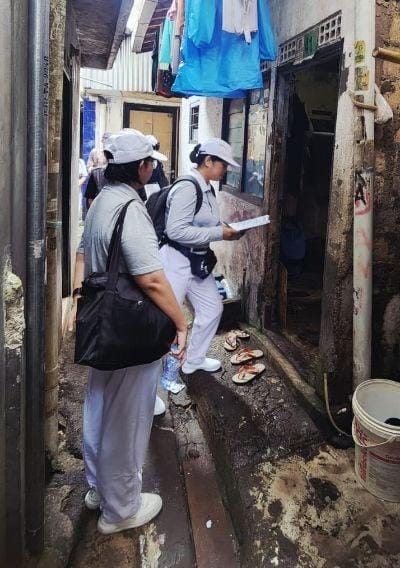
The alleyway remains as narrow as before, stretching less than two meters wide. Houses stand tightly packed on both sides, leaving only a slim passage that barely allows two people to walk past each other. Sunlight occasionally filters through the gaps between roofs and hanging laundry. On this particular morning, two volunteers walked into this familiar alley in Bogor, Indonesia.
However, the scene before them had transformed. At the end of the alley stood a house freshly painted in white, clean and sturdy. The doors and windows were completely new, and the light reflecting from inside brought a vibrant energy to the once-cramped space. Before the visitors could even knock, a petite woman stepped out to greet them softly.
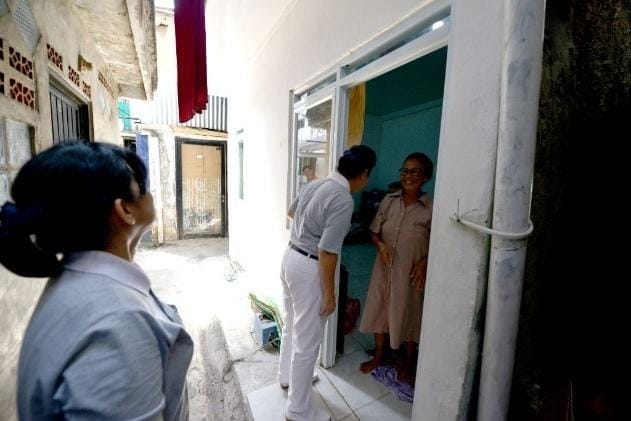
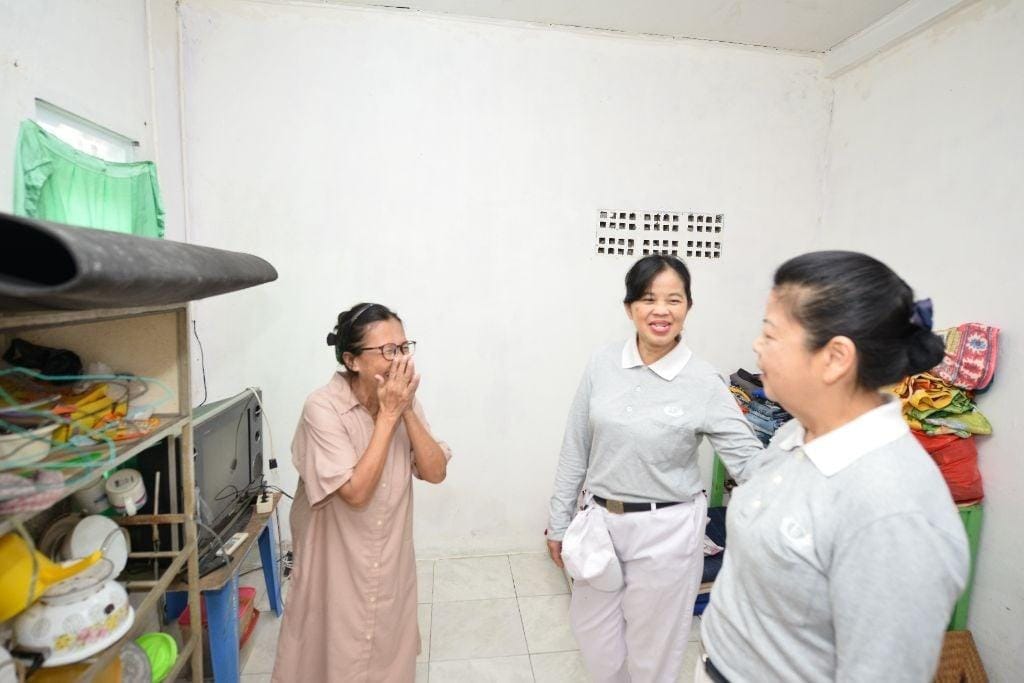
LEFT: The rebuilt home is clean and features new windows for a healthier environment. RIGHT: Murni is deeply moved to see the volunteers who previously assessed her home. | Photos: Anand Yahya
Fifty-nine-year-old Murni immediately covered her mouth with both hands, looking back at the house. Her eyes crinkled into a deep smile as she leaned forward slightly, unable to hold back her gentle laughter. It was as if she still could not believe this sturdy structure was truly her own home.
"Thank Allah," she repeated. Her smile was remarkably genuine, free of any forced pleasantry. It was the laugh of a woman who had spent years living in fear and could finally exhale with relief. Murni was lost for words, constantly looking at every corner of the house, realizing that the safety and comfort she had wished for decades were finally real.
Decades of fear and quiet prayers
To most, it might be just a simple house, but to Murni, it was the answer to years of prayers. Months prior, the old structure had been her greatest source of anxiety. She would be left sleepless whenever the sky darkened and the wind picked up, worrying whether the house would survive until morning.
The rotting roof creaked with every gust of wind, and the aged wooden planks were brittle. When mice and cats ran across the ceiling, they often fell straight into the living space.
If there was heavy wind and rain, I would run to my neighbor's house. I was very afraid the wood would fall and hit my grandchildren. — Murni, Resident
The fragile, 17-square-meter shack was home to seven people. Murni, her three children, and three grandchildren squeezed into the confined space. The walls were decaying, the concrete floor was crumbling, and the roof threatened to collapse at any moment. Furthermore, they did not even have a bathroom.
For years, Murni walked to a nearby stream to bathe, wash clothes, clean dishes, and fetch water. When nature called, the family took turns using public facilities or, in urgent situations, resorted to the riverbank. She endured all of this quietly, rarely complaining. Yet, every night before sleeping, she would silently pray for her house to be fixed.
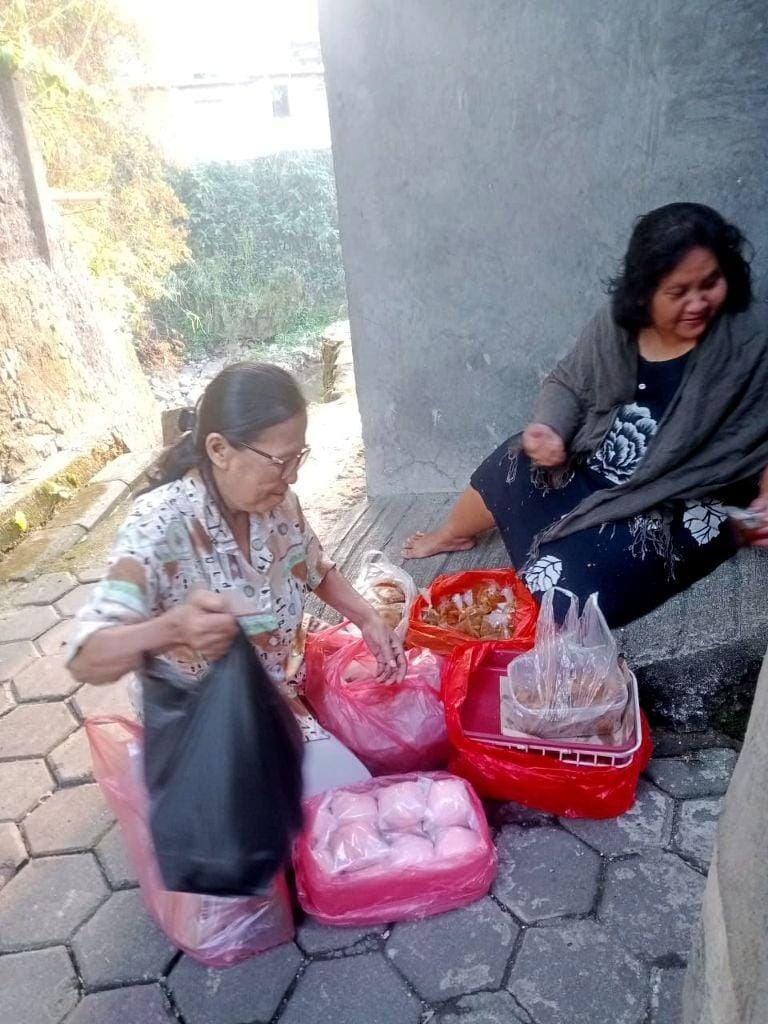
LEFT: Murni sustains her livelihood by selling pastries door-to-door every morning. RIGHT: The original house had muddy floors, damaged walls, and a rotting roof. | Photos: Unknown
A connection rekindled
Murni had previously received an offer from others to help repair her home, but the hope vanished when she was asked to cover the construction workers' wages. Knowing she had no money, she buried her dream of a safe home. Surviving each day took precedence over chasing an impossible wish.
Then, a neighborhood leader approached her daughter, Maharani, with news about a housing repair project in Babakan Pasar. When Murni heard this, she was stunned, immediately asking if they were being untruthful. Her disbelief stemmed from having her hopes dashed too many times before.
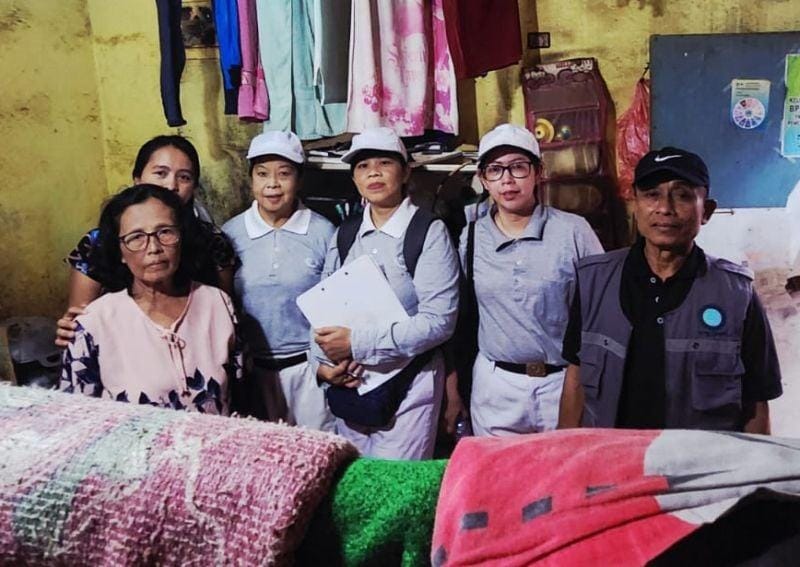
In truth, a connection had already been established years earlier. When Murni's husband fell ill in 2015, the family received monthly living assistance until his passing in 2017. Even after the care concluded, Murni remained engaged, participating in neighborhood recycling activities where she reconnected with volunteers like Ay Lin Lie (李愛玲), Dewi Margaretha, and Sioe Ing Lie (李秀英).
Throughout the rebuilding process, volunteers visited almost weekly to check on the construction. For Murni, their presence brought a profound sense of warmth, but it also made her feel a sense of inadequacy. Although visitors brought their own drinking water to avoid burdening the family, Murni insisted on offering something in return.
I feel sad because I have nothing to offer everyone. Sometimes when my children have a little income, I buy coffee for everyone. If I have no money, I feel very embarrassed. — Murni, Resident
A sanctuary restored
During the construction, pessimistic voices circulated in the neighborhood. Some neighbors speculated that the house would never be finished, or that the workers would abandon the job halfway. Murni remained silent and placed her trust in those who were genuinely dedicating their time, and that trust was honored.
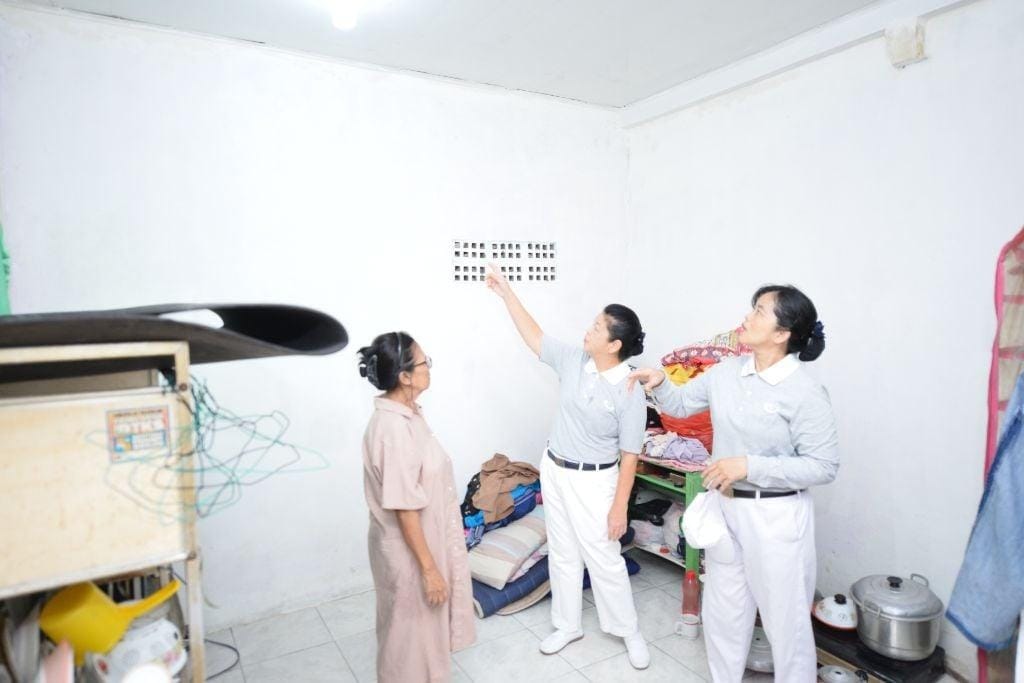
Day by day, the transformation took shape. The fragile roof was fortified, the old walls were painted clean and white, and the broken concrete was replaced with neat tiles. New doors and windows were installed. Most importantly, for the first time in her life, Murni had her own bathroom.
Now, after completing her morning prayers, Murni still heads out to sell pastries, busy until around ten o'clock. But when she returns, it is no longer to a crumbling shelter that causes her distress. She comes back to a sanctuary that protects her children and grandchildren, restoring the family's dignity.
Before leaving, a visitor gently reminded Murni to take good care of the house, urging her not to sell or rent it out. Murni nodded softly in agreement. To her, it is far more than a new building. It is a reminder that care extends beyond words, found in the steady hands of builders and the quiet persistence of people who believe everyone deserves a safe place to live.
I have no way to repay Tzu Chi's kindness; I can only pray for everyone. I hope all the volunteers are healthy, have long lives, and can continue helping more people. — Murni, Resident
When raindrops fall on the roof now, Murni no longer needs to run to her neighbor's house for shelter. She simply closes the door, looks at the sky through her brand-new windows, and smiles with a settled mind, knowing she finally has a true home.
Written by Anand Yahya
