


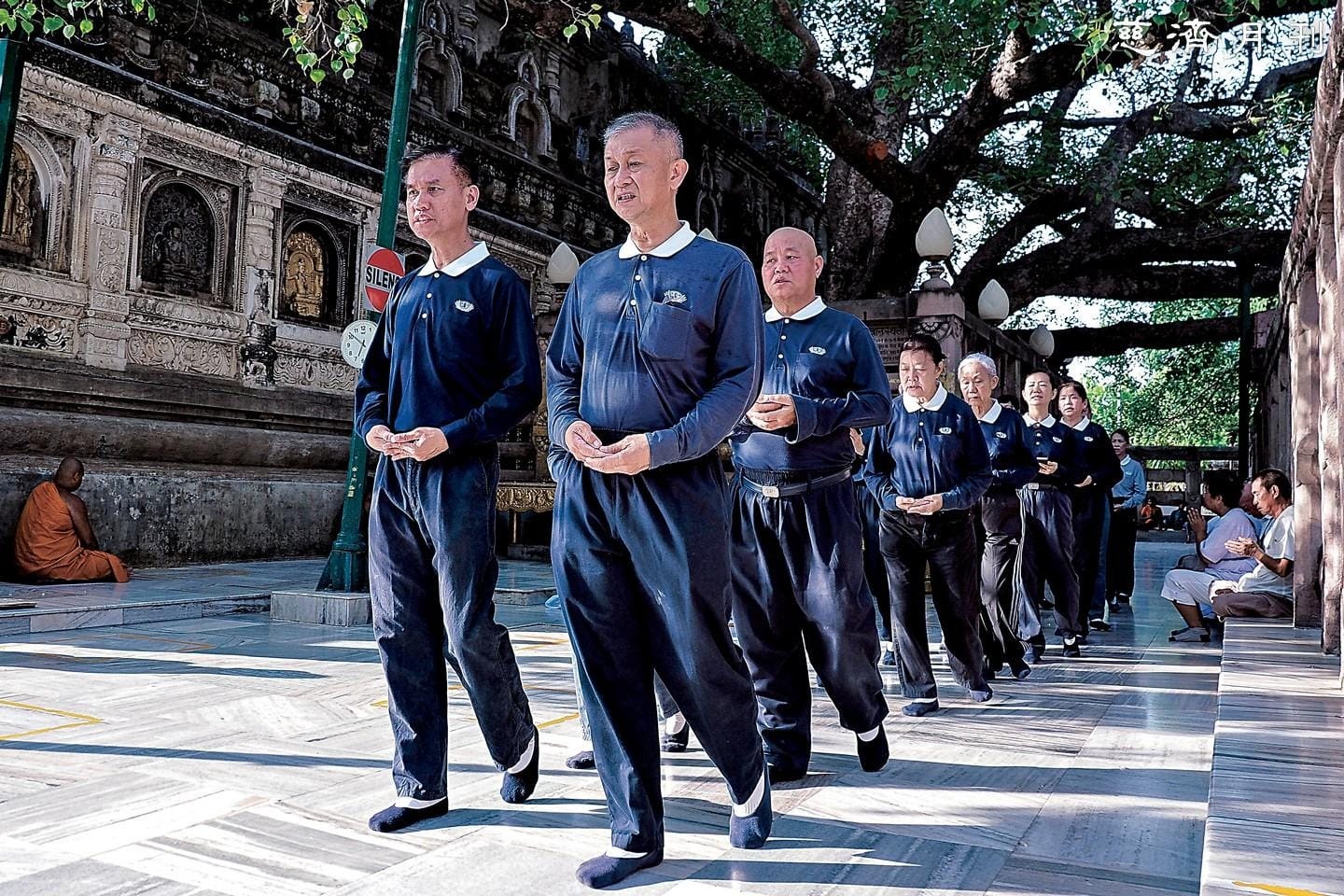
In the historic regions of Lumbini, Nepal, and Bodh Gaya, India, generations of residents in impoverished communities have lived in deep economic hardship. For many, daily survival long depended on begging near sacred sites. Reversing this generational path required more than material aid; it required a fundamental shift in how people viewed their own capacity to create change. By encouraging self-reliance and fostering mutual support, local outreach programs have helped community members discover that regardless of their circumstances, they possess the power to uplift themselves and support others.
Shifting mindsets from receiving to giving
When humanitarian efforts began in Lumbini in August 2022, volunteers recognized that lasting transformation could only happen if care recipients were empowered to take ownership of their future. Rather than fostering dependence through continuous handouts, community teams focused on encouraging local residents to cultivate self-reliance and discover the fulfillment of helping their neighbors.
One notable example of this transformation is Gaina Manjhi. Gaina previously spent his days begging for food and spare coins outside the Sujata Temple to support himself. Through regular interactions with volunteers who visited his village, he began participating in local community activities and learned how small, collective acts of kindness could make a tangible difference.

Inspired by this new perspective, Gaina stepped forward to become a community volunteer. He began returning to the streets where he once begged, encouraging his peers to contribute whatever small amount they could—even a single rupee—to help others in hardship. Seeing someone from their own community transition from a beggar to an active giver deeply resonated with locals. Those who had long been accustomed solely to receiving assistance began contributing small sums to help others in need, breaking a long-standing cycle of dependency and restoring personal dignity.
Grounding service in daily community action
For Kee Hong Sio (蘇祈逢), deputy CEO of the Kuala Lumpur and Selangor branch in Malaysia, living in Nepal and India over the past four years has been a journey of deep learning and patience. Navigating cultural differences, administrative challenges, and harsh environmental conditions required constant adaptability and humility.
Sio’s journey into humanitarian service began years earlier in Malaysia, where he studied Theravada Buddhism and practiced meditation. While reading The Way to Buddhahood by Master Yin Shun, he was moved by a core principle:
To liberate oneself and liberate others brings complete awakening and action.
This idea stayed with Sio when he later joined Tzu Chi. However, it was not until he stood directly in the communities of Nepal and India that the abstract principles took on concrete reality.
Working alongside local residents, Sio and fellow team members realized that effective service required active listening and deep empathy. When challenges arose, guidance came from founder Master Cheng Yen:
We must first devote ourselves to human affairs, and then gain confidence from the sutras.
Rather than becoming discouraged by setbacks, volunteers used each obstacle as an opportunity to refine their approach, ensuring support remained practical, respectful, and tailored to people's needs.
Building a lasting foundation for hope
Over the past four years, community initiatives have expanded across key historical sites, including Lumbini, Bodh Gaya, Sarnath, and Kushinagar. On May 2, 2026, a replica of the Jing Si Abode was officially completed at the Tzu Chi Lumbini Garden in Nepal. The facility serves as a permanent community hub, providing a stable space for educational programs, medical care, and vocational training designed to help local families build sustainable livelihoods.
By grounding spiritual reflection in direct social action, the program continues to foster compassionate communities where former aid recipients become active participants in uplifting their own neighborhoods.
The transformation unfolding across Nepal and India demonstrates that genuine empowerment begins when individuals recognize their inherent worth and potential. As local residents like Gaina move from relying on daily charity to actively organizing community aid, they prove that poverty does not diminish a person's capacity for kindness. Step by step, through practical action, mutual trust, and shared dignity, communities in the Buddha's birthplace are creating a foundation for long-term self-reliance and lasting hope.
Narrated by Kee Hong Sio (蘇祈逢)
Interviewed and compiled by Li-Yun Chang (張麗雲)
