


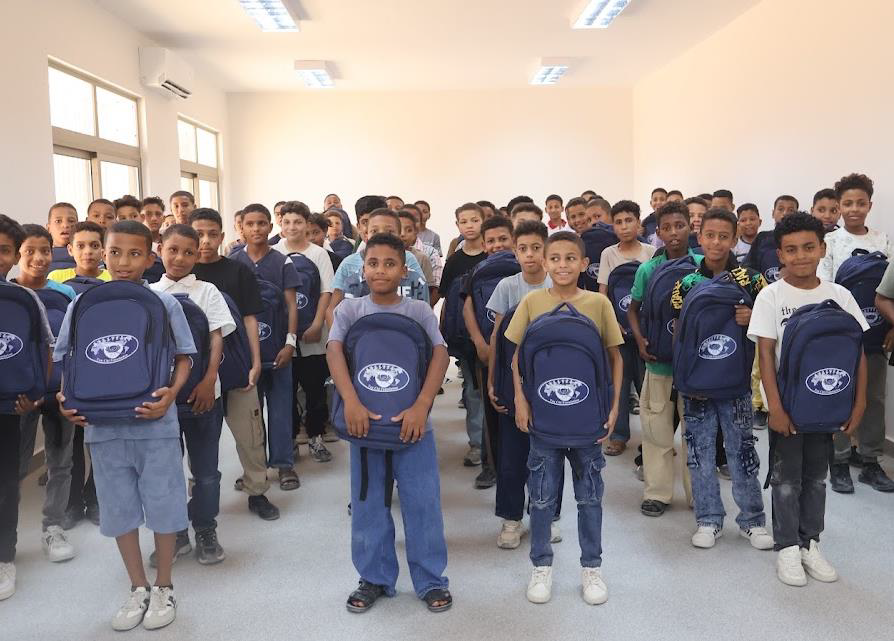
For many families living in the desert regions and remote valleys of Jordan, daily life is a constant challenge. The harsh weather and blazing sun compound the difficulties of securing basic necessities. To support these communities, regular distributions of food and educational supplies are organized across the country—from the capital of Amman to Al-Mafraq in the north, Ghor Al-Safi in the central valley, down to Al-Thograh and Al-Abbasiya in the south. These initiatives aim to alleviate immediate hunger while equipping children with the tools they need to pursue their education. In total, 1,293 students received backpacks and stationery, while 941 families were provided with comprehensive food supplies.
Nourishing families in the desert
In the Al-Mafraq region, temperatures can soar to nearly 42 degrees Celsius. Despite the scorching heat, families and children gather eagerly to receive fresh breakfast sandwiches, juice, and cake. Many of the children run barefoot across the hot ground, their feet seemingly desensitized to the burning sand, as they carry their younger siblings to queue for a meal.
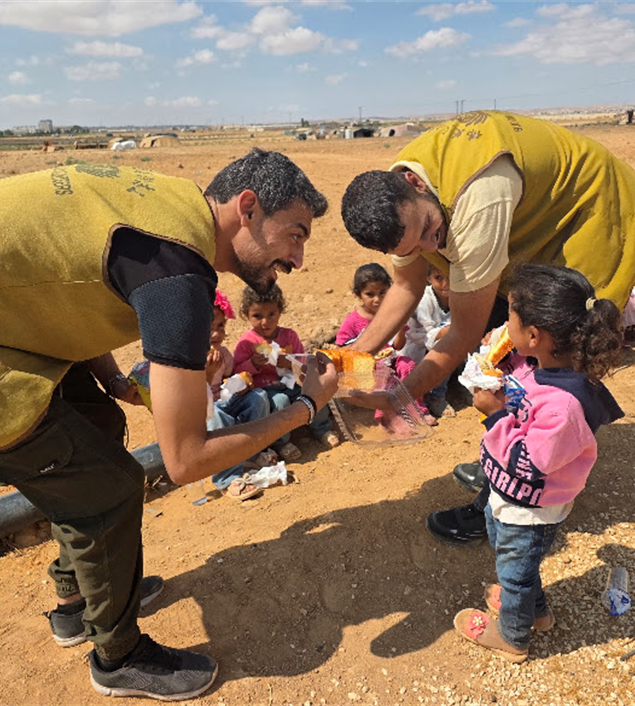
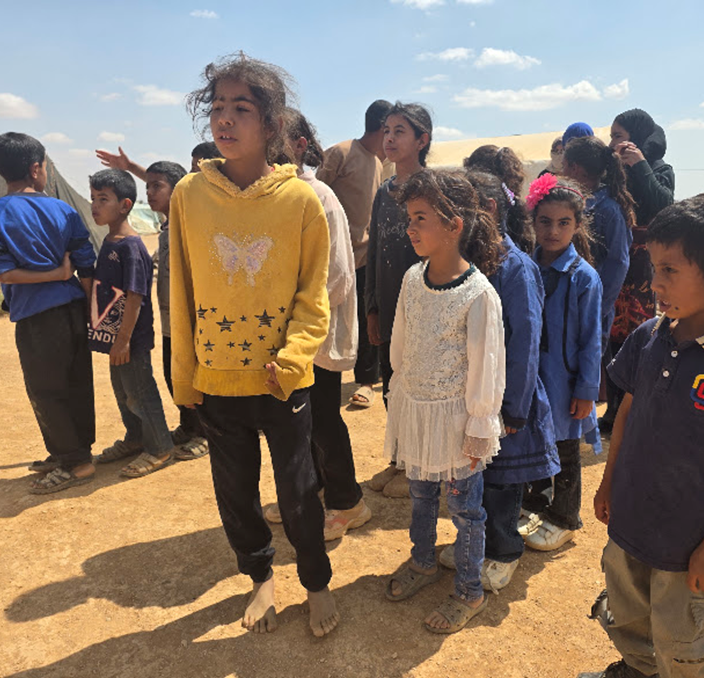
LEFT: In Al-Mafraq, volunteers hand out fresh bread for the children to eat during the distribution. RIGHT: Several children arrived barefoot or wearing wornout shoes despite the scorching hot ground. | Photos: Tzu Chi Jordan
The arrival of food brings visible joy to the community. In the Hawijah area, children welcomed the visiting team with songs and dances. The sharing of a simple meal often reveals the deep compassion these children hold for one another. Ali, a child with mental disabilities, was offered a piece of cake. Initially, he tried to take only half of his portion. When told he could have two pieces because he was older, he agreed but insisted that the younger children in the village also receive some, ensuring his peers were not forgotten.
Beyond breakfast, families receive substantial food parcels containing essentials like sugar, rice, cooking oil, lentils, bulgur, and beans. These parcels provide critical nutritional support for families struggling with poverty and unemployment. The Bab Al-Rayyan Women's Charitable Association noted that the high-quality food items are carefully selected to provide essential nutrients and support a healthy diet for the 200 families receiving them in their area. In Ghor Al-Safi, the National Association for Community Rehabilitation helped facilitate the distribution of 600 food parcels to households facing difficult living conditions.
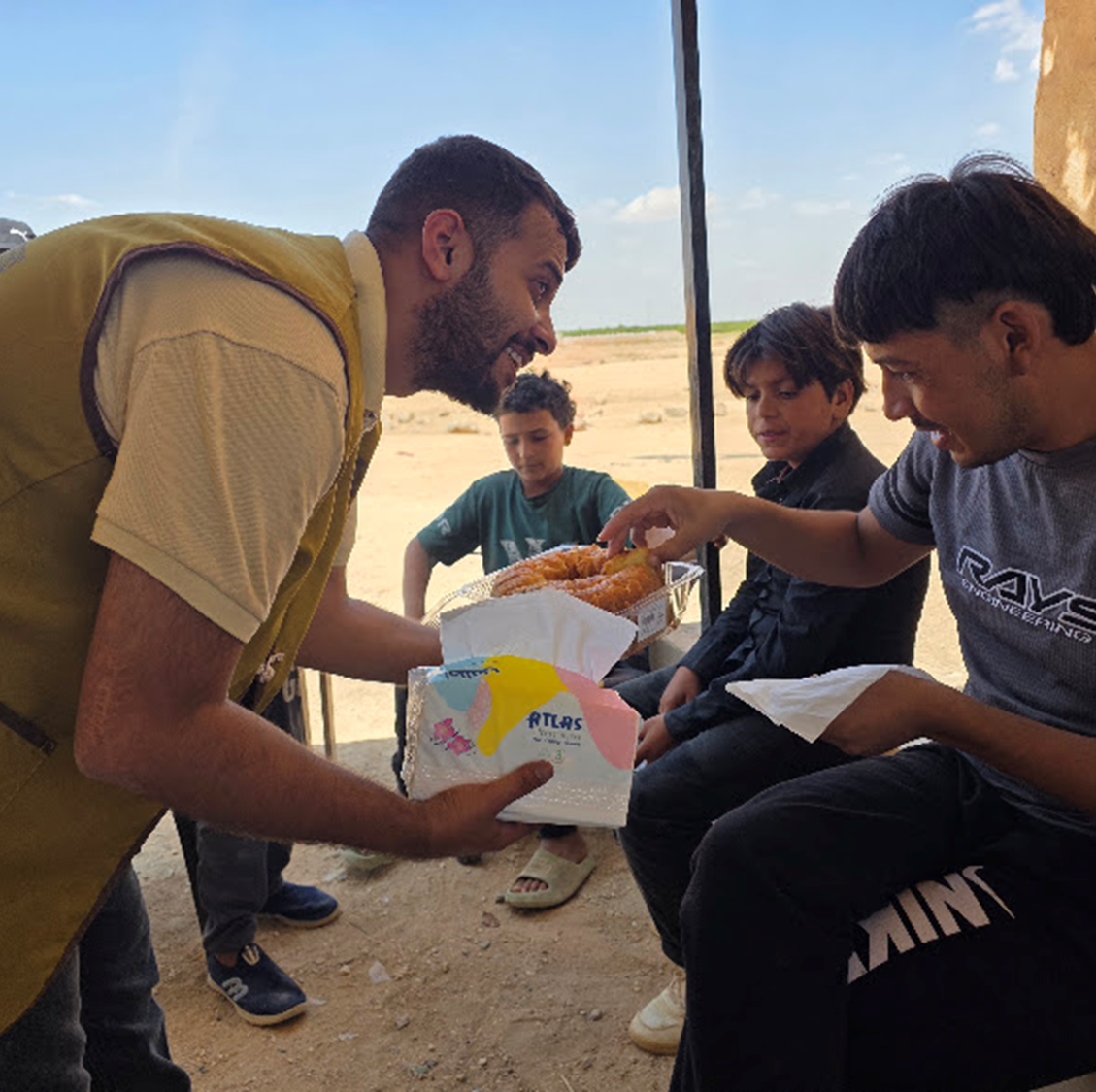
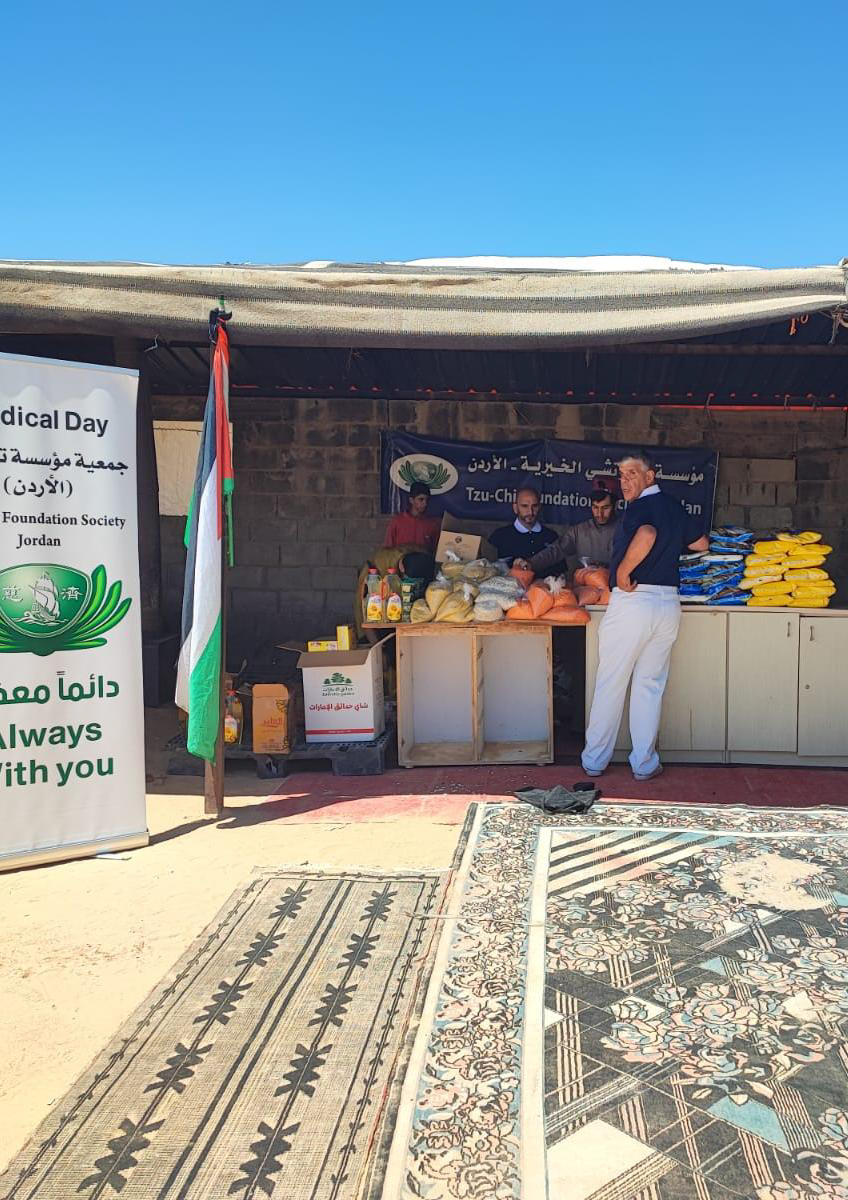
LEFT: Despite being older and needing more food than the younger children, Ali (right) generously made sure the other children received enough food to eat before taking a portion for himself. RIGHT: Volunteers neatly arranged all the essential food supplies to be distributed to 38 family during the distribution at Al Abbasiya. | Photos: Tzu Chi Jordan
Equipping students for the future
Education offers a pathway out of poverty, but securing school supplies is a significant hurdle for many parents. To ensure students can start the academic year with confidence, over 1,000 school bags filled with stationery were distributed across several schools in the Southern Ghor district, including Tawahin Al-Sukkar, Al-Thraa, Al-Mazra'a, Zenobia, and Al-Qaa'a Al-Haditha.
The distributions were carried out in cooperation with local schools and the National Association for Community Rehabilitation. Dr. Issa Al-Tarawneh, Director of Education for the Southern Jordan Valley District, attended the distribution at Tawahin Al-Sukkar Secondary School. He emphasized the importance of these initiatives in a public statement:
This voluntary initiative reflects the vision of His Majesty King Abdullah II ibn Al Hussein and His Royal Highness Crown Prince Al Hussein bin Abdullah II in promoting the values of volunteerism... taking into consideration the humanitarian circumstances of families and students, and directing efforts toward supporting and empowering the people of Jordan. — Dr. Issa Al-Tarawneh, Director of Education for the Southern Jordan Valley District
The impact of the new supplies was immediately felt by the students. One student shared that they had no stationery to keep up with their lessons prior to receiving the new bag. The dedication of parents to their children's education was also evident. At one location, a father brought his son, who suffers from muscle atrophy and cannot stand unaided, through the intense heat to ensure he received his school supplies.
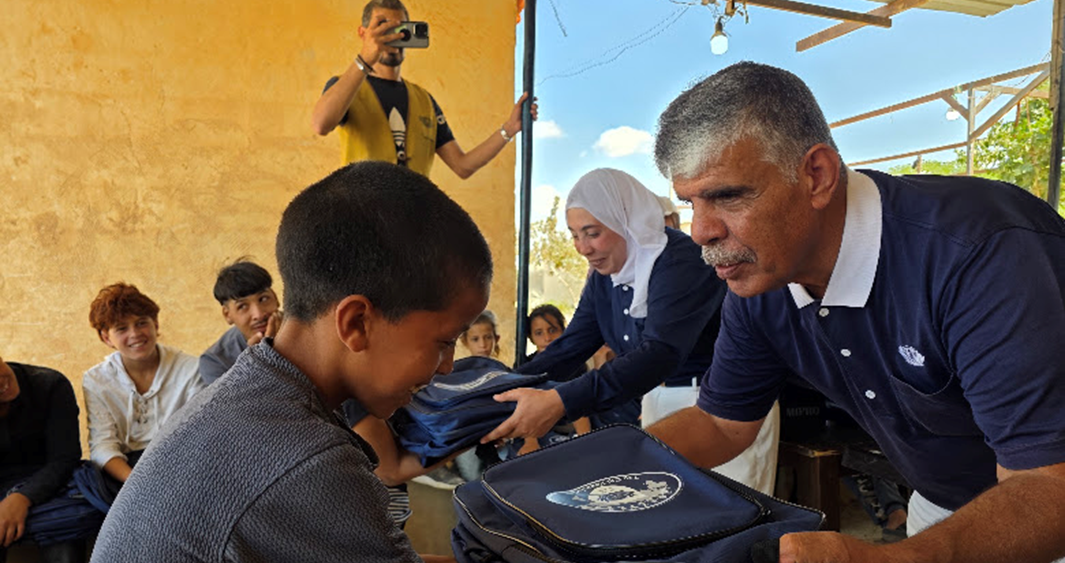
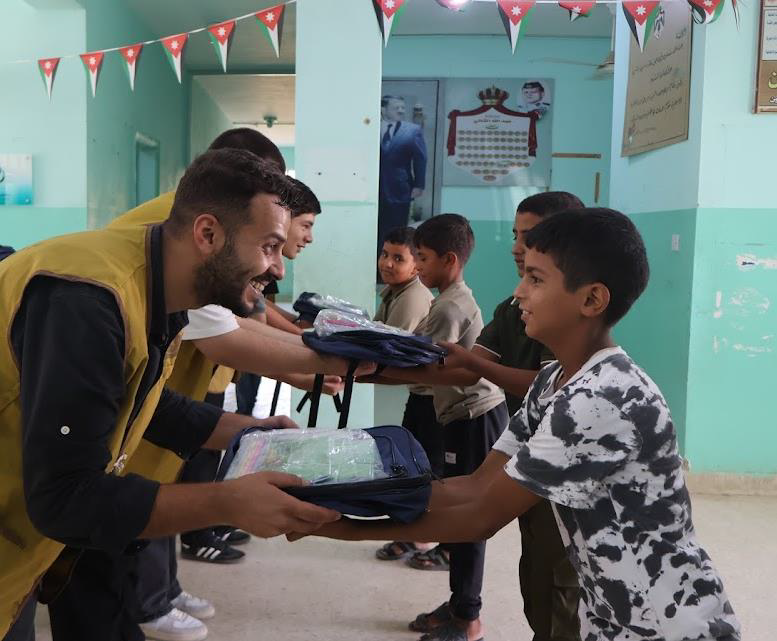
Students receives a new school bag and stationery while also learning about Tzu Chi's method of giving and receiving with gratitude. | Photos: Tzu Chi Jordan
Through the simple act of providing a meal and a school bag, barriers begin to dissolve. The students learn the cultural practice of bowing when giving and receiving, fostering a mutual sense of gratitude and respect. Each bag handed out represents a shared hope that these children will one day earn their degrees and secure a brighter future for their families.
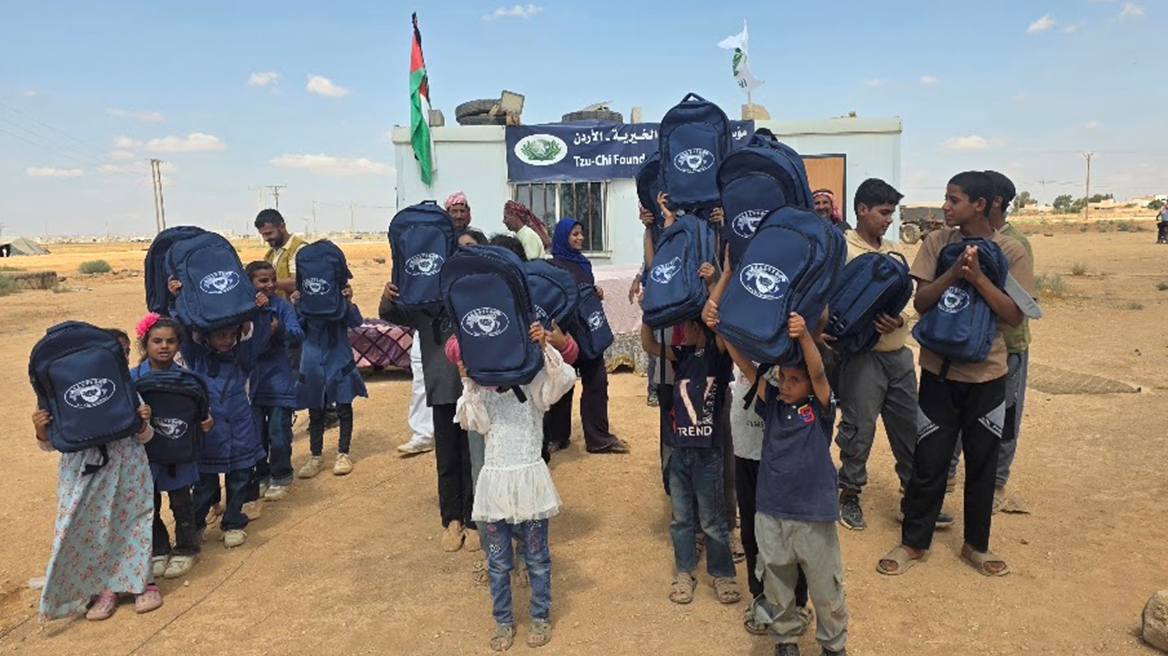
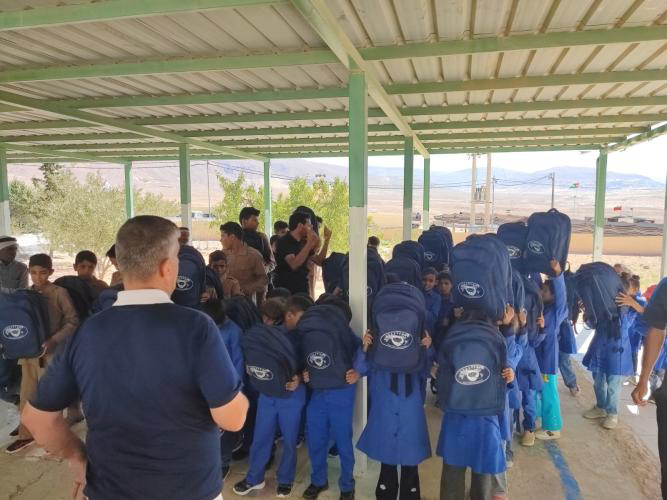
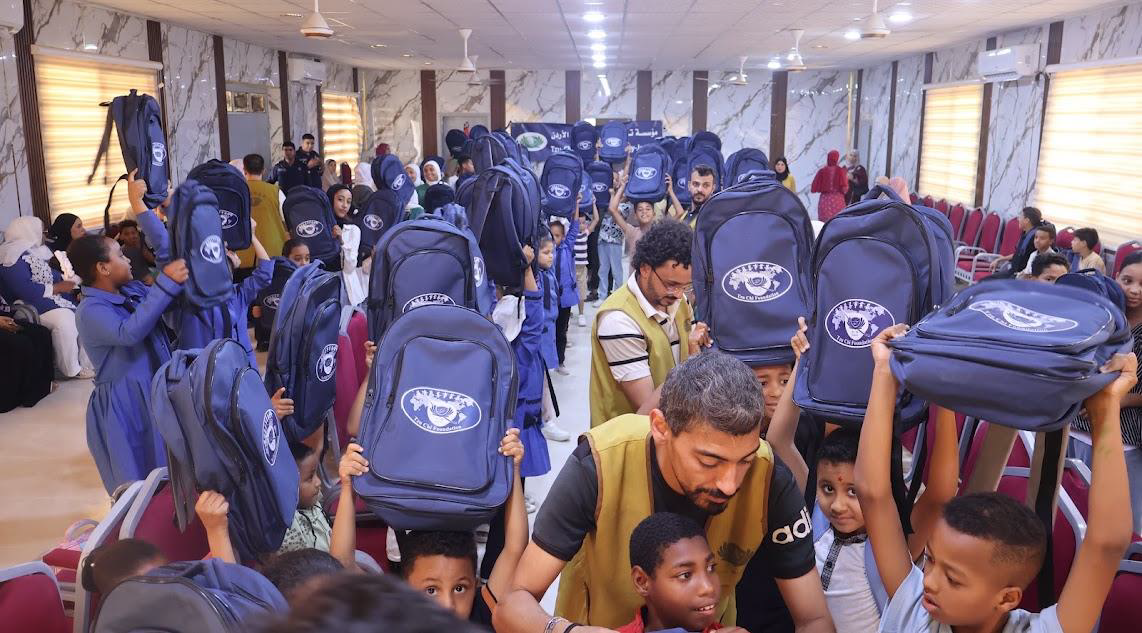
Students from different schools proudly hold up their brand-new backpacks, expressing their eagerness to learn. | Photos: Tzu Chi Jordan
Written by Aslaf Al-Abood
