


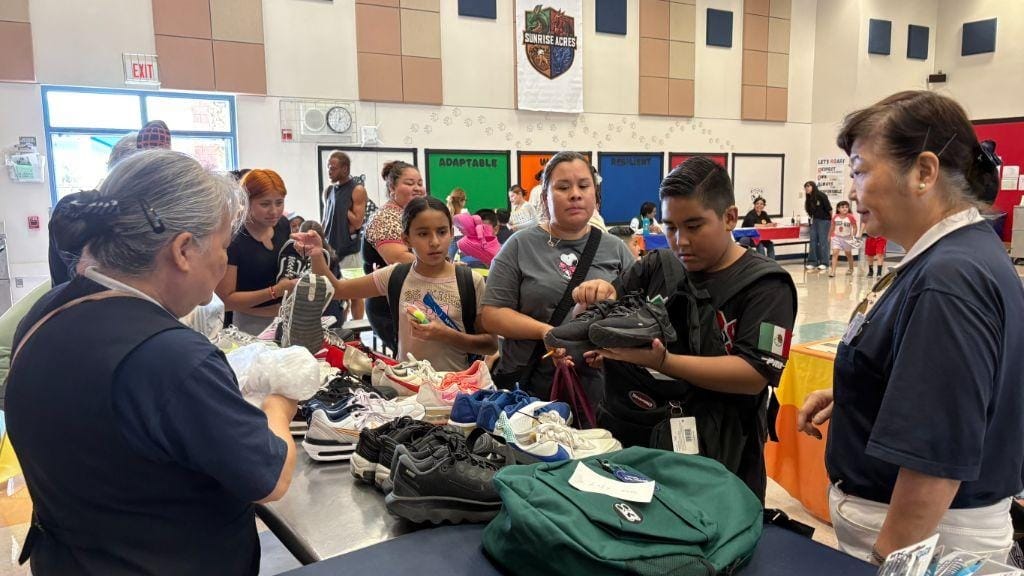
On August 7, 2026, the campus of Sunrise Acres Elementary School buzzed with anticipation as students prepared for the new academic year. For many families, the back-to-school season brings excitement, but it can also present a significant financial challenge. Purchasing required stationery, backpacks, and clothing quickly adds up. Recognizing these difficulties, volunteers set up a distribution booth to provide essential supplies, ensuring that children could return to their classrooms fully equipped and ready to learn.
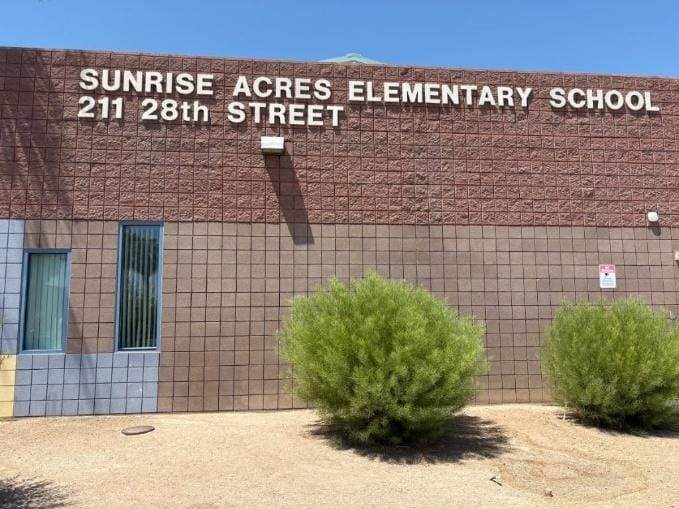
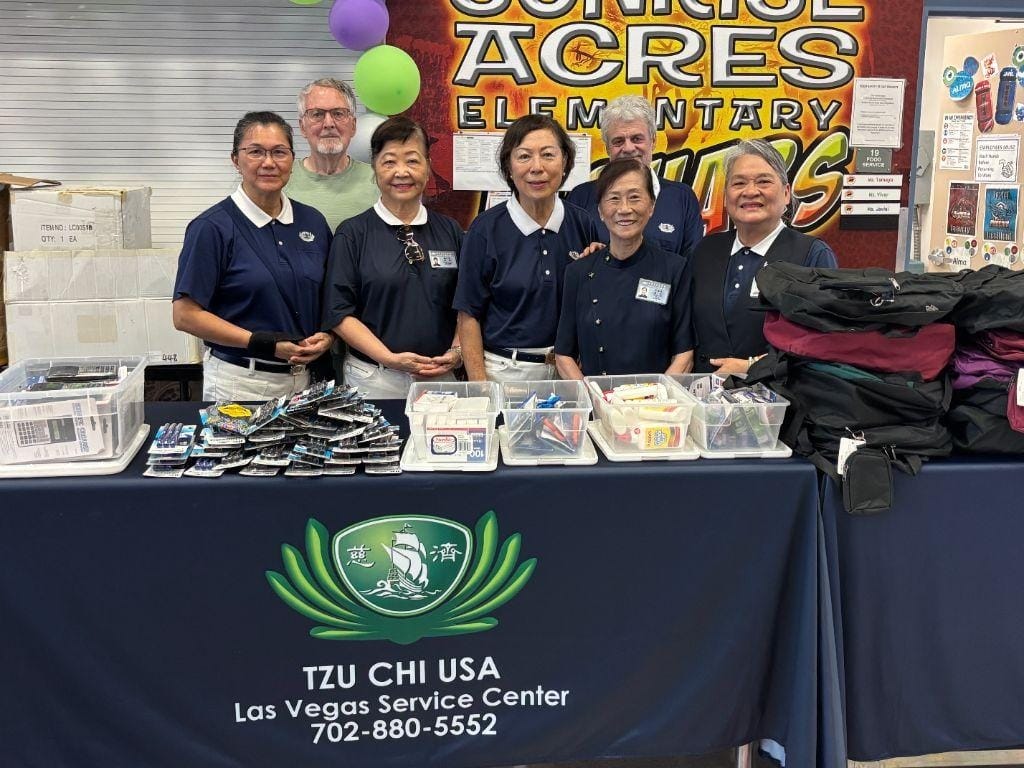
LEFT: Sunrise Acres Elementary School sets up a distribution area to provide essential supplies for the students. | Photo: Audrey Cheng RIGHT: Volunteers carefully prepare the booth with backpacks, stationery, sneakers, and bamboo banks. | Photo: Tsui-Lin Kao (高翠玲)
A new journey for old shoes
A prominent feature of the distribution was a neatly arranged display of gently used sneakers. Volunteers meticulously cleaned and sorted these shoes, offering various styles and sizes. Although initially intended as supplementary items, the sneakers quickly became the most sought-after goods. The shelves were soon emptied as children eagerly tried on their new pairs.
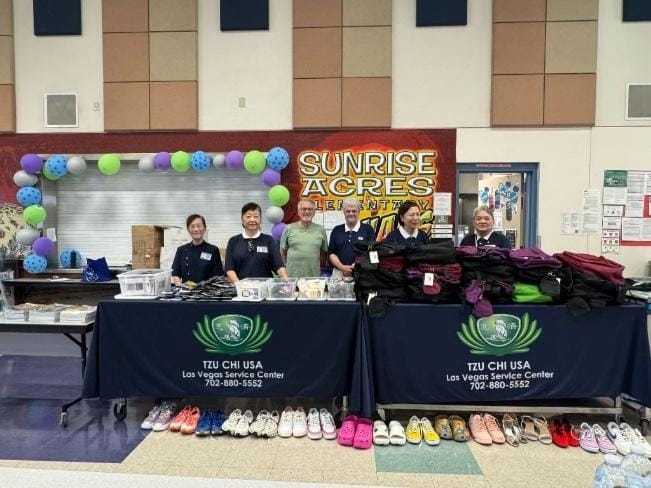
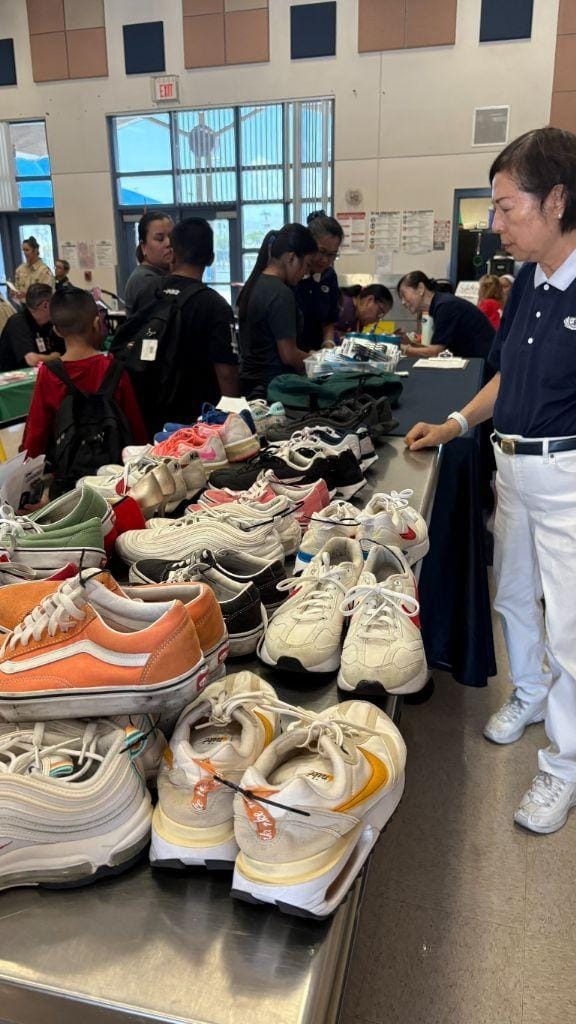
LEFT: Volunteers prepare an abundance of back-to-school supplies, adding warmth and support to the new school year. | Photo: Pamela LIm (黃玉柳) RIGHT: Gently used sneakers of various styles are neatly arranged, quickly catching the attention of many eager students. | Photo: Audrey Cheng
For a child, a comfortable pair of shoes is essential for running, playing, and walking through the school gates every day. For families managing tight budgets, receiving these shoes represented practical relief. By giving these gently used items a second life, the distribution promoted environmental sustainability while providing tangible support to those in need. The volunteers witnessed how the true value of an item lies not in whether it is new or old, but in whether it reaches someone who needs it. A pair of shoes that once accompanied one child now journeys with another, allowing care to continue its cycle.
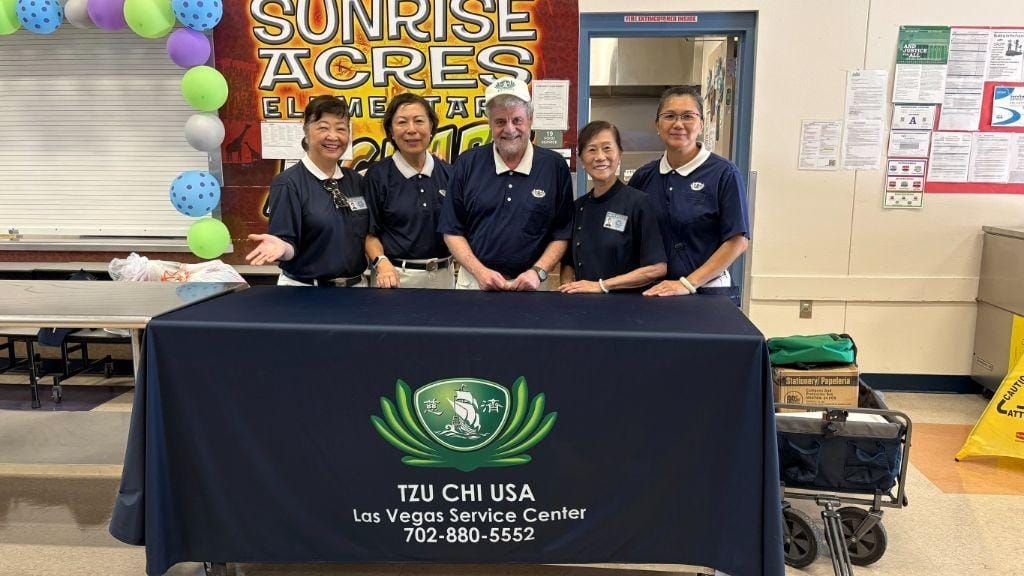
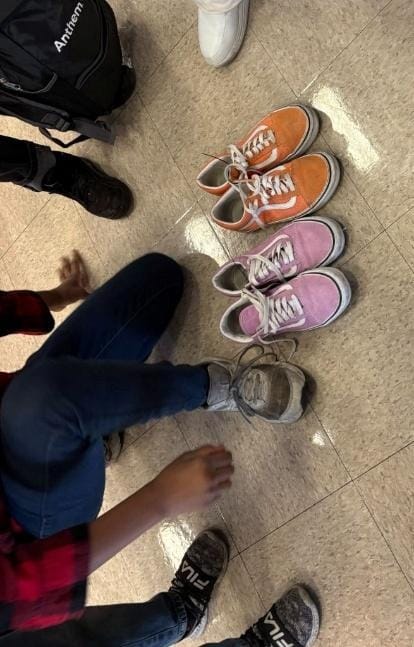
LEFT: The volunteer team poses for a group photo after the distribution. RIGHT: Neatly arranged secondhand sneakers; surprisingly, dozens of pairs were quickly claimed by parents and children, finding new homes for these donated items. | Photos: Audrey Cheng
A meaningful reunion
Amidst the lively distribution, an inspiring reunion took place. Jesse Chavez, a student who had previously received a gift card from the volunteers, approached the booth with a bright smile. The gift cards are typically distributed at the end of the semester to students from low-income families who demonstrate academic excellence or perfect attendance. Recognizing the familiar faces, Jesse eagerly stepped forward to greet them.
I recognize you! You came to our school at the end of last year and gave us 'gift cards' to encourage us. Thank you! — Jesse Chavez, Student
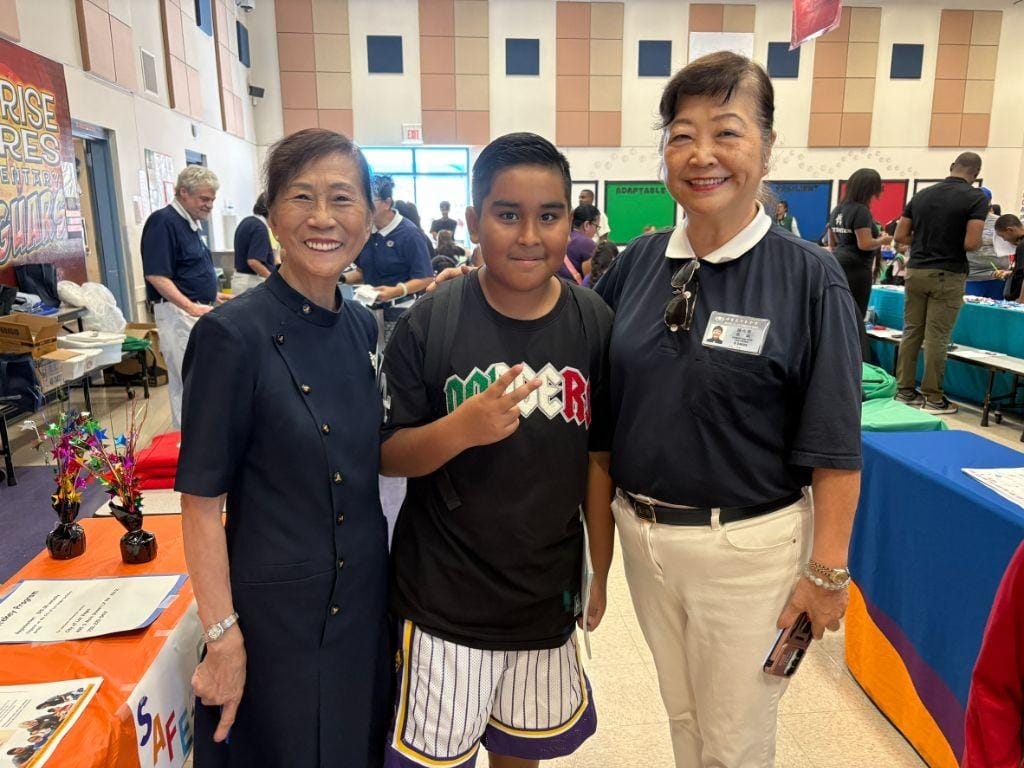
His words deeply moved the volunteers. What seemed like a simple gesture of providing a gift card had become a lasting memory of encouragement for Jesse. It served as a reminder that the value of the aid extends beyond the physical item; it is about acknowledging a child's efforts and showing them that their hard work is seen and appreciated. This interaction reinforced that giving is not just about material provision, but about continuous companionship and inspiration.
Cultivating generosity
Beyond providing material supplies, the volunteers also introduced the concept of the bamboo bank to the families. Volunteer Christine Fisk (楊大蓉) explained how saving small coins daily can accumulate to help others. Students enthusiastically requested their own bamboo banks, eager to participate.
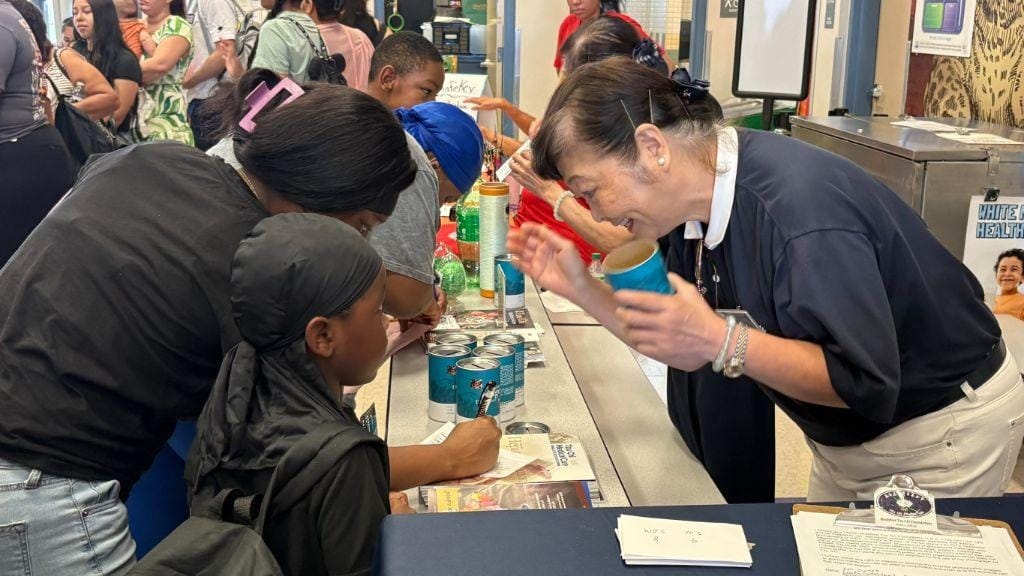
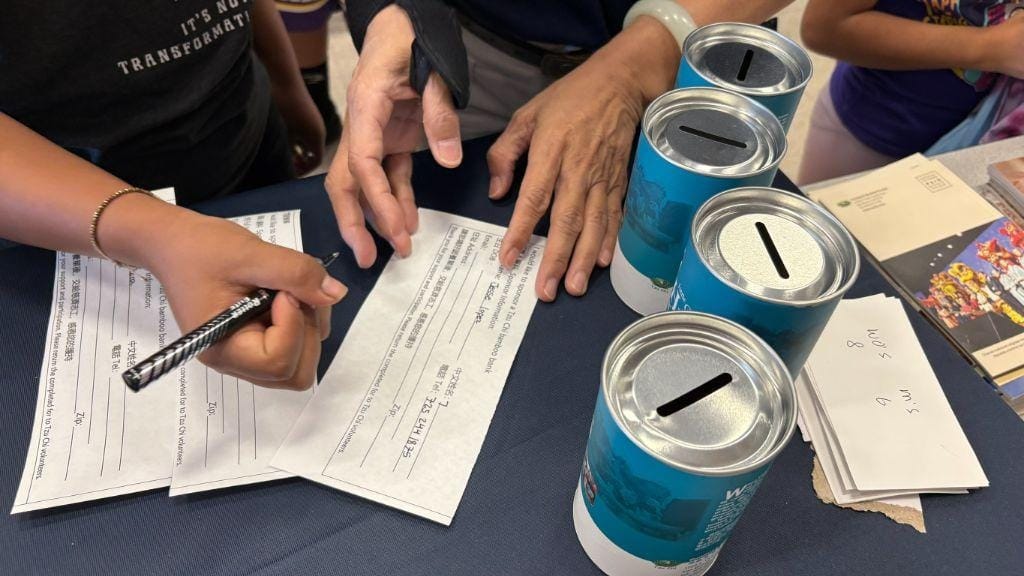
LEFT: Tzu Chi volunteer, Christine Fisk, shares the bamboo bank story, encouraging children to cultivate a habit of helping others. RIGHT: Students eagerly claim bamboo banks, planting the seeds of kindness to allow love to spread throughout the campus. | Photos: Audrey Cheng
This simple practice teaches children that regardless of their current circumstances, they have the capacity to give. It nurtures a mindset of gratitude and sharing, empowering them to become active contributors to their community. When children drop a coin into the bamboo bank, they are taking their first steps in charity, learning to accept support while simultaneously becoming individuals who spread care to others.
Providing backpacks, pens, and shoes does more than just meet immediate physical needs; it offers peace of mind to parents and confidence to students. As the children of Sunrise Acres Elementary School shoulder their new backpacks and walk in their comfortable shoes, they carry with them the support of their community. Equipped with the necessary tools and a sense of being valued, they are ready to embrace the opportunities of the new school year with renewed hope and resilience.
Written by Joanne Lee (李慧瓊), Audrey Cheng (鄭茹菁)
