


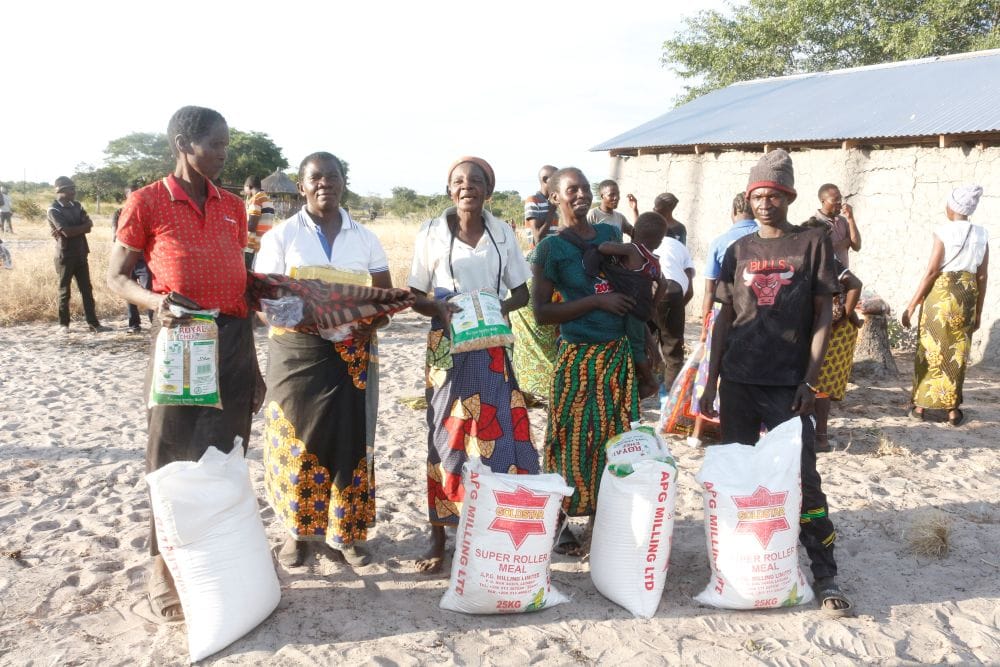
Continuous flooding between March and April, 2026 devastated communities in Zambia's Western Province, destroying homes and cornfields and leaving many families without shelter or livelihoods. As floodwaters spread, some villages became isolated, leaving residents struggling to meet their most basic needs.
For some villagers, the hardship was compounded by a sense of being forgotten. Repeated flooding had left their communities cut off, with little hope of receiving outside assistance.
In response, Tzu Chi Zambia organized four relief distributions in the affected districts of Kalabo, Mongu, Nalolo, and Senanga. Working with local government officials, agricultural departments, and community organizations, volunteers identified households most in need, including older people living alone, single-parent families, households with young children, and those who had lost both their homes and livelihoods.
Reaching these families, however, was no easy task. With villages still surrounded by floodwaters, volunteers and residents worked together to find ways to carry essential supplies across the water and into communities that could not be reached by road.
Crossing floodwaters, carrying hope
The first distribution took place in Kalabo on April 25 and 26. Volunteers began loading relief supplies onto trucks as early as 6 a.m., but the journey was far from over when the trucks reached the flooded areas. More than a dozen wooden canoes were mobilized by local residents and volunteers to ferry the supplies across the water.
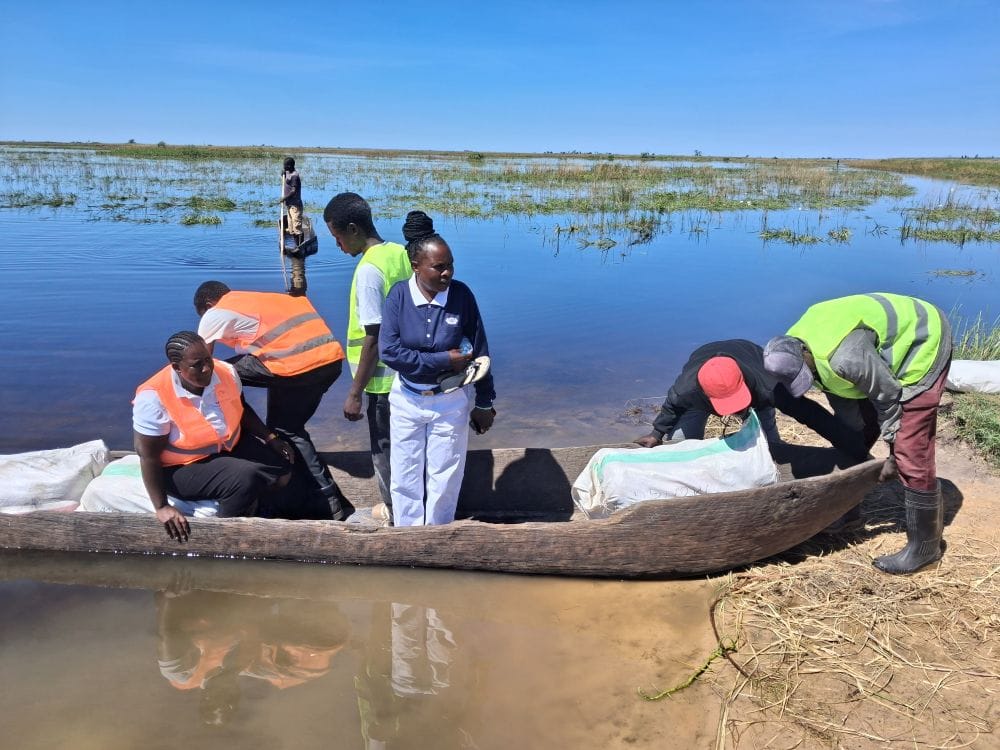
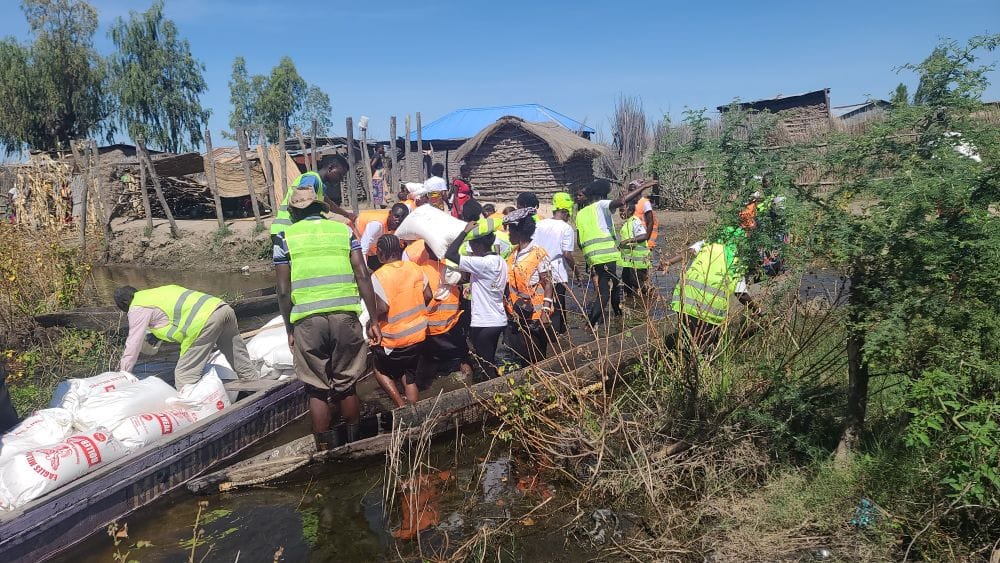
Residents and Tzu Chi volunteers work together to transport relief supplies across flooded waters by wooden canoe. | Photos: Tzu Chi Zambia
Once across, volunteers and residents formed a human chain, passing supplies from one person to another and carrying heavy loads on their heads and shoulders into the villages. Each person played a part in bringing the relief items to the community.
The determination was shared by both volunteers and residents. What could not be accomplished by vehicles was made possible through their collective effort.
On May 13, the relief team reached Mongu, where the distribution served communities across 75 surrounding areas. This time, motorized boats were used to transport supplies across the flooded waterways. As the boats approached the shore, residents gathered to welcome the volunteers and receive the long-awaited assistance.
For those who had been cut off by the floods, the arrival of the boats brought more than food and daily necessities. It was also a reminder that they had not been forgotten.
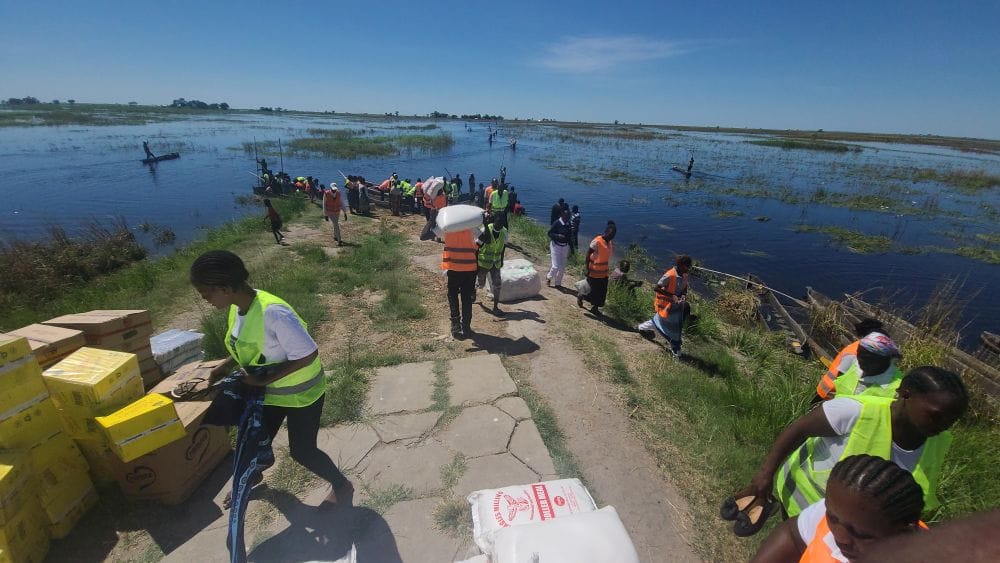
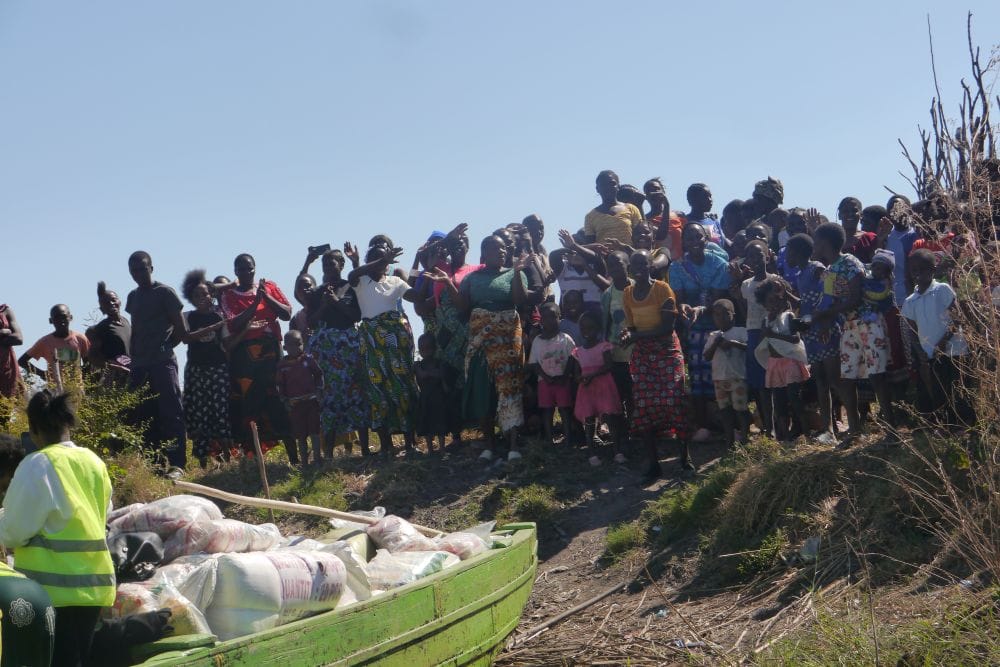
LEFT: Residents and volunteers ferry the supplies across the water. RIGHT: The arrival of the boatloads of supplies bring happiness to the residents. | Photos: Tzu Chi Zambia
Reaching families displaced by the floods
In Nalolo, the third distribution took place on May 15. The government had relocated some displaced residents to higher ground, where 72 tents had been set up, each accommodating up to eight people. Yet many families continued to face difficult living conditions and lacked basic necessities.
Volunteers visited the community and shared the teachings of Master Cheng Yen and Tzu Chi's Ten Precepts with residents from 28 villages. The villagers welcomed them with songs and dances, expressing their gratitude for the assistance.
Across the four districts, Tzu Chi provided relief supplies to 2,000 households. Each family received 25 kilograms of maize meal, 5 kilograms of beans, 2 liters of cooking oil, 500 grams of salt, 200 milliliters of water purification solution, two blankets, a bar of soap, a mosquito net, and a package of secondhand clothing.
With flooding increasing the risks of waterborne and mosquito-borne diseases, the water purification solution and mosquito nets were especially important in helping families protect their health.
Beyond distributing supplies, volunteers also took time to accompany and assist older residents, ensuring they received the care and attention they needed.
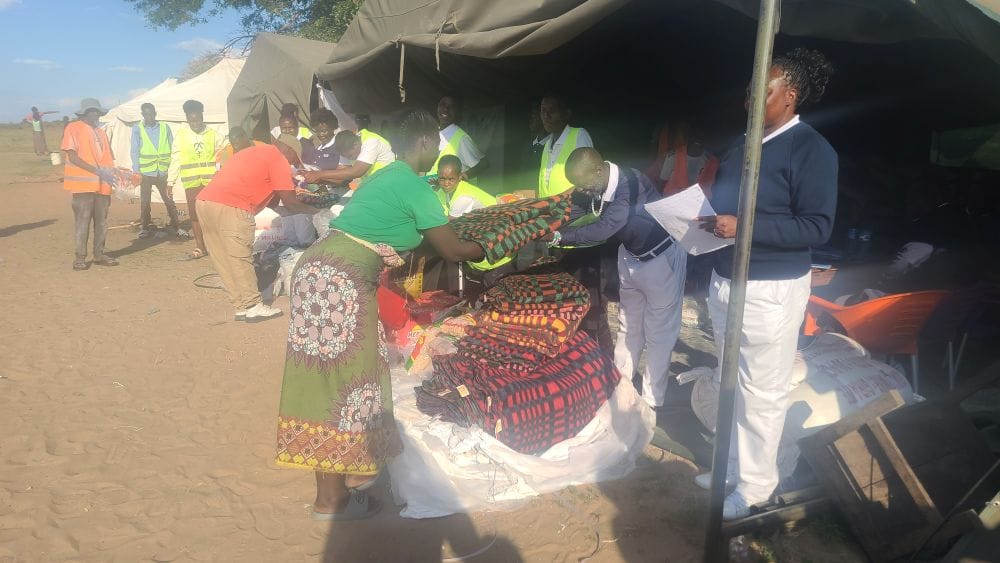
A gesture of kindness brings hope
The final distribution took place on May 21 in Senanga, the most distant of the four districts. Reaching the villages remained challenging. Some vehicles became stuck in sandy terrain, forcing volunteers to continue on foot. In other areas, where floodwaters had isolated communities, they had to travel by boat.
From roads to waterways, volunteers pressed on, working together to bring supplies to those waiting for assistance.
For some residents, the arrival of the relief team was an especially emotional moment. Years of repeated flooding had left their communities isolated; they shared that no one had previously come to offer assistance. Seeing the volunteers arrive with supplies moved many to tears.
One resident expressed:
I did not think I deserved this, but the kindness and sincerity of Tzu Chi volunteers have given me hope.
The gratitude was also expressed through music. In one community, residents sang a song for Master Cheng Yen, expressing their appreciation for her love and compassion for them and for people around the world. Through their songs and dances, the villagers shared a warmth that words alone could not convey.
For the volunteers, these expressions of gratitude were a reminder of the meaning of their journey. The relief effort had brought together people who might otherwise never have met, united by a shared willingness to care for one another.
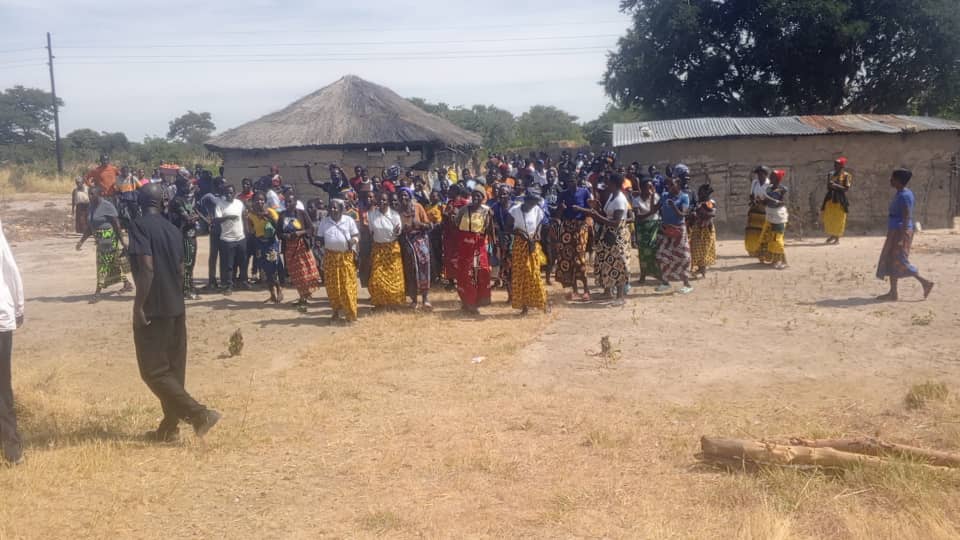
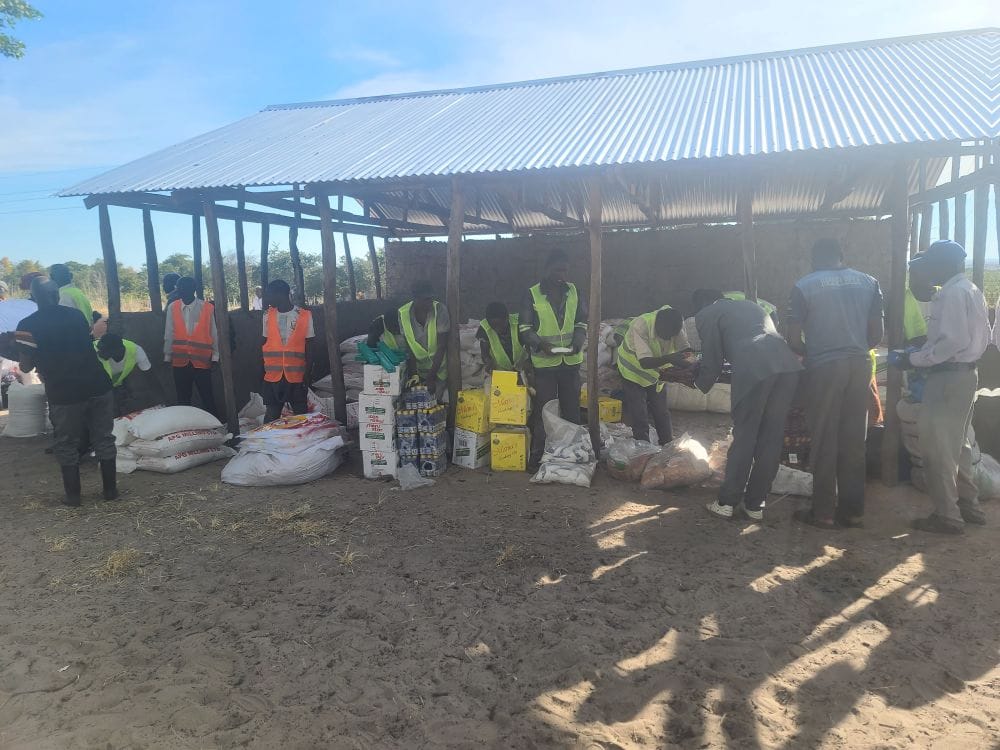
LEFT: Residents sing a song to express their appreciation. RIGHT: The final distribution in Senanga. | Photos: Tzu Chi Zambia
Continuing to care for the communities
Although the four distributions have concluded, Tzu Chi's care for the affected communities will continue. A second phase of food assistance is being planned, while follow-up visits will help identify families with ongoing needs. Additional mosquito nets and safe drinking water initiatives are also priorities in reducing the risks of malaria and cholera.
Through the combined efforts of volunteers, local authorities, and community members, 2,000 households across Kalabo, Mongu, Nalolo, and Senanga received essential supplies. More importantly, the journey to these isolated villages brought people together through acts of kindness and mutual support.
For families who had felt forgotten amid repeated floods, the arrival of help offered something beyond immediate relief: a renewed sense of hope and the reassurance that they were not alone.
