


My mother said that with her income from washing clothes, it was impossible for me to go to university. But Tzu Chi changed everything. They turned a dream that seemed out of reach into reality.—Marithel
For Marithel, growing up in Ormoc, Leyte Province in the Philippines, university once felt like a distant hope. Today, she has graduated from Tzu Chi University in Hualien, Taiwan, and returned to work at the Tzu Chi Philippines Ophthalmic Center, determined to give others the same chance she received.
Her journey began in hardship, and in the middle of one of the most destructive storms in the country’s recent history.
Childhood in Ormoc: work before play
Born the fifth of six children, Marithel lost her father when she was very young. Her mother supported the family by doing other people’s laundry. The work was unstable; some days there was pay, some days there was none. Often, the family did not know where their next meal would come from.
By fourth grade in elementary school, she was already working.
On weekends and during school breaks, she followed her mother to employers’ homes to wash clothes and weed yards. When school was out, she worked full days in the sugarcane fields, from eight in the morning until five in the afternoon, handing all of her wages to her mother.
The heat in the fields made each day exhausting, but she kept going. Easing her mother’s burden while staying in school became the goal that kept her moving forward.
The night Typhoon Haiyan tore the roof away
In 2013, Super Typhoon Haiyan struck Ormoc. It became the deadliest typhoon in the Philippines in modern times.
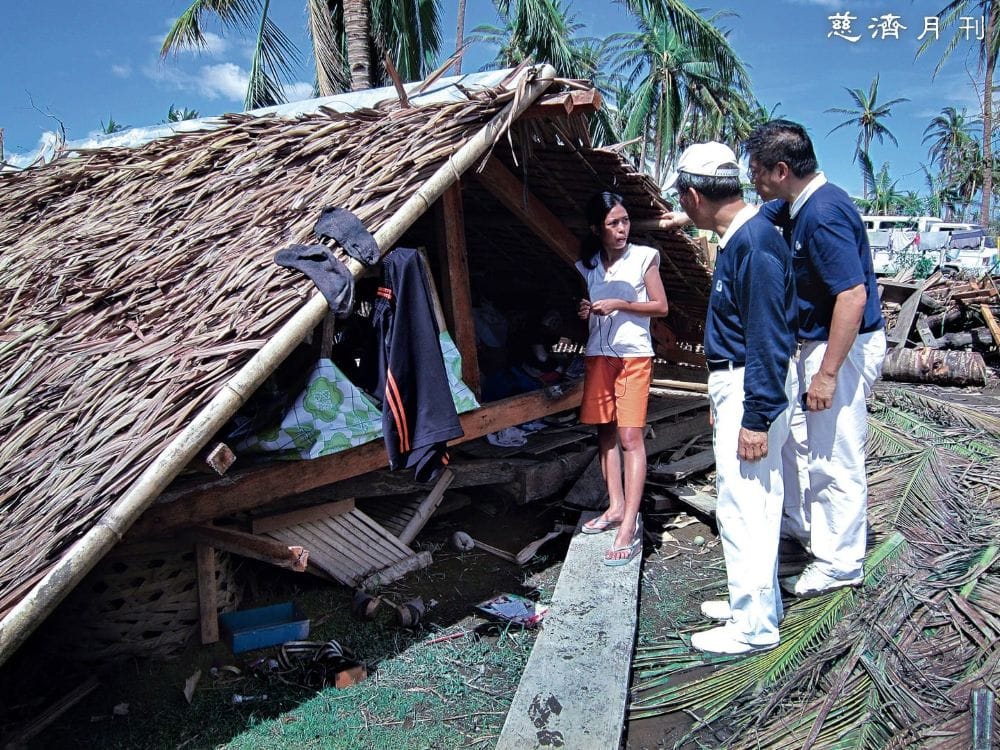
The powerful winds toppled the bamboo walls of her home and ripped away the roof made from coconut leaves and plastic sheets. As the storm raged, four family members squeezed under a single table, trying to shield themselves from wind and rain.
The previous night’s leftover dinner still sat in a pot. Rainwater had poured in, diluting what remained. Even so, they chose to eat it. Survival mattered more than taste.
With their house destroyed, a single question haunted them: where would they sleep from now on? Rebuilding seemed beyond reach. At fourteen, Marithel had already left school for a time to work and help support the family. After the typhoon, even that fragile income was gone. A sister who worked away from home wanted to help but simply could not afford to.
At the moment when the family felt most cornered, Tzu Chi volunteers arrived in their community. They walked through the damaged neighborhood, visiting families, asking about their needs. Their presence—gentle conversations, simple greetings, listening to stories—felt, to the residents, like a beam of light breaking into the darkest days. For Marithel’s family, that visit planted the first seed of hope that life could be rebuilt.
A stable home and a light on the desk
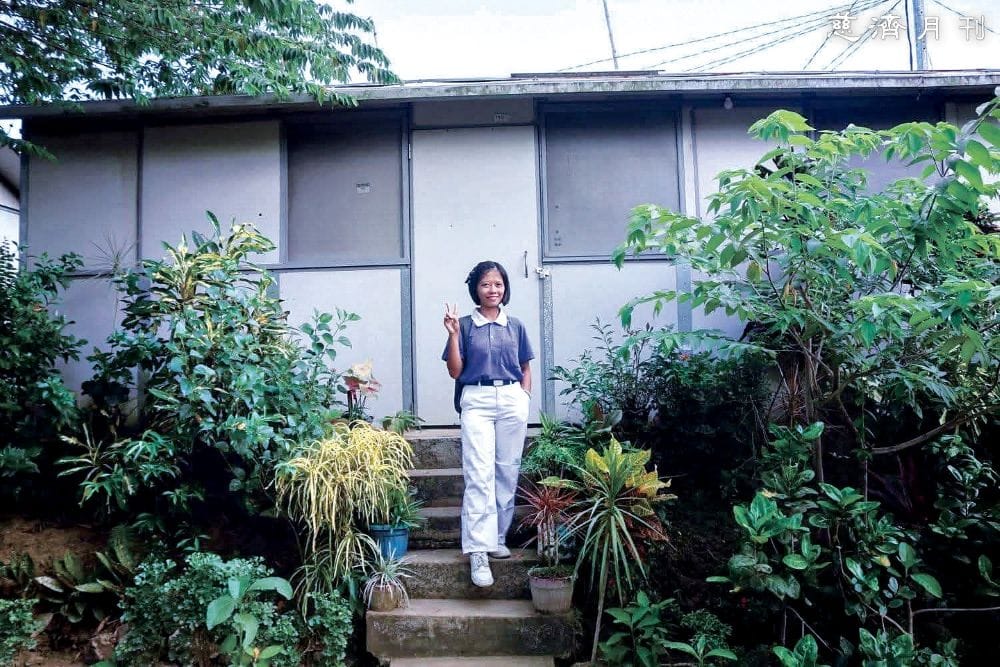
In 2015, families in Ormoc began moving into the newly completed Tzu Chi Great Love Village. For the first time, Marithel and her family had a safe, stable home. They no longer needed to move from place to place.
Before that, everyone slept in a single room and used a kerosene lamp at night. There was no electricity. After moving, everything changed—running water, electric lights, and, for the first time, her own room.
At night, when she sat at her desk under a bright light to do homework, she felt something new: time and space that truly belonged to her. That simple light, she recalls, symbolized hope and a brighter future. It motivated her to study harder, believing that her life did not have to stay within the limits of what she had known as a child.
Discovering that she, too, could give
One scene from the early days in the village stayed with her.
During a distribution, volunteers bowed respectfully as they handed rice and provisions to residents. To many, it was just a gesture. To her, it expressed sincerity. The people giving were also the ones bowing. Their humility left a deep impression.
Among them, a group of young people caught her eye. They wore white shirts and dark trousers. They moved in an orderly, focused way, yet were warm and attentive. On weekends, they returned to the village to do recycling work, clean the surroundings, and visit elderly residents.
It was the first time she had seen young people serve their community so willingly.
She learned that these were Tzu Ching (university volunteers) and youth volunteers. She wanted to be like them.
Soon, she began joining home visits and environmental activities in the Great Love Village. She helped with emergency relief and, during Christmas breaks, joined others in singing carols to raise donations. With the money collected, they bought rice and vegetables for those most in need in the community.
Each visit and each small act of service changed how she saw herself. Even though her family struggled financially, she realized she still had the power to bring hope to others. Through giving, she began to understand empathy and compassion—not as abstract words, but as something that could be practiced in everyday life.
A scholarship that opened the world
In 2017, with middle school behind her, another turning point came. She received a scholarship from the Tzu Chi Foundation, which supported her education all the way through high school.
Her mother often reminded her of their reality: income from washing clothes could never cover the cost of university. When graduation approached, worry about the future pressed heavily on her.
Then came news that changed everything.
Senior volunteer Alfredo Li (李偉嵩) told her and other students that Master Cheng Yen was offering them an opportunity to study at Tzu Chi University in Taiwan. The support would not only include full tuition but also a monthly living allowance.
Li also encouraged them to see beyond their island. The world, he said, was much larger than what they had seen. In another country, they could learn new cultures and languages and, in the future, be better equipped to help others.
That day, when she reached home, she cried. For the first time, the long‑held “university dream” felt real.
Before leaving, she and other students spent three months in Manila receiving basic Chinese language training. In 2019, they flew to Taiwan. After one and a half years of intensive study at the Chinese Language Center at Tzu Chi University, she began her bachelor’s degree in Communication Studies.
Tears at the desk and a call for help
Studying far from home brought its own challenges. The biggest barrier was language.
Listening to lectures in Chinese, trying to keep up with classmates, and then facing exams left her exhausted. No matter how hard she tried, her grades did not improve at first. At night, she returned to her dormitory, sat at her desk, and cried quietly.
She hesitated to disturb Li, knowing how busy he was, but eventually she called him. She told him she could not understand the classes and that she was afraid of failing.
Li reassured her. If she failed a subject, he explained, they would speak with her professors about her learning situation and ask for another chance. Her task was to keep trying and focus on studying; worry alone would not help.
His words eased some of the fear. She remembered a previous experience in 2018, when she had visited Taiwan for a global Tzu Ching camp. At that time, she had stood on stage to share about the youth volunteers in Ormoc. It was her first time speaking before a large audience. Her legs shook, her lips went pale. Li quietly stood behind her on stage, a silent support.
To her, he became a father figure—someone who was present whenever she faced difficulties, reminding her not to give up but to face problems bravely.
From then on, she approached her classes differently. She concentrated closely during lectures and, back in the dorm, reviewed the day’s material again and again. An Indonesian classmate who was also learning Chinese became a study partner; they encouraged each other and kept going.
She often reminded herself: do not give up, and do not waste this chance. If she quit and went home empty‑handed, she felt she would be wasting a precious opportunity given by Master Cheng Yen.
In low moments, she found strength in her family’s encouragement, the support of fellow volunteers, and reading Master Cheng Yen’s Jing Si Aphorisms, which offered practical guidance for daily life.
Returning home with a new mission
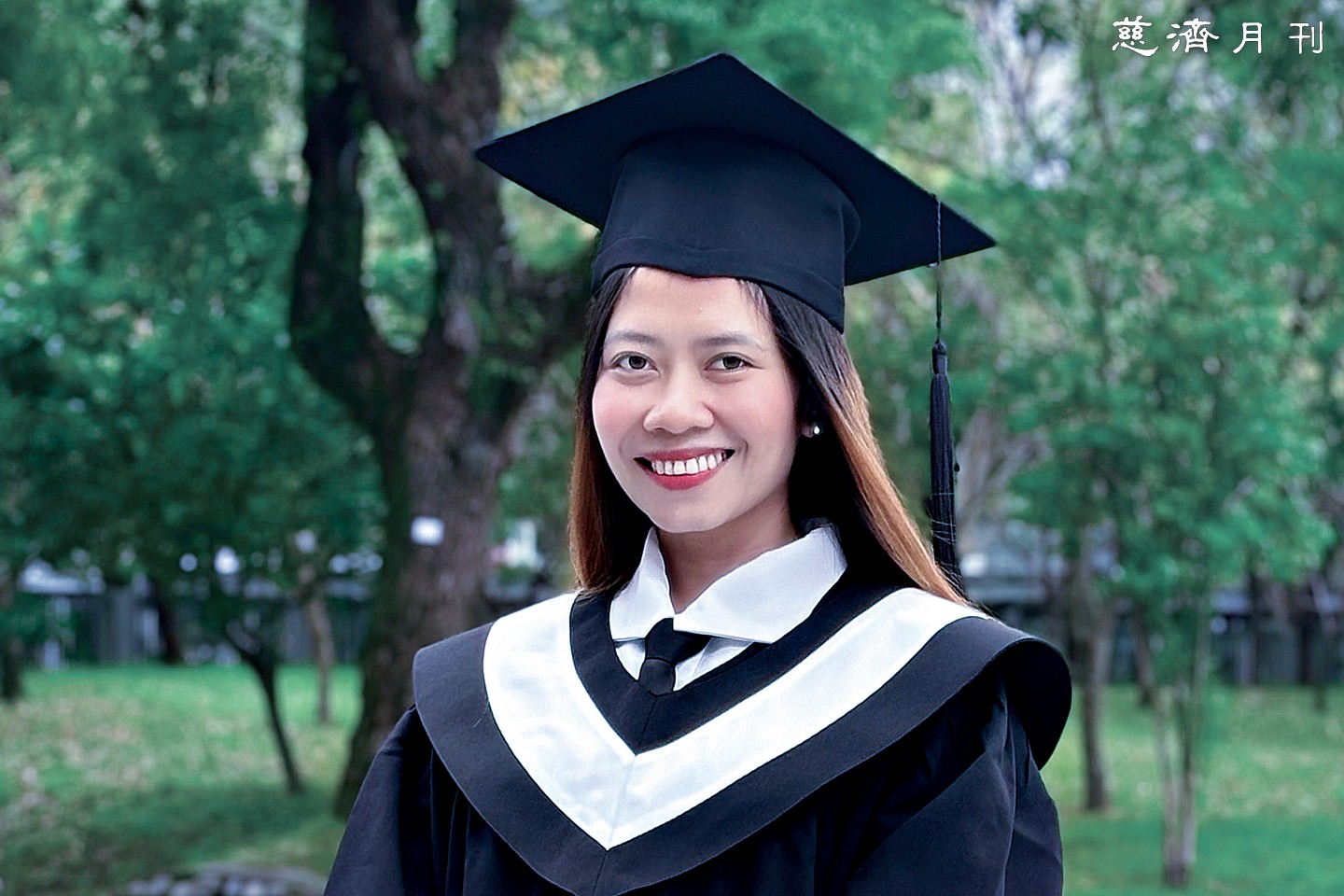
In June 2025, after years of effort, she graduated from Tzu Chi University with a degree in Communication Studies. The following month, she returned to the Philippines and began serving at the Tzu Chi Ophthalmic Center.
Looking back, she sees her life woven with two strands: receiving support and learning to support others. Through Tzu Chi, she did not only receive housing, scholarships, and guidance. She also learned how to extend care, inspire others, and see her own capacity to contribute.
Master Cheng Yen and the many volunteers who quietly helped her left a lasting impression: give without asking for anything in return.
With that in mind, she has set a clear aspiration for herself—to use the education and opportunities she received to benefit others. In her work at the ophthalmic center and in her community, she hopes to share the values and teachings she encountered in Taiwan so more people can understand what Tzu Chi does and, more importantly, feel that change is possible in their own lives too.
A dream fulfilled, a promise made
From a bamboo house shattered by a typhoon to a lit desk in a stable home; from a sugarcane field in Ormoc to a university campus in Hualien, Marithel’s path has been marked by hardship, opportunity, and choice.
Her story is, at its core, about a daughter who did not want her mother’s struggle to define the limits of her future—and about how steady, practical support can turn that desire into reality.
Now back in the Philippines, she carries a promise with her: to stand beside others in their difficult moments, just as so many people once stood beside her.
Written by Marithel (馬利安), Rei-Ling Lai (賴睿伶)
