


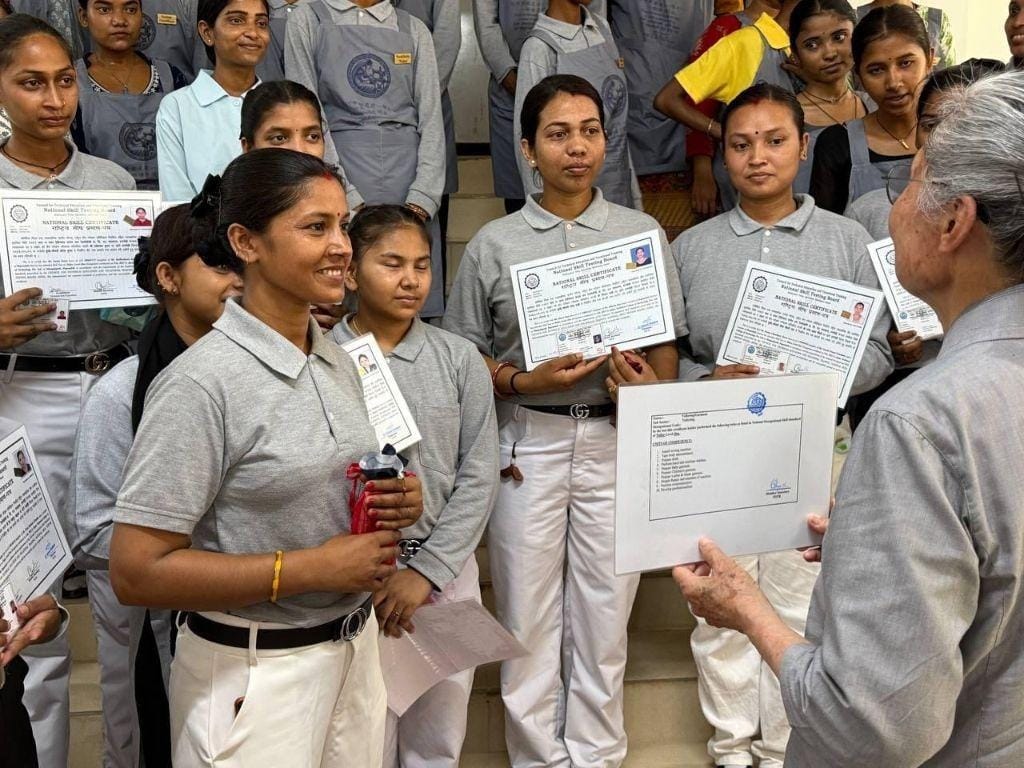
With steady pacing and consistent stitches, Anita Bhuj patiently guides 21 students in her classroom. She demonstrates how to properly iron seams and ensure fabric lines are perfectly straight. In May 2025, Anita passed the national examination held by Nepal’s Council for Technical Education and Vocational Training (CTEVT), earning her Level 2 certification. By January 9th, 2026, she proudly took on the role of sewing instructor for her second cohort of students.
Anita acknowledges that teaching can be challenging. Many of the young women in her class have limited formal education. Beyond teaching them how to operate a sewing machine, sew in a straight line, and calculate basic measurements, Anita also guides them on interpersonal skills. She encourages her students to speak softly, avoid conflicts, and treat one another with respect.
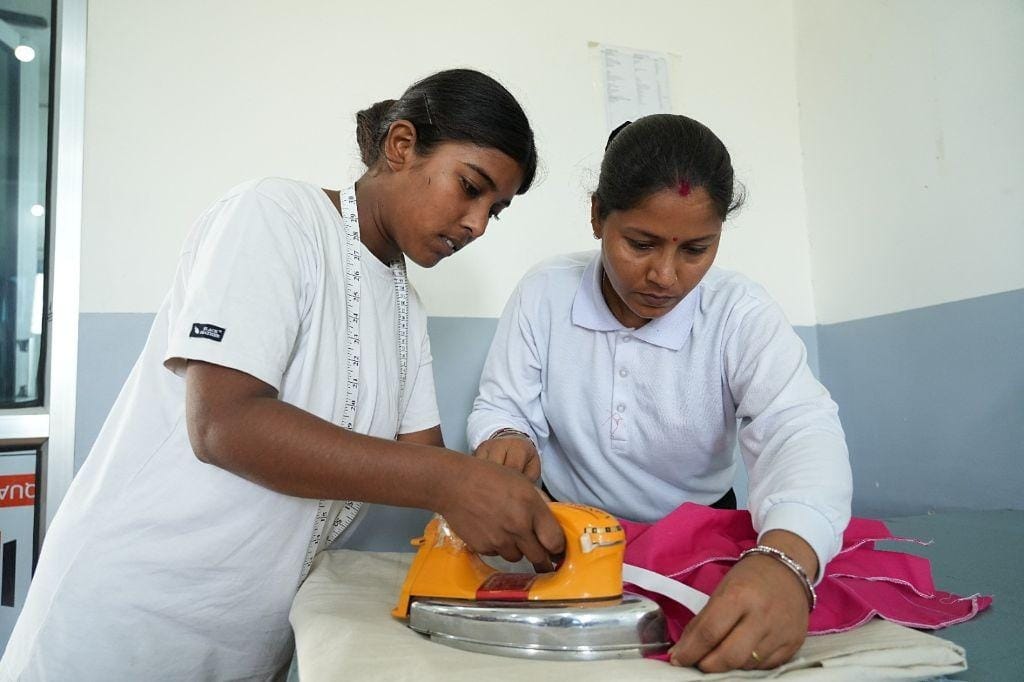
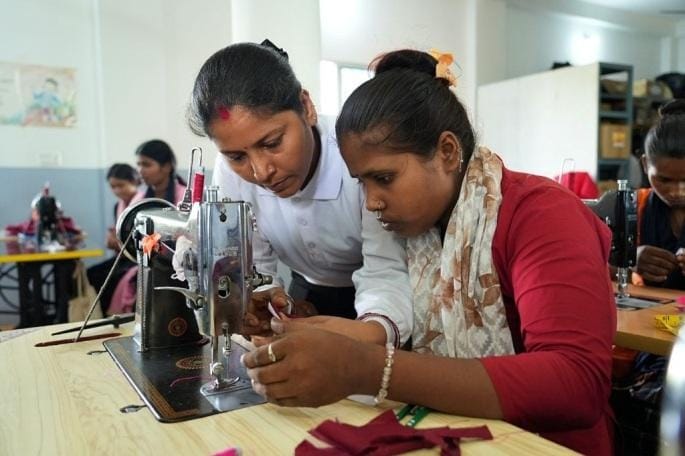
LEFT: Anita Bhuj (right) patiently guides new students on sewing techniques. RIGHT: Anita (left) ensures her students maintain consistent stitching. | Photos: Ramesh
The weight of early marriage
It is difficult to imagine that this confident instructor was once a deeply depressed young woman. Married into her husband's family before the age of 15, Anita faced significant cultural and personal challenges. Having only completed the eighth grade, she found herself completely unprepared for the responsibilities of her new household. Prior to her marriage, her older sister had managed the chores, and her mother handled all meal preparations.
Confined to her new home due to traditional community norms that discouraged women from venturing out, Anita’s mental and physical health deteriorated. She struggled with severe depression and eventually developed kidney disease, which required the removal of one kidney. Her husband, Devendra Kumar Bhuj, who had married her at age 17, felt powerless to intervene against his parents' strict expectations. Feeling entirely unsupported, Anita struggled to find a reason to keep going.


LEFT: Anita writes measurement formulas on the board to help her students learn. RIGHT: Anita (left) found joy and improved health after making new friends in the class. | Photos: Ramesh
A path outside the home
When Anita learned about an opportunity to sew masks in the village, she saw it as a potential lifeline.
Every time I went to the tailor, I would watch how the master sewed and cut fabric. Even though I knew how to sew masks, my husband wouldn't let me go.— Anita Bhuj, Sewing Teacher
A few months later, a free sewing class opened in Lumbini. Recognizing how isolated and ill she was, neighbors began to advocate for her. They urged her family to let her attend class, suggesting that getting out of the house would improve her mental state. After persistent requests, her family finally agreed.
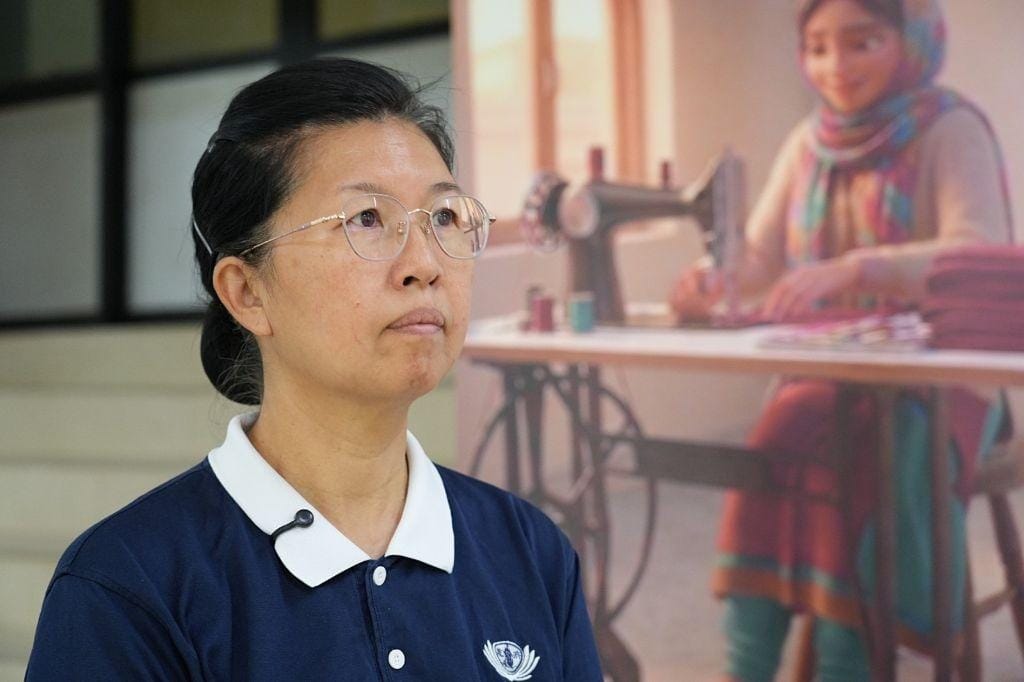
The transition was not easy. Cecelia Ong (王綺楨), the project lead for vocational training, recalled that Anita initially lacked energy, moved slowly, and struggled to communicate because she did not speak Nepali well. She frequently missed class due to exhaustion. However, a turning point arrived when the students were given fabric to design their own clothing. Anita’s eyes lit up with anticipation. Recognizing this spark, Ong encouraged her to study the local language and aim for the national certification exam. As she immersed herself in learning, Anita’s mental and physical health began to improve remarkably.
Shifting perspectives
As Anita’s confidence grew, so did the dynamics within her household. Devendra initially had reservations about his wife leaving the house, primarily due to the societal pressure of neighbors asking why she wasn't at home taking care of the family. However, noticing her renewed enthusiasm, improved health, and expanding circle of friends, his perspective shifted.
Times have changed, and everyone can have their own job. So it doesn't matter; if she wants to go, she can go.— Devendra Kumar Bhuj, Husband
Devendra, who runs a local pharmacy, also began to view his community differently. Inspired by the positive changes he saw in his wife, he started offering free or at-cost medication to impoverished patients who visited his shop daily.
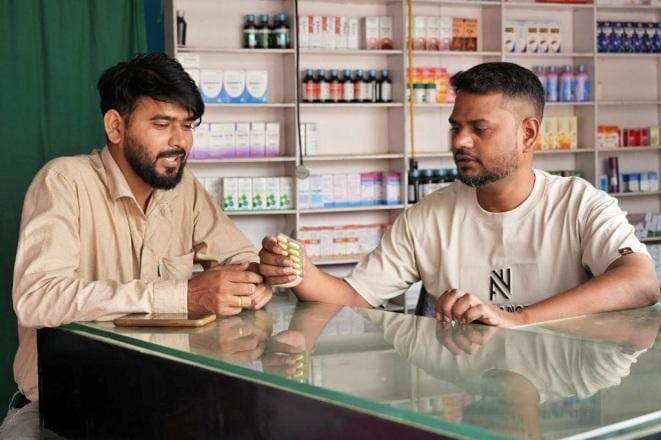

LEFT: Devendra Kumar Bhuj (right) supports his family by running a pharmacy. RIGHT: Cecelia Ong (front right) shares practical tips with Anita (left). | Photos: Ramesh
Anita’s transformation extended into her household management. During home visits, Ong was struck by the neatness of their home.
I initially felt it was difficult just to get the girls to work at a table because they were used to squatting on the floor and didn't know how to use scissors. That was the first sign of progress. The second was when I went for a home visit and found Anita's house exceptionally neat. Her husband's clothes and children's uniforms were hung up and ironed flat. Even when a rice bag had a hole, she used fabric scraps to sew it up.— Cecelia Ong, Project Lead
Despite her busy schedule as an instructor—which includes waking up early to prepare meals for her family before riding her bicycle to class—Anita manages her responsibilities with grace. While cooking, she intentionally sets aside a handful of rice each day, saving it in a "rice bank" to help those in her community who have even less.
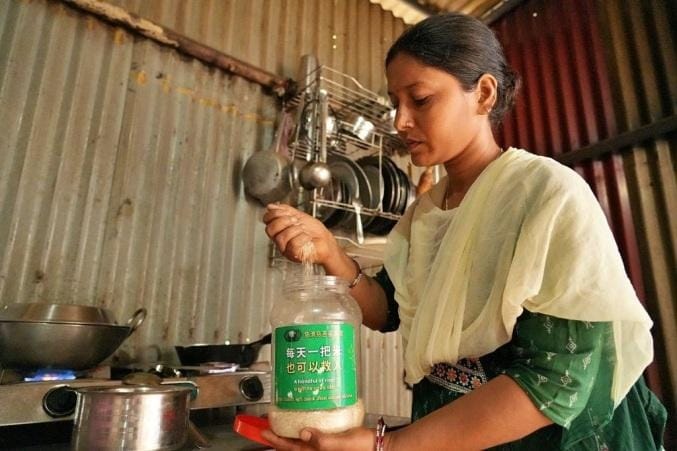
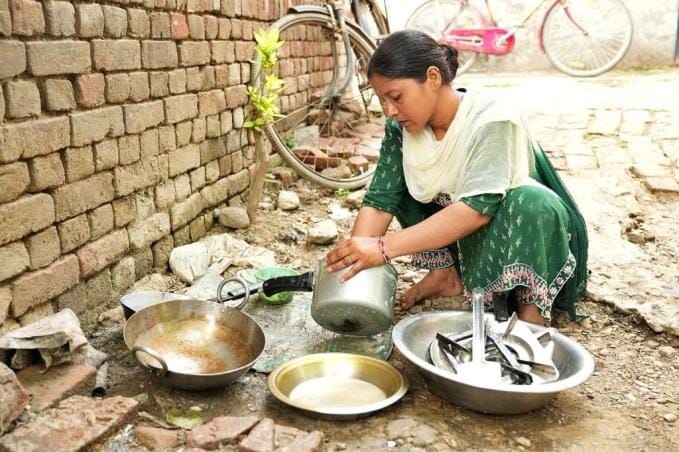
LEFT: While cooking, Anita saves a handful of rice to help others in need. RIGHT: Anita maintains a tidy home, practicing the values she learned in class. | Photos: Ramesh
Through the opportunity to learn a trade, Anita moved past the confines of her isolation. She navigated community gossip, overcame severe health challenges, and emerged as an educator. By sharing her skills with other young women in Lumbini, she offers them the same chance she had to step out of their homes and build a sustainable future.
Written by Jennifer Pai (白如璐)
