


On August 26, a sudden glacier collapse triggered devastating floods in Nepal's Himalayan region, sweeping away homes, businesses, and livelihoods in the Trishuli River basin. In Dhading district's Galchhi Rural Municipality, residents faced the daunting task of starting over in the mud and debris. Recognizing the immediate need for practical and respectful aid, Tzu Chi introduced a voucher program—a first for its relief operations in Nepal—empowering survivors to choose exactly what they needed most to rebuild their lives.
Empowering autonomy through vouchers
Initially, standard relief supplies like rice and cooking pots were distributed to address urgent hunger. However, as volunteers assessed the widespread damage, they realized that each family's needs varied greatly. Some had lost their clothes, while others needed school supplies for their children. To provide the most practical support, the team decided to issue shopping vouchers valued at 50,000 Nepalese rupees (approximately 375 USD) per household.
Creating this system required meticulous coordination. The solution came through a partnership with Bhat-Bhateni supermarket, which offered a customized voucher system requiring no digital access—crucial for those who had lost their mobile phones in the disaster. The supermarket also provided a discount to support the relief efforts and agreed not to sell tobacco or alcohol to voucher users, ensuring the aid would be used for essential recovery.
On September 19, 292 households gathered at the Galchhi Rural Municipality office to receive the vouchers. The atmosphere was filled with relief as families realized the flexibility this aid provided.

I didn't expect the devastating flood on August 26 to submerge my shop and turn me into a disaster survivor. I am grateful to charity organizations for sending clothes, food, and drinking water, and even more grateful to Tzu Chi for the large-scale distribution of shopping vouchers and folding beds, which provided a lot of help. Thank you very much. — Bimal Tamang, Survivor

Providing rest and tangible comfort
Beyond the vouchers, ensuring the survivors had a safe and warm place to sleep was a priority. Many were staying in temporary shelters or damaged homes with muddy floors. Navigating complex customs procedures, local volunteer Dr. Nirdesh Shakya worked persistently with government ministries to expedite the release of the multipurpose foldable beds and blankets shipped from abroad.
Saraswati Adhikari, whose house cracked and belongings were washed away, expressed her appreciation upon receiving her bed. She mentioned she would carefully use and preserve it, noting that she and her family are willing to relocate if the government can provide a safer area.
For Ganesh Bhujel, the flood destroyed the beverage shop and rented house he relied on to support his family. He temporarily sent his daughter to live with her grandmother while he cleaned up the remaining mud. Receiving the multipurpose foldable bed offered him a small but meaningful comfort amidst the chaos. "It is very comfortable, and it can also be used as a chair to sit on," he shared.

Awakening local compassion
The relief efforts resonated deeply with the local community, inspiring many to join the cause. Bikash Sapkota, a dentist originally from the area, temporarily left his clinic to volunteer and assist his hometown. He coordinated with the local government and military to clear thick mud from the regional hospital, restoring its operations in just one week.
At the distribution event, the spirit of mutual aid was palpable. After learning about Tzu Chi's "Bamboo Bank Era"—a tradition of saving small coins daily to help others—the survivors, despite their own severe losses, eagerly donated their spare change. Within a short time, they raised over 16,000 Nepalese rupees to help those even less fortunate.
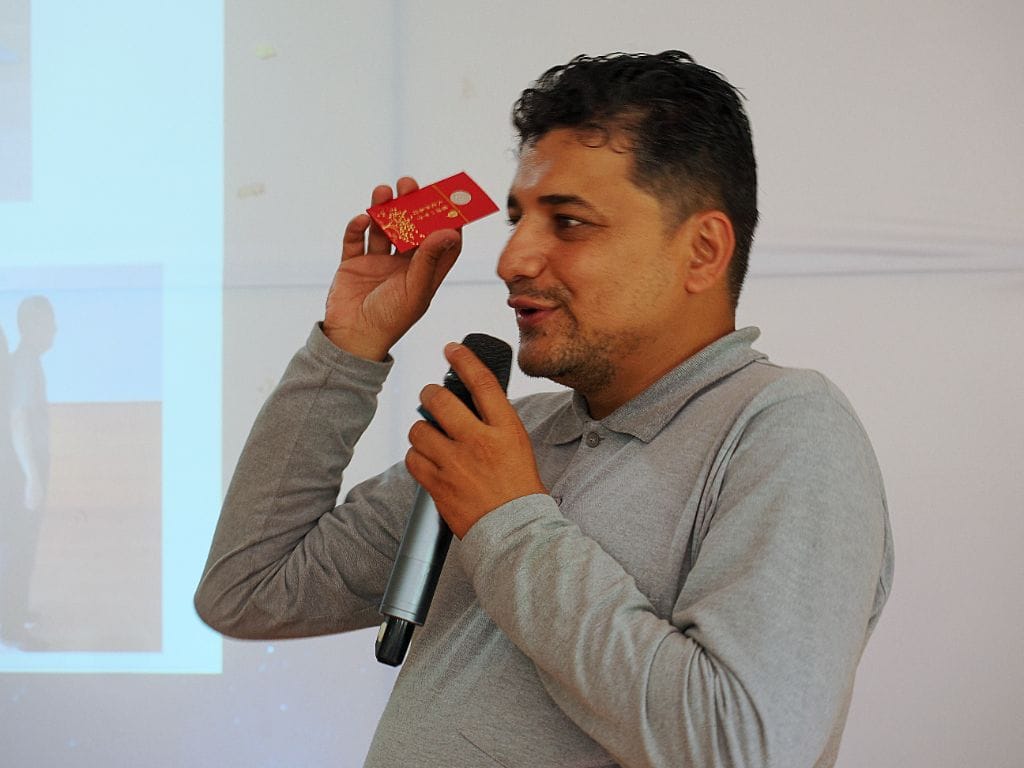
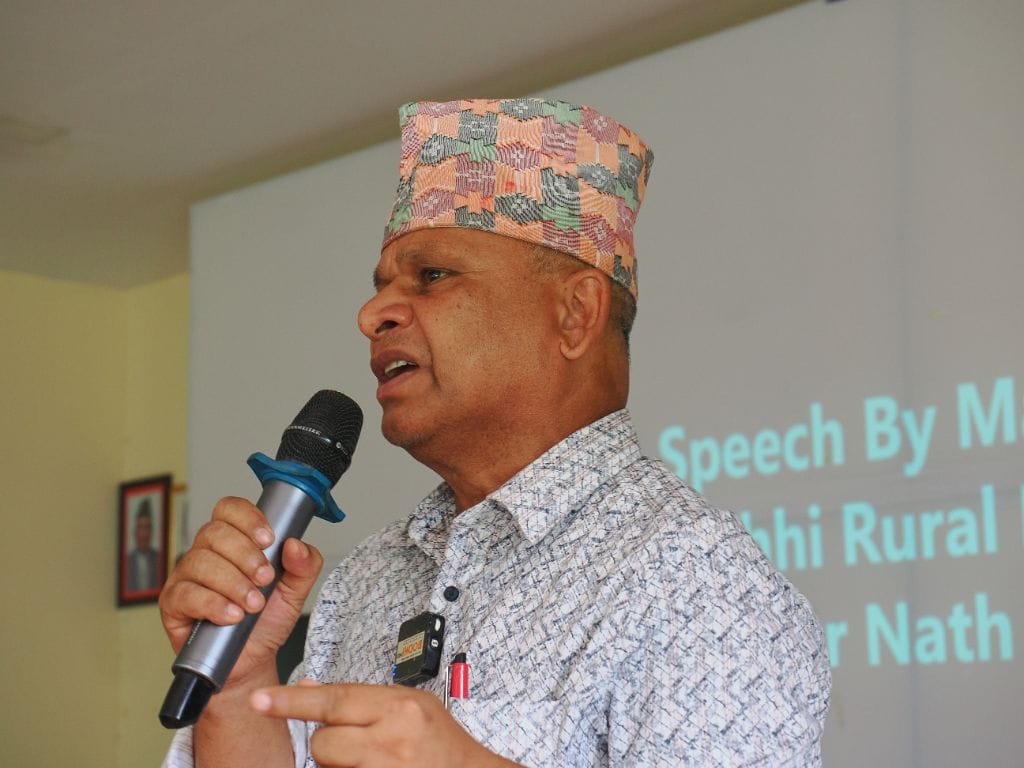
LEFT: Dhading volunteer Bikash Sapkota explains that the red envelopes are blessings from Dharma Master Cheng Yen. RIGHT: Kedarnath Khatiwada, Mayor of Galchhi Rural Municipality, remarks that helping those in distress with a charitable spirit is true faith. | Photos: Willy Ang (洪德謙)
The local leadership acknowledged this profound impact. Galchhi Rural Municipality Mayor Kedarnath Khatiwada noted that while many organizations provided initial aid and left, the foundation remained to offer sustained support.
Tzu Chi has helped us understand that we are always earning and losing wealth. If we work together, save a little, learn to give, and gather small amounts into something great, we can gather the power of love to help the vulnerable. Helping people in difficulty with a charitable spirit is true faith. — Kedarnath Khatiwada, Mayor of Galchhi Rural Municipality
Through a combination of practical relief and emotional support, the survivors in Galchhi are not just rebuilding their homes; they are finding the strength to move forward as a united community.
Written by Jennifer Pai (白如璐)
