


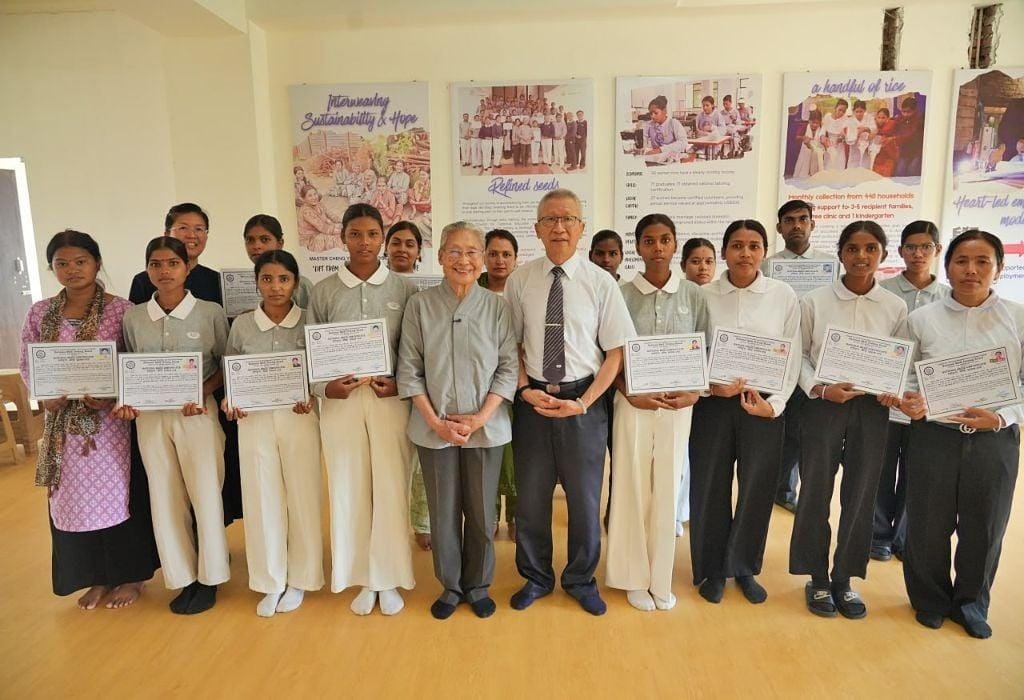
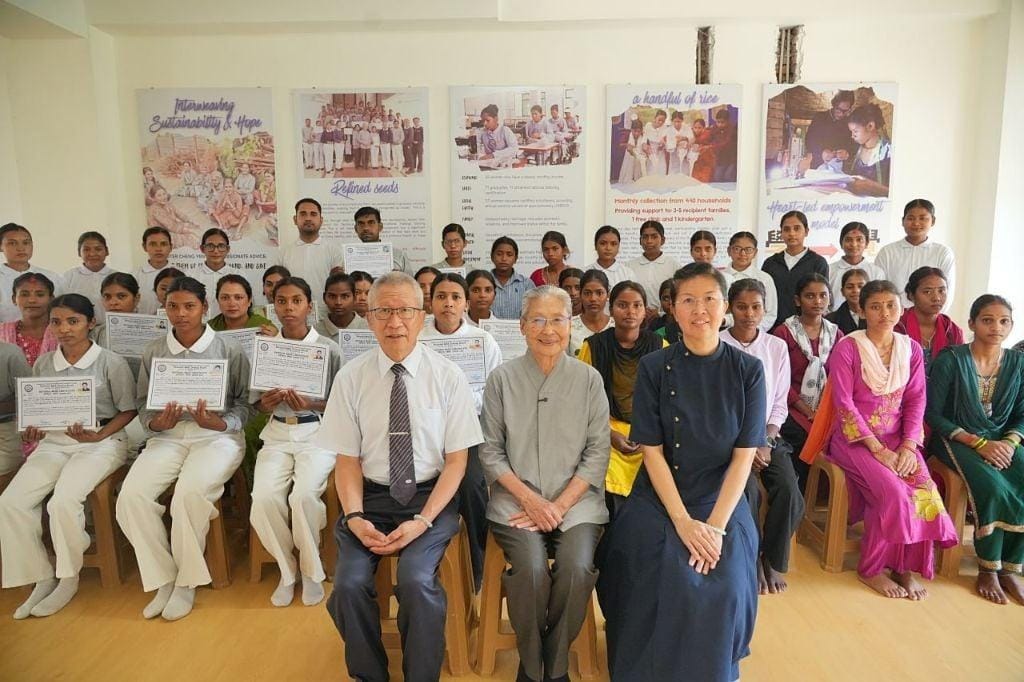
On July 16, a milestone was celebrated at the incubation center in Lumbini, Nepal, as 16 sewing class students received national certificates. Vice President of the Tzu Chi Foundation, Pi-Yu Lin (林靜憪), visited the center to present 14 basic and two intermediate sewing certificates to individuals who participated in the national exams in February. This follows an earlier ceremony on June 11, where 10 basic and one intermediate certificates from the Council for Technical Education and Vocational Training (CTEVT) were awarded. For many of these individuals, the certificates represent a vital step toward financial independence and building a brighter future.
Overcoming hardship to teach others
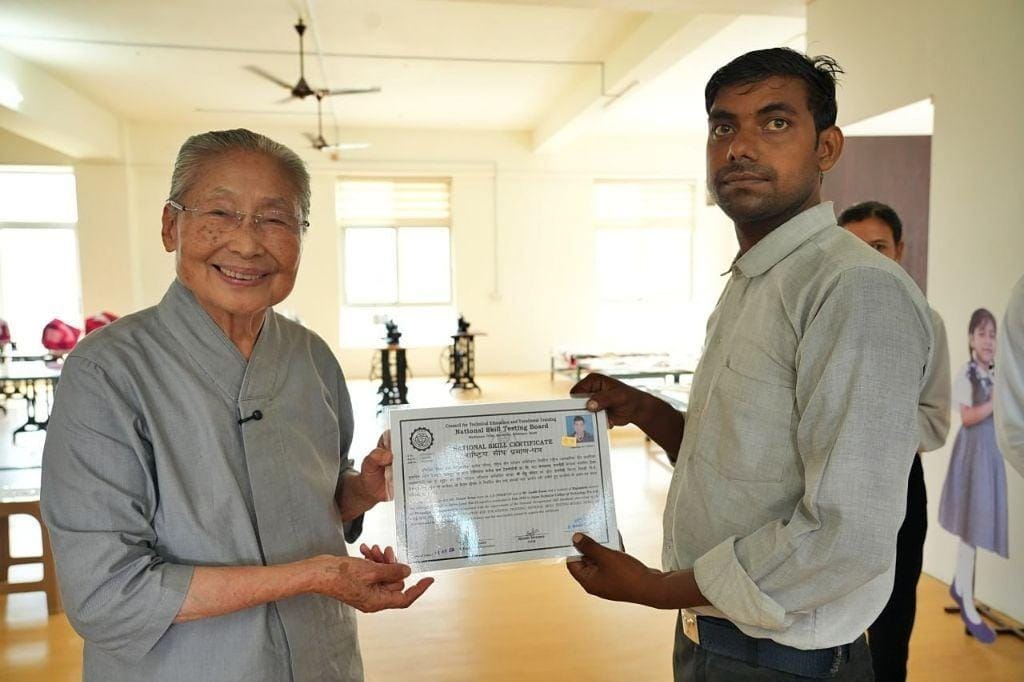
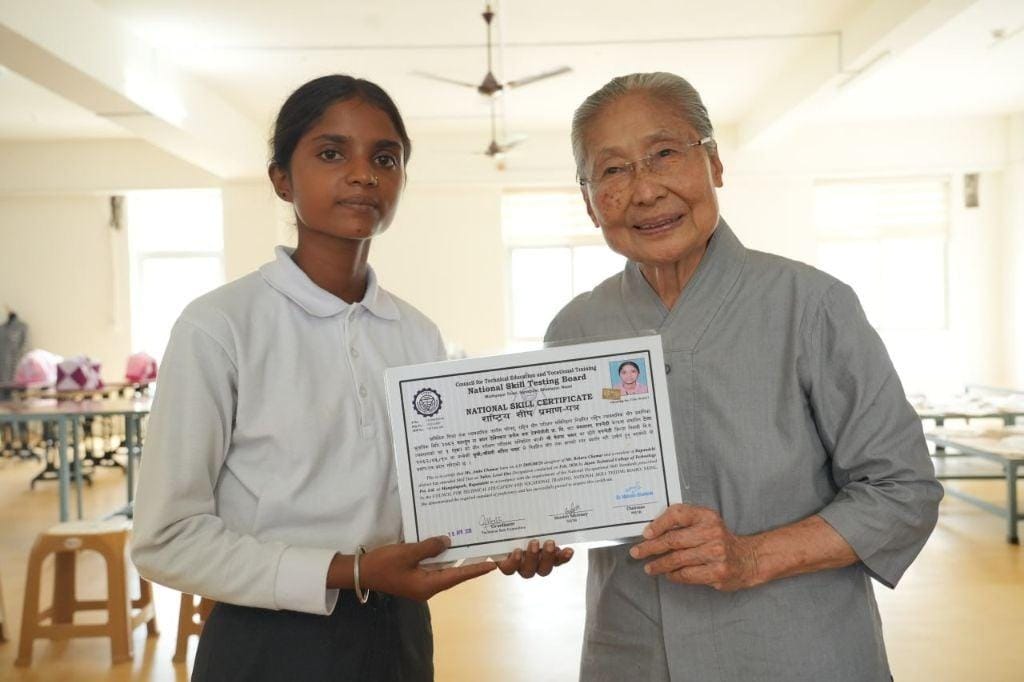
LEFT: Vice President Lin (left) presents an intermediate certificate to sewing teacher Pritam Sunar (right). RIGHT: Vice President Lin (right) presents a basic certificate to sewing class colleague Anita Harijan (left). | Photos: Ramesh
Pritam Sunar received his intermediate certificate during the ceremony. Reflecting on his past, Pritam shared that he previously learned sewing in his village before moving to Mumbai, India, to work. Six years later, health issues forced him to return home, where he opened a vegetable stall. He was eventually diagnosed with kidney disease, and the resulting year and a half of expensive treatments left him in a difficult financial situation.
After hearing that he could seek assistance, Pritam reached out to the organization. Volunteers visited his home and learned about his background in tailoring, discovering that he knew how to make pants, shirts, and the traditional Nepalese Kurta. Following this visit, he was invited to teach sewing at the local center. In September 2025, volunteer Gaik Chin Ong (王綺楨) encouraged him to take the intermediate sewing national exam, noting that mastering the skills would allow him to officially share his experience with others.
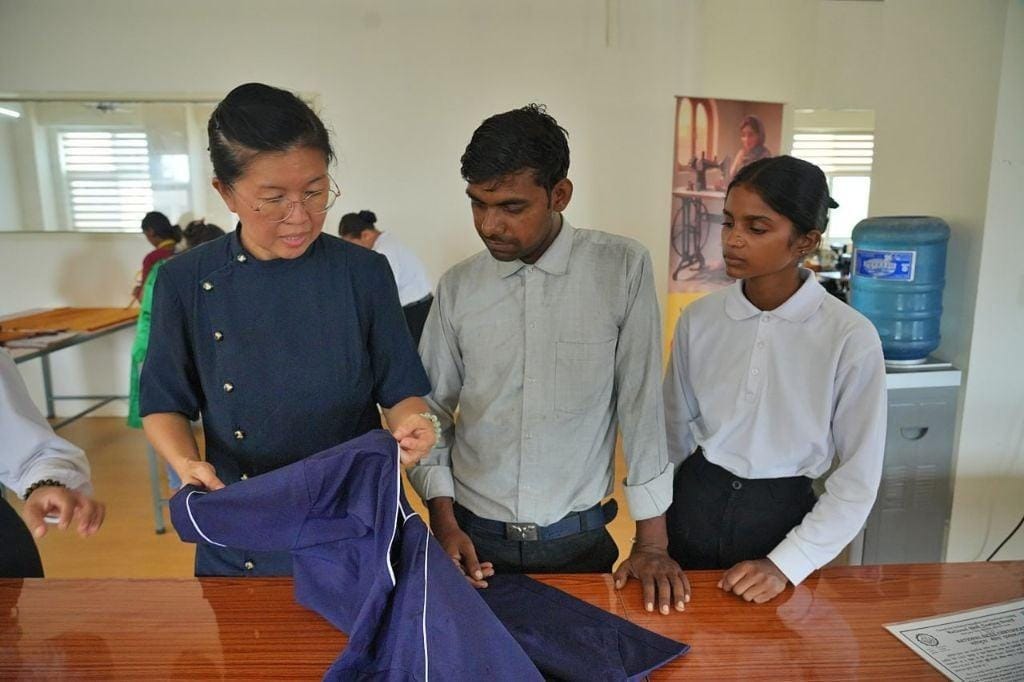
Getting the certificate means I am qualified to teach. I can also repair sewing machines, and after seeing various samples, I have the ability to make the finished products. I am grateful to Tzu Chi for giving me the opportunity. As long as I can still do it, I will continue to teach women and contribute to Tzu Chi. — Pritam Sunar, Sewing Teacher
Breaking social barriers
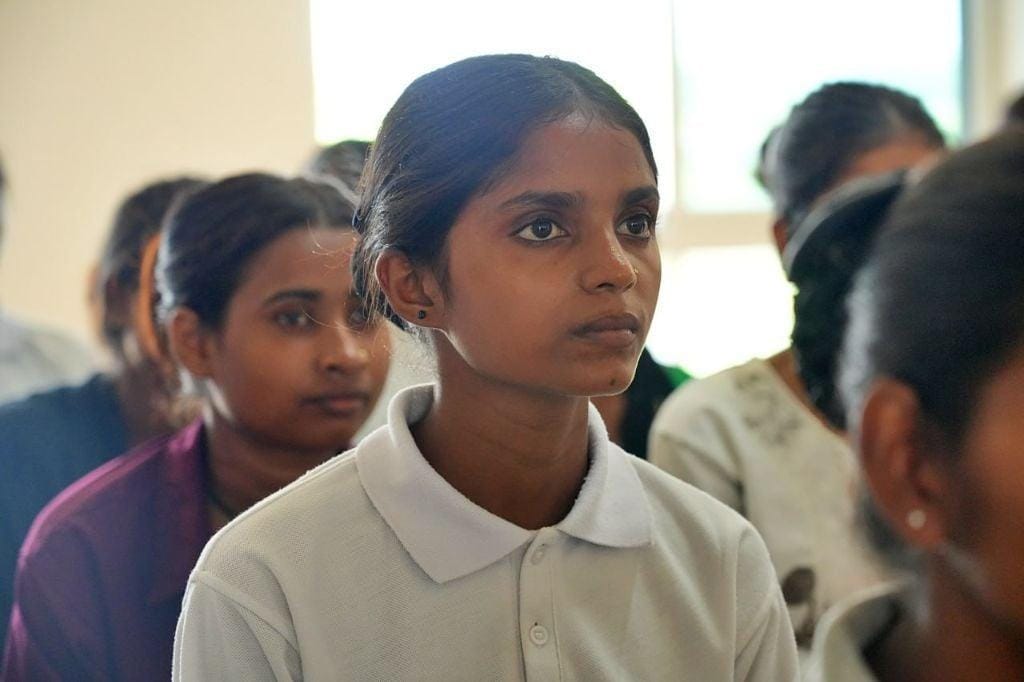
Anita Harijan, who earned a basic certificate, faced different obstacles on her journey. When she first began learning to sew, villagers mocked her, questioning what someone from a low caste could achieve and doubting she would ever find employment. However, her family encouraged her to ignore the gossip, and she persisted with her classes. Now, she works at the facility where she is treated equally and without discrimination, becoming the only person to secure work outside her village.
Although she had forgotten some techniques after a year of learning, Anita practiced continuously for a month and a half before the exam. She encountered minor challenges during the test but relied on her solid foundation to pass successfully. Receiving the certificate signifies a major personal triumph for her.
In the past, I lacked confidence and did not even have the courage to stand up. But today, after I get my certificate, I can open a shop of my own, earn money to take care of my family, and be self-reliant. I can be a role model for low-caste girls like me, teach them skills, help them find jobs, and make a way for ourselves. — Anita Harijan, Sewing Student
Confidence and a new direction
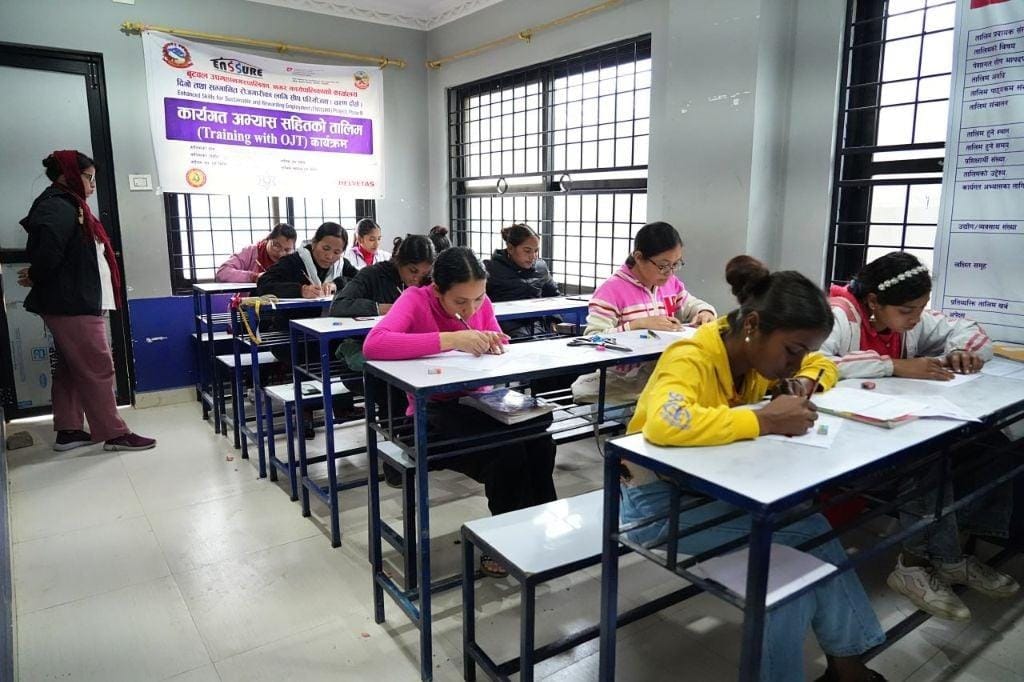
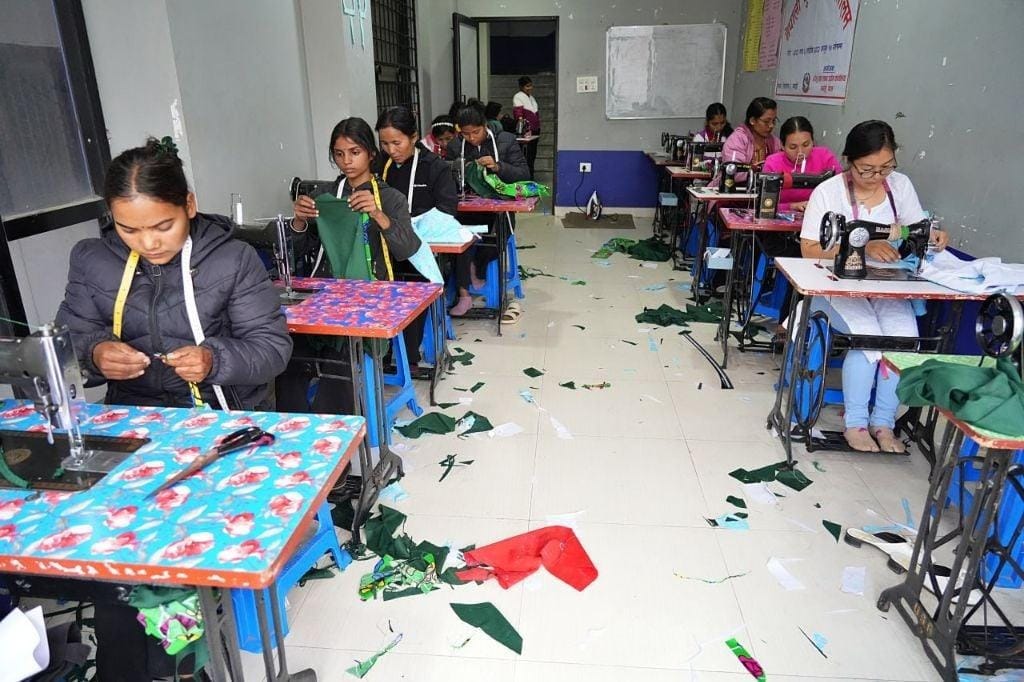
LEFT: On February 19, sewing students take the written portion of the national exam held by the CTEVT. RIGHT: Students participate in the practical portion of the exam. | Photos: Ramesh
During the certificate presentation, Lin expressed joy at seeing the sewing class students succeed in the national exams. Some of the women who earned certificates have already been guided to attend or graduate from university. These women have progressed from being illiterate to pursuing master's degrees, studying business administration, and training to become teachers.
The benefits extend beyond education, as several certified women have been hired at a garment factory in Bhairahawa. Factory management noted that the women are punctual, humble, elegant, and eager to learn. Impressed by their performance, the factory hopes to continue hiring students from this program, offering 20 to 30 additional job opportunities.
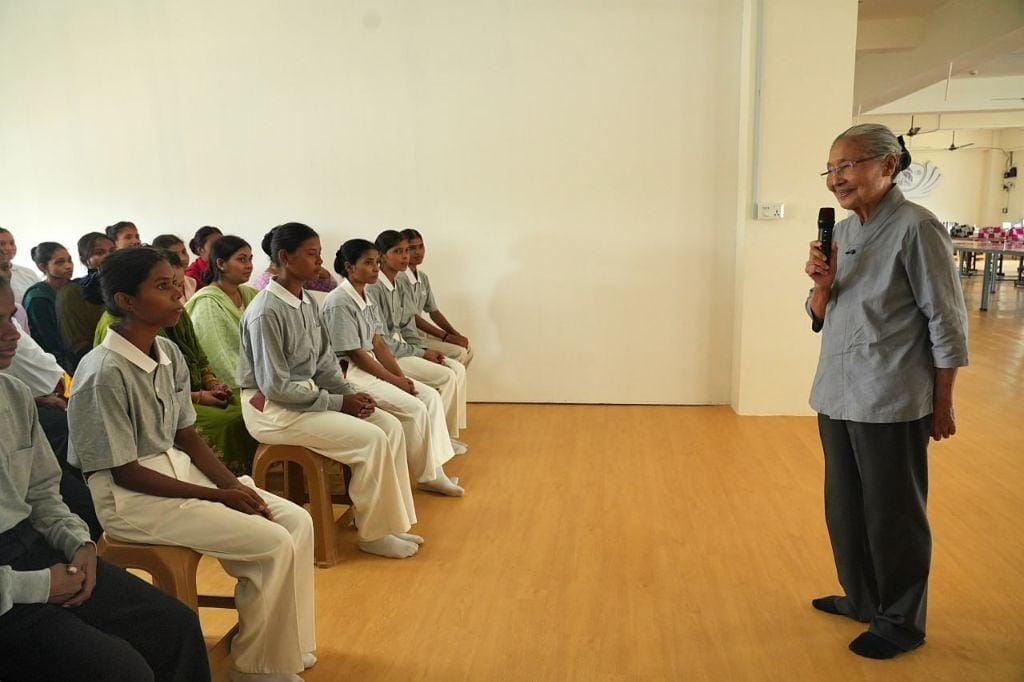
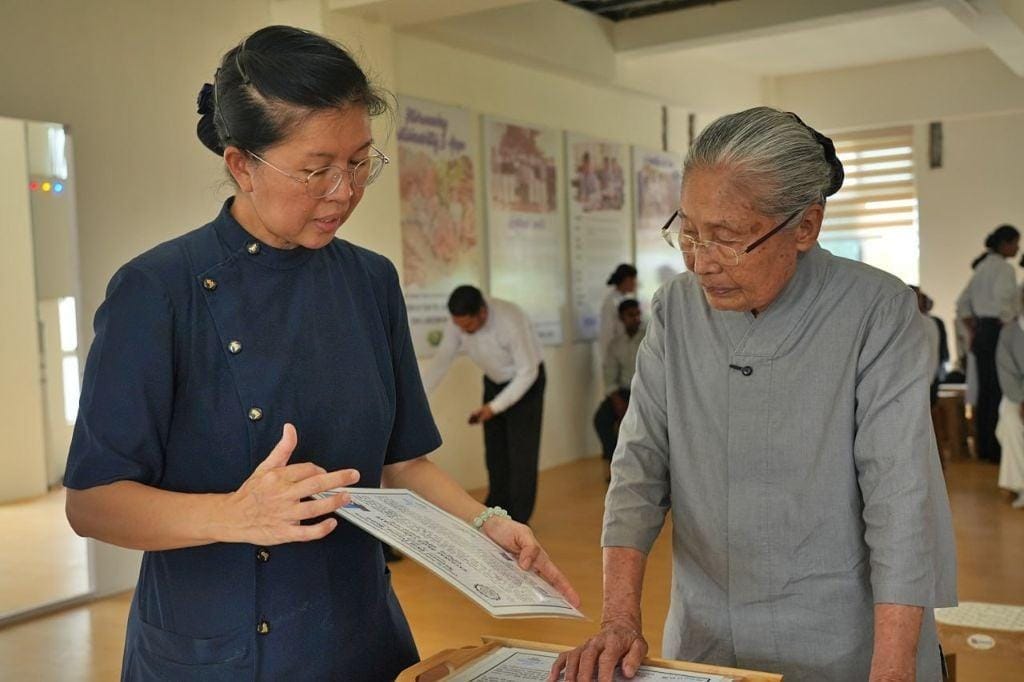
LEFT: Vice President Lin (right) praised the women in the sewing class for their elegant demeanor, dignified bearing, and courteous manners, noting that the class helps improve their families’ livelihoods and truly transforms women’s lives. Right: Gaik Chin Ong (left) explains to Vice President Lin (right) that 14 people obtained their basic certification and 2 obtained their intermediate certification. | Photos: Ramesh
Wang noted the profound growth the students have experienced since the classes began on October 17, 2022. Initially, the girls did not know how to hold scissors or calculate dimensions, and no one believed they could build a successful future. Now, their national certification provides formal recognition that can help them apply for microloans to start businesses or secure factory employment.
According to the Council for Technical Education and Vocational Training, there has never been a group that trains so many girls to participate in the national exam. — Gaik Chin Ong, Volunteer
Bhikkhu Maitri, who has been in Lumbini since 1997, observed that local women had never obtained national certificates before, as previous programs only offered short-term courses without continued support. By providing consistent accompaniment, the training program has enabled these individuals to use their skills to improve their families' livelihoods, overcome societal barriers, and create a more sustainable path forward.
Written by Jennifer Pai (白如璐)
