


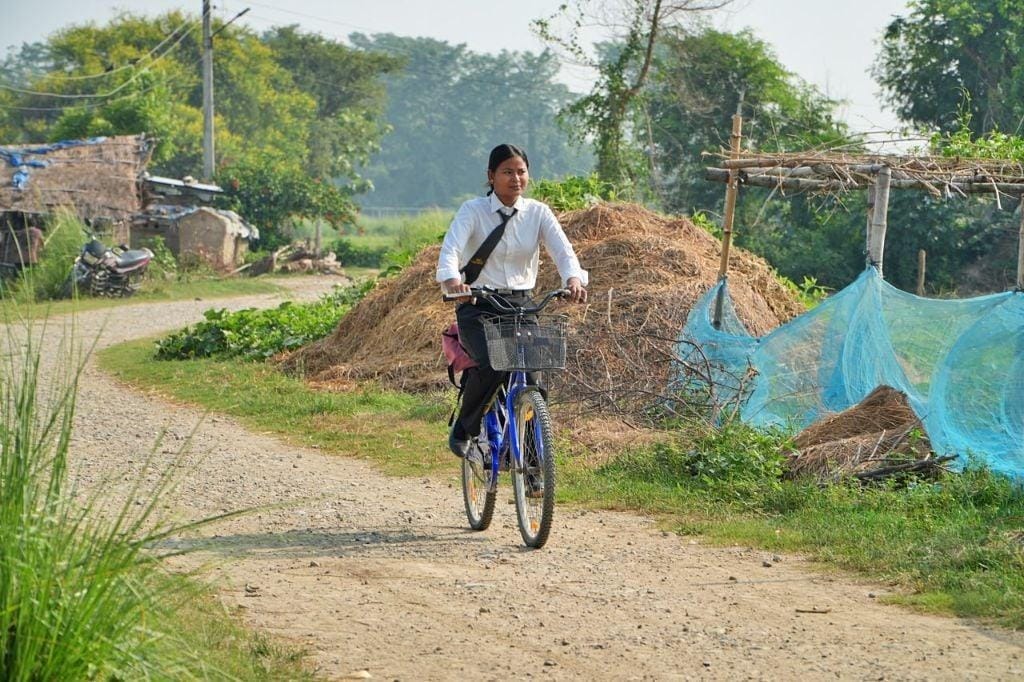
As a student in the education department, this daily journey represents a reality she once thought was entirely out of reach. For a long time, financial constraints kept her confined to her home in Khudabagar Village, Nepal, despite her excellent academic record. Today, her path to higher education is funded by her own hard work as a quality control inspector at a community sewing workshop, allowing her to balance employment with her dreams of becoming a teacher.
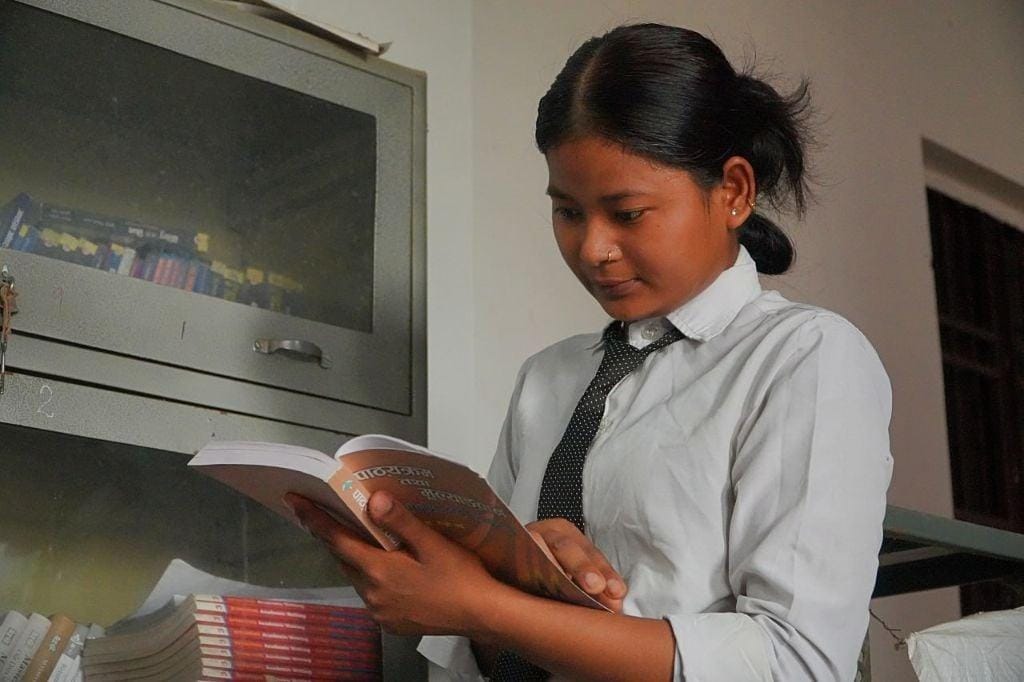
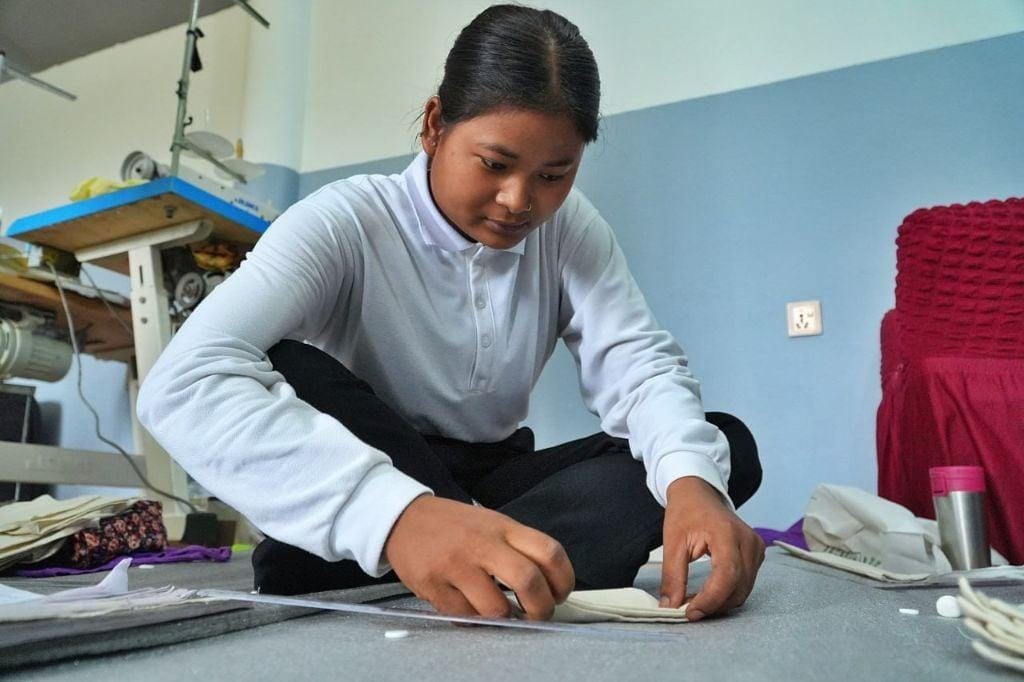
LEFT: Mamta Chaudhary enrolled in the education department at Khudabagar Adarsh College using income earned from the sewing class. RIGHT: Serving as a quality control inspector, Mamta Chaudhary carefully checks the stitching and measures both sides for symmetry. | Photos: Ramesh
Proactively seeking opportunities
In 2023, Mamta heard that a local initiative was offering opportunities to earn an income by sewing cloth masks. Eager to help her family, she joined 30 fellow villagers and walked to a free clinic center operated by the International Buddhist Society to inquire. Although that specific project had already concluded, their determination led them to the nearby Tzu Chi office in Lumbini.

There, they met volunteer Tulsi Narayan Matang, who listened to their aspirations and explained that home visits would be necessary to understand each family’s unique circumstances. The volunteers subsequently consulted Bhikkhu Maitri, a respected local monk who had spearheaded community development efforts—including installing solar panels, digging wells, and improving irrigation systems—in the village decades earlier.
When volunteers commenced the home visits, Ong Gaik Chin (王綺楨), a volunteer from Malaysia, visited Mamta's home first. Mamta was 17 at the time and had completed the 12th grade with high marks, yet she was staying at home because her family could not afford university tuition. Impressed by her academic achievements and proactive nature—Mamta even volunteered to guide the team through the village to find the homes of 30 other young women—Ong recognized her potential and invited her to join a newly established community workshop.

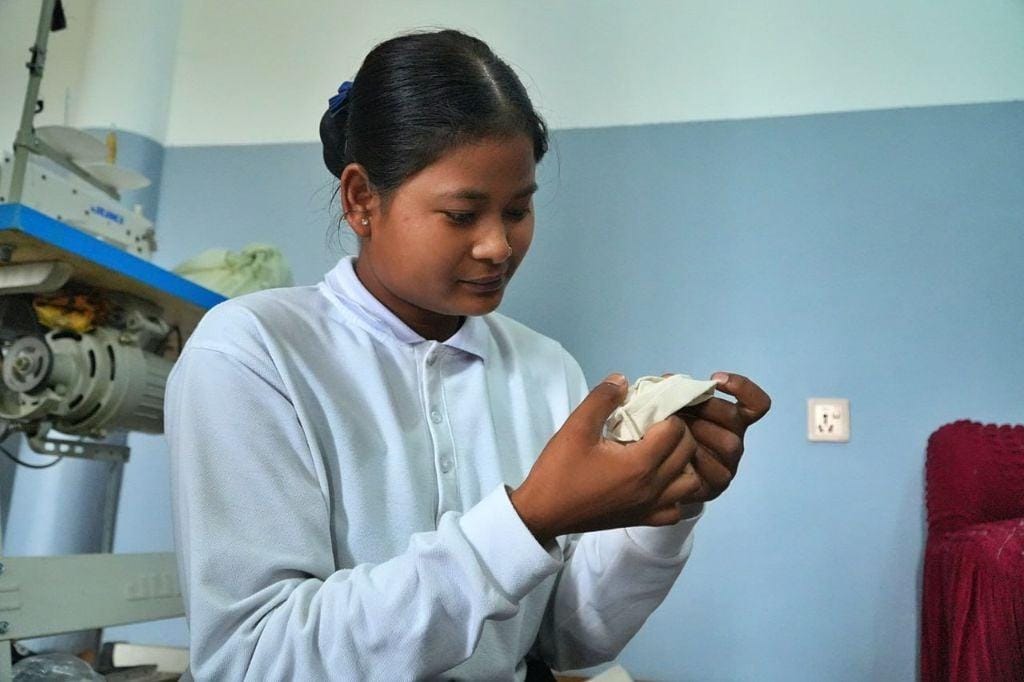
LEFT: Ong Gaik Chin (right) and Mamta Chaudhary (left), who are in charge of Tzu Chi's vocational training and empowerment project, discuss work matters. RIGHT: When detecting defects, Mamta Chaudhary marks them and explains how to improve, respecting the women's hard work. | Photos: Ramesh
Overcoming challenges and managing quality
The workshop required a dedicated individual to oversee quality control, and Ong offered the position to Mamta, promising further educational sponsorship once the college semester began. However, social norms presented an initial hurdle. Mamta's father, Mahendra Prasad Tharu, worried about his daughter working outside the village, so he personally rode his bicycle to the workshop to understand the environment and meet the team. Assured of her safety and the supportive atmosphere, he gave his consent. Rather than waiting for external aid, Mamta used the wages she earned from this cash-for-work position to enroll herself in college, officially beginning her journey of working semi-independently.
Stepping into the role of a quality control inspector was not without difficulties for an inexperienced teenager. When Mamta strictly rejected imperfect items and sent them back for alterations, some of the older village women became defensive, leading to disagreements. To resolve this, Ong coached Mamta on communication strategies, advising her to let the seamstresses measure the pieces themselves to identify the discrepancies. This approach defused tensions, fostered mutual respect, and established a standardized workflow.
Some items have a pass rate of 98 to 99 percent, while others are only at 50 percent. I mark the defects and send them back for adjustments. The women work very hard on their sewing, but I have a responsibility to maintain quality, so I carefully explain how they can fix the flaws.— Mamta Chaudhary, Quality Control Inspector
To help expand her horizons, Ong once accompanied Mamta to a nearby city to explore larger educational institutions. The bustling urban environment, crowded with heavy traffic, overwhelmed Mamta, who had never left her rural village, causing her to grow pale with anxiety. Recognizing her discomfort, Ong shifted focus, choosing instead to thoroughly train Mamta within the familiar surroundings of the community center, teaching her everything required for textile production and quality assurance.
Empowering the family and community
Mamta’s dedication has brought tangible improvements to her household of 11 people. Her father, Mahendra, who works as a farmer, expresses immense relief and pride. Her wages have helped the family secure water for irrigation, purchase rice seedlings and fertilizer, and hire a tractor for cultivation.
Since my daughter began working, she speaks clearly, is polite, and interacts well with others. Seeing her success, other girls in the village have also started learning how to sew to earn an income, bringing collective progress to our community. — Mahendra Prasad Tharu, Parent and Farmer
Similarly, her mother, Chanda Tharu, who balances farming with raising cattle, recalls how villagers once feared that allowing young women to work outside the home would lead them astray. Now, seeing Mamta handle her responsibilities, tutor her younger siblings, and assist with their school fees, the community’s perspective has changed completely. Many neighbors have followed suit, encouraging their daughters to join the sewing program.
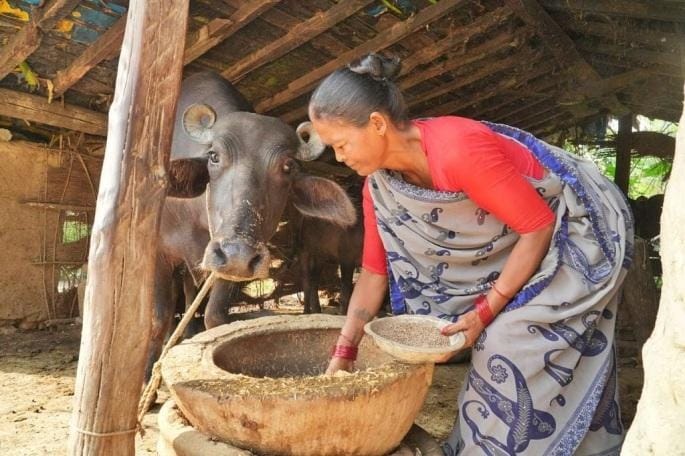
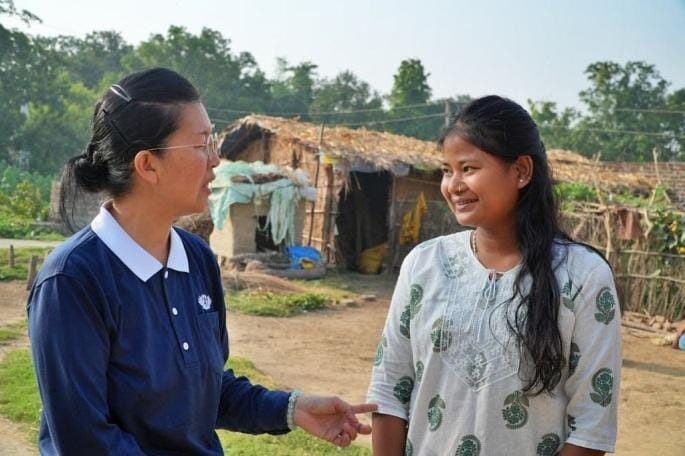
LEFT: Chanda Tharu raises cattle to support her children's education and is pleased to see her daughter helping with tuition. RIGHT: Ong Gaik Chin (left), head of the vocational training project, visits Mamta Chaudhary (right) during a home visit. | Photos: Ramesh
Daily interactions with the global community and exposure to humanistic values have deeply enriched Mamta's outlook on life. She has embraced the philosophy of small, daily acts of charity and hopes to complete her volunteer training this year to express her appreciation to Master Cheng Yen in person.
There are many girls in the village like Mamta, and it is through these connections that we have the opportunity to support them. Seeing her transform from someone who was too timid to speak into a confident college student has deepened my confidence in empowering women, making every effort completely worthwhile. — Ong Gaik Chin, Vocational Training Project Manager
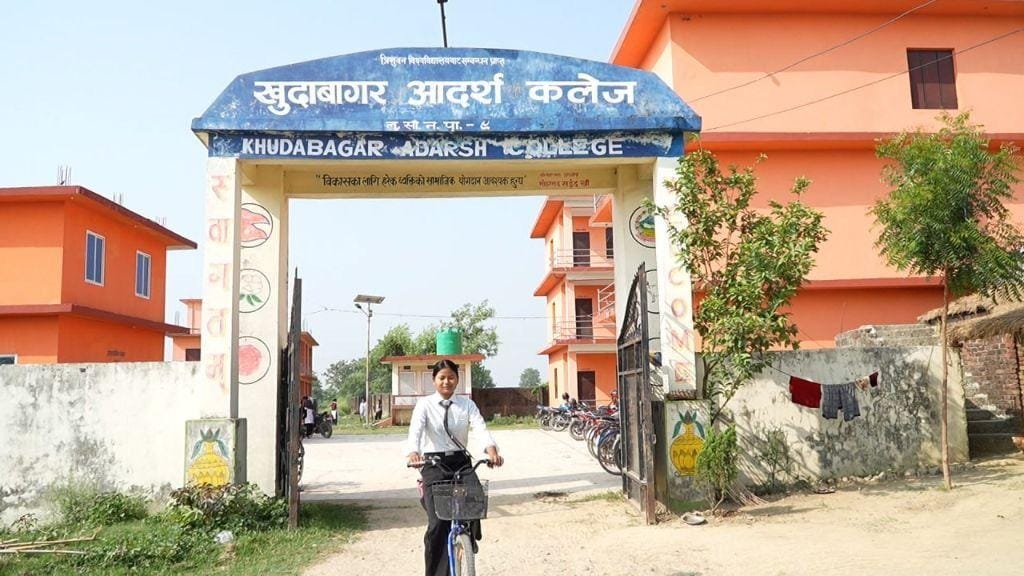
Through this vocational training initiative, Khudabagar Village has trained 56 skilled seamstresses over the past three years, with several graduates earning national certifications or becoming instructors themselves. By equipping young women with practical skills and the means to pursue higher education, the project is quietly fostering long-term self-sufficiency and driving positive social change across the region.
Written by Jennifer Pai (白如璐)
